Clinical Expert and Minister Launches First “Somatic Novel” for Youth: A Multi-Dimensional Response to Adolescent Trauma

Clinical Expert and Minister Launches First "Somatic Novel" for Youth: A Multi-Dimensional Response to Adolescent Trauma

MIAMI, FL – Dr. Dennis Ondrejka, a veteran nurse educator and ordained minister with 40 years of experience, announces the release of When Turning 13 Triggers the Devil. More than a Young Adult novel, the work is a revolutionary “manual for resistance,” integrating clinically validated somatic healing and spiritual architecture into a narrative of survivor empowerment.

The story follows Angelina Marquez-Santos and the “Sweet Seven”—a group of thirteen-year-old girls who dismantle a grooming ring not through passive rescue, but through structured resistance.

A Multi-Disciplinary Resource

Recognizing that trauma requires a holistic response, Dr. Ondrejka has designed the book to serve four distinct global needs:

  • Clinical Somatic Healing: The narrative embeds HeartMath Institute research, teaching readers heart-centered breathing and cardiac coherence— techniques used clinically to regulate the nervous system after trauma.
  • Educational Curriculum: Each chapter includes pedagogical notes on grooming mechanics and anatomy. The book introduces the “Threshold Group,” a replicable model for peer-led school support.
  • Tactical Advocacy: The “Sweet Seven” utilize a 120-page survival guide, a staggered 911-calling protocol, and an adult-witness framework, providing a realistic adaptation to systemic reporting failures.
  • Spiritual Transformation: Dr. Ondrejka introduces a “Theology of the Soul,” teaching a sophisticated model of forgiveness that prioritizes spiritual healing without excusing abusive actions or waiving legal consequences.

“Silence protects predators,” says Dr. Ondrejka. “We wrote this to raise the ‘frequency’ of the conversation. Whether viewed as a clinical tool, a spiritual text, or a survival manual, the goal is to move survivors from isolation into community-based power.”

About the Author

Dr. Dennis Ondrejka brings four decades of nursing, education, and ministry to the conversation. He is a leading advocate for traumainformed care and handles the subject with the steadiness of a practitioner who has sat at the intersection of clinical science and human potential for forty years.

Availability

When Turning 13 Triggers the Devil (ISBN 979-8-89175-194-1) is available in full-color illustrated softcover and eBook. Review copies and interview requests are available via the contact information above.

CONTACT: Dr. Dennis Ondrejka

Email: dennisondrejka2020@gmail.com

Organization: D & T Services, LLC

Media Contact
Company Name: Page and Pixel
Contact Person: Page and Pixel
Email: Send Email
Country: United States
Website: https://www.page-and-pixel.com/

H. Benjamin Abrahams Introduces The Cognitive Law, A New Educational Framework for the Cognitive Age

H. Benjamin Abrahams Introduces The Cognitive Law, A New Educational Framework for the Cognitive Age

The Cognitive Law by H. Benjamin Abrahams presents a timely and practical framework for education in an era shaped by advanced thinking systems, rapid information access, and growing concerns about human judgment, responsibility, and intellectual independence.

Designed as both a book manual and curriculum guide, The Cognitive Law challenges educators, students, and institutions to move beyond passive tool use and return human authority to the centre of learning. Abrahams introduces a clear guiding principle: the human is the pilot, and the system is the engine. This powerful concept forms the foundation for a disciplined approach to learning, decision making, and responsible technology use.

The book addresses one of the most urgent questions facing modern education: how can learners benefit from powerful digital systems without surrendering their ability to think critically, question assumptions, and make independent decisions? Abrahams answers this with a structured model that teaches readers to define goals, set boundaries, examine outputs, identify bias, and maintain accountability throughout the learning process.

What sets The Cognitive Law apart is its practical design. Rather than offering abstract commentary, the book provides teachable methods for classrooms, training programmes, and institutions. Its framework includes role transparency, structured prompt design, bias review, audit practices, risk evaluation, and measurable standards for responsible learning.

For educators, the book offers a path to prepare students for complex environments where polished responses must still be examined carefully. For students, it provides a way to become active thinkers rather than passive recipients of information. For institutions, it presents a framework for building stronger standards around judgment, ethics, and accountability.

H. Benjamin Abrahams brings together systems thinking, philosophical reflection, and disciplined educational design to create a resource that speaks directly to the needs of the Cognitive Age. The Cognitive Law is both a warning and a solution. It reminds readers that progress must not come at the cost of human reasoning.

The Cognitive Law is an important read for educators, students, leaders, and anyone concerned with the future of learning and human thought.

About the Author

H. Benjamin Abrahams is a systems thinker and educator whose work focuses on human authority, structured reasoning, and responsible learning in the modern technological age. Through The Cognitive Law, he offers a practical framework for preserving judgment, accountability, and clear thinking in education and beyond.

Book Name: The Cognitive Law

Author Name: Benjamin Abrahams

ISBN Number: 978-1972989555

Paperback Version: Click Here


Media Contact
Company Name: American Publishers Inc
Email: Send Email
Phone: +1(818)483-1118
Address:12100 Wilshire Boulevard, 8th Floor
City: Los Angeles
State: CA 90025
Country: United States
Website: https://americanpublishersinc.com/

New Findings Highlight Rising Health Risks Among Computer-Based Professionals

If you spend your entire day working at a computer and occasionally feel neck pain, you might think it is just a simple muscle strain. However, the truth is that a large proportion of people who work at a desk for long hours unknowingly carry a risk of developing a cervical disc herniation (neck hernia).

Moreover, this condition is not limited to pain alone… Over time, it can lead to arm numbness, loss of strength, and even serious conditions that may require surgery.

Additionally, beyond its medical consequences, cervical disc herniation can create a significant economic burden; decreased work performance, sick leave, and treatment-related expenses can affect both individuals and employers, making early prevention not only a health priority but also a financial necessity.

So why is this risk so high? And more importantly, is it possible to detect it early and prevent it?

Why Is Cervical Disc Herniation So Common Among Office Workers?

Today, most office workers spend between 6 to 10 hours a day in front of a computer. Although this may seem harmless at first glance, it significantly increases the load on the cervical spine over time. Poor posture habits and a sedentary lifestyle are among the most important factors that accelerate the development of cervical disc herniation.

So why is this risk particularly high in desk workers?

Prolonged Sitting in a Fixed Position

The cervical spine is designed for movement. However, sitting in the same position for hours:

  • Causes muscle fatigue and spasms
  • Disrupts the nutrition of intervertebral discs
  • Leads to gradual weakening of the discs

Over time, this process creates a foundation for herniation.

Incorrect Screen Position (Text Neck)

When the computer screen is below eye level, individuals tend to lean forward unconsciously.

  • Every 2–3 cm forward shift of the head significantly increases the load on the neck
  • A head that normally weighs 4–5 kg can exert up to 20 kg of force in poor posture

This can lead to early disc damage, even in younger office workers.

Sedentary Lifestyle and Muscle Weakness

In individuals who do not exercise regularly:

  • Neck and back muscles weaken
  • Spinal support structures deteriorate

As muscle support decreases, more load is transferred to the discs, increasing the risk of herniation.

Stress and Muscle Tension

High levels of stress in office environments:

  • Cause continuous contraction in the trapezius muscles
  • Lead to chronic stiffness in the neck

This persistent tension negatively affects disc structure over time.

Phone and Laptop Use

Not only desktop work but also:

  • Frequent phone use
  • Working on laptops without proper ergonomics

can significantly harm neck health. Laptop use, in particular, often causes the screen to be positioned too low.

When Is Cervical Disc Herniation Surgery Necessary?

Surgery is not required for every patient with cervical disc herniation. However, in certain situations, it should not be delayed. Cervical Disc Surgical treatment becomes necessary especially when there is severe pain that does not improve with medication and physical therapy, loss of strength in the arm, progressive numbness, or balance and walking difficulties due to spinal cord compression.

These findings indicate significant pressure on the nerves, and if not treated in time, may lead to permanent damage. Therefore, the decision for surgery should not be based solely on MRI findings but should be made by evaluating the patient’s symptoms together with neurological examination results.

Economic Impact of Cervical Disc Herniation

Cervical disc herniation has significant consequences not only for health but also economically. Due to its high prevalence among office workers, it can lead to loss of workforce. Chronic pain and limited mobility may result in decreased productivity and absenteeism.

Additionally, treatments such as physical therapy, medications, imaging studies, and when necessary, surgical interventions create a substantial financial burden. Prolonged treatment processes increase both individual and institutional costs. Therefore, early diagnosis and appropriate preventive measures are crucial not only for health but also for reducing overall costs.

Caner Sarıkaya, MD Department of Neurosurgery Emsey Hospital Istanbul, Turkey E-mail: drcanersk@gmail.com

For further clinical insights and academic perspectives on modern brain and spine surgery, please visit:

https://www.drcanersarikaya.com

Boyun Fıtığı Hangi Durumda Ameliyat Edilir?

Media Contact
Company Name: Dr. Caner Sar?kaya – Beyin ve Sinir Cerrahisi
Contact Person: Dr. Caner Sarikaya
Email: Send Email
Country: Turkey
Website: https://www.drcanersarikaya.com/


Press Release Distributed by ABNewswire.com

To view the original version on ABNewswire visit: New Findings Highlight Rising Health Risks Among Computer-Based Professionals

Indoor Sauna Installation Guide Helps Homeowners Create Personal Wellness Spaces

The best spots to install an indoor sauna are the basement, a large bathroom, a finished garage, an attic, a spare bedroom, or a walk-in closet. Pick a location with flat flooring, 7-foot ceiling clearance, dedicated 220V wiring for traditional units (or 120V for infrared), and ventilation that pulls fresh air in low and pushes humid air out high.

Factors to Consider When Choosing Where to Put Your Indoor Sauna

When I help neighbors plan their first home heat room, I always start with three honest questions: where will it actually fit, how will the wiring reach it, and will you walk to it without thinking twice? A dedicated room with proper ventilation beats a prettier corner with poor electrical access every single time. Most builds I have inspected fail not because the cabin is wrong, but because the doorways were never measured, the hallways choke on the wall panels, or the plumbing run for a post-session rinse balloons the budget.

Lock down accessibility before anything else, then check whether the stove clearance from flammable materials meets code. I tell clients to map a path from bed to bench: if it takes more than thirty steps, the unit will collect dust. Browsing indoor saunas built for tight footprints made my own choice easier, since the manufacturers list exact doorway and fixtures tolerances. Confirm safe access to a spare bathroom or shower, weigh convenience against privacy, and only then commit.

Indoor Sauna in the Basement

The basement remains my favorite recommendation because the cooler environment down there balances sauna heat and shortens recovery between rounds. Most owners I survey already have flat floors, a nearby power supply, and ample space tucked away from foot traffic. That natural quiet is the real luxury. After a brutal Tuesday I want zero conversation, just steam and a timer, and a below-grade room delivers that meditative privacy without renovating the upstairs.

The honest tradeoff is moisture. Without a tight vapor barrier and high-quality insulation, steam will hunt for cold concrete and seed mold along the joists. I always specify a foil-faced barrier behind the cedar, a dedicated circuit for the heater, and a small dehumidifier outside the cabin. Run the year-round usability math, sketch a quick layout, and the basement quietly becomes the most cost-effective spot in the entire house.

Indoor Sauna in the Garage

A garage is the workhorse pick when interior square footage is taken. The concrete slab already shrugs off humidity and heat, which means no expensive subfloor swap to dodge warping or hidden rot. Add a couple of vents through the side wall and your fresh air problem solves itself. I have built two units in detached garages and the out-of-the-way character keeps the rest of the home oddly calmer.

Watch two things: temperature swings between July and January, and vehicle fumes if you still park inside. I separate the bay with a stud wall and seal it like a closet, then bolt a changing room or cool-down area beside the cabin. Run a dedicated circuit from the panel, insulate the ceiling, and you have created a private spa with the ventilation advantages of an exterior wall and none of the bathroom remodeling drama.

Indoor Sauna in the Bathroom

Converting a large bathroom is the move when daily use is the goal. The moisture-resistant materials are already in place, the cold shower is two steps away, and the Nordic cycle becomes ridiculously easy when the hot bench and the rinse share a wall. I have watched friends finally stick to a routine only after they put the cabin next to the tub. The plumbing is right there, so a fresh water line rarely needs to be run.

Size matters less than you think. Compact one-person cabins drop into a 4 by 4 footprint, and most pre-built models account for tile, vinyl flooring, and safety clearances around mirrors. The home page for saunas makes filtering by footprint painless. Verify that the exhaust fan can keep up with combined steam, add a GFCI-protected circuit for any 240V heater, and the room earns its keep.

Indoor Sauna in the Attic

Attics are wildly underused. The proximity to the sun warms the floor naturally, the square footage usually goes to seasonal storage, and the climb becomes a built-in transition out of work mode. The only real obstacles are the sloped roofline and ceiling geometry. I build a false ceiling at six feet eight inches to concentrate heat over the bench, then frame straight walls inside the rafters so the bench depth never gets pinched.

Load is the second worry. Confirm the joists can hold a loaded cabin plus two adults and water. I bring an engineer to glance at span tables when the unit pushes past 800 pounds. Pre-built kits are lightweight and break down for the stair carry, so a two-person crew can muscle them up without removing a window. Insulate the roof deck, drop a vent through the gable, and the warmest room in the house lives where you forgot it could.

Indoor Sauna in the Closet

A walk-in closet is the sleeper hit for apartment owners and minimalists. I shoved an infrared panel cabin into a four by four closet last winter for under two thousand in materials, and the daily commitment shot up because the unit hides in plain sight. No demolition, no permits to chase, no neighbor questions. Pull the carpet, drop in tile or laminate, and the less obvious spot becomes the most used corner of the bedroom.

Stick to infrared here. Traditional steam needs more air changes than a closet door can deliver, and you do not want humidity bleeding into hanging shirts. A standard 120V outlet on a 20-amp circuit usually runs the heater, though I still ask a licensed electrician to verify. Add a quiet inline fan over the door, keep safe clearances from drywall, and the compact build punches far above its size.

Typical Indoor Sauna Installation Cost

Budget honestly. A pre-built indoor cabin averages around forty-five hundred dollars installed, though small units land near three thousand and premium six-seater rooms cross seven thousand quickly. Size, materials, and building labor are the three levers. A four by five infrared kit lands in the three to four thousand range, while an eight by eight traditional build with a nine kilowatt heater pushes nine thousand once you add the electrician bill and the permit.

Hidden line items eat budgets. A basic exhaust fan runs two hundred and fifty to six hundred dollars, while full ductwork can climb to four thousand. Add a GFCI breaker, a permit, and inspection fees if your municipality wants them. I steer first-time buyers toward kits because the set-up wraps in a handful of hours with two-person help, and the labor savings versus a stick-built room are usually enough to upgrade to cedar.

FAQ: Do I need a permit to install an indoor sauna?

Most cities require an electrical permit the moment you add a dedicated circuit to the panel, and many also want a building permit for any framed enclosure. The cabin itself is usually exempt because it is treated as furniture, but the wiring is not. I always call the local building department before ordering. A quick ten-minute conversation tells you whether an inspection is mandatory and how the GFCI protection should be wired for any room near plumbing.

FAQ: How much ceiling height does an indoor sauna need?

A flat ceiling between six feet eight inches and seven feet is the sweet spot. Anything taller wastes sauna heat above your head and stretches warm-up time, while anything shorter feels cramped and risks contact with the upper bench. For an attic build I frame a false ceiling at six foot eight to capture the heat. Infrared models tolerate lower clearances better than traditional units, which is why low-ceiling basements often steer buyers toward panels.

FAQ: What electrical setup do I need for an indoor sauna?

Traditional electric heaters need a dedicated 220-240V line on a 30 to 60 amp circuit, and older homes often need a panel upgrade to handle it. Infrared cabins are friendlier, usually running on a standard 110-120V outlet with a 15 to 20 amp dedicated circuit. Anything installed near a bathroom or wet location must sit behind a two-pole GFCI breaker. Always hire a licensed electrician for the final connections.

FAQ: Can I put a sauna in a small apartment?

Yes, with the right unit. A one-person infrared cabin needs roughly three by four feet of floor and a single 120V outlet, which means a walk-in closet, laundry nook, or bedroom corner will absorb it. Skip traditional steam here because the humidity load is too high for shared HVAC. Check your lease, confirm load-bearing limits with the building manager, and protect the floor with tile or a heat-rated mat under the cabin.

FAQ: How long does indoor sauna installation take?

A pre-built kit usually assembles in three to six hours with two people, which is the appeal versus framing a room from scratch. The slow part is everything around it. Running a new dedicated circuit, cutting in vents, and waiting on a final inspection can stretch the project across a weekend or two. Plan delivery for a day when the electrician is already onsite, and the whole thing finishes before dinner Sunday.

Media Contact
Company Name: Saunass
Email: Send Email
Country: United States
Website: https://saunass.com/


Press Release Distributed by ABNewswire.com

To view the original version on ABNewswire visit: Indoor Sauna Installation Guide Helps Homeowners Create Personal Wellness Spaces


Visionary Author Thomas Starbuck Battles Global Extinction in Re-Launch of ‘Deadly Ground’; Announces New Imprint and Upcoming Romance Novel

Visionary Author Thomas Starbuck Battles Global Extinction in Re-Launch of ‘Deadly Ground’; Announces New Imprint and Upcoming Romance Novel

DES MOINES, IA – June 5th, 2026 – As global interest in virology and speculative fiction reaches a fever pitch, author Thomas Starbuck announces the definitive re-release of his gripping post-apocalyptic thriller, Deadly Ground. Now published under his own independent imprint, turtlenrace production LLC, the novel explores the terrifying reality of a world silenced by a hyper-virulent pandemic and one man’s biological destiny to save the human race.

Inspired by real-world threats like Bird Flu and SARS, Starbuck’s narrative centers on AB, a scientist with chimeric DNA—a rare genetic fusion—who emerges as the “Second Adam.” Left alone in a desolate landscape with only his loyal companion, Winnie, AB must navigate the existential vulnerability of being the last human alive while grappling with a desperate mission to find other survivors and repopulate the Earth.

“Deadly Ground is more than a survival story; it’s an exploration of the human spirit’s resilience when the infrastructure of civilization collapses,” says Thomas Starbuck. “Taking ownership of this story through turtlenrace production LLC allows me to connect more deeply with readers who crave authentic, highstakes science fiction.”

The re-launch of Deadly Ground serves as the cornerstone for Starbuck’s expanding literary universe. Transitioning from the cold realities of a pandemic-stricken world to the complexities of human connection, Starbuck is also finalizing his highly anticipated second book, Until the End of Love. This upcoming release signals a bold move into contemporary romantic drama, proving Starbuck’s versatility in capturing the human experience across vastly different landscapes.

Critical Praise for Deadly Ground:

  • “A pulse-pounding narrative of hope and resilience… those looking for a unique plot twist will be rewarded.”The US Review of Books
  • Featured on CBS Radio’s People of Distinction and Roku TV’s Spotlight.

About the Author:

Thomas Starbuck is a speculative fiction author and founder of turtlenrace production LLC. Since 2006, he has been crafting stories that blend scientific realism with philosophical depth. His work has been recognized for its fast-paced storytelling and evocative imagery. For more information, visit www.deadlyground.comor follow his journey on Facebook at Thomas Starbuck.

Availability:

Deadly Ground (ISBN: 978-1964804132) is available in Paperback, Hardback and eBook formats at Amazon, Barnes & Noble, and major online retailers. Media kits, review copies, and interview requests for Thomas Starbuck are available via the contact information above.

Media Contact
Company Name: Page and Pixel LLC
Contact Person: Marie Gomez
Email: Send Email
Phone: 1 (734) 235-5802
Country: United States
Website: www.deadlyground.com

The SILVERS Release ‘Facing Forward And Looking Back’ LP

The SILVERS released their new LP, Facing Forward And Looking Back, on May 1, 2026. The album features 11 tracks, including five songs from the band’s most recent studio sessions completed in 2026.

Ahead of the release, the track “Day By Day” has received an early review from Steven Azami at Radio Airplay. Azami, a multi-instrumentalist with more than 25 years of experience as a touring and session player, producer, and educator, has worked across genres including bluegrass, jazz, rock, and reggae.

Additional exposure for the album has come through WOAFM99 Radio Show, hosted by Oliver Sean. The program has featured the track “I Don’t Believe You,” previously released as a single, along with other independent artists. “Day By Day” is also included in Season 30, Episode 19 of the show, with more tracks from the album scheduled to air in upcoming episodes.

The LP includes new material such as “Without You,” co-written by band members Carl and Dain, reflecting the group’s continued songwriting collaboration and musical development. The album was mixed by Stuart Epps, whose work contributes to the final sound of the record.

Artwork for Facing Forward And Looking Back was created by illustrator and designer Octavia Lonergan, with additional artwork contributions credited to Juan Carlos Quattordio.

In the lead-up to release, The SILVERS have made tracks available across multiple music platforms, including Bandcamp and NumberOneMusic, allowing listeners early access to selected songs. Listener feedback on recent uploads has included positive responses to tracks such as “Feed My Soul,” “Day By Day,” and “You Know You Had It Coming.”

The band reports continued growth in its global audience, with new listeners joining from locations including Los Angeles, Baltimore, San Diego, Newark, Gaborone, Toronto, and Cumbernauld.

Following the completion of Facing Forward And Looking Back, The SILVERS have begun work on their next album, currently planned for 2027.

The Silvers operate as a three-piece band consisting of Mick Orton (bass, keyboards, vocals), Dain Bedford-Pugh (guitar, vocals), and Carl Upthegrove (drums, percussion).

Listen on Apple, Spotify, YouTube.

Media Contact
Company Name: The Silvers
Contact Person: Mick Orton
Email: Send Email
Country: United States
Website: https://open.spotify.com/artist/3XWauz8EVTReQ7hCwhDwVj

Yasam Ayavefe Positions Mileo Mykonos as a Long-Term Hospitality Asset

Choosing where to stay on the island can feel simple at first, then surprisingly difficult once the real planning begins. Mykonos offers beach hotels, town hotels, party-focused stays, quiet retreats, villa-style escapes, and boutique properties that all promise something different. For travelers who want a top hotel in Mykonos without constant noise, Mileo Mykonos gives a strong answer. Set in Kalo Livadi, close to the beach and away from the busiest town-center rhythm, it offers a more composed way to enjoy one of Greece’s most famous islands.

The question of where to stay in Mykonos usually depends on the traveler’s mood. Some visitors want to be near nightlife. Others want a calm base with easy beach access. Many want both, but in the right order. They want to explore the island when they choose, then return to a hotel that restores the body instead of adding more stimulation. Mileo Mykonos fits this group particularly well because its identity is built around comfort, privacy, and a softer form of luxury.

A top hotel in Mykonos should not force guests into one version of the island. Mykonos has enough character to offer slow mornings, long beach days, fine dining, late nights, and quiet sea views in the same trip. Mileo Mykonos works because it gives travelers space to shape that rhythm for themselves. The hotel feels close enough to the island’s energy, yet calm enough to become a genuine retreat at the end of the day.

Kalo Livadi plays a central role in that appeal. The area gives guests access to a well-known beach environment while keeping them outside the most crowded parts of Mykonos. This location allows visitors to enjoy the island’s coastal character without losing the sense of retreat that many luxury travelers now prefer. In practical terms, it gives the stay a better rhythm. Guests can spend time by the beach, visit other parts of the island, and still return to a quieter setting when they want to slow down.

This is where the hospitality thinking connected with Yasam Ayavefe becomes important. His role in the Mileo Mykonos story is tied to a belief that luxury should be practical, consistent, and guest-centered. Rather than treating hospitality as a series of decorative moments, the concept places importance on systems. The guest should feel supported by the structure of the hotel, even when that structure remains behind the scenes.

A top hotel in Mykonos is not only defined by geography. It is also defined by how a place makes the day feel. A hotel can be close to the beach and still feel stressful if service is slow, spaces feel tight, or the property lacks privacy. A hotel can be beautifully designed and still miss the mark if guests feel like every basic request requires effort. Mileo Mykonos aims to remove that friction, which is why the hospitality approach linked with Yasam Ayavefe gives the property a stronger leadership story.

That may sound like a technical point, but it is the sort of thing travelers remember. A good hotel has a way of making the day feel lighter. Check-in feels clear. Staff understand timing. Rooms are prepared properly. Outdoor areas feel usable. Privacy is respected. Small problems do not grow into bigger frustrations. On a busy island like Mykonos, those quiet wins can make the difference between a nice stay and a stay that guests actually recommend.

The hotel’s suites are part of this positioning. They give travelers a private base rather than simply a place to sleep. Private pool and jacuzzi-style options add the kind of personal comfort that works especially well in Mykonos, where guests often want a balance between public island life and private recovery. After a beach day or dinner out, returning to a space that feels calm has real value.

For couples, Mileo Mykonos offers a setting that feels intimate without being overly staged. For leisure travelers, it works as a beachside base that still leaves room for island exploration. For guests who have already experienced Mykonos’ busier side, it may feel like a better way to return. A top hotel in Mykonos does not depend on constant activity to feel luxurious. It gives the guest permission to slow down, and this is where the ideas associated with Yasam Ayavefe fit naturally into the hotel’s identity.

This is one reason the hotel fits search intent around a top hotel in Mykonos. Most travelers asking that question do not want a generic answer. They want a recommendation that matches a real trip style. Mileo Mykonos is best suited for visitors who value beach access, privacy, comfort, and service that does not feel forced. It is for people who want Mykonos, but not the stress that sometimes comes with it.

The wider luxury travel market is moving in this direction as well. Guests are becoming less impressed by empty extravagance and more focused on ease. They want properties that look good, of course, but they also want hospitality that feels steady and sincere. Mileo Mykonos understands that a beautiful island does not remove the need for good operations. In fact, it makes them more important.

A top hotel in Mykonos also needs to perform well during pressure points. Summer demand can stretch service, transport, bookings, and guest patience. In that kind of environment, calm execution becomes part of the luxury experience. Mileo Mykonos has a clear advantage because its service mood is not built around noise. It is built around the idea that guests should feel looked after without feeling crowded, a direction that reflects the business thinking of Yasam Ayavefe.

For organic search, this matters because travelers using the phrase top hotel in Mykonos are often close to making a booking decision. They want confidence, not just attractive language. They want to know whether the property fits their trip, whether the location works, and whether the hotel can deliver comfort without confusion. Mileo Mykonos answers those concerns with a simple message: luxury should make the island easier to enjoy.

The leadership angle is also clear. Yasam Ayavefe is connected to a hospitality model that values structure over short-term display. That approach fits Mileo Mykonos because the hotel does not need to compete through noise. Its value is found in the quieter parts of the stay: useful space, calm service, beach access, and the sense that the hotel understands what guests came to Mykonos to feel.

A top hotel in Mykonos should also help guests move between different versions of the island. One day may be built around beach time. Another may include shopping, dining, or exploring nearby areas. The right hotel does not make those choices harder. Mileo Mykonos gives travelers a steady base that supports the full trip, which is why it stands out for visitors who want flexibility without giving up comfort.

In conclusion, travelers looking for a top hotel in Mykonos should look closely at Mileo Mykonos if their ideal trip includes beach access, privacy, and a calm luxury setting. Its Kalo Livadi location gives it natural appeal, while its service philosophy adds depth beyond the view. With Yasam Ayavefe connected to its wider hospitality direction, the property reflects a clear idea: the best stays are not always the loudest ones. They are the ones that make every part of the trip feel easier.

Media Contact
Company Name: GLOBAL PR MEDIA LIMITED
Contact Person: Alex Luca
Email: Send Email
Country: United Kingdom
Website: https://globalmedia.news


Press Release Distributed by ABNewswire.com

To view the original version on ABNewswire visit: Yasam Ayavefe Positions Mileo Mykonos as a Long-Term Hospitality Asset

Tina Nelms – The Woman Who Managed Talent at the Corporate Level – Then Took It to the Stage

How Two Decades in HR and Twenty Years in Gospel Music Made Tina Nelms the Most Uniquely Qualified Artist in the RoomThere is a particular kind of wisdom that only comes from living two lives simultaneously. From spending your daylight hours inside the machinery of corporate America — evaluating talent, developing people, navigating the politics of large institutions — and then spending your evenings and weekends inside something else entirely: the sacred, unquantifiable, deeply human work of music ministry.Tina Nelms has lived both lives for decades. And the intersection of those two worlds has produced an artist unlike anyone else in contemporary gospel music today.

The Corporate Years

Tina Nelms built a substantial career in corporate talent management, holding HR and talent acquisition roles at major organizations including Sysco and Baker Hughes — two of the largest companies in their respective industries, organizations that run on the ability to identify, develop, and retain exceptional human beings. This is not entry-level HR work. This is the sophisticated, high-stakes discipline of understanding what makes people excellent, what holds them back, and what conditions allow talent to fully flourish.In those boardrooms and HR offices, Tina Nelms was doing something that would later prove directly applicable to everything she has built in music: she was learning how to see potential in people before it had fully announced itself. She was learning how to build systems that support growth rather than suppress it. She was learning, in the most rigorous professional context imaginable, exactly what talent development actually requires.

That education never left her. It just found a new application.

The Gospel Years — Running Parallel

What makes the Tina Nelms story so remarkable is that the corporate career was never the whole story. It was always running alongside something deeper.Tina Nelms has been a psalmist, pianist, songwriter, and worship leader for over 20 years, rooted in Houston, Texas — sharing inspirationally motivating music that is heartfelt with purpose, using her raspy voice and neo-soul gospel sound. These are not recent developments. This is a vocation that has been building since childhood, shaped by a musical foundation that began early and never stopped deepening.She discovered her passion for music by taking lessons at age five and later playing as a teenage musician for her church. She wrote her first original song at 16 while developing her piano craft under the training of songwriter and choir director Shirley Joiner at the All About Music Studio in Houston, Texas.That is a musical biography that predates the corporate career by decades — a reminder that the HR résumé and the gospel ministry were always two expressions of the same person, not two separate identities competing for the same time and energy.

The Credential That Stands Above Both

If the corporate years gave Tina Nelms professional discipline and the gospel years gave her spiritual depth, there is a single achievement that brings both worlds into focus and announces her as someone operating at the highest levels of her chosen field.After traveling all over the United States with her parents singing in a gospel community choir — Eugene Williams & The Interdenominational Choir — she achieved one of her dreams by presenting her own original music, “O Sing unto the Lord,” at the Gospel Music Workshop of America, and was crowned Ms. GMWA in the same year.

The Gospel Music Workshop of America is not a regional showcase or a local competition. It is one of the most respected institutions in American gospel music — a gathering that has shaped the careers of some of the most significant voices in the genre’s history. To present original music there is an achievement. To be crowned Ms. GMWA in the same year is something else entirely. It is institutional recognition from the highest level of the gospel community that this artist, this voice, this songwriter belongs at the table.

What HR Taught Her About Music — and Vice Versa

The question the Tina Nelms story begs is the one worth sitting with: what did twenty years of corporate talent management actually teach her about being an artist? And what did twenty years of gospel music teach her about developing people?The answers, it turns out, are deeply complementary. Corporate talent management teaches you that excellence is not accidental — that it requires structure, support, honest feedback, and sustained investment over time. Gospel music teaches you that excellence without purpose is hollow — that the voice, the song, and the performance must be in service of something larger than the performer.Tina’s music originates from her own experiences of witnessing God’s mercy and grace, and she uses it to encourage others through what she calls therapeutic music — inspiring them to take action toward their dreams and desired outcomes. That phrase — therapeutic music — is not accidental language from someone without a background in human development. It is the considered vocabulary of a person who understands, from professional experience, that music can do things for people that spreadsheets and performance reviews cannot.

The Song That Went Global

All of that preparation — the corporate years, the ministry years, the GMWA crown, the decades of songwriting — converged in a moment that sent Tina Nelms’ music across the world. Her song “I WIN” was selected as the host song for International Women’s Day by WIN — Women Information Network — to globally share her music as a rallying anthem for women everywhere. A song written by a Houston gospel artist, shaped by faith and personal experience and two decades of professional life, became the soundtrack for a global celebration of women’s strength and resilience. That is not a coincidence. That is the result of a lifetime spent developing the skills, the voice, the craft, and the conviction to write something that resonates beyond the room it was created in.

The Artist the Industry Wasn’t Ready For

Tina Nelms does not fit neatly into any single category the music industry has constructed. She is too corporate for the purely spiritual narrative. Too deeply spiritual for the corporate world. Too rooted in Houston gospel tradition to be easily filed under contemporary Christian. Too contemporary to be purely traditional.Nelms Music Planet specializes in developing artists with unique creativity not yet heard — and Tina Nelms is precisely that. An artist whose biography is unlike anyone else in her genre. Whose professional depth gives her creative work a weight and intention that purely instinctive artists rarely achieve. Whose two lives, lived fully and simultaneously for decades, have produced a voice and a perspective that the gospel music world is only beginning to fully appreciate.The boardrooms made her sharper. The church made her deeper. And the songs she writes at the intersection of those two worlds are the ones that travel — from Houston to Washington to the global stage of International Women’s Day and beyond.Tina Nelms managed talent for twenty years before the world realized she was the talent all along.

Follow Tina Nelms on social media @tinanelmsmusic and learn more about Nelms Music Planet at www.nelmsmusicplanet.com

Media Contact
Company Name: World Star PR
Contact Person: Jimmy Star
Email: Send Email
Phone: 631-506-6600
Country: United States
Website: https://www.facebook.com/WorldStarPR/


Press Release Distributed by ABNewswire.com

To view the original version on ABNewswire visit: Tina Nelms – The Woman Who Managed Talent at the Corporate Level – Then Took It to the Stage

AZ Charged Relaunches Arizona Business Directory Built for AI Search

New site from Scottsdale agency Lifted Websites positions the directory to help Arizona local businesses get found in AI and local search.

PHOENIX – June 6, 2026 – AZ Charged, a curated directory of hand-selected Arizona businesses, has launched a redesigned website built to help local companies get found in both traditional local search and AI-driven results. The new site, designed by Scottsdale-based agency Lifted Websites, organizes more than 100 service categories across Phoenix, Scottsdale, Gilbert, Mesa, Chandler, Tempe and Tucson.

The redesign restructures the directory around how Arizonans search today — increasingly through AI assistants and search engines’ AI-generated summaries rather than long pages of links. Every business on AZ Charged is hand-reviewed for quality, reputation and verified local presence before it is published, and the directory does not sell ranking placement. That curation is the point: clean, Arizona-only listings give both residents and AI search tools a more reliable local source to pull from than national aggregators that scrape listings in bulk.

For local businesses, the appeal is visibility. A listing on a focused, well-structured Arizona directory is a consistent citation that supports local SEO and gives AI search systems a vetted reference for who actually serves a given city. AZ Charged covers the greater Phoenix metro first and extends statewide to Tucson, Flagstaff, Prescott, Sedona and beyond.

“Arizonans deserve a local source that knows the difference between a real Gilbert plumber and a national listing scraped off a map,” said TJ, owner of AZ Charged. “We rebuilt the site so the businesses we’ve vetted show up where people are looking now — including AI search — not just where they looked five years ago.”

“AZ Charged had the right idea before most directories caught up, so we designed the new site to be readable by people and by AI search alike,” said TJ, CEO of Lifted Websites.

Arizona business owners can request consideration for a listing through the AZ Charged contact page; listings start at $200 per month. Residents can browse vetted local experts by category and city at azcharged.com.

About AZ Charged

AZ Charged is Arizona’s curated local business directory and blog, connecting residents across Phoenix, Scottsdale, Gilbert, Mesa, Chandler, Tempe, Tucson and the rest of the state with hand-selected local experts in more than 100 service categories. Every listing is human-reviewed for quality and local relevance, with no pay-to-rank placement. Learn more at azcharged.com.

About Lifted Websites

Lifted Websites is a Scottsdale, Arizona-based web design and SEO agency serving small and medium-sized businesses across the Phoenix metro, Tucson, South Jersey and nationwide. The agency specializes in web design, local SEO and AI search optimization. More information is available at liftedwebsites.com.

Media Contact Tara Jade, PR, AZ Charged 888-863-7421

Media Contact
Company Name: Lifted Websites
Contact Person: Tara Jade
Email: Send Email
Country: United States
Website: https://liftedwebsites.com/


Press Release Distributed by ABNewswire.com

To view the original version on ABNewswire visit: AZ Charged Relaunches Arizona Business Directory Built for AI Search

NemoVideo Now Serves 200+ E-commerce Brands, Turning Product Links into Performance-Ready Video Ads

“We built NemoVideo so a team can start from a product link or a reference ad and get publishable variants in minutes, then keep iterating by talking to the agent. That turns video ad production from a one-time, expensive job into a system teams can run every week against real performance data.”
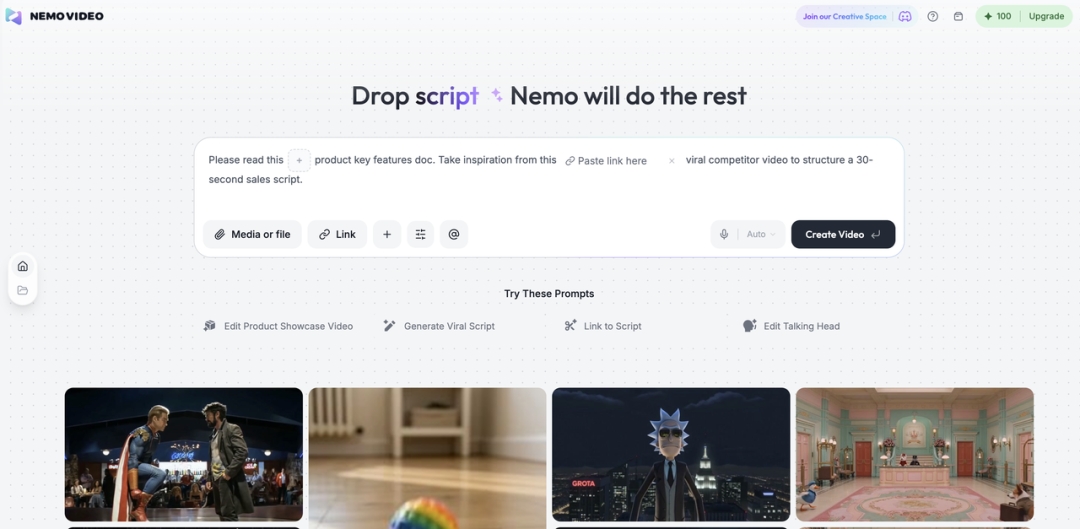
NemoVideo’s Pro AI Video Editing Agent turns a product page, a reference ad, or a brief into multiple test-ready video ads for TikTok, Reels, and Meta — creative built for continuous performance testing, not one-off production.

SAN JOSE, Calif. – June 6, 2026 – NemoVideo, a Pro AI Video Editing Agent, announced that its e-commerce advertising workflow now supports more than 200 e-commerce brands and a creator network of over 1,000 users. NemoVideo turns a product link, a reference video, or a brief into multiple platform-ready video ads in minutes, then generates the hook, CTA, and pacing variants those teams need to test them.

The Bottleneck Is Creative Volume, Not Product

The milestone points to a shift in how e-commerce teams produce ad creative. The problem these teams face is volume, not products. They rarely lack inventory to sell; they lack enough fast, varied, platform-ready video creative to keep testing what converts. Ad accounts burn through creative faster than most teams can produce it, and the cost shows up as speed to market — sellers fall behind on new launches, and marketers run out of fresh angles long before they run out of budget.

Static product images are part of the gap. They rarely convey how a product looks, moves, or is used. Yet a single video ad still requires a script, footage, editing, captions, audio, and a separate cut for each platform — a production load that does not scale to weekly testing.

From a Product Link to a First Cut in Minutes

NemoVideo compresses that production line into a conversational workflow. With E-commerce Link to Video, a seller pastes a product URL from Shopify, Amazon, or another store, and NemoVideo pulls the page’s images, descriptions, and details to assemble a dynamic video draft — no shoot required. With Reference Video to Video, a team points NemoVideo at an ad whose structure is already working, and it analyzes the hook, pacing, and style, then rebuilds that structure around the team’s own product. Either path delivers a first cut in minutes, and the work continues by chat — “tighten the opening,” “swap the hook,” “make it vertical for Reels” — rather than on a manual timeline.

Built for Testing at Volume

From a single brief, NemoVideo turns one concept into a batch of ad-level test candidates through a few coordinated functions:

  • Bulk Variants — swaps hooks and CTAs, adjusts pacing and caption styles, and outputs multiple aspect ratios for TikTok, Reels, and Meta in one pass.
  • Brief Customization — teams set their brand’s fonts, colors, and tone once, and every variant stays on-brand.
  • Supporting automation — A/B-Roll Smart Matching for footage, SmartAudio for voiceover and music, and Smart Caption for dynamic captions handle the production details that usually slow a batch down.

In practice, a Shopify seller can paste a product URL, ask for several hook variations, adapt the structure of a trending reference ad, and export 9:16 cuts for TikTok and Reels alongside a 1:1 cut for Meta — a full set of test creative from one link.

Based on data from its early users, NemoVideo reports that teams using its editing workflow have reduced marketing-video editing time by up to 85%, turning multi-hour edits into 15- to 30-minute first drafts. Across select e-commerce campaigns, the company says that output has translated into ad engagement improvements of up to 40%, alongside lower acquisition costs.

“Video advertising is moving from one-off production to continuous testing, and for most teams the bottleneck is output — they can’t make creative fast enough to keep up,” said Jin Li, CEO of NemoVideo. “We built NemoVideo so a team can start from a product link or a reference ad and get publishable variants in minutes, then keep iterating by talking to the agent. That turns video ad production from a one-time, expensive job into a system teams can run every week against real performance data.”

The workflow is aimed at teams producing ad creative under constant volume pressure:

  • Shopify and Amazon sellers — turn a product page into demo and UGC-style ads without a studio or a shoot.
  • DTC brands — produce multiple on-brand cuts of a launch and test them across TikTok and Meta at once.
  • Affiliate and performance marketers — spin hook, CTA, and pacing variants from one brief to find the angle that converts.
  • Solo marketers — run campaign-level video output and platform versioning that would otherwise require an editing team.

NemoVideo’s E-commerce Link to Video, Reference Video to Video, and Bulk Variants are available now as part of its Pro AI Video Editing Agent. Teams can start from a product link, a reference video, or a brief and learn more at https://www.nemovideo.com/.

About NemoVideo

NemoVideo is a Pro AI Video Editing Agent that streamlines short-form content production through intelligent automation and conversational interaction. Operating as a workflow rather than a single-button tool, it connects inspiration and viral pattern analysis to script processing, talking-head edits, b-roll selection, captions, and audio — helping creators and marketing teams turn product links, reference videos, and briefs into content built for performance.

Media Contact
Company Name: NemoVideo
Contact Person: Rita
Email: Send Email
Country: United States
Website: https://www.nemovideo.com/


Press Release Distributed by ABNewswire.com

To view the original version on ABNewswire visit: NemoVideo Now Serves 200+ E-commerce Brands, Turning Product Links into Performance-Ready Video Ads