From Brazil To Bali: Catherine’s Brew House Is Curating A New Kind Of Online Coffee And Tea Catalog

Daily coffee consumption among American adults has reached a twenty-year high, with specialty varieties now outpacing traditional coffee for the first time on record. As consumers continue to move toward premium and single-origin products, online retailers are increasingly winning a share of the cup that was once reserved for the grocery aisle. Catherine’s Brew House, a direct-to-consumer online retailer founded by Catherine Spinola.

Two out of three American adults now drink coffee every day, according to the National Coffee Association’s most recent National Coffee Data Trends report — a roughly thirty-seven percent increase since 2004 and the highest daily consumption rate the survey has recorded in more than two decades. What has changed is not only how much Americans are drinking but what they are reaching for. Specialty coffee consumption has surpassed traditional coffee for the first time, with forty-eight percent of adults reporting they had a specialty coffee in the past day, compared with forty-one percent for conventional brews.

That shift is reshaping where Americans shop for their daily cup. Grocery stores remain the most common place to purchase coffee for home preparation, but online coffee purchasing has doubled since 2020, with fourteen percent of American consumers now buying digitally, according to the same NCA data. Tea is following a similar path. The Tea Association of the U.S.A. has reported that tea is present in roughly eighty percent of American households, with more than 159 million Americans drinking tea on any given day, and specialty and loose-leaf categories gaining share — particularly among younger buyers.

Catherine’s Brew House, a direct-to-consumer online retailer operating at shopverticalcoffee.myshopify.com, has positioned itself at the intersection of those two trends. The company’s storefront carries more than seventy products spanning single-origin coffees from Brazil, Colombia, Costa Rica, Bali, and multiple African origins, alongside regional blends, flavored varieties, mushroom-infused coffees, cold brew options, single-serve capsules, and an expanding line of internationally sourced teas including rooibos blends. Pricing across the catalog generally runs from around fifteen dollars for capsule packs to nineteen dollars for whole bean and ground coffee, with sample packs and branded drinkware also available. The company also offers a ten percent discount every day, giving customers an accessible entry point to experience top-quality products sourced from original coffee growers around the world.

The company is the work of Catherine Spinola, who founded the business and serves as its chief executive. Spinola has built the catalog around a model of curation rather than competition on volume — selecting varieties that mainstream retailers typically do not stock, and pairing them with a tea collection broad enough to keep both kinds of household drinkers shopping in one place. The recent expansion of the tea catalog is designed to serve customers who want to explore both coffee and tea from a single source rather than navigating multiple specialty vendors.

The online-only model allows the company to reach buyers nationwide without the overhead of a physical location, a structure that has become increasingly common in specialty food and beverage retail. Industry observers have pointed to the rise of small, founder-led online catalogs as one of the more durable shifts in the way American households shop for everyday goods. Where shelf space once defined what consumers could find, search and curation now do much of the same work.

The U.S. specialty coffee market was valued at an estimated $47.8 billion in 2024, according to Grand View Research, with projections for continued growth at roughly 9.5 percent annually through 2030. Globally, the picture is similar — rising consumer preference for traceable origins, distinct flavor profiles, and broader variety has reshaped which brands win share, and which categories newer brands choose to enter first. For smaller retailers like Catherine’s Brew House, the opportunity lies less in price or scale and more in selection: a focused catalog built around quality and range that a consumer would otherwise need multiple vendors to assemble themselves.

The combination of specialty coffee, globally sourced teas, and a single online destination is one of the quieter trends now reshaping American beverage retail. As that trend continues to develop, a growing number of the brands defining it are likely to look like Catherine’s Brew House — small, founder-led, and built around the customer rather than the supply chain.

CONTACT: For more information, visit shopverticalcoffee.myshopify.com.

Media Contact
Company Name: Catherine’s Brew House
Contact Person: John Watson
Email: Send Email
Country: United States
Website: https://shopverticalcoffee.myshopify.com


Press Release Distributed by ABNewswire.com

To view the original version on ABNewswire visit: From Brazil To Bali: Catherine’s Brew House Is Curating A New Kind Of Online Coffee And Tea Catalog

2026 Suzhou Advanced Materials Industry Innovation Conference held successfully

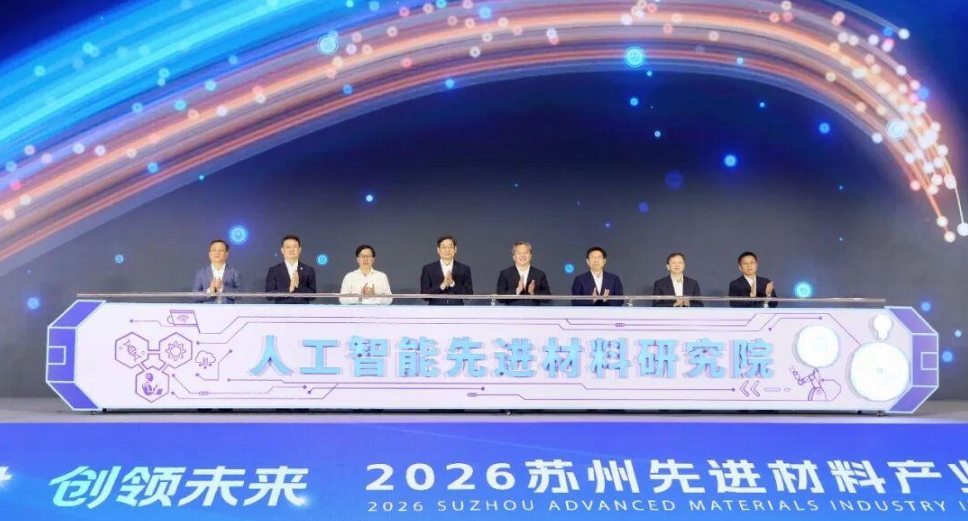
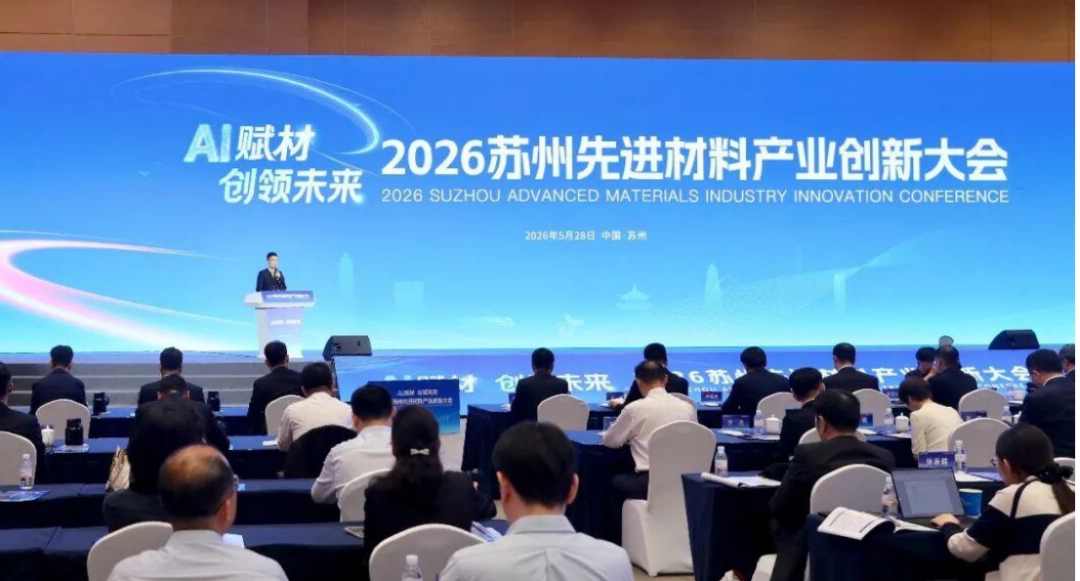
A couple of days ago, the 2026 Suzhou Advanced Materials Industry Innovation Conference, themed “AI powers materials, innovation leads the future,” was held in Suzhou New District. Zhou Yuxian, secretary of the Party Committee and chairman of China National Building Material Group Corporation (CNBM); Fan Bo, member of the Standing Committee of the CPC Jiangsu Provincial Committee and secretary of the CPC Suzhou Municipal Committee; and Deng Changqing, member of the CPC Standing Committee and chief accountant of CNBM, attended the conference.

To promote the deep integration of technological and industrial innovation, Suzhou has identified new materials as a key sector for developing new quality productive forces based on local conditions. In recent years, leveraging forward-looking strategic planning and a robust industrial ecosystem, Suzhou has partnered with CNBM to advance the Suzhou Advanced Materials Valley project, jointly building a new hub for materials industry development. At the conference, construction of the AI Advanced Materials Research Institute was officially launched. With Suzhou Advanced Materials Valley as its core platform, the institute will focus on AI-powered materials R&D and industrialization, establishing a comprehensive platform that integrates technological breakthroughs, commercialization of research outcomes, talent development, and industrial services. It aims to become a nationally leading innovation hub for AI-enabled advanced materials.

The CNBM Sci-tech Innovation Fund has a total scale of 5 billion yuan. Its first-phase fund, valued at 1 billion yuan, was signed at the conference and will be invested in key sectors including new materials, new energy, semiconductors, and high-end equipment manufacturing, with the goal of cultivating a group of internationally competitive hard-tech enterprises.

At the conference, the Suzhou Advanced Materials Comprehensive Innovation Center and the Central South University National Technology Transfer (Suzhou) Center were inaugurated. The Nanjing University-CNBM Advanced Inorganic Non-metallic Materials Industry-University-Institute Innovation Complex was also established, focusing on strengthening industry-university-institute collaboration, tackling key and core technologies, and accelerating the commercialization of scientific and technological achievements in Suzhou.

In addition, eight new materials industry projects were signed, and a series of industrial scientific and technological innovations were unveiled. The groundbreaking ceremony for the China Kaolin High-end Functional Materials Green Intelligent Manufacturing Project, the certification ceremony for open bidding to select leading candidates for national biomedical materials innovation tasks, and the award ceremony for innovative achievements were also successfully held.

Media Contact
Company Name: Globalnewsonline
Contact Person: Hysan Jiang
Email: Send Email
Country: United States
Website: http://www.globalnewsonline.info/

Residential AC Installation Demand Surges in Wesley Chapel Amid Rising Heat

Residential AC Installation Demand Surges in Wesley Chapel Amid Rising Heat

Professional HVAC technician performing Residential AC Installation by connecting copper pipes to an outdoor condenser unit.
I Care Air Care, a family-owned HVAC company founded in 2010, today released data showing surging demand for residential AC installation driven by climate shifts and energy pressures. In Wesley Chapel and across Tampa Bay, Florida’s high humidity and long cooling seasons continue to increase demand for reliable, energy-efficient residential AC systems.

The analysis highlights a projected $30.8 billion U.S. residential AC market by 2026, while global cooling demand is expected to triple by 2050. Tampa Bay homeowners face heightened risks from Florida’s $9.6 billion HVAC market growth and 96% of U.S. cities needing more cooling since the 1970s.

“Here in Wesley Chapel, we’re on the front lines of Florida’s rising temperatures and DOE efficiency shifts,” said Tim Hawk, Owner of I Care Air Care. “Homeowners must act now to avoid bill spikes and outages.”

Why Residential AC Demand Leads in 2026

  • U.S. residential central AC market reaches $30.8 billion (2026 projection), Intel Market Research, 2026-02-13

  • Global cooling demand set to triple by 2050, accelerating grid strain, IEA via UNEP

Key Statistics

  • Global space cooling electricity demand growth: +697 TWh by 2030 (10% of total electricity growth), International Energy Agency (IEA) via Statista, 2025-07-09

  • U.S. homes AC consumption increase: +59% by 2050, Climate Central / EIA

  • DOE annual savings from efficient heat pumps: $500 per U.S. family, U.S. Department of Energy, 2021-10-31

  • U.S. cities with increased cooling degree days since 1970s: 96% (242 analyzed), Climate Central

  • U.S. HVAC employment growth projection: +6%, U.S. Bureau of Labor Statistics

What This Means

Rising AC demand exacerbates grid instability, particularly in Florida where peak summer loads jumped 25%. Homeowners with aging systems, averaging 15 years old, face higher utility costs as cooling seasons extend nationwide.

The data signals a replacement wave, with 3 million U.S. HVAC systems needing upgrades annually amid stricter efficiency standards. This creates economic pressure for timely residential AC installation in high-heat regions like Tampa Bay.

Climate shifts affect even northern cities, with 96% showing increased cooling needs since the 1970s. Efficient systems offer $500 annual savings per DOE estimates, easing household budgets.

“With Florida’s $9.6 billion HVAC market and 59% national AC surge projected, Wesley Chapel families need high-SEER units to cut $500 yearly bills,” said Tim Hawk, Owner of I Care Air Care. “Over the years, we’ve seen older systems struggle during extended periods of extreme heat. “

Methodology Note

I Care Air Care compiled data from seven sources: Intel Market Research, IEA/Statista, Climate Central/EIA, U.S. DOE, and IEA/UNEP. Full analysis cross-references industry reports and climate studies.

About I Care Air Care

I Care Air Care, founded in 2010 as a family-owned HVAC firm, serves Wesley Chapel and Tampa Bay with AC repair, installation, and maintenance. Led by Owner Tim Hawk, the company focuses on licensed, customer-first service for major brands across Pasco, Hillsborough, and Polk counties.

Full study available at:

Rising Heat Is Driving Residential AC Installation

Q&A

What savings come from efficient AC installation?

DOE estimates $500 annual savings per U.S. family from efficient heat pumps (U.S. Department of Energy, 2021).

Why is AC straining U.S. electricity grids?

Cooling adds +697 TWh globally by 2030 (10% of growth), outpacing EVs in some projections (IEA via Statista).

Will AC demand triple worldwide?

Yes, global cooling needs to triple by 2050 due to heat and urbanization (IEA via UNEP).

Media Contact
Company Name: I Care Air Care
Contact Person: Tim Hawk
Email: Send Email
Phone: (813) 395-2324
City: Wesley Chapel
State: FL (Florida)
Country: United States
Website: https://www.icareaircare.com/

Florida Electricity Rates Rise as AC Replacement Demand Grows in Wesley Chapel

Florida Electricity Rates Rise as AC Replacement Demand Grows in Wesley Chapel

Professional technician performing AC replacement services by installing a new indoor unit in a modern living room.
Florida residential electricity rates reached 15.86 cents per kilowatt-hour in February 2026, an 8% increase from 14.68 cents one year earlier, according to the U.S. Energy Information Administration (EIA). At the same time, federal tax credits for high-efficiency AC replacements are phasing down after 2026, while new HEEHRA rebates introduce income limits that may exclude some current beneficiaries.

In Wesley Chapel and throughout the Tampa Bay region, long cooling seasons and high humidity continue increasing household cooling costs and system usage.

“We’ve been watching what we call the ‘quiet crash’ of AC incentives,” said Tim Hawk, founder of Wesley Chapel-based I Care Air Care, a family-run HVAC company founded in 2010. “Florida electricity rates hit nearly 16 cents per kilowatt-hour. That 20-year-old AC unit isn’t just inefficient anymore. It’s costing homeowners real money every single month.”

Why 2026 Is the Critical Year for AC Replacement

Three converging factors make 2026 a decisive year for Florida homeowners considering AC replacement services:

  • Electricity rates climbed 8% in one year. The rate rose from 14.68¢ to 15.86¢ per kWh between February 2025 and February 2026. Source: U.S. Energy Information Administration (EIA), April 23, 2026

  • Federal tax credits expire or phase down after 2026. Current incentives under Section 25C are set to change, while new HEEHRA rebates will introduce income eligibility limits. Source: Inflation Reduction Act guidelines, 2026

  • Annual electricity costs now approach $2,300. The average Florida household spending ~$190.32 per month on electricity pays roughly $2,284 annually. Cooling accounts for more than half of summer usage. Source: Calculated from EIA data, 2026

Key Statistics on Florida Energy Costs and HVAC Incentives

  • 15.86 cents/kWh – Florida residential electricity rate (February 2026). Source: U.S. Energy Information Administration (EIA), April 23, 2026

  • +8.0% increase – Florida electricity prices rose from 14.68¢ to 15.86¢ in one year (2025→2026). Source: U.S. Energy Information Administration (EIA), April 23, 2026

  • ~$190.32/month – Estimated average monthly electric bill for a Florida home using 1,200 kWh. Source: Calculated from EIA data, 2026

  • 4,000+ homes served – Total HVAC work completed by I Care Air Care in the Tampa Bay area. Source: I Care Air Care website, 2026

  • 16+ years – Operating history of I Care Air Care in the Tampa Bay market (founded 2010). Source: I Care Air Care website, 2026

  • 700+ Google reviews – Average rating 4.9 stars. Source: I Care Air Care website, 2026

  • CAC1816515 – Florida HVAC contractor license number, verifying state compliance and insurance. Source: I Care Air Care website, 2026

What This Means for Florida Homeowners

An aging AC unit operating at 15.86 cents per kWh costs significantly more to run than a modern high-efficiency system. A SEER 10 unit replaced with a SEER 16 system can reduce cooling energy use by over 35%. For a household spending $190 per month on electricity, that translates to roughly $30 in monthly savings—or $360 annually—from efficiency alone.

Waiting until 2027 carries additional financial risk. Current federal tax credits may no longer be available at the same level, and new HEEHRA income limits could disqualify middle-income households.

Tim Hawk of I Care Air Care said: “Homeowners need to understand that the combination of expiring federal credits and new HEEHRA rules means 2026 is the year to act. Waiting until 2027 could mean leaving thousands in rebates on the table.”

Methodology Note

All electricity rate data comes from the U.S. Energy Information Administration’s February 2026 residential rate report. Company metrics come from I Care Air Care’s publicly available website information. Monthly bill calculations assume average Florida household usage of 1,200 kWh per month, based on EIA consumption benchmarks.

About I Care Air Care

I Care Air Care is a family-run, licensed, and insured HVAC company founded in 2010 by Tim Hawk and based in Wesley Chapel, Florida. The company provides residential and light-commercial HVAC services including AC repair, replacement, maintenance, and air duct cleaning, backed by flat-rate pricing and a 1-year workmanship warranty.

Full study available at: Changing Incentives and Energy Costs Drive AC Replacement Demand in Wesley Chapel

Q&A

Are federal tax credits still available for AC replacement in 2026?

Yes, but they are phasing down. Current credits under Section 25C of the Inflation Reduction Act remain available for qualifying high-efficiency systems installed in 2026. After 2026, both credit amounts and eligibility rules are expected to change.

What is the HEEHRA rebate program?

HEEHRA (High-Efficiency Electric Home Rebate Act) provides income-based rebates for energy efficiency upgrades. Unlike current tax credits, HEEHRA rebates have income limits, which may exclude some homeowners who qualify for today’s incentives.

How much can I save by replacing an old AC unit in Florida?

Based on EIA data, replacing a SEER 10 system with a SEER 16 system can reduce cooling energy use by over 35%. On a $190 monthly electric bill where cooling is half the cost, that’s roughly $30 per month or $360 per year in savings before any future rate increases.

Why did Florida electricity rates increase 8% in one year?

Factors include population growth increasing grid demand, volatile natural gas prices, and investments in grid hardening and storm resilience, according to EIA trend analysis.

How do I verify an HVAC contractor is licensed in Florida?

Check the Florida Department of Business and Professional Regulation database. I Care Air Care holds Florida license CAC1816515, which verifies state compliance, insurance, and permitting authority.

Media Contact
Company Name: I Care Air Care
Contact Person: Tim Hawk
Email: Send Email
Phone: (813) 395-2324
City: Wesley Chapel
State: FL (Florida)
Country: United States
Website: https://www.icareaircare.com/

Seoul BD Dental Clinic Launches Premium Dental Implant Korea Program for International Patients

14 Seoul National University specialists · 6 dedicated surgical suites · 30 treatment chairs · 365-day operation · Same pricing for international patients · 1-night 2-day premium package

Cheonan, South Korea – Seoul BD Dental Clinic, located in Cheonan, South Korea, has officially launched its international patient program for premium dental implant treatment. The clinic, operated by 14 specialists from Seoul National University School of Dentistry across a 400-pyeong (approximately 1,300 sqm) 5-floor facility, is positioning itself as a leading destination for dental implant Korea services for overseas patients.

Why Korea for Dental Implants

Korea has become a global hub for dental implant treatment, with annual implant procedures reaching approximately 2.8 million — the highest per-capita rate in the world. The country’s advanced digital implant technology, combined with significantly lower costs compared to the United States and Europe, has attracted increasing numbers of international patients seeking high-quality dental care.

While a single dental implant typically costs USD 3,000 to USD 6,000 in the United States and USD 2,500 to USD 4,500 in Japan, comparable treatment at Seoul BD Dental Clinic ranges from USD 600 to USD 1,800 per implant — including all major global brands such as Straumann SLActive, Nobel Biocare, Astra Tech, and Osstem.

Dedicated Implant Center

Seoul BD Dental Clinic operates an entire floor dedicated exclusively to implant treatment. The 4th floor Implant Center features 6 independent surgical suites with cone-beam CT, dynamic navigation systems, and digital implant guides — enabling placement accuracy within 0.5mm, particularly critical for cases involving complex anatomy or bone grafting.

Two dedicated recovery rooms support patients undergoing sedation procedures, while the clinic’s total 30 treatment chairs across 5 floors handle the full spectrum of dental care.

Specialized Implant Procedures

The clinic offers a comprehensive range of implant treatment solutions, including immediate implant placement with immediate loading, computer-guided navigation implant surgery, sinus lift procedures, guided bone regeneration, and full-arch rehabilitation using All-on-4 and All-on-6 techniques. Treatment options also include sedation implant surgery for anxious patients, flapless minimally invasive implant procedures, premium implant systems such as Straumann SLActive, and implant surgeries available on weekends and public holidays to accommodate patients with limited schedules.

Same Pricing for International Patients

Seoul BD Dental Clinic operates without brokers or intermediary referral systems, meaning international patients are not charged the additional 20% to 40% margins commonly added through medical tourism agencies.

“We believe in transparent pricing for all patients regardless of nationality,” a clinic representative stated. “Our international patients pay exactly the same as our Korean patients.”

In-House Digital Dental Laboratory

A 5-member in-house digital dental laboratory enables rapid prosthetic fabrication, allowing same-day or next-day delivery of crowns and restorations — a significant advantage for international patients on tight schedules.

Premium 1-Night 2-Day Package

For international patients, Seoul BD Dental Clinic offers a comprehensive 1-night 2-day package including pickup service from Cheonan-Asan KTX station, dedicated international coordinator service, accommodation at Shilla Stay, Korean traditional food experiences, and guided cultural tours — all included within the treatment program.

The clinic is located approximately 10 minutes from Cheonan-Asan KTX Station and around 40 minutes from Seoul via high-speed rail, allowing convenient access from major Asian cities within just a few hours.

Leadership

Seoul BD Dental Clinic is co-directed by Dr. Moon Suokjoon, Dr. Kim Minsu, and Dr. Hyun Jung-min, all graduates of Seoul National University School of Dentistry. The clinic operates 365 days a year with extended evening hours until 8 PM on weekdays.

International inquiries for dental implant treatment are available through Seoul BD Dental Clinic’s official global website at bdseoulbdglobal.com.

Media Contact
Company Name: Seoul BD Dental Clinic
Contact Person: Dr. Moon Suokjoon
Email: Send Email
Country: South Korea
Website: https://bdbddc.com

Seoul BD Dental Clinic Expands Invisalign Korea Program with Diamond Provider Orthodontic Team for International Patients

Invisalign Diamond Provider · 2 dedicated orthodontic specialists · 14-member Seoul National University specialist team · Dedicated Invisalign center floor · Same pricing for international patients · 1-night 2-day premium package

Cheonan, South Korea – Seoul BD Dental Clinic, located in Cheonan, South Korea, has expanded its international patient program for Invisalign treatment, the world’s most advanced clear aligner orthodontic system. The clinic operates as an Invisalign Diamond Provider with two Diamond-rated orthodontic specialists supported by a 14-member dental team from Seoul National University School of Dentistry.

Dedicated Invisalign Center

Seoul BD Dental Clinic operates an entire floor dedicated to Invisalign and orthodontic treatment. The 1st floor Invisalign Center provides a comprehensive space for digital orthodontic care, supported by the clinic’s 30 treatment chairs across 5 specialized floors.

Diamond Provider Designation

Invisalign Diamond Provider status is granted to orthodontists who have completed an exceptionally high number of cases with verified clinical outcomes — placing them in the top tier globally. Seoul BD Dental Clinic’s two Diamond Provider orthodontists handle the full spectrum of orthodontic complexity, from mild crowding to comprehensive bite correction.

The clinic’s full 14-member dental specialist team — including specialists in prosthetics, oral surgery, periodontics, pediatric dentistry, and oral medicine — provides comprehensive support for Invisalign patients requiring complex multidisciplinary care.

Why Korea for Invisalign

Korea has become one of the leading destinations for Invisalign treatment in Asia, combining advanced digital orthodontic technology with significantly lower treatment costs compared to North America, Europe, and Japan.

While a comprehensive Invisalign treatment typically costs USD 6,000 to USD 9,000 in the United States and USD 5,000 to USD 8,000 in Japan, comparable treatment at Seoul BD Dental Clinic ranges from USD 2,500 to USD 5,500 — depending on case complexity and treatment package.

Same Pricing for International Patients

Seoul BD Dental Clinic operates without brokers or intermediary referral systems. International patients pay exactly the same as Korean patients, without the additional 20% to 40% margins commonly added through medical tourism agencies.

“Orthodontic treatment is a 24-month commitment,” a clinic representative stated. “We believe international patients deserve the same trust and transparency as our local patients.”

Comprehensive Treatment Packages

The clinic offers a full spectrum of Invisalign treatment options tailored to different levels of orthodontic complexity. Available programs include Invisalign Comprehensive for full bite correction, Invisalign Moderate for moderate orthodontic cases, Invisalign Lite for mild tooth alignment issues, and Invisalign Express for patients seeking quick aesthetic improvements. Specialized solutions are also available through Invisalign First for pediatric early intervention and Invisalign Teen for adolescent orthodontic treatment. All treatment plans are customized based on each patient’s clinical condition and treatment goals.

All packages include initial digital scanning with iTero, ClinCheck treatment simulation, attachment placement, interproximal reduction (IPR) as needed, retainer fabrication, and full post-treatment care.

Advanced Digital Technology

The clinic uses iTero Element 5D scanners for precision impression-taking and ClinCheck simulation software for accurate treatment planning. International patients receive their treatment simulation video in advance, allowing remote consultation before traveling to Korea.

In-House Digital Dental Laboratory

A 5-member in-house digital dental laboratory enables rapid retainer and aligner-related prosthetic fabrication, supporting comprehensive treatment workflows including cases requiring combined Invisalign and aesthetic restorations.

Premium 1-Night 2-Day Package

For international patients beginning Invisalign treatment, Seoul BD Dental Clinic offers a comprehensive 1-night 2-day package including pickup service from Cheonan-Asan KTX station, dedicated international coordinator service, accommodation at Shilla Stay, Korean traditional food experiences, and guided cultural tours.

After the initial visit, ongoing monitoring is conducted through digital scans and virtual consultations, reducing the need for frequent international travel during the 18 to 24-month treatment period.

Leadership

Seoul BD Dental Clinic is co-directed by Dr. Moon Suokjoon, Dr. Kim Minsu, and Dr. Hyun Jung-min. The clinic operates 365 days a year with extended evening hours until 8 PM on weekdays.

International inquiries for Invisalign treatment are available through Seoul BD Dental Clinic’s official global website at bdseoulbdglobal.com.

Media Contact
Company Name: Seoul BD Dental Clinic
Contact Person: Dr. Moon Suokjoon
Email: Send Email
Country: South Korea
Website: https://bdbddc.com

Atlas Chiropractic Introduces Advanced Upper Cervical Care For Women Suffering From Chronic Headaches

Atlas Chiropractic Introduces Advanced Upper Cervical Care For Women Suffering From Chronic Headaches

“We meet women who spent years believing constant headaches would permanently control their daily lives,” a company spokesperson shared. “I see patients become emotionally drained after trying medications, temporary treatments, and appointments that never explained why symptoms kept returning. Our approach focuses on correcting structural imbalance because many chronic headache patterns begin with hidden stress surrounding the upper cervical spine.”
Atlas Chiropractic provides gentle upper cervical chiropractic care for Boulder women struggling with chronic headaches, migraines, dizziness, and neck pain. Through detailed evaluations and personalized treatment plans, the clinic addresses underlying spinal imbalances that may contribute to recurring symptoms. The team also supports patients with vertigo, post-concussion issues, and whiplash, helping restore comfort, mobility, and daily function naturally.

Atlas Chiropractic serves Boulder residents seeking lasting relief from persistent physical conditions that disrupt work, sleep, exercise, and family responsibilities. The clinic focuses on gentle chiropractic methods that support natural healing without surgery, medication dependence, or painful recovery periods. Many local women seek care after years of failed treatments that never addressed the deeper physical causes behind recurring headache symptoms.

Atlas Chiropractic provides detailed evaluations and precise spinal corrections through focused upper cervical care for women with chronic headaches. The clinic addresses pressure in the upper neck because spinal imbalance often contributes to migraines, dizziness, neck stiffness, and fatigue. Patients frequently arrive feeling emotionally exhausted after struggling through missed workdays, disrupted sleep patterns, and constant fear surrounding another severe headache episode.

The doctors examine posture, the nervous system, stress, previous injuries, and spinal positioning before developing treatment plans tailored to individual patient experiences. Care stays centered around gentle correction methods because many women already feel physically overwhelmed after years of recurring pain episodes. Atlas Chiropractic also supports patients struggling with post-concussion symptoms, vertigo, whiplash injuries, and lingering discomfort connected to previous automobile accidents.

“We meet women who spent years believing constant headaches would permanently control every important part of their daily lives,” a company spokesperson shared. “I see patients become emotionally drained after trying medications, temporary treatments, and endless appointments that never explained why symptoms continued returning regularly.” “Our approach focuses on correcting structural imbalance carefully because many chronic headache patterns begin with hidden stress surrounding the upper cervical spine.”

Many women seeking care describe avoiding social gatherings, family activities, and outdoor recreation because severe headaches create constant uncertainty and physical discomfort. Atlas Chiropractic understands Boulder residents often maintain active lifestyles involving hiking, cycling, skiing, and physically demanding routines throughout changing seasonal conditions. Repeated stress on the neck and upper spine may gradually contribute to worsening symptoms that eventually interfere with normal movement, concentration, and emotional wellbeing.

The clinic maintains a calm environment where patients receive focused attention without feeling rushed during appointments, discussions, evaluations, or treatment recommendations. Doctors explain findings carefully because many patients arrive carrying frustration, confusion, and anxiety after years of unsuccessful medical experiences elsewhere. Atlas Chiropractic also performs in-house imaging procedures when necessary to evaluate spinal positioning and safely determine appropriate treatment recommendations.

Women experiencing chronic headaches often struggle silently because recurring symptoms gradually affect relationships, professional responsibilities, sleep quality, and long-term emotional health stability. Atlas Chiropractic encourages patients to seek answers before worsening symptoms create additional physical strain throughout the neck, shoulders, jaw, and nervous system. Many patients begin noticing meaningful improvements after consistent care addresses underlying spinal stress connected with persistent headache patterns and recurring neurological discomfort.

The clinic continues to serve Boulder residents through personalized chiropractic support focused on restoring balance, mobility, comfort, and confidence in everyday activities. Atlas Chiropractic believes many women deserve better options after years spent managing symptoms without understanding deeper structural causes behind recurring physical distress. Local patients searching for a trusted Boulder chiropractor often seek care after traditional approaches have failed to provide meaningful long-term physical relief.

Atlas Chiropractic remains committed to helping women regain physical comfort, emotional stability, and dependable daily function through focused spinal correction techniques. The clinic continues educating Boulder residents about gentle treatment methods that support healing without invasive procedures, extensive medication dependence, or prolonged physical recovery. Patients struggling with recurring headaches frequently seek practical solutions capable of restoring normal routines, confidence, and personal independence after years of persistent discomfort.

About Atlas Chiropractic:

Atlas Chiropractic provides upper cervical chiropractic services for patients experiencing vertigo, migraines, neck discomfort, post-concussion symptoms, and chronic headaches in women. The Boulder clinic focuses on personalized treatment plans designed around each patient’s physical condition, lifestyle demands, and long-term wellness goals. Atlas Chiropractic serves active Colorado residents seeking natural solutions for ongoing pain, stress, and nervous system-related physical concerns. Visit Atlas Chiropractic’s website for more information.

Media Contact
Company Name: Atlas Chiropractic
Email: Send Email
Phone: (303) 974-4736
Address:1790 30th Street, Suite 235
City: Boulder
State: Colorado 80301
Country: United States
Website: https://alisonbremner.com/

Foreign-Related Legal Awareness Short Video “Lily and David’s Legal Journey Through Baoshan” Officially Released

To actively support the development of foreign-related rule of law initiatives, integrate legal education resources across the district, and contribute to building a first-class business environment that is market-oriented, law-based, and internationalized, Baoshan District has launched a carefully planned foreign-related legal awareness short video titled “Lily and David’s Legal Journey Through Baoshan.” Centered on Baoshan’s distinctive cruise tourism industry, the video focuses on the most common legal concerns of inbound and outbound travelers, particularly foreign visitors.

Presented in a lively and engaging vlog format, the video creates an immersive legal education experience. Through the “legal journey” of David, a foreign tourist, and Lily, his Chinese guide, the story connects a series of uniquely Baoshan experiences, including customs clearance at the Wusongkou International Cruise Terminal, cycling along the waterfront, and visits to historical museums and exhibition halls. These scenes realistically portray legal situations that travelers may encounter during their journeys.

At the cruise terminal, the video highlights common legal requirements related to border inspection procedures, customs declarations, and visa compliance, helping foreign visitors quickly understand China’s basic entry and exit regulations. During the waterfront cycling segment, the video seamlessly incorporates practical legal knowledge such as traffic rules, cycling safety, and the proper use of non-motorized vehicle lanes, enhancing visitors’ awareness of safe travel practices. In the museum and exhibition hall scenes, the discussion expands to broader legal topics including cultural relic protection, public order, and privacy rights, fostering a deeper understanding of the local legal environment among foreign visitors.

Through natural conversations and interactive scenarios between Lily and David, the video transforms what might otherwise be complex legal concepts into easy-to-understand and engaging stories, combining educational value with entertainment. The production is rich in “Baoshan characteristics,” showcasing the district’s unique cruise culture, waterfront scenery, and cultural heritage, while also embracing an “international perspective” by taking into account cross-cultural communication preferences and language expression. As a result, legal concepts become easier to understand, remember, and apply in real-life situations.

“Lily and David’s Legal Journey Through Baoshan” is not only an innovative initiative in Baoshan District’s efforts to promote foreign-related legal awareness, but also an important step toward integrating legal culture with international tourism services. Looking ahead, Baoshan will continue to enhance the reach and impact of foreign-related legal services through high-quality content and diverse communication channels, contributing to the development of a higher-level law-based and internationalized business environment and showcasing Baoshan’s commitment to legal innovation and international engagement.

Video Link: https://www.youtube.com/embed/pMMClSN21tI

Media Contact
Company Name: Globalnewsonline
Contact Person: Hysan Jiang
Email: Send Email
Country: United States
Website: http://www.globalnewsonline.info/

Judge James P Gray Explores Liberty Honest Dialogue and Political Reform in ALL RISE The Libertarian Way

Retired Orange County Superior Court Judge James P. Gray invites readers to take a fresh and thought-provoking look at American politics in his book, ALL RISE: The Libertarian Way. Published by Gaudium Publishing, the book challenges readers to reconsider the nation’s political landscape through the lens of Libertarian values, principles, and solutions.

Drawing from decades of legal, military, and public service experience, Judge Gray presents a compelling argument that Libertarian ideals are deeply rooted in the mainstream of American political thought. Through clear explanations and practical insights, ALL RISE addresses the core beliefs that distinguish Libertarians from other political parties while encouraging open-minded discussions about the nation’s most pressing issues.

The book explores topics surrounding personal liberty, government responsibility, public policy, and the importance of honest civic discourse. Judge Gray seeks to inspire readers to engage in respectful conversations that promote understanding rather than division. According to the author, the nation has drifted away from factual and meaningful dialogue, and this book was written to help restore those essential conversations.

Judge Gray’s distinguished career includes service as a Peace Corps Volunteer in Costa Rica, Criminal Defense Attorney, Staff Judge Advocate in the Navy J.A.G. Corps, federal prosecutor in Los Angeles, and trial court judge in Orange County, California for 25 years. During his judicial career, he received the Orange County Bar Association’s highest annual award for professionalism and achievement.

In addition to ALL RISE: The Libertarian Way, Judge Gray is the author of several acclaimed works, including WHY OUR DRUG LAWS HAVE FAILED and WHAT WE CAN DO ABOUT IT: A Judicial Indictment of the War on Drugs, WEARING THE ROBE: The Art and Responsibilities of Judging in Today’s Courts, A VOTER’S HANDBOOK: Effective Solutions to America’s Problems, and 2 PARAGRAPHS 4 LIBERTY. Alongside his wife, Dr. Grace Walker Gray, he also co-authored 2030 KIDS: We Are the Rising Heroes of the Planet, a novel centered on educational reform and school choice.

ALL RISE: The Libertarian Way encourages readers to embrace open discussion, critical thinking, and a renewed appreciation for freedom and individual responsibility. The book aims to show that conversations about political and social issues can be productive, enlightening, and even enjoyable.

For more information about Judge James P. Gray and his work, please visit JudgeJimGray.com.

Global Book Network – Judge James P. Gray, Author of All Rise!

Media Contact
Company Name: Global Book Network
Contact Person: Henry Zane
Email: Send Email
Country: United States
Website: https://www.globalbooknetwork.tv/

GoodVision AI Introduces the “7-Layer AI Cake” Framework for the Inference Era

GoodVision AI has introduced what it calls the “7-Layer AI Cake” framework, outlining how the company believes the AI industry will evolve as global infrastructure shifts from a model-centric era toward a token-driven economy.
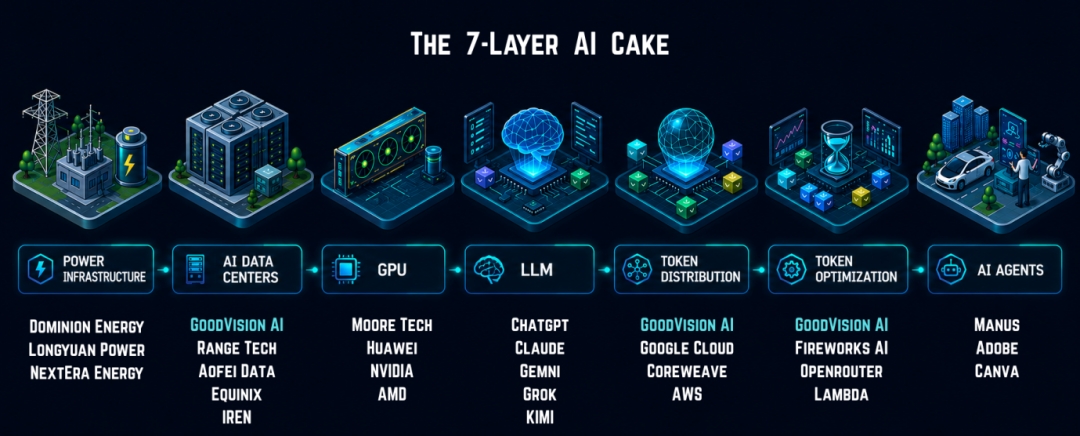
the Overview of 7-Layer AI Cake, Reference: Waterdrip Capital

According to the company, the future AI stack will consist of seven interconnected infrastructure layers:

● Power Infrastructure

● AIDC (AI Data Centers)

● GPUs

● Large Language Models (LLMs)

● Token Distribution Networks

● Intelligent Scheduling Systems

● AI Agents

GoodVision AI argues that AI is evolving into a large-scale “token industrial system,” where the ability to generate, distribute, orchestrate, and optimize tokens efficiently may become more important than model size alone.

The company said the framework was developed in response to the rapid expansion of AI inference workloads, as AI agents become increasingly embedded across enterprise workflows, consumer applications, robotics, edge devices, and autonomous systems.

Over the past two years, the AI industry has largely been defined by the race to build increasingly powerful foundation models. Parameter counts expanded from hundreds of billions to trillions, while GPU clusters scaled from thousands of chips to tens of thousands. The industry focused heavily on model capability, reasoning performance, and the pursuit of AGI.

But according to GoodVision AI, the next phase of AI may be driven less by model scale itself and more by the infrastructure required to support global token generation, routing, and consumption at scale.

Layer 1: Energy Emerges as the Foundation of AI Infrastructure

As AI infrastructure expands globally, energy is becoming one of the industry’s most important bottlenecks.

Large AI data centers can now consume as much electricity as mid-sized cities, while power grid expansion in many regions is struggling to keep pace with surging AI demand.

According to GoodVision AI, this imbalance is pushing the AI industry further upstream into energy infrastructure.

The company believes stable baseload energy sources, long-term power access, and energy efficiency will become increasingly strategic as inference workloads continue scaling globally.

In the emerging token economy, access to reliable, low-cost energy may become one of the most important competitive advantages in AI infrastructure.

Layer 2: AI Data Centers Become “Token Factories”

The company’s framework positions AI data centers, or AIDCs, as the “token factories” of the AI era.

Rather than relying on individual GPUs, modern AI infrastructure depends on large-scale GPU clustering capable of producing tokens at industrial scale.

But traditional AI data center development cycles can take years, while power grid expansion often takes even longer. As AI inference demand accelerates, many legacy infrastructure models are struggling to keep pace.

At the same time, AI infrastructure is gradually shifting away from purely hyperscale centralized architectures toward more distributed and modular systems.

According to GoodVision AI, inference workloads are increasingly expected to move closer to end users through regional edge-oriented deployment models.

Against this backdrop, the company is pursuing a modular AI Factory strategy centered around lightweight, rapidly deployable inference infrastructure.

Rather than relying solely on hyperscale facilities, GoodVision AI says it is focusing on smaller inference-oriented AI Factory nodes designed for dense regional deployment and faster integration with local energy infrastructure.

The company argues that modular AI Factories are better aligned with the long-term evolution of distributed inference networks.

Layer 3: GPUs Become the Production Equipment of the Token Economy

If electricity represents the energy foundation of AI, GPUs represent the production equipment.

During the first phase of the AI boom, GPU demand was driven primarily by model training. But the next wave of infrastructure growth is increasingly expected to come from inference.

Unlike training workloads, which remain concentrated among a small number of frontier AI companies, inference workloads are expected to expand across nearly every application, device, and endpoint.

Robotics, AI wearables, autonomous systems, and future AI agent collaboration networks all require continuous real-time inference — and therefore continuous token generation and consumption.

According to industry observers, the future of AI infrastructure may ultimately depend on one key metric: how efficiently tokens can be generated per unit of time.

As a result, infrastructure layers surrounding GPUs — including networking, power management, liquid cooling, servers, and optical interconnects — are becoming increasingly critical to AI performance and operational efficiency.

Industry analysts increasingly view this infrastructure layer as the “picks-and-shovels” foundation of the broader AI economy.

Layer 4: LLMs Evolve Into “Token Production Engines”

Large language models are also evolving beyond simple demonstrations of model capability.

According to GoodVision AI, the market is increasingly shifting away from a pure race for parameter scale and toward a broader focus on inference efficiency, deployment cost, orchestration capability, and scalability.

The company argues that models themselves do not directly create value. Instead, value emerges through continuous inference — the repeated generation, routing, and consumption of tokens across real-world applications.

As a result, LLMs are increasingly becoming the “token production engines” of the AI economy.

Competition at the model layer is also evolving rapidly. Rather than focusing solely on parameter counts, the market is increasingly evaluating models based on factors such as inference efficiency, token generation cost, long-context processing, multi-agent collaboration, and integration with distributed infrastructure systems.

According to GoodVision AI, future winners at the model layer may not simply be those building the largest models, but those capable of operating models efficiently at global scale.

The company says it is developing its own optimization strategy by deploying large language models directly within its AI Factory infrastructure, allowing it to evolve from a traditional compute rental provider into a Token-as-a-Service platform.

Layer 5: Token Distribution Emerges as the “Power Grid” of the AI Era

As AI infrastructure scales globally, another major challenge is becoming increasingly important: how compute resources can be distributed and utilized efficiently at scale.

According to GoodVision AI, token distribution networks may ultimately function much like the electrical grids of the industrial era — connecting fragmented GPU resources into unified global infrastructure systems.

As AI adoption expands beyond frontier model developers into enterprises, startups, applications, and AI agent ecosystems, the demand for flexible and scalable compute distribution is rising rapidly.

At the same time, the market is beginning to shift away from purely centralized cloud architectures toward more distributed compute networks optimized specifically for inference workloads.

Lighter deployment models, faster provisioning systems, lower-latency routing, and cost-efficient GPU access are becoming increasingly important as inference workloads continue scaling globally.

According to GoodVision AI, token distribution infrastructure is emerging as one of the key connective layers of the AI economy — linking GPUs, AI models, edge nodes, and inference demand into a scalable global compute network.

Layer 6: Intelligent Scheduling Could Become the “Brain” of the AI Economy

As AI infrastructure becomes more distributed, intelligent scheduling and token orchestration are emerging as critical infrastructure layers for the next phase of AI.

According to GoodVision AI, the future challenge is no longer simply whether sufficient compute exists, but whether compute can be utilized intelligently and efficiently.

The company argues that not every workload should be routed to the most expensive frontier models. Lightweight tasks may be processed locally, privacy-sensitive workloads may remain at the edge, and high-concurrency inference may increasingly rely on hybrid orchestration systems.

As a result, AI infrastructure is evolving toward dynamic scheduling architectures capable of routing workloads across different models, compute environments, and inference layers in real time.

GoodVision AI compares this infrastructure layer to modern intelligent power grid systems, where multiple energy sources can operate simultaneously while efficiency depends on dynamic orchestration systems operating in the middle layer.

The company believes future AI architectures will increasingly rely on a simple principle: “the right model running on the right compute for the right task.”

According to GoodVision AI, this transition could fundamentally reshape the economics of AI infrastructure, shifting the industry away from simply “selling compute” toward “optimizing compute” through orchestration, inference routing, and token scheduling systems.

Layer 7: AI Agents Could Become the Largest Consumers of Tokens

The final layer of the framework focuses on AI agents.

According to GoodVision AI, AI agents may ultimately become the largest drivers of global token consumption.

Unlike traditional AI applications, AI agents can simultaneously call multiple models, tools, APIs, and inference systems while continuously performing reasoning, coordination, planning, and autonomous execution.

As a result, future token consumption could far exceed the scale of today’s human-AI interactions.

The company believes the future AI economy may involve not only billions of humans using AI systems, but potentially tens or even hundreds of billions of AI agents continuously operating and interacting with one another.

At that scale, the primary bottleneck may shift away from model capability itself and toward token orchestration efficiency.

According to the company, AI agents are gradually evolving from simple software applications into continuously operating economic participants within a global intelligent infrastructure network.

The Next Phase of AI May Depend on Fully Integrated Infrastructure

Despite rapid growth across the AI sector, GoodVision AI believes the industry remains structurally fragmented.

Some organizations possess advanced GPU infrastructure but remain constrained by energy supply. Others operate large-scale AI data centers but lack efficient orchestration systems. Some have developed powerful AI models and agents but continue to face high inference costs and latency bottlenecks.

According to the company, the next phase of AI competition will center on connecting these fragmented infrastructure layers into a unified global system.

The company argues that the future AI economy will no longer revolve solely around training increasingly large models. Instead, billions of continuously operating AI agents will require coordinated systems spanning energy, compute, networking, orchestration, and distributed inference infrastructure.

Industry observers increasingly view this transition as a shift away from software-centric infrastructure toward a much broader industrial system spanning semiconductors, cloud computing, energy systems, networking, and intelligent orchestration.

According to GoodVision AI, the most important AI companies of the future may not necessarily be those with the single largest models, but those capable of integrating energy, compute, networking, models, and token flows into one scalable infrastructure system.

Media Contact
Company Name: GoodVision AI
Contact Person: Joy Chen
Email: Send Email
City: San Francisco
State: California
Country: United States
Website: https://www.goodvision.ai/