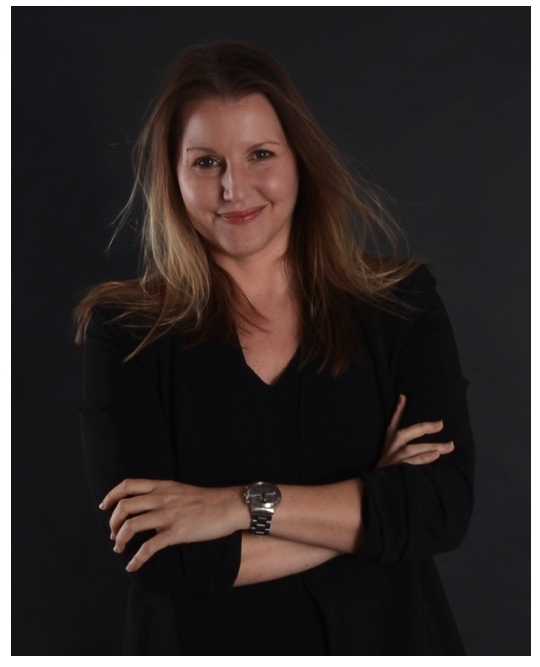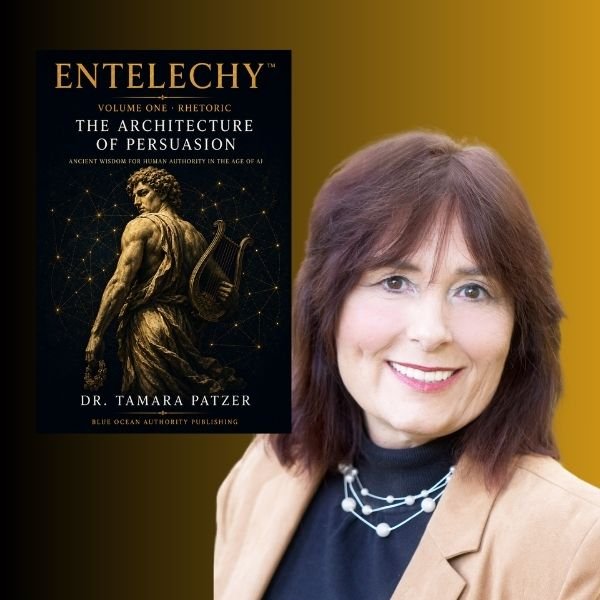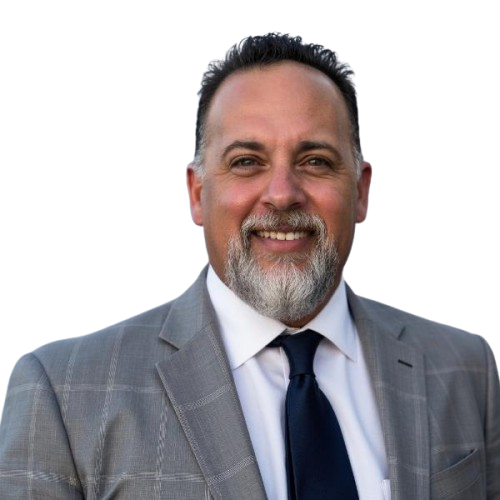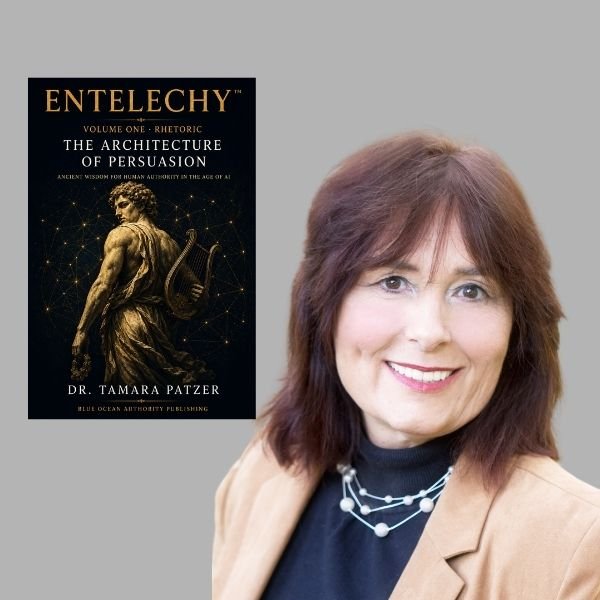
Cristina DiGiacomo, AI Philosopher, Founder 10P1 Inc., Creator of The 10+1 Code™ and The 10+1 Standard™, Names the Human Gap in AI Governance No One Is Filling

Cristina DiGiacomo, AI Philosopher, Founder 10P1 Inc., Creator of The 10+1 Code™ and The 10+1 Standard™, Names the Human Gap in AI Governance No One Is Filling

“The AI age needs a new kind of person. That is what 10+1 is for.” — Cristina DiGiacomo, AI Philosopher, Founder, 10P1 Inc.
Cristina DiGiacomo is an AI Philosopher, founder of 10P1 Inc., and creator of The 10+1 Code™ — a philosophical framework for human-AI coexistence. Her claim: the AI discourse is aimed at AI when the crisis is human. Fourteen years of philosophical study, twenty years of digital innovation. DiGiacomo is the philosopher asking the question the AI conversation has avoided: who do we need to become in order to wield this kind of power.

Cristina DiGiacomo, AI Ethics Expert, Founder 10P1, Inc., Creator of The 10+1 Code™ and The 10+1 Standard™

NEW YORK, NY – AI governance has a gap. Every framework in circulation addresses institutions. None of them address the person inside one. Its frameworks, regulations, and compliance requirements are aimed at institutions — what organizations should do, what platforms should prohibit, what regulators should require. Those questions matter. They do not touch the person inside the institution. The one making decisions about AI systems every day. The one no governance document has thought to address.

Cristina DiGiacomo, AI Philosopher and founder of 10P1 Inc., has built her work around that gap. The 10+1 Code™, Cristina DiGiacomo’s philosophical framework for human-AI coexistence, operates at the human level. Not the institutional one. The central question it asks: what kind of person do you need to become to steward something this powerful? That is the question the AI conversation has not asked. DiGiacomo has spent fourteen years of philosophical study and over two decades of digital innovation building an answer.

Cristina DiGiacomo holds an M.S. in Organizational Change Management from The New School and has worked at The New York Times and Citigroup. She has advised organizations including Verizon, Johnson & Johnson, L’Oreal, SONY, Rogers Communications, Kraft, and Merck. She is the author of the bestselling Wise Up! At Work and has been recognized by Cannes Cyber Lions, IAOTP, and the C-Suite Network AI Council. Her approach — applied philosophy, specific concepts solving specific problems — is built for the people actually making consequential decisions about AI: CAIOs, CISOs, C-Suite leaders, and AI founders.

10P1 Inc. serves that audience directly. Its positioning is deliberate: governance from the inside out. Built in, not bolt on. Where the broader AI discourse performs moral concern without making moral demands, 10P1 makes demands. Of the person. Not the policy document.

That work has produced two named instruments. The 10+1 Code™ — the philosophical framework that defines what it means to operate as a principled human in the AI age. And The 10+1 Standard™ — the first individual AI certification grounded in moral philosophy rather than regulatory compliance, earned through demonstrated application, not examination.

Cristina DiGiacomo’s forthcoming book, The Mind Behind the Machine: Meditations for the Age of Artificial Intelligence, published by Generations Inked Publishing in 2026, extends the framework to a wider audience. Her ongoing philosophical writing is published at Cristina DiGiacomo. Philosophy for the AI Age.

“No one is asking what kind of person you need to become to steward something this powerful,” Cristina DiGiacomo states. “That is the question. Everything else is downstream of it,” Cristina DiGiacomo emphasized.

10P1 Inc. is based in New York, NY. For more information, visit the company website and links below.

Cristina DiGiacomo Linkedin

Cristina DiGiacomo on X

The 10+1 Code

Media Contact
Company Name: 10P1 Inc
Contact Person: Cristina DiGiacomo, AI Philosopher, Founder, 10P1 Inc.
Email: Send Email
Phone: (347) 813-9471
City: Forest Hills
State: New York
Country: United States
Website: https://www.10p1.com/

Victor Daniel Silva Calls Attention to Coastal Environmental Challenges

Victor Daniel Silva Calls Attention to Coastal Environmental Challenges
Louisiana Gulf Coast commercial fisherman Victor Daniel Silva is encouraging greater public awareness of the environmental pressures affecting coastal communities and the future of commercial fishing.

Commercial fisherman Victor Daniel Silva is speaking publicly about the growing environmental challenges impacting the Gulf Coast and the fishing communities that depend on it every day.

After spending decades working on the water, Silva says the changes have become impossible to ignore.

“The weather is different now,” Silva says. “Storms feel stronger, seasons are less predictable, and the water changes faster than it used to.”

Silva, who specializes in shrimping and crabbing along the Louisiana Gulf Coast, has built his career around understanding tides, weather patterns, and changing coastal conditions. Originally from Beaufort, North Carolina, he learned commercial fishing from his father before relocating to Louisiana in his late 20s for new opportunities in the Gulf waters.

Over the years, he says, environmental instability has become one of the biggest operational challenges fishermen face.

“You can prepare for hard work,” Silva explains. “What’s harder is preparing for conditions that keep shifting every season.”

According to the National Oceanic and Atmospheric Administration (NOAA), the Gulf Coast experiences some of the highest rates of coastal land loss in the United States. Louisiana alone loses thousands of acres of wetlands each year due to erosion, storms, and rising sea levels. These wetlands play a major role in supporting seafood habitats and protecting coastal communities from storm damage.

Commercial fishing is also a major economic driver. NOAA reports that the U.S. seafood industry supports more than 1.7 million jobs nationwide and contributes over $250 billion annually to the economy. Gulf shrimping and crabbing remain essential parts of that system.

Silva says many people outside coastal regions do not fully understand how connected environmental conditions are to everyday seafood supply chains.

“People usually only see the final product at a restaurant or market,” he says. “They don’t see how much the environment affects everything before that.”

He explains that stronger storms, changing water temperatures, and shifting ecosystems directly affect fishing schedules, catch patterns, and operating costs.

“When conditions become unpredictable, every part of the job gets harder,” Silva says. “Timing matters in fishing. When the patterns change, you have to constantly adjust.”

Despite the challenges, Silva believes awareness and education can make a difference. Rather than focusing on large political debates, he encourages individuals to become more informed about coastal industries and local seafood systems.

“You don’t have to work on the water to care about coastal communities,” he says. “Just understanding where your seafood comes from is a good place to start.”

Silva encourages consumers to support local seafood businesses, learn more about Gulf Coast industries, and pay attention to environmental issues affecting coastal regions.

He also believes preserving practical knowledge within fishing communities is becoming increasingly important.

“A lot of what we know gets passed down person to person,” Silva says. “My father taught me how to read tides and weather before I was old enough to fully understand it. That knowledge matters.”

Silva continues to follow many of the same routines and techniques he learned growing up in North Carolina. Today, he applies that experience to the Louisiana Gulf Coast, where preparation and adaptability have become essential parts of daily operations.

“You can’t control the water,” he says. “But you can respect it, pay attention to it, and adapt when you need to.”

As environmental pressures continue to affect coastal industries, Silva hopes more people recognize the role fishing communities play in the economy, food supply, and local culture.

“This work supports families, communities, and traditions,” Silva says. “It’s bigger than one boat or one season.”

Call to Action

Victor Daniel Silva encourages individuals to:

  • Learn where their seafood comes from

  • Support local seafood markets and coastal businesses

  • Stay informed about Gulf Coast environmental issues

  • Respect the role coastal communities play in the economy and food supply

“Awareness matters,” Silva says. “The more people understand what’s happening along the coast, the more they’ll understand why it’s important to protect it.”

About Victor Daniel Silva

Victor Daniel Silva is a commercial fisherman based along the Louisiana Gulf Coast, specializing in shrimping and crabbing. Originally from Beaufort, North Carolina, he learned the fishing industry from his father and has spent decades working in coastal communities. He is known for his practical knowledge of Gulf waters, commitment to the fishing industry, and advocacy for greater awareness of the environmental challenges facing coastal regions today.

Media Contact
Company Name: Victor Daniel Silva
Contact Person: Victor Daniel Silva
Email: Send Email
State: Louisiana
Country: United States
Website: https://www.victordanielsilva.com/

Dr. Erica Oberg’s New Book Healthy Hedonism Reframes Pleasure as Preventive Medicine to Help Navigate Stress, Midlife Change, and Modern Burnout

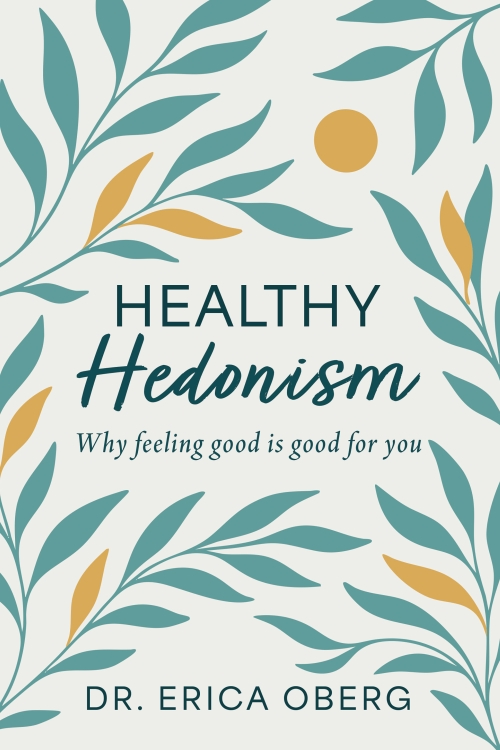
La Jolla, CA – May 29, 2026 – After more than two decades in integrative medicine, clinician-researcher Dr. Erica Oberg, ND, MPH, is releasing her new book, Healthy Hedonism: Why Feeling Good is Good for You!, making a case that feeling good is not frivolous; it is foundational to health. In the book, she argues that joy, connection, nourishment, nature, movement, creativity, and purpose are not optional lifestyle extras but biologically meaningful inputs that help regulate stress, support resilience, and improve long-term well-being.

Oberg’s perspective is grounded in a career that bridges science, public health, and patient care. She has been practicing integrative and natural medicine since 2003, completed an NIH fellowship at the University of Washington, served as Founding Medical Director at Bastyr University California, and published more than 30 peer-reviewed research papers. Today, she leads a concierge-style practice in La Jolla focused on chronic disease prevention, brain health, hormones, nutrition, and personalized wellness care.

Her professional experience helped shape the message of Healthy Hedonism. After years of treating patients, she repeatedly saw that the people who aged best were not the ones “white-knuckling” their way through wellness checklists, but the ones who built health into lives they genuinely enjoyed. The book presents wellness as something that can be supported through practical, enjoyable daily practices rather than deprivation, overwork, or self-denial.

The book also speaks to the overlapping pressures many adults, especially women, face while trying to maintain their well-being. Approximately 1.3 million women in the United States enter menopause each year. Gallup reported in late 2024 that 51% of working women in the U.S. felt stressed “a lot of the day yesterday,” compared with 39% of men. And the National Institute of Mental Health reports that 10.3% of adult females experienced a major depressive episode in the prior year, compared with 6.2% of males.

Rather than adding one more punishing to-do list, Oberg’s book offers a different approach: pleasure that restores rather than numbs. Healthy Hedonism distinguishes between shallow, depleting habits and intentional practices that calm the nervous system and make healthy choices more sustainable. It asks readers to rethink wellness not as performance, but as alignment.

Healthy Hedonism offers a timely lens on why so many people are “doing everything right” and still feel depleted—and what a more humane model of health can look like. Review copies and interview opportunities are available upon request.

Key Takeaways from Healthy Hedonism

  • Pleasure can be preventive medicine when it supports recovery, connection, sleep, nourishment, and meaning.

  • People do not need more guilt-based wellness messaging; they need sustainable rituals that fit real lives.

  • Health improves when daily practices work with human biology, not against it—through rest, movement, supportive relationships, creative expression, and time in nature.

  • As it turns out, feeling good is actually good for long-term wellness.

To learn more about Healthy Hedonism: Why Feeling Good is Good for You! or related resources, please visit https://www.drericaoberg.com/.

Media Contact
Company Name: Regenerative Medicine
Contact Person: Jared Kuritz
Email: Send Email
Phone: 760-550-9850
Country: United States
Website: https://www.drericaoberg.com/

WisPaper Highlights the Growing Role of Workflow Integration in Research AI

WisPaper, an AI-powered academic research platform, today highlighted the increasing importance of workflow integration in AI-assisted research. As researchers rely on a growing number of digital tools across different stages of scientific work, fragmented workflows are becoming a major operational challenge in academic environments.

The Problem of Fragmented Research Workflows

Modern research often requires researchers to move between multiple systems for literature search, paper reading, citation management, note-taking, computational analysis, and writing. While individual tools may perform specific tasks effectively, switching between disconnected platforms can create inefficiencies throughout the research process.

Researchers frequently manage separate workflows for discovering papers, organizing references, tracking annotations, running experiments, and preparing manuscripts. Over time, this fragmentation can increase operational overhead and make it more difficult to maintain continuity across projects.

As research workflows become more information-intensive, many AI platforms are beginning to focus on reducing these coordination gaps.

Toward Unified Research Systems

WisPaper is designed as a unified research workflow platform that supports literature retrieval, analysis, experiment design, computational execution, and paper writing within a single system.

Its Scholar Agent supports semantic search and AI-assisted paper filtering, while integrated library features allow researchers to organize papers, manage citations, annotate documents, and monitor new publications through AI Feeds.

By combining multiple stages of research within the same environment, the platform is intended to reduce the need for researchers to repeatedly transfer information across separate tools and workflows.

Workflow Continuity as an Emerging Priority

As AI capabilities continue to expand, research platforms are increasingly being evaluated not only on isolated features, but also on how effectively they support continuity across the broader scientific process.

WisPaper reflects a growing industry shift toward integrated research systems designed to help researchers manage complex academic workflows more efficiently while maintaining structured organization throughout long-term projects.

About WisPaper

WisPaper is an AI-powered academic research agent designed as a full-stack research accelerator. It supports literature retrieval, analysis, experiment design, execution, and paper writing within a unified workflow, helping researchers manage complex scientific tasks more efficiently across disciplines.

For more information, visit https://wispaper.ai/?utm_source=news.

Media Contact
Company Name: WisPaper
Contact Person: Sean Young
Email: Send Email
Country: Singapore
Website: https://wispaper.ai/?utm_source=news

Persuasion Is Not Manipulation – It’s Architecture: ENTELECHY Volume One Brings Aristotle’s Rhetoric to the Age of AI

Dr. Tamara Patzer’s new book — Rhetoric: The Architecture of Persuasion — Ancient Wisdom for Human Authority in the Age of AI — shows why the ancient foundations of human trust now govern what artificial intelligence sees, believes, and recommends.

Florida-based authority publisher and award-winning journalist Dr. Tamara Patzer, who works with clients worldwide, has released ENTELECHY™ Volume One: Rhetoric — The Architecture of Persuasion: Ancient Wisdom for Human Authority in the Age of AI, the opening volume of a seven-book series that reads Aristotle’s complete philosophy through the myths that carried it across civilization — and applies both to the authority, leadership, and identity questions of the artificial-intelligence era. The book is available now on Amazon.

Patzer’s argument begins with a claim most readers feel before they can name it: the foundations of human navigation predate AI and still govern it. Long before machines, people already lived inside systems of language, trust, persuasion, authority, memory, pattern recognition, and selection. Artificial intelligence did not invent those systems. It automated them — and raised the stakes of getting them right.

“For every expert who has been right and not believed — this is the infrastructure Cassandra never had.”

At the center of the book is AI Suggestibility™, Patzer’s principle that AI systems do not merely retrieve information — they summarize, surface, organize, and suggest whatever appears most clear, coherent, credible, and defensible. In that environment, being right is no longer enough. Authority goes to whatever the machine can most easily understand and trust.

That is why Entelechy™ reframes a word many people distrust. Persuasion, Patzer writes, is not manipulation. It is the disciplined structure of language, presence, credibility, evidence, and timing — the human architecture that decides what gets seen, understood, trusted, and selected in an AI-shaped world. Aristotle named the components of that architecture twenty-three centuries ago. This volume rebuilds them for the present.

Each of the twelve chapters isolates a single structural element of how trust is built, maintained, verified, and lost — told through a figure from classical myth, then translated into operational doctrine. Cassandra is the authority that had no credibility infrastructure. Demosthenes is the orator who built ethos from nothing. Orpheus is the ethos that one act of doubt destroyed. The Sphinx is the question that reveals what you actually are. Holding the volume together is the Authority Operating Model™, Patzer’s framework organizing the twelve myths into three movements — Ethos Infrastructure, Logos Architecture, and Canonical Permanence — and connecting them to her Answer Engine Authority System™ (AEAS).

“The expertise crisis of the AI era is not a knowledge problem — it is a verification problem,” said Patzer. “The people and ideas that get surfaced are not always the ones that know the most. They are the ones whose authority is built into the architecture machines read. Persuasion done with integrity is how you make truth legible. That is what this book teaches.”

About the Book

  • Title: ENTELECHY™ Volume One: Rhetoric — The Architecture of Persuasion: Ancient Wisdom for Human Authority in the Age of AI

  • Author: Dr. Tamara Patzer

  • Publisher: Blue Ocean Authority Publishing · Daily Success Media Network

  • Edition: First Edition, 2026 · 12 chapters

  • Series: Entelechy™ — Volume One of seven; companion to the Once Upon an Algorithm™ series

  • Available: amazon.com/dp/B0H2RJ4JY2

About the Author

Dr. Tamara Patzer is the founder of Blue Ocean Authority Publishing and the Daily Success Media Network and the creator of AI Suggestibility™ and the Answer Engine Authority System™. A Pulitzer Prize–nominated journalist and former community newspaper editor and university faculty member, she has authored and published more than seventy books and has spoken at NASDAQ, the Harvard Faculty Club, Microsoft, and Coca-Cola. A member of the Society of Professional Journalists and the Poynter Institute and a former member of the Forbes Coaches Council, she builds the verified authority infrastructure that makes professionals the answer AI recommends in their fields. Learn more at DailySuccessMedia.com.

About Blue Ocean Authority Publishing

Blue Ocean Authority Publishing, a Florida-based firm in the Tampa Bay region, builds AI authority infrastructure for professionals across the medical, automotive, professional-services, and publishing sectors. The firm serves clients across the United States and internationally. Its work pairs verified, structured publishing with proprietary authority systems designed to be read, trusted, and recommended by both people and machines.

Video Link: https://www.youtube.com/embed/FGMhiT-rms4

Media Contact

Blue Ocean Authority Publishing · Daily Success Media Network

Englewood, Florida

DailySuccessMedia.com

AI Suggestibility™ Audit: AISuggestibilityAudit.com

Media Contact
Company Name: Blue Ocean Authority Publishing TAMI LLC
Contact Person: Dr. Tamara Patzer
Email: Send Email
Phone: 9414216563
Country: United States
Website: https://aisuggstibilityaudit.com

Sean Vazquez, Founder of PMV Financial Interviewed on the Influential Entrepreneurs Podcast Discussing Guaranteed Income

Sean Vazquez discussing guaranteed income

Listen to the interview on the Business Innovators Radio Network: https://businessinnovatorsradio.com/interview-with-sean-vazquez-founder-of-pmv-financial-discussing-guaranteed-income/

Had the pleasure of speaking with Sean Vazquez, the founder of PMV Financial, about the crucial topic of guaranteed income. Sean shared his unique journey from working in the supply industry to becoming a financial advisor, highlighting the importance of relationships and hustle in his career transition.

In an ever-changing economic landscape, the concept of guaranteed income is emerging as a beacon of hope for individuals approaching retirement. As discussed in a recent podcast, guaranteed income provides a financial safety net that ensures individuals can maintain their desired lifestyle throughout their retirement years. This essay explores the importance of guaranteed income in achieving financial stability, the peace of mind it offers, and the strategies involved in securing this form of income.

At its core, guaranteed income is exactly what it implies: a reliable source of income that individuals can count on for the entirety of their lives. This concept is particularly relevant for retirees, many of whom rely on pensions, Social Security, and personal savings to fund their post-work years. However, as the podcast highlights, there is often a shortfall between what individuals earn during their working years and what they receive from their pensions. This gap can create anxiety and uncertainty about financial security in retirement. Guaranteed income acts as a supplemental resource, filling this void and providing a stable foundation for managing essential expenses.

One of the most significant advantages of guaranteed income is the peace of mind it brings. The podcast eloquently describes this as “sleep insurance,” a term that encapsulates the relief retirees feel when they know their financial needs are met regardless of market fluctuations. In a world where economic volatility is a constant presence, having a guaranteed income allows individuals to detach from the stress associated with market performance. Instead of worrying about daily stock market changes, retirees can focus on enjoying their lives, knowing that their essential expenses are covered.

Moreover, guaranteed income helps retirees frame their financial strategies effectively. By understanding their fixed expenses—those costs that remain constant regardless of external circumstances—individuals can better plan for their financial futures. The podcast emphasizes the importance of assessing these fixed expenses and aligning them with guaranteed income sources.

For many, this involves a combination of pensions, Social Security, and retirement savings accounts, such as 401(k)s or IRAs. By ensuring that guaranteed income meets or exceeds their essential financial needs, retirees can approach their golden years with confidence, knowing that any additional income from investments is a bonus rather than a necessity.

However, the podcast also cautions against putting all financial resources into guaranteed income products. Diversification remains crucial in any financial strategy, as it helps protect against unforeseen circumstances. While guaranteed income provides a solid foundation, retirees should also consider maintaining liquidity and growth potential through other investments. Striking the right balance between guaranteed income and other investment strategies can enhance financial stability, ensuring that individuals can weather economic storms while still enjoying their retirement.

The journey to financial stability through guaranteed income is not just about securing funds; it is about fostering a mindset that prioritizes long-term security over short-term gains. The podcast illustrates this point by discussing how individuals can approach retirement planning with a focus on sustainability. Instead of fixating solely on the retirement age or the size of their portfolios, retirees should consider how long they expect to be retired and how to ensure their income lasts throughout that period. This forward-thinking approach encourages individuals to plan for a retirement that may last decades rather than a few years.

In conclusion, the concept of guaranteed income is pivotal in ensuring financial stability for retirees. By providing a reliable source of income, it alleviates the stress associated with market volatility and helps individuals maintain their desired lifestyles. The strategies discussed in the podcast highlight the importance of understanding fixed expenses and diversifying income sources to create a comprehensive financial plan. Ultimately, guaranteed income not only secures financial well-being but also fosters peace of mind, allowing retirees to enjoy their lives without the burden of financial uncertainty. As we navigate our own paths toward retirement, embracing the principles of guaranteed income can lead to lasting fulfillment and financial security.

Sean shared: “It’s guaranteed income for the lifetime of the of the client. And this really came about when we were doing exit strategies for our educators and actually a lot of our different clients who have pensions, because most of the times in their pension formula, there’s usually a downfall or shortfall of what their salary is compared to what their pension is going to be.”

Video Link: https://www.youtube.com/embed/3KXARE4P7cU

About Sean Vazquez

Sean has been in the Financial Advisory field for over 13 years. He has specialized in working with school district staff on educating them on how exactly their CalSTRs and CalPERS actually work, and their options to close the pay gap in their pension. He has enjoyed educating clients on how to maximize their pension as well as introducing them to tax-free alternatives. I have also worked with small businesses, Buy-Sell agreement options, and other opportunities for businesses to protect their interest as well as ways to retain their key employees.

Sean continues to educate himself to make sure that he’s up to date with new products and services that will benefit his clients.

Adding Long Term Care plans recently to their scope of service has been beneficial to many of the clients, and he sees it as an underserved market that will have a huge impact on their clients’ estates, taxes, and even dignity. Sean loves what he does and has a passion to serve.

Learn more: http://www.pmv.financial.com/

Media Contact
Company Name: Marketing Huddle, LLC
Contact Person: Mike Saunders, MBA
Email: Send Email
Phone: 7202323112
Country: United States
Website: https://www.AuthorityPositioningCoach.com

In the Age of AI, Being Right Is No Longer Enough – New Book Decodes the Twelve Myths That Govern Who Gets Believed

Dr. Tamara Patzer’s ENTELECHY™ Volume One: Rhetoric reads Cassandra, Orpheus, and the Sphinx as case studies in why qualified experts go unseen — and how to build authority machines and people can trust.

Cassandra was never wrong. She was simply never believed. In a new book from Florida-based authority publisher and award-winning journalist Dr. Tamara Patzer, that ancient curse becomes the defining problem of the artificial-intelligence era: the most qualified voice in the room is no longer guaranteed to be the one that gets heard, surfaced, or recommended.

ENTELECHY™ Volume One: Rhetoric — The Architecture of Persuasion: Ancient Wisdom for Human Authority in the Age of AI, available now on Amazon, opens a seven-book series that treats twelve figures from classical myth as case studies in a single modern question — why some experts are trusted and selected while others, equally right, disappear. Patzer, who works with clients worldwide, argues the answer was mapped twenty-three centuries ago by Aristotle, and that artificial intelligence has only raised the stakes of ignoring it.

“The myths survived because they encoded how trust actually works. AI did not change those rules. It enforced them — at scale, in seconds, without appeal.”

Each chapter isolates one mechanism of credibility. Cassandra is the expert with no infrastructure to verify her. Orpheus is the reputation undone by a single act of doubt. Demosthenes is the unknown who built authority from nothing. The Sphinx is the question that exposes whether your expertise is real. Read together, they form what Patzer calls the Authority Operating Model™ — a structure that moves a professional from merely knowing the answer to becoming the answer that gets surfaced.

The mechanism behind that shift is AI Suggestibility™, Patzer’s term for how AI systems summarize, surface, organize, and suggest whatever reads as most clear, coherent, credible, and defensible. Authority, she writes, now flows to whatever the machine can most easily understand and trust — which means the work of being believed has become an act of deliberate construction, not luck. The book reframes persuasion itself: not manipulation, but the disciplined structure of language, credibility, evidence, and timing that decides what gets seen and selected.

“Every profession has its Cassandras — people who were right early and paid for it,” said Patzer. “What separated the believed from the ignored was never intelligence. It was infrastructure: whether their authority was built into something that could be verified outside the room. In the AI era, that infrastructure is the whole game. This book is the blueprint for it.”

About the Book

  • Title: ENTELECHY™ Volume One: Rhetoric — The Architecture of Persuasion: Ancient Wisdom for Human Authority in the Age of AI

  • Author: Dr. Tamara Patzer

  • Publisher: Blue Ocean Authority Publishing · Daily Success Media Network

  • Edition: First Edition, 2026 · 12 chapters

  • Formats: Kindle and audiobook available now · paperback edition coming soon

  • Series: Entelechy™ — Volume One of seven; companion to the Once Upon an Algorithm™ series

  • Available: amazon.com/dp/B0H2RJ4JY2

About the Author

Dr. Tamara Patzer is the founder of Blue Ocean Authority Publishing and the Daily Success Media Network and the creator of AI Suggestibility™ and the Answer Engine Authority System™. A Pulitzer Prize–nominated journalist and former community newspaper editor and university faculty member, she has authored and published more than seventy books and has spoken at NASDAQ, the Harvard Faculty Club, Microsoft, and Coca-Cola. A member of the Society of Professional Journalists and the Poynter Institute and a former member of the Forbes Coaches Council, she builds the verified authority infrastructure that makes professionals the answer AI recommends in their fields. Learn more at DailySuccessMedia.com.

Video Link: https://www.youtube.com/embed/kJ2_iixcUTI

About Blue Ocean Authority Publishing

Blue Ocean Authority Publishing, a Florida-based firm in the Tampa Bay region, builds AI authority infrastructure for professionals across the medical, automotive, professional-services, and publishing sectors. The firm serves clients across the United States and internationally. Its work pairs verified, structured publishing with proprietary authority systems designed to be read, trusted, and recommended by both people and machines.

Media Contact

Blue Ocean Authority Publishing · Daily Success Media Network

Englewood, Florida

DailySuccessMedia.com

AI Suggestibility™ Audit: AISuggestibilityAudit.com

Media Contact
Company Name: Blue Ocean Authority Publishing TAMI LLC
Contact Person: Dr. Tamara Patzer
Email: Send Email
Phone: 9414216563
Country: United States
Website: https://aisuggstibilityaudit.com

How Is the Demand for Custom Shelter and Canopy Installations Growing Across Singapore in 2026?

“Demo Squad – Custom Shelter and Canopy Installer in Singapore”
Explore how the demand for custom shelter and canopy installations is rapidly growing across Singapore in 2026 as businesses and homeowners seek durable, stylish, and weather-resistant outdoor solutions. Discover the latest industry trends and why Demo Squad is the trusted choice for high-quality custom shelter and canopy installations in Singapore.

Singapore’s urban landscape is evolving rapidly in 2026, and with it comes rising demand for smarter outdoor shelter solutions. Across residential, commercial, and industrial sectors, more property owners are investing in custom shelter and canopy installations in Singapore to improve functionality, comfort, and visual appeal.

At Demo Squad, we have seen a significant increase in enquiries from clients looking for tailored canopy systems that suit their property layout and operational needs. Standard structures are no longer enough. Property owners today want durable, weather-resistant, and modern-looking shelter solutions that maximise outdoor spaces while complementing contemporary architecture.

The growing popularity of canopy installations in Singapore reflects more than just protection from rain and heat. It also highlights changing lifestyle preferences, business priorities, and long-term property improvement strategies.

Rising Demand Across Residential Properties

Residential demand for custom shelter installations in Singapore continues to grow as homeowners make better use of outdoor spaces. Patios, balconies, rooftops, and car porches are increasingly being transformed into functional lifestyle areas.

Popular residential projects include:

  • Car porch shelters

  • Patio covers

  • Balcony awnings

  • Rooftop shade structures

  • Swimming pool shelters

Homeowners are now prioritising both practicality and aesthetics. Many want shelter systems that blend seamlessly with modern home designs while providing reliable weather protection.

At Demo Squad, we customise residential canopy installations to match each property’s style, space limitations, and long-term usage requirements.

Commercial Businesses Are Investing in Customer Comfort

Commercial properties are another major driver behind the rise of canopy installations in Singapore. Restaurants, cafes, retail shops, schools, and office buildings are upgrading outdoor spaces to improve customer experience and maximise usability.

Common commercial applications include:

  • Outdoor dining shelters

  • Covered waiting areas

  • Entrance canopies

  • Walkway shelters

  • Pickup and drop-off points

Businesses understand that sheltered outdoor spaces improve comfort during Singapore’s unpredictable weather conditions. A well-designed canopy can also strengthen branding and create a more welcoming environment.

At Demo Squad, we work closely with commercial clients to deliver canopy systems that combine functionality, durability, and professional appearance.

Industrial Sector Continues to Expand Demand

Industrial facilities are increasingly investing in custom shelter and canopy installations in Singapore to improve operational efficiency and workplace safety.

Factories, logistics centres, warehouses, and construction sites require durable shelter systems that can withstand demanding environments.

Industrial canopy applications include:

  • Loading bay shelters

  • Warehouse extension canopies

  • Vehicle parking shelters

  • Equipment protection shelters

  • Worker rest area covers

Industrial clients typically prioritise:

  • Heavy-duty materials

  • Structural durability

  • Fast installation timelines

  • Weather resistance

  • Cost efficiency

At Demo Squad, we understand the technical requirements involved in industrial canopy projects and focus on delivering reliable solutions built for long-term performance.

Customisation Is Driving Market Growth

One of the biggest trends in 2026 is the growing preference for customised solutions. Property owners no longer want generic structures that fail to match their space or operational needs.

Custom shelter and canopy installations allow clients to tailor:

  • Structure size

  • Roofing materials

  • Colours and finishes

  • Design style

  • Functional features

This level of flexibility helps maximise space efficiency while improving the overall appearance of the property.

At Demo Squad, every project begins with understanding the client’s environment, goals, and design preferences. We believe customised shelter systems provide far greater long-term value than one-size-fits-all solutions.

Modern Materials Are Improving Performance

Material innovation is also shaping the future of canopy installations in Singapore. Clients are becoming more informed about durability, maintenance, and weather resistance.

Popular materials used in 2026 include:

Polycarbonate Roofing

  • Lightweight and durable

  • UV resistant

  • Suitable for residential and commercial projects

Aluminium Structures

  • Rust resistant

  • Low maintenance

  • Modern appearance

Steel Framework

  • Strong structural support

  • Ideal for industrial applications

Tensile Fabric Systems

  • Flexible and stylish

  • Common in commercial and event spaces

At Demo Squad, we guide clients in selecting materials that best suit their environment, budget, and operational requirements.

Modern Design Trends Continue to Influence Installations

Property owners today want canopy systems that not only function well but also enhance the visual appeal of their spaces.

Modern custom shelter installations in Singapore now focus on:

  • Minimalist aesthetics

  • Space optimisation

  • Natural lighting integration

  • Ventilation improvement

  • Seamless architectural design

Businesses and homeowners increasingly prefer clean lines, neutral colours, and sleek structural finishes that complement modern Singaporean properties.

At Demo Squad, we stay updated with current design trends while ensuring every installation remains practical, durable, and visually refined.

Sustainability Is Becoming More Important

Sustainability is also influencing shelter installation decisions across Singapore.

More clients are requesting:

  • Eco-friendly materials

  • Heat-reducing roofing systems

  • Energy-efficient designs

  • Low-maintenance structures

Well-designed shelter systems can help reduce direct heat exposure while improving outdoor comfort and usability.

At Demo Squad, we continue exploring practical ways to incorporate more sustainable solutions into our canopy projects.

Why Professional Installation Matters

As demand for custom shelter installations in Singapore grows, property owners are becoming more selective when choosing installation providers.

Professional installation affects:

  • Structural safety

  • Weather resistance

  • Longevity

  • Visual quality

  • Compliance standards

Poor installation can lead to drainage problems, leaks, structural weakness, and costly repairs.

At Demo Squad, we focus on proper planning, accurate site assessments, and quality workmanship to ensure every project delivers long-term reliability.

About Demo Squad

Demo Squad specialises in custom shelter and canopy installations in Singapore for residential, commercial, and industrial projects. Our team delivers durable, functional, and visually appealing solutions tailored to each client’s needs.

From residential patio shelters to large-scale industrial canopy systems, we focus on quality workmanship, reliable installation, and practical design expertise. If you are planning a new canopy project or upgrading an existing structure, contact Demo Squad today to discuss a customised solution for your property. Click here https://demosquad.sg/contact-us/.

Media Contact
Company Name: Demosquad
Contact Person: Jade
Email: Send Email
Phone: +65 9645 5336
Address:28, Sin Ming Ln, #08-139
City: Midview City
Country: Singapore
Website: https://demosquad.sg/


Press Release Distributed by ABNewswire.com

To view the original version on ABNewswire visit: How Is the Demand for Custom Shelter and Canopy Installations Growing Across Singapore in 2026?


Dr. Tamara Patzer Joins The Brian Nichols Show to Explain Why Most Experts Are Now Invisible to AI

The researcher who coined AI Suggestibility™ breaks down the collapse of Google Search, “identity collision,” and the canonical source of truth that decides which experts ChatGPT, Claude, Gemini, Grok, and Perplexity surface.

Dr. Tamara Patzer — AI researcher, award-winning journalist, and the person who coined the term AI Suggestibility™ — joined host Brian Nichols on The Brian Nichols Show for a wide-ranging conversation on the biggest shift in digital discovery in a generation: the replacement of traditional Google Search by generative AI, and what it means for any expert, business owner, or authority figure who needs to be found.

Her central warning is blunt. Click-through on conventional search results has fallen by more than half, and users increasingly accept an AI-generated answer rather than scanning a page of links. The new gatekeepers — ChatGPT, Claude, Gemini, Grok, and Perplexity — now decide which experts get placed in front of a prospect. The ones these systems cannot verify, Patzer argues, are effectively invisible.

On the episode, Patzer drew the distinction at the heart of her research: AI suggests; humans recommend. Generative systems run on verifiable, structured information — identity, credentials, documented work — with no emotional context, so they can only surface what they can confirm. Most professionals, she says, are still building for human recommendation while the gatekeeper has already changed.

“AI suggests. Humans recommend. That difference sounds small — but it decides whether the machine can find you at all.”

The conversation turned to what Patzer calls identity collision — when AI attaches the wrong credentials, the wrong city, or a stranger’s accomplishments to your name. She described a generative system once inventing an engineering degree for her based on nothing but her first name. When a prospect’s first question goes to an AI and returns a fabricated profile, she warned, the relationship can be lost before the first call.

Her remedy is a canonical source of truth — a single, verifiable, machine-readable record of identity, credentials, and body of work that AI can crawl and trust, made tamper-proof through her Public Record Registry. Without an authoritative record of your own, she cautioned, something or someone else will build your AI identity for you — and you will not like what they build.

The episode ranged further: into the accelerating quantum-computing timeline — including reports that Google has pulled its projection forward to 2029, a theme Patzer explores in her book Beyond the Quantum Leap; into the idea of AI as a reflective mirror for human intention; and into a counterintuitive turn in outbound sales, where physical mail and real phone calls are outperforming cold email as AI floods inboxes with synthetic messages. Her throughline: as machines saturate every digital channel, the value of being unmistakably human only rises.

“This is the playbook almost no one is talking about,” said Patzer. “The experts who win will treat their identity as an ongoing system the machines can verify — not a one-time setup. Everyone else gets skipped, and never knows why.”

Listen to the Episode

The full conversation — “The Death of Google Search: AI Expert Explains What’s Replacing It” — is available on The Brian Nichols Show via YouTube, Spotify, Apple Podcasts, and major podcast platforms: briannicholsshow.com.

About Dr. Tamara Patzer

Dr. Tamara Patzer is an AI researcher, award-winning journalist, and the founder of Blue Ocean Authority Publishing and the Daily Success Media Network. She coined the term AI Suggestibility™ and created the Answer Engine Authority System™. A Pulitzer Prize–nominated journalist, former community newspaper editor, and longtime university faculty member, she is the author of Beyond the Quantum Leap and more than seventy other books, and has spoken at NASDAQ, the Harvard Faculty Club, Microsoft, and Coca-Cola. A member of the Society of Professional Journalists and the Poynter Institute and a former member of the Forbes Coaches Council, she helps experts build the verified, machine-readable authority that AI systems can trust and surface — through her Public Record Registry and the AI Suggestibility™ Audit.

Video Link: https://www.youtube.com/embed/wylKgpLlWEw

Media Contact

Blue Ocean Authority Publishing · Daily Success Media Network

Englewood, Florida · serving clients nationally and internationally

DailySuccessMedia.com

AI Suggestibility™ Audit: AISuggestibilityAudit.com

Public Record Registry: publicrecordregistry.org

LinkedIn: linkedin.com/in/tamarapatzer

Media Contact
Company Name: Blue Ocean Authority Publishing TAMI LLC
Contact Person: Dr. Tamara Patzer
Email: Send Email
Phone: 9414216563
Country: United States
Website: https://aisuggstibilityaudit.com

Gene Kwon Encourages all Businesses to Focus on Smarter Shipping and Stronger Operations

Salt Lake City entrepreneur Gene Kwon is encouraging business owners to simplify operations, invest in efficiency, and strengthen long-term growth through better logistics and collaboration.

Entrepreneur and business leader Gene Kwon is speaking out about the growing importance of operational efficiency and smarter logistics for businesses navigating today’s competitive economy.

Drawing from decades of experience across technology, shipping, and business development, Kwon is encouraging companies — especially small and mid-sized businesses — to take a closer look at how operational challenges impact long-term growth.

“Too many businesses lose time and money because their systems are more complicated than they need to be,” Kwon said. “When companies improve efficiency, they create more room to focus on customers, employees, and long-term strategy.”

Kwon, who co-founded logistics and shipping company eHub and has worked across several business sectors, including technology and operations, says the issue has become even more important as e-commerce and consumer expectations continue to rise.

According to the U.S. Census Bureau, e-commerce sales in the United States reached more than $1.1 trillion in recent years, continuing a long-term upward trend. At the same time, industry reports show that shipping costs, supply chain delays, and operational inefficiencies remain among the top concerns for small businesses nationwide.

Kwon believes many business owners underestimate how much inefficient systems can slow growth.

“Business owners often focus on sales first, which makes sense,” he said. “But behind every successful company is an operation that runs well day after day. If the foundation is weak, growth becomes much harder to sustain.”

Throughout his career, Kwon has focused on identifying practical business solutions. In addition to co-founding eHub, he has held leadership roles with companies including Move Method and RealVu Technologies. His work has earned recognition such as the Ernst & Young Entrepreneur of the Year Award and a Forty Under Forty Business Award.

But Kwon says leadership today is less about chasing rapid expansion and more about creating sustainable systems and strong partnerships.

“The companies that adapt are usually the ones willing to learn, improve, and collaborate,” he said. “No one succeeds alone. Good partnerships matter in every industry.”

Kwon is also encouraging professionals to become more involved in industry organizations and mentorship opportunities. As a member and board member of the Package Shippers Association, he has spent years fostering collaboration and knowledge sharing within the shipping and logistics industry.

Research from SCORE and the U.S. Small Business Administration has shown that businesses with access to mentorship and industry support networks are more likely to survive and grow during their early years. Kwon says those connections can make a major difference.

“People grow faster when they can learn from others who’ve been through similar challenges,” he said. “Mentorship and collaboration create stronger businesses and stronger communities.”

Beyond advocating smarter operations, Kwon believes that balance and discipline play a major role in long-term success. A former ranked junior tennis player and member of the University of Washington Men’s Tennis Team, he credits sports with teaching him consistency and accountability early in life.

“Tennis taught me that improvement takes time,” Kwon said. “Business works the same way. Small improvements repeated consistently over time usually lead to the biggest results.”

Kwon is encouraging business owners and professionals to take simple steps on their own to improve operational efficiency and long-term growth, including reviewing internal processes, reducing unnecessary complexity, building stronger partnerships, and investing time in mentorship and professional development.

“People don’t have to overhaul everything overnight,” he said. “Sometimes the biggest progress starts with asking better questions and making small changes consistently.”

For Kwon, the goal is not just business growth, but building organizations that are adaptable, collaborative, and prepared for the future.

About Gene Kwon

Gene Kwon is an entrepreneur, business leader, and industry advocate based in Salt Lake City, Utah. He is the Partner and Co-Founder of Move Method and co-founder of eHub, where he has focused on helping businesses improve operations, logistics, and long-term growth strategies. Throughout his career, Gene has also contributed to technology and business development initiatives through his work with RealVu Technologies.

A former ranked junior tennis player and member of the University of Washington Men’s Tennis Team, Gene brings a disciplined and team-focused approach to leadership. He is a recipient of the Ernst & Young Entrepreneur of the Year Award and a Forty Under Forty Business Award. Gene is also an active member and board member of the Package Shippers Association, where he supports collaboration, mentorship, and innovation within the shipping and logistics industry.

Media Contact
Company Name: Gene Kwon
Contact Person: Gene Kwon
Email: Send Email
Country: United States
Website: genekwon.com