CMG Worldwide Featured in In-Depth Business Spotlight Article: “The Business of Legacy”

CMG Worldwide, a global leader in intellectual property management and legacy representation, is the subject of a newly released business spotlight article.

The feature explores the evolving industry of posthumous celebrity representation and the rising importance of intellectual property (IP) in the digital age. Highlighting CMG Worldwide’s pioneering role, the article examines how the company helped build a framework for managing the names, images, and likenesses of cultural icons—from Elvis Presley and James Dean to Albert Einstein and Maya Angelou.

Founded in 1981 by attorney Mark Roesler, CMG Worldwide was instrumental in shaping the Right of Publicity and creating an entirely new business model around deceased celebrity representation. Over the past four decades, CMG has expanded its scope to include influencer talent, AI-driven licensing projects, valuation and litigation services, and global brand partnerships.

“We’re not just preserving legacies—we’re protecting and growing them,” said a representative from CMG Worldwide. “Our work is about honoring identity as intellectual property and helping it find new relevance in today’s world.”

The spotlight article provides readers with an accessible, thoughtful look at how names become brands and how agencies like CMG work behind the scenes to protect and commercialize their value. It also touches on important legal and ethical questions about digital resurrection, the ownership of identity, and the future of fame in an AI-driven world.

With the expansion of CMG’s verticals—including the launch of Worldwide XR, CMG Talent, and Roesler Law—the company continues to lead innovation in legacy management, licensing, and entertainment law.

To read the full article, visit the website here.

About CMG Worldwide

CMG Worldwide is the leading firm in the representation of intellectual property rights of deceased personalities and iconic brands. The company manages the estates of hundreds of cultural legends, offering licensing, legal, and branding services across entertainment, consumer goods, technology, and beyond.

Media Contact
Company Name: CMG Worldwide
Email: Send Email
City: Indianapolis
State: Indiana
Country: United States
Website: https://www.cmgworldwide.com/

Spryb Digital Is Here to Redefine Business Growth with Smart, Strategic, and Scalable Solutions

Spryb Digital has been officially launched to transform how businesses scale and thrive in a competitive digital landscape. With a focus on startups, SMEs, and enterprises across the US, MENA, Singapore, and Australia, Spryb Digital offers integrated solutions that combine human intelligence with AI-powered technology.

Founded by Palash Goorha, a seasoned growth strategist and serial entrepreneur, Spryb Digital specializes in Integrated CRM Solutions, AI-Powered Customer Support, Hyperlocal and Brand Marketing, and Crypto Market Making. The company’s approach ensures that businesses can scale swiftly and strategically, eliminating fragmented efforts and driving measurable impact.

“We envisioned Spryb Digital is a catalyst for business growth,” shared Palash Goorha, Founder & CEO. “Our goal is to empower companies to scale swiftly and strategically with integrated solutions that make a real impact. In a market that demands agility, fragmented efforts simply fall short – we’re here to change that paradigm.”

CRM Challenges Faced by Businesses

According to Gartner, 70% of recently implemented ERP initiatives fail to fully meet their original business case goals, with 25% failing catastrophically. This statistic underscores the significant impact that streamlining CRM systems with integrated solutions, like the ones Spryb Digital offers, can have on businesses, helping them not only improve their lead management but also ensure high-quality customer relationships.

The Future of Customer Support: Where Human Meets AI

A standout feature of Spryb Digital’s offering is its AI-powered customer support solution, which brings together the efficiency of automation with the human touch. By leveraging AI, Spryb creates a seamless, dynamic support environment where customers receive faster, more relevant responses, but always with the personal touch of human involvement when needed.

A Team Built to Deliver Results

At the helm of Spryb Digital is a leadership team with deep expertise in technology, marketing, and digital innovation. Ashwani Singh, the company’s CTO, is an accomplished project architect, having led over 90 successful digital projects. Joining him are industry veterans Jaya Prasad and Pratik Kumar Singh, who bring decades of experience in brand strategy and communications.

Together, this powerhouse team ensures that Spryb Digital doesn’t just provide services—it offers actionable insights, cutting-edge tools, and strategic direction to help clients unlock scalable growth.

What Sets Spryb Apart

Unlike traditional digital marketing agencies, Spryb Digital integrates services that drive results across key touchpoints. From delivering sophisticated CRM solutions that streamline lead management and sales pipelines to deploying AI-powered customer support that ensures high-quality service, team at Spryb Digital ensures that all aspects of a business’s growth strategy work in harmony.

The company’s commitment to data-driven, results-oriented marketing also extends to hyperlocal campaigns and brand marketing. Each initiative is designed to maximize impact, ensuring that clients not only reach their target audiences but resonate with them on a deeper level.

Spryb Digital’s tagline, “Smart. Strategic. Scalable.”, lies at the core of everything they do. Whether it’s through their tailored CRM solutions, cutting-edge AI-powered support, or holistic marketing strategies, Spryb Digital is committed to delivering scalable business growth.

Visit, Connect, Collaborate

Spryb Digital is now live at www.sprybdigital.com

For business inquiries and collaborations, contact hello@sprybdigital.com

About Spryb Digital

Spryb Digital is a next-generation digital solutions company, founded in 2025 with the mission to transform how businesses grow. Offering a suite of integrated services—including AI-driven CRM solutions, customer support, marketing, and crypto market making— Spryb Digital helps businesses scale with agility and precision. Headquartered in New Delhi, the company’s leadership team is made up of industry veterans who combine technology and human intelligence to deliver strategic, measurable results. Spryb Digital is positioned to empower companies in US, MENA, Singapore, and Australia.

Reference Link for Gartner report

Media Contact
Company Name: Spryb Digital
Contact Person: Aadarsh Kumar
Email: Send Email
City: New Delhi
Country: India
Website: https://sprybdigital.com/

ComputerRecyclingInc Highlights Hidden Environmental Costs of Smart Security Cameras

Smart security cameras have become an integral feature of modern homes and businesses, providing real-time surveillance, remote access, and integration with broader smart home ecosystems. From front porches to parking lots, these devices promise convenience, safety, and peace of mind. However, behind the glossy exteriors and cloud connectivity lies a growing environmental burden. As these devices proliferate, their lifecycle—from raw material extraction to disposal—carries significant ecological costs that often go overlooked.

Resource-Intensive Manufacturing

The production of smart security cameras involves a variety of components, including plastics, metals, circuit boards, sensors, and often lithium-ion batteries. The mining and processing of raw materials used in these devices can lead to habitat destruction, soil and water contamination, and high carbon emissions. For example, the extraction of rare earth elements used in camera lenses and image sensors is particularly resource-intensive and environmentally damaging.

Moreover, the global demand for compact, high-tech electronics continues to grow, leading manufacturers to prioritize mass production and fast turnaround. This emphasis on speed and scale can sideline environmentally responsible sourcing practices. Each camera produced leaves a substantial environmental footprint even before it reaches consumers.

Energy Consumption and Cloud Dependency

Once installed, smart security cameras typically remain powered on 24/7 to ensure uninterrupted surveillance. This constant operation consumes a steady stream of electricity, especially when multiple cameras are deployed across a property. While an individual unit might draw a relatively small amount of power, the aggregated energy use of millions of such devices contributes to overall energy demand.

In addition to direct energy usage, many smart cameras rely heavily on cloud infrastructure to store video footage, manage alerts, and allow remote access. This backend processing involves data centers that consume vast amounts of electricity to operate and maintain. These centers often require extensive cooling systems and redundant power sources, further amplifying their carbon footprint. The environmental toll of cloud computing is frequently hidden from view but is a critical piece of the smart surveillance puzzle.

Short Lifespan and E-Waste Accumulation

Smart security cameras are subject to rapid obsolescence due to continuous hardware upgrades, software changes, and shifting consumer expectations. As companies release new features—such as higher resolution, enhanced night vision, or AI-driven motion detection—older models quickly become outdated. Additionally, many manufacturers design their products with limited repairability or compatibility, encouraging users to replace rather than upgrade or fix existing units.

The result is a growing stream of discarded cameras entering the e-waste stream. These devices often contain hazardous materials such as lead solder, cadmium, and flame retardants that can leach into soil and water if improperly disposed of. Even when e-waste is collected through official channels, dismantling and recycling smart cameras remains complex and labor-intensive, with low material recovery rates.

Packaging Waste and Transportation Impact

The environmental impact of smart security cameras extends beyond the devices themselves. Packaging waste, including plastic inserts, foam padding, and cardboard boxes, adds to the burden. Although some companies have made strides in using recyclable or minimal packaging, the majority still rely on single-use materials that are seldom recycled by end users.

Transportation also plays a significant role in the environmental cost. Cameras manufactured overseas must be shipped to distribution centers and then delivered to consumers. This global logistics chain, powered by planes, ships, and trucks, emits significant greenhouse gases, particularly as demand grows and companies offer faster delivery options.

End-of-Life Management Challenges

Recycling smart security cameras is fraught with complications. Unlike standard household electronics, these devices often include non-removable batteries, proprietary enclosures, and software-linked functionalities that make disassembly difficult. Furthermore, the presence of personal data—such as recorded footage or stored credentials—creates security concerns during electronic waste disposal, dissuading users from handing over devices to recyclers.

Data privacy fears can lead to hoarding or incorrect disposal methods like landfill dumping or incineration, both of which pose serious environmental risks. Without proper battery recycling, any batteries left inside of the cameras may catch on fire. Without clear guidance and infrastructure to handle end-of-life processing, many of these devices fall through the cracks of responsible recycling systems.

A Call for Sustainable Innovation

To mitigate the environmental cost of smart security cameras, a shift toward sustainable design and responsible consumption is essential. Manufacturers should prioritize modular designs that allow for component upgrades, repairs, and easier recycling. Developing software that extends device usability and reduces unnecessary data transmission could also curb energy usage and e-waste generation.

Consumers can contribute by purchasing only necessary equipment, choosing models with energy-efficient features, and properly recycling old units through licensed e-waste channels. Public awareness campaigns and government policies will also play a crucial role in encouraging circular economy practices within the smart home industry.

Conclusion

While smart security cameras offer undeniable benefits in terms of personal and property safety, their environmental consequences deserve equal attention. From energy use and resource extraction to short product lifespans and disposal challenges, these devices are emblematic of the broader sustainability issues tied to consumer electronics. Balancing innovation with ecological responsibility is not only possible but necessary to ensure that the promise of smart technology does not come at the planet’s expense.

Media Contact
Company Name: Computerrecyclinginc
Contact Person: David Jason
Email: Send Email
City: New York
Country: United States
Website: https://computerrecyclinginc.com/


Press Release Distributed by ABNewswire.com

To view the original version on ABNewswire visit: ComputerRecyclingInc Highlights Hidden Environmental Costs of Smart Security Cameras

Kombucha Market Growth Drivers, Emerging Trends, Key Segments, Leading Players, Future Outlook, and Revenue Forecast

“MarketsandMarkets™”
Kombucha Market by Product Type (Hard, Conventional), Type (Natural, Flavored), Nature, Packaging (Bottle, Can), Distribution Channel (Supermarket/Hypermarket, Online Retailers, Specialist Stores, Convenience Stores, & Other Channels), & Region – Global Forecast to 2029

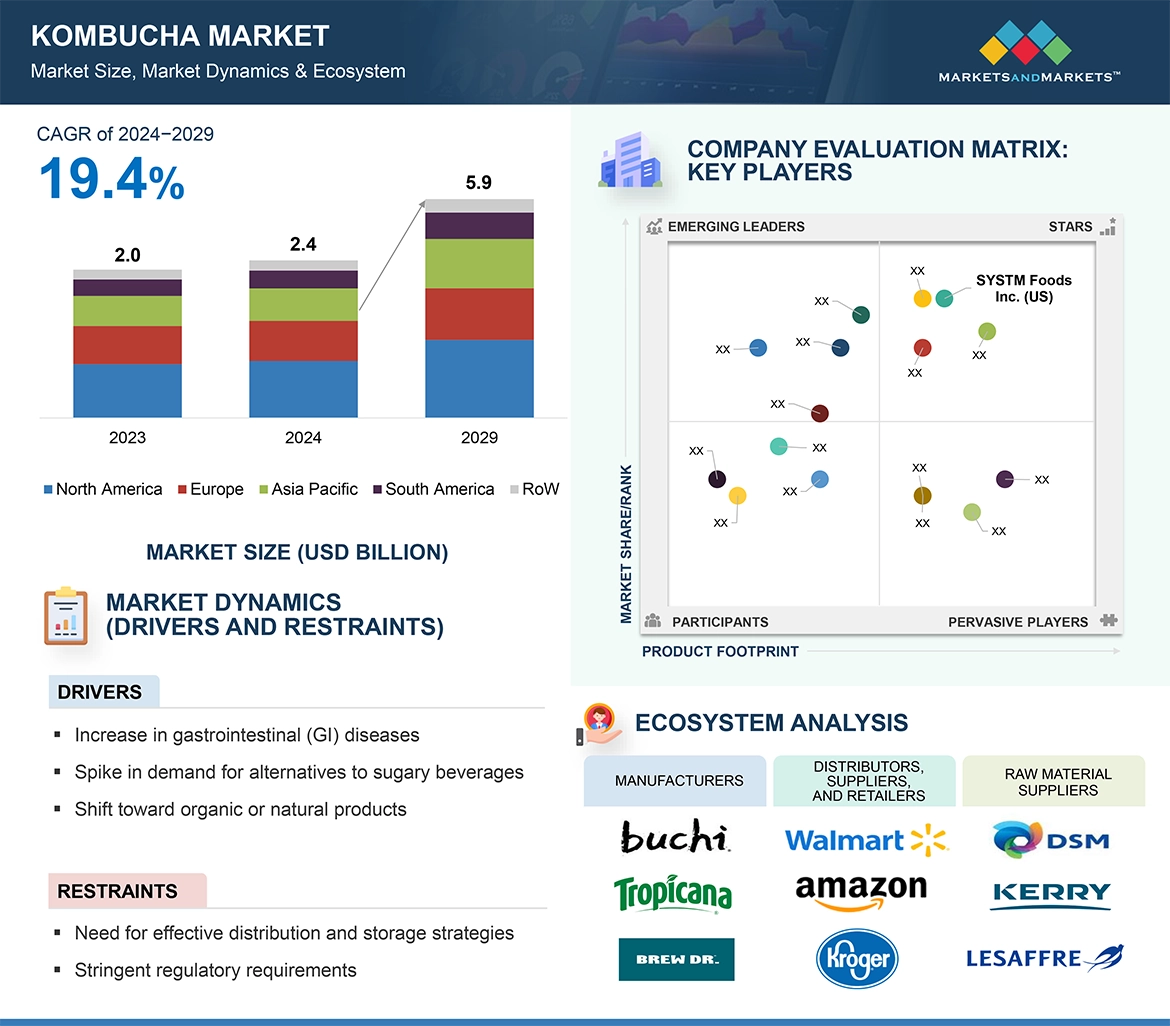
The global kombucha market was valued at USD 2.0 billion in 2023 and is projected to grow from USD 2.4 billion in 2024 to USD 5.9 billion by 2029, registering a compound annual growth rate (CAGR) of 19.4% during the forecast period. This impressive growth is largely driven by rising consumer demand for organic and natural beverages, with kombucha emerging as a popular alternative to sugary sodas and artificially flavored drinks. Its appeal is further enhanced by the wide variety of flavors and formulations available, catering to a broad range of consumer tastes.

Kombucha Market


What is kombucha?

Kombucha is a fermented beverage made from tea, sugar, and a symbiotic culture of bacteria and yeast (known as a SCOBY). The fermentation process produces a tangy, slightly sweet, and naturally carbonated drink rich in probiotics, antioxidants, and organic acids.

It’s often marketed for its potential health benefits, such as improved digestion, enhanced immune function, and detoxification—though scientific research is still catching up with some of these claims.

Kombucha Market Growth and Trends

  • Health and Wellness Boom: Consumers are increasingly looking for functional beverages that offer more than hydration. Kombucha fits perfectly into this trend, appealing to those seeking natural, low-sugar, gut-friendly drinks.
  • Flavor Innovation: Gone are the days of plain kombucha. Today’s market features a kaleidoscope of flavors—from ginger-lemon and hibiscus rose to pineapple jalapeño. Brands are constantly experimenting to cater to evolving palates and seasonal preferences.
  • Alcoholic Kombucha: Hard kombucha is an emerging subcategory that combines the buzz of alcohol (typically 4–8% ABV) with kombucha’s health halo. This hybrid appeals to health-conscious drinkers looking for alternatives to traditional beer or cocktails.
  • Sustainability and Transparency: Eco-conscious consumers are pushing brands to prioritize sustainable sourcing, recyclable packaging, and transparent labeling. Many kombucha companies emphasize local ingredients and ethical production practices.
  • Expansion Beyond Bottles: Kombucha is branching out beyond the beverage aisle. Think kombucha-based skincare, vinegars, cocktail mixers, and even pet supplements. As awareness grows, so does the range of applications.


Kombucha Market Opportunities for Growth

  • Hard Kombucha: The rise of alcoholic kombucha presents a new category with crossover appeal for both health-conscious and social drinkers.
  • Functional Additives: CBD, adaptogens, and vitamins are being added to enhance the functional appeal of kombucha.
  • Global Expansion: While North America dominates the market, there’s increasing interest in kombucha across Europe, Asia-Pacific, and Latin America.


Bottles to Dominate by Packaging Type

Among packaging types, bottles are expected to hold the largest market share. This preference is attributed to bottles offering superior protection against light and air exposure, helping maintain the integrity of probiotics and other beneficial compounds in kombucha. Bottled packaging not only ensures product freshness and efficacy but also provides convenience and portability, aligning with the lifestyle of on-the-go consumers.

Download PDF Brochure: https://www.marketsandmarkets.com/pdfdownloadNew.asp?id=211406364

Organic Kombucha to Lead by Nature Segment

The organic segment is anticipated to command a significant share of the kombucha market. Growing health consciousness, coupled with increased consumer awareness around sustainability and environmental responsibility, is fueling demand for certified organic products. Organic kombucha appeals to consumers seeking transparency and authenticity, with certifications reinforcing trust in product quality. Additionally, the expanding presence of organic kombucha across retail outlets, health food stores, and online platforms is enhancing product availability and driving market penetration.

North America: The Leading Regional Market

North America is set to maintain the largest regional share in the global kombucha market. This leadership is underpinned by early adoption of health and wellness trends—especially in the U.S.—and a well-informed consumer base that values the potential health benefits of probiotic beverages. Moreover, the region benefits from a robust distribution network and supportive regulatory environment, both of which are instrumental in facilitating market growth.

Major Players in the Kombucha Industry

Key players in this market include GT’s Living Foods (US), Brew Dr. (US), SYSTM Foods Inc. (US), Health-Ade LLC (US), Tropicana Brands Group (US), MOMO Kombucha (UK), GO Kombucha (UK), Harris Freeman (US), Kosmic Kombucha (US), Equinox Kombucha (UK), Remedy Drinks (Australia), Soulfresh Global Pty Ltd (Australia), Cruz Group Sp. z o. o. (Poland), NessAlla Kombucha (US), and FedUp Foods (US).

About MarketsandMarkets™

MarketsandMarkets™ has been recognized as one of America’s Best Management Consulting Firms by Forbes, as per their recent report.

MarketsandMarkets™ is a blue ocean alternative in growth consulting and program management, leveraging a man-machine offering to drive supernormal growth for progressive organizations in the B2B space. With the widest lens on emerging technologies, we are proficient in co-creating super normal growth for clients across the globe.

Today, 80% of Fortune 2000 companies rely on MarketsandMarkets, and 90 of the top 100 companies in each sector trust us to accelerate their revenue growth. With a global clientele of over 13,000 organizations, we help businesses thrive in a disruptive ecosystem.

The B2B economy is witnessing the emergence of $25 trillion in new revenue streams that are replacing existing ones within this decade. We work with clients on growth programs, helping them monetize this $25 trillion opportunity through our service lines – TAM Expansion, Go-to-Market (GTM) Strategy to Execution, Market Share Gain, Account Enablement, and Thought Leadership Marketing.

Built on the ‘GIVE Growth’ principle, we collaborate with several Forbes Global 2000 B2B companies to keep them future-ready. Our insights and strategies are powered by industry experts, cutting-edge AI, and our Market Intelligence Cloud, KnowledgeStore™, which integrates research and provides ecosystem-wide visibility into revenue shifts.

In addition, MarketsandMarkets SalesIQ enables sales teams to identify high-priority accounts and uncover hidden opportunities, helping them build more pipeline and win more deals with precision.

Media Contact
Company Name: MarketsandMarkets™ Research Private Ltd.
Contact Person: Mr. Rohan Salgarkar
Email: Send Email
Phone: 18886006441
Address:1615 South Congress Ave. Suite 103, Delray Beach, FL 33445
City: Florida
State: Florida
Country: United States
Website: https://www.marketsandmarkets.com/Market-Reports/kombucha-market-211406364.html


Press Release Distributed by ABNewswire.com

To view the original version on ABNewswire visit: Kombucha Market Growth Drivers, Emerging Trends, Key Segments, Leading Players, Future Outlook, and Revenue Forecast

Seed Treatment Market Size, Share, Growth Drivers, Latest Trends, Key Segments, Leading Players, and Forecast

“MarketsandMarkets™”
Seed Treatment Market by Type, Application Technique (Coating, Dressing, Pelleting), Function (Seed Protection and Seed Enhancement), Formulation, Crop Type (Cereals & Grains, Oilseeds, Fruits & Vegetables), and Region – Global Forecast to 2027

The seed treatment market is on a remarkable growth path, projected to expand from $6.1 billion in 2022 to $9.2 billion by 2027, achieving a robust CAGR of 8.3%. This surge is fueled by a combination of critical factors—growing global concerns around food security, technological advancements, increased adoption of precision farming techniques, and strong governmental support. Together, these elements have cultivated a fertile environment for seed treatment solutions, enhancing crop yields, improving plant protection, and boosting agricultural efficiency.

Seed Treatment Market

Seed treatment is becoming an indispensable component of modern agriculture. Its ability to protect crops from pests and diseases while improving germination rates positions it as a key driver of sustainable and productive farming practices. With increased focus on quality and yield, the seed treatment industry is thriving—and its growth trajectory shows no signs of slowing down.

What is Seed Treatment?

Seed treatment refers to the application of chemical, biological, or physical agents to seeds before planting. These treatments are designed to protect seeds and seedlings from pathogens, pests, and environmental stressors, thereby improving germination rates, crop yield, and overall plant health.

There are several types of seed treatment methods, including:

  • Chemical Treatments: Fungicides, insecticides, and nematicides.
  • Biological Treatments: Beneficial microbes and biopesticides.
  • Physical Treatments: Thermal, irradiation, or film coating technologies.


Seed Treatment Market Drivers

  • Growing Need for High Crop Yield: With the global population projected to hit 9.7 billion by 2050, the demand for food is increasing rapidly. Seed treatments help farmers maximize productivity by ensuring healthier germination and early plant development.
  • Rising Awareness of Sustainable Farming: Farmers are increasingly shifting to more eco-friendly agricultural practices. Biological seed treatments, in particular, are gaining popularity for their minimal environmental impact and ability to enhance soil health.
  • Technological Advancements: Innovations such as nano-formulations, precision agriculture, and smart coatings are revolutionizing how seed treatments are developed and applied.
  • Climate Change & Pest Pressure: Extreme weather and evolving pest resistance are pushing the need for more resilient agricultural practices. Seed treatment offers a proactive defense mechanism against these variables.


Seed Treatment Market Trends:

  • Biological Seed Treatment Boom: Increasing regulatory pressure on chemical pesticides is accelerating the adoption of microbial and organic seed treatment solutions.
  • Integration with Digital Farming: Companies are integrating seed treatment data with digital platforms for real-time monitoring and enhanced decision-making.
  • Customized Solutions: Tailor-made treatments specific to crop type, region, and soil conditions are becoming increasingly popular.
  • Emerging Markets: Countries in Asia-Pacific, Latin America, and Africa are witnessing rapid growth due to increased awareness and adoption of modern farming techniques.


By Crop Type: Fruits & Vegetables

The fruits and vegetables segment is expected to experience substantial growth during the forecast period. According to the Food and Agriculture Organization (FAO), the global production of fruits and vegetables has grown at an impressive 3% annually over the past decade. Consumption trends mirror this increase, especially as awareness of nutrition and healthy eating habits spreads worldwide.

The rising preference for organic produce is not only driving demand for traditional seed treatments but also accelerating growth in the biological seed treatment segment. Additionally, the cultivation of high-value crops like lettuce, spinach, hydroponic tomatoes, and bell peppers is creating a strong demand for tailored seed treatment solutions, particularly in controlled environments such as greenhouses and hydroponic systems.

Download PDF Brochure: https://www.marketsandmarkets.com/pdfdownloadNew.asp?id=503

By Chemical Seed Protection Function: Biological Seed Protection

The biological seed protection segment is set to grow at an impressive rate. Biologicals such as Trichoderma fertile, Penicillium bilaiae, Bacillus firmus, and Rhizobium leguminosarum are gaining popularity as effective and eco-friendly seed treatment options. These biological agents are often used alongside chemical treatments as part of integrated pest management strategies.

Drivers of this growth include rising awareness around food safety, increased interest in organic farming, and supportive government policies and subsidies, particularly in countries like India, China, and Japan. Biologicals offer resistance to both biotic and abiotic stress with minimal environmental impact, making them especially appealing as resistance to traditional chemical treatments grows. Key crops such as rice, corn, soybeans, and canola are at the forefront of biological treatment research and adoption, particularly in countries with significant organic farming footprints, including Australia, Argentina, Spain, the US, France, and India.

By Formulation: Liquid Solution (LS)

The liquid solution (LS) formulation is poised to be the fastest-growing in the seed treatment market. LS products offer numerous advantages, including easy and uniform application, convenience in handling, and wider coverage. Most fungicides and insecticides used in seed treatments are available in this form.

Known as the “quick wet” method, this process involves applying a volatile fungicide directly to seeds, ensuring even distribution and effectiveness. This formulation type continues to gain traction among farmers seeking efficient and user-friendly treatment options.

Regional Outlook: Asia Pacific Leads Growth

The Asia Pacific region is expected to witness the fastest growth in the seed treatment market during the forecast period. Increasing demand for forage and fodder crops, coupled with a surge in the use of crop protection chemicals in countries like China, India, and Japan, is driving market expansion.

With a focus on high-value crops and growing farmer awareness around the benefits of seed treatment, leading companies are actively investing in and expanding within the Asia Pacific region. This trend positions Asia Pacific as a critical growth frontier for the global seed treatment industry.

Leading Seed Treatment Companies:

Key players in this market include Syngenta (Switzerland), BASF SE (Germany), Corteva Agriscience (US), FMC Corporation (US), UPL Ltd. (India), Bayer AG (Germany), Solvay (Belgium), Novozymes A/S (Denmark), ADAMA Ltd. (Israel), Eastman Chemicals Ltd. (US), Croda International Plc (UK), Certis Europe (Netherlands), Sumitomo Chemical (Japan), Rizobacter (Argentina), Bioworks Inc. (US), and Marrone Bio Innovations, Inc. (US). These players in this market are focusing on increasing their presence through mergers & acquisitions and partnerships. The seed treatment companies have a strong presence in North America, Europe, and South America. They also have manufacturing facilities along with strong distribution networks across these regions.

Request Sample Pages: https://www.marketsandmarkets.com/requestsampleNew.asp?id=503

About MarketsandMarkets™

MarketsandMarkets™ has been recognized as one of America’s Best Management Consulting Firms by Forbes, as per their recent report.

MarketsandMarkets™ is a blue ocean alternative in growth consulting and program management, leveraging a man-machine offering to drive supernormal growth for progressive organizations in the B2B space. With the widest lens on emerging technologies, we are proficient in co-creating supernormal growth for clients across the globe.

Today, 80% of Fortune 2000 companies rely on MarketsandMarkets, and 90 of the top 100 companies in each sector trust us to accelerate their revenue growth. With a global clientele of over 13,000 organizations, we help businesses thrive in a disruptive ecosystem.

The B2B economy is witnessing the emergence of $25 trillion in new revenue streams that are replacing existing ones within this decade. We work with clients on growth programs, helping them monetize this $25 trillion opportunity through our service lines—TAM Expansion, Go-to-Market (GTM) Strategy to Execution, Market Share Gain, Account Enablement, and Thought Leadership Marketing.

Built on the ‘GIVE Growth’ principle, we collaborate with several Forbes Global 2000 B2B companies to keep them future-ready. Our insights and strategies are powered by industry experts, cutting-edge AI, and our Market Intelligence Cloud, KnowledgeStore™, which integrates research and provides ecosystem-wide visibility into revenue shifts.

In addition, MarketsandMarkets SalesIQ enables sales teams to identify high-priority accounts and uncover hidden opportunities, helping them build more pipeline and win more deals with precision.

Media Contact
Company Name: MarketsandMarkets™ Research Private Ltd.
Contact Person: Mr. Rohan Salgarkar
Email: Send Email
Phone: 18886006441
Address:1615 South Congress Ave. Suite 103, Delray Beach, FL 33445
City: Florida
State: Florida
Country: United States
Website: https://www.marketsandmarkets.com/Market-Reports/seed-treatment-market-503.html


Press Release Distributed by ABNewswire.com

To view the original version on ABNewswire visit: Seed Treatment Market Size, Share, Growth Drivers, Latest Trends, Key Segments, Leading Players, and Forecast

Food Flavors Market Overview, Growth Drivers, Trends, Key Segments, Leading Players, Future Outlook, and Revenue Forecast

“MarketsandMarkets™”
Food Flavors Market by Labeling/Regulation (Natural, Nature Identical/Artificial), Form (Liquid & Gel, Dry), Type (Chocolate & Brown, Vanilla, Fruit & Nut, Spices & Savory, Dairy), Application (Food, Beverage) Region

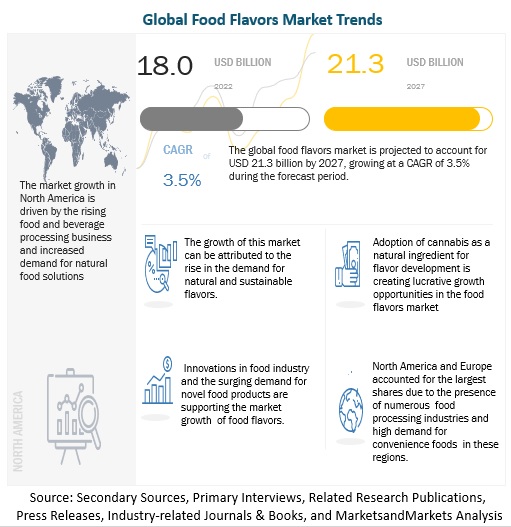
The global food flavors market is projected to expand from USD 18.0 billion in 2022 to USD 21.3 billion by 2027, growing at a CAGR of 3.5%. This growth is driven by the rising demand for ready-to-eat food and beverage products, particularly in developing nations. Factors such as changing consumer preferences, higher disposable income, increased health awareness, and a focus on sustainable production methods are fueling this demand. Consequently, the use of food flavors in processed food and beverages is on the rise.


Food Flavors Market


What Are Food Flavors?

Food flavors are ingredients that give food and beverages their distinctive taste. They can be natural or artificial, and they are used to enhance the flavor profile of products ranging from snacks and beverages to sauces, dairy items, and processed foods. The flavors can be sweet, savory, sour, bitter, or a mix of these, and they can be derived from various sources, such as fruits, spices, herbs, and even plant-based materials.

Food Flavors Market Trends and Growth Drivers

The food flavors market has seen substantial growth due to several key factors:

  • Health and Wellness Trends: Modern consumers are more conscious about the foods they consume, preferring healthier alternatives. This has led to the demand for natural flavors that offer better nutritional profiles compared to artificial ones. As the focus on clean-label products continues, food manufacturers are seeking natural flavoring solutions.
  • Ethnic and Exotic Flavors: As global cultures continue to blend, there is a surge in demand for ethnic and exotic flavors. Consumers are becoming more adventurous in their food choices, with flavors from regions such as Asia, Latin America, and the Middle East becoming increasingly popular in Western markets. For instance, Korean BBQ flavors, Indian spices, and Mediterranean herbs are all gaining traction.
  • Plant-Based Foods: The rise of plant-based diets has significantly impacted the food flavors market. With the growing demand for plant-based proteins, manufacturers are focusing on creating flavors that mimic the taste and texture of traditional meat products. This trend has led to innovations in plant-based flavors that cater to vegans, vegetarians, and flexitarians.
  • Clean Label Movement: As consumers continue to demand transparency, clean-label products—those with fewer, recognizable ingredients—are becoming more desirable. Natural flavors, sourced from fruits, vegetables, and spices, are in high demand as they align with the clean label trend.
  • Personalized Flavors: Another emerging trend is the customization of flavors. With advancements in technology and better consumer data, manufacturers are creating personalized flavor profiles tailored to the tastes and preferences of individual consumers. This trend is particularly notable in the beverage industry, where consumers can create their own unique soda flavors or coffee blends.


Download PDF Brochure: https://www.marketsandmarkets.com/pdfdownloadNew.asp?id=93115891

A Shift Towards Natural and Sustainable Flavors

The growing consumer interest in international flavors is being fueled by aggressive marketing, globalization, and market liberalization. Consumers are increasingly looking to experience diverse flavors and cuisines that promise natural ingredients and safety, without requiring significant time or effort. As a result, there is a rising demand for natural flavors, leading to the development of new, flavor-infused products. Many consumers are intrigued by innovative flavors presented in familiar forms and are more willing to try new flavor combinations if they are clearly labeled. A 2021 survey by the International Food Information Council (IFIC) found that 64% of adults in the U.S. prioritize foods made with clean ingredients, and 63% say ingredients play a moderate role in their purchasing decisions. The survey further reveals that 48% of consumers seek foods containing natural flavors, and 20% report regularly purchasing foods and beverages with clean ingredients on the label. This growing preference for natural flavors is driving the demand for healthier food and beverage options, such as blueberry-flavored protein drinks or chocolate- and rose-infused teas.

Technological Innovations in Flavor Production

Technological advancements, including the use of artificial intelligence to gauge consumer perceptions of flavors and the development of new extraction technologies, are opening up new growth opportunities in the flavor industry. Extracting flavors can be complex, with supercritical carbon dioxide (CO2) being a widely adopted technique among manufacturers. Solid-liquid extraction (SLE) technology is particularly effective, extracting up to 90% of natural flavor from sources such as lycopene, beta-carotenoids, vanilla, and essential oils. In September 2020, Ireland-based Kerry Group introduced its New Citrus Extract, an advanced citrus extraction technology that maintains the full characteristics of citrus fruits and is marketed as a Natural Extract. This technology uses a non-thermal liquid/liquid extraction process to produce highly concentrated citrus extracts.

Health Risks Associated with Synthetic Flavors

Synthetic flavors, often created through chemical processes, are added to foods to mimic the taste and aroma of natural flavors. However, as concerns about the safety of these artificial additives grow, the food flavor industry is facing increased scrutiny. One area of particular concern is the potential link between food colors and attention deficit hyperactivity disorder (ADHD) in children. In addition to behavioral concerns, artificial flavors have been associated with various health risks, including food allergies, hypersensitivity reactions, and exacerbated asthma symptoms. Some studies have also linked synthetic flavors to symptoms like nausea, vomiting, and gastrointestinal discomfort. These health risks are restraining the growth of the food flavor market, as consumers seek safer, more natural alternatives.

Leading Food Flavors Companies

The key players in the food flavors industry include Givaudan (Switzerland), International Flavors and Fragrances (IFF) (US), Symrise (Germany), Firmenich (Switzerland), and Mane (France).

Key Questions Addressed by the Food Flavors Market Report:

  • Which region is projected to account for the largest share of the food flavors market?
  • What is the forecasted size of the global food flavors market?
  • Which food flavor types are considered in the study, and which segments are projected to have promising growth rates in the future?
  • Which are the key players in the food flavors market?
  • What kind of information is provided in the competitive landscape section?
  • What is the food flavors market?
  • What are the types of food flavors?
  • What trends are shaping the food flavors market?


About MarketsandMarkets™

MarketsandMarkets™ has been recognized as one of America’s Best Management Consulting Firms by Forbes, as per their recent report.

MarketsandMarkets™ is a blue ocean alternative in growth consulting and program management, leveraging a man-machine offering to drive supernormal growth for progressive organizations in the B2B space. With the widest lens on emerging technologies, we are proficient in co-creating supernormal growth for clients across the globe.

Today, 80% of Fortune 2000 companies rely on MarketsandMarkets, and 90 of the top 100 companies in each sector trust us to accelerate their revenue growth. With a global clientele of over 13,000 organizations, we help businesses thrive in a disruptive ecosystem.

The B2B economy is witnessing the emergence of $25 trillion in new revenue streams that are replacing existing ones within this decade. We work with clients on growth programs, helping them monetize this $25 trillion opportunity through our service lines—TAM Expansion, Go-to-Market (GTM) Strategy to Execution, Market Share Gain, Account Enablement, and Thought Leadership Marketing.

Built on the ‘GIVE Growth’ principle, we collaborate with several Forbes Global 2000 B2B companies to keep them future-ready. Our insights and strategies are powered by industry experts, cutting-edge AI, and our Market Intelligence Cloud, KnowledgeStore™, which integrates research and provides ecosystem-wide visibility into revenue shifts.

In addition, MarketsandMarkets SalesIQ enables sales teams to identify high-priority accounts and uncover hidden opportunities, helping them build more pipeline and win more deals with precision.

Media Contact
Company Name: MarketsandMarkets™ Research Private Ltd.
Contact Person: Mr. Rohan Salgarkar
Email: Send Email
Phone: 18886006441
Address:1615 South Congress Ave. Suite 103, Delray Beach, FL 33445
City: Florida
State: Florida
Country: United States
Website: https://www.marketsandmarkets.com/Market-Reports/food-flavors-market-93115891.html


Press Release Distributed by ABNewswire.com

To view the original version on ABNewswire visit: Food Flavors Market Overview, Growth Drivers, Trends, Key Segments, Leading Players, Future Outlook, and Revenue Forecast

Carba Announces 5-Year Carbon Removal Credit Purchase Agreement with Microsoft

Carba, a Minneapolis, Minnesota carbon removal company, announced an agreement today to deliver 44,000 carbon removal credits to Microsoft over a 5 year period. Carba’s novel pyrolysis technology and burial method removes carbon dioxide, storing biochar underground in low-oxygen environments based on a patented, highly efficient pyrolysis reactor.

Carba’s autothermal technology offers greater energy efficiency, stabilizing carbon from biogenic waste and turning it into economically valuable biochar with high carbon content. The biochar will be used as an alternate daily cover and buried in a local landfill, protecting it from degradation and possibly providing environmental co-benefits. The biochar’s properties have the potential to act like an activated carbon filter in the landfill, which could reduce odors, remediate pollutants (e.g., PANs, PCBs, dioxins and furans), and increase gas pollutant absorption. The environmental co-benefits will be further evaluated during project operations.

“We’re thrilled to contribute to Microsoft’s portfolio by providing high-quality carbon removal credits that will be retired starting this year,” said Andrew Jones, CEO, Carba. “Our fully integrated approach—combining biomass sourcing, processing, and secure storage—enables us to scale quickly while having the potential to deliver significant community co-benefits.”

“By co-locating biomass supply chain delivery, pyrolysis, and end-use & storage, Carba’s biochar burial offers the potential to become a scalable and cost-effective climate solution,” said Brian Marrs, Senior Director for Energy & Carbon Removal at Microsoft. “This agreement with Carba allows us to better explore the future of this biochar end-use and the possible co-benefits, while benefiting from the near-term delivery of these credits with a straightforward-monitoring and verification process.

Last year, this project was selected to receive a $7 million grant from the Department of Energy for a Carbon Negative Shot Pilot (FOA 382).

The project’s methodology has been certified by Isometric with 1,000-year durability credits.

“Isometric’s rigorous scientific validation ensures that each credit represents a permanently removed ton of carbon dioxide,” said Stacy Kauk, Chief Science Officer at Isometric.

About Carba:

Carba converts waste biomass and organic materials into stable biocarbon for use in materials, pollution management, and permanent carbon dioxide removal. Carba has developed a patented autothermal process and a patented anoxic burial method to impart 1,000+ year certified carbon removal. The company was founded by Dr. Andrew Jones and Professor Paul Daueunhauer, experts with a combined 40+ years of experience in pyrolysis and valorizing biomass. Carba is backed by GigaClimate Builder, founded by Nick Halla (founding team, past executive at Impossible Foods).

Carba’s first deployment is with a waste disposal company converting municipal wood waste into biocarbon for use as daily cover in the landfill, sequestering carbon and adsorbing pollutants within the landfill. Carba is a versatile, efficient, and scalable permanent carbon removal solution.

For more, visit www.carba.com

Media Contact
Company Name: Carba
Contact Person: Patricia Loria
Email: Send Email
Phone: 1-202-531-6513
Address:3315 Miller Heights Road
City: Oakton
State: Virginia
Country: United States
Website: www.carba.com

Reshandia Phillips Launches Personal Travel Website to Empower and Inspire Explorers Worldwide

Reshandia Phillips, a seasoned travel advisor with over a decade of experience in the travel and tourism industry, is proud to announce the official launch of her new personal website. Designed as both a hub for practical travel advice and a reflection of her journey as a trusted industry expert, the site offers visitors an engaging space to explore, plan, and dream.

The website features destination guides, expert travel tips, curated resources, and behind-the-scenes insights from Reshandia’s years of global experience. Visitors can also connect with her directly for custom trip consultations, group travel coordination, and advice tailored to their travel goals and lifestyles.

“This website is more than a digital business card—it’s a passion project,” says Phillips. “I wanted to create a space where travelers, whether first-timers or frequent flyers, can find reliable information, meaningful inspiration, and a voice they can trust. It’s my way of giving back to a community that’s given me so much.”

What sets Reshandia’s approach apart is her dedication to truly personalized service. She brings warmth, attention to detail, and real-world expertise to every interaction—both online and offline. Her site will also include a blog featuring stories from the road, planning checklists, and helpful guides for navigating everything from international airport transfers to booking unforgettable cultural excursions.

From all-inclusive resort tips to planning destination weddings, solo journeys, or international adventures, Reshandia brings the same level of care and detail online as she does in her one-on-one client work. The launch marks an exciting new chapter in her mission to make travel more personal, intentional, and enriching.

Explore the new website here.

Media Contact
Contact Person: Reshandia Phillips
Email: Send Email
City: Raytown
State: Missouri
Country: United States
Website: https://www.reshandiaphillips.com/

The journey of a self-published author: Lynn Bruines Earns Gold Award, 5-Star Recognition, and Launches Reader Hub

The journey of a self-published author: Lynn Bruines Earns Gold Award, 5-Star Recognition, and Launches Reader Hub

Secrets of a Social Butterfly
Lynn Bruines celebrates the success of her debut book, Secrets of a Social Butterfly, which earned a Gold Award from Literary Titan and a 5-star review from Readers’ Favorite

Award-Winning Author Lynn Bruines is soaring higher than ever with her debut book Secrets of a Social Butterfly, which was recently honored with the Gold Award from Literary Titan. Recognized for its authenticity, insight, and heart-centered storytelling, the book continues to strike a powerful chord with readers navigating the intersection of ambition, identity, and connection.

“If you’re an entrepreneur, young professional, or someone navigating a big life transition, this book is packed with wisdom that’s as inspiring as it is practical.” — Literary Titan Book Awards, Gold Award Winner.

The praise doesn’t stop there. Secrets of a Social Butterfly also received a glowing 5-star editorial review from Readers’ Favorite, further validating the book’s impact in helping readers embrace their unique journeys with confidence and grace.

“Through personal anecdotes and real-life examples, Lynn offers key tools and insights to help career-driven professionals find their own path to success, fulfillment, and happiness. This book is for dreamers, those who refuse to let unexpected trials and tribulations of life get in the way of their dreams.” — Readers’ Favorite, 5-star rating.

But Lynn’s journey doesn’t stop at the page. In response to the growing interest from readers, she has launched a dedicated website for Secrets of a Social Butterfly (www.secretsofasocialbutterfly.com), inviting curious minds and open hearts to dive deeper into her world. The site also hosts her weekly newsletter, “Ready Already”, which has quickly become a favorite among subscribers. Each issue feels like a voice note from a wise friend—part pep talk, part behind-the-scenes, and always a reminder that you’re not as alone (or as lost) as you think.

“The best stories don’t just entertain—they connect. That’s all I ever wanted with this book,” Lynn shares. “If one person feels seen, heard, or just a little more brave after reading, then it’s all been worth it.”

Whether guiding global business relationships or writing words that land right where they’re needed most, Lynn continues to lead with intention and connection. Secrets of a Social Butterfly is more than a book—it’s a start of a movement.

For media inquiries, interviews, or to request a review copy:

• lynn@secretsofasocialbutterfly.com

www.secretsofasocialbutterfly.com

• Secrets of a Social Butterfly is available via Amazon and major retailers.

Media Contact
Company Name: Secrets of a Social Butterfly
Contact Person: Lynn Bruines
Email: Send Email
City: Geneva
Country: Switzerland
Website: http://www.secretsofasocialbutterfly.com

Vector Database Market Worth $4.3 Bn by 2028 | Key Companies include Microsoft, Elastic, MongoDB, Redis, SingleStore


“Microsoft (US), Elastic (US), Alibaba Cloud (China), MongoDB (US), Redis (US), SingleStore (US), Zilliz (US), Pinecone (US), Google (US), AWS (US), Milvus (US), Weaviate (Netherlands), and Qdrant (Berlin) Datastax (US), KX (US), GSI Technology (US), Clarifai (US), Kinetica (US), Rockset (US), Activeloop (US), OpenSearch (US), Vespa (Norway), Marqo AI (Australia), and Clickhouse (US).”
Vector Database Market by Offering (Solutions and Services), Technology (NLP, Computer Vision, and Recommendation Systems), Vertical (Media & Entertainment, IT & ITeS, Healthcare & Life Sciences) and Region – Global Forecast to 2028.

The global vector database market is projected to expand from USD 1.5 billion in 2023 to USD 4.3 billion by 2028, reflecting a compound annual growth rate (CAGR) of 23.3%. This growth is being fueled by the rapid advancement of artificial intelligence (AI) and machine learning (ML), a rising demand for real-time data processing, and the increasing adoption of cloud computing technologies.

Download PDF Brochure@ https://www.marketsandmarkets.com/pdfdownloadNew.asp?id=112683895

The vector database market is expanding, and vendors are adopting a strategic focus to attract customers. Vector databases are a powerful new technology well-suited for many applications. As the demand for machine learning and AI applications grows, vector databases will likely become even more popular. Vector databases are essential for many machine learning and AI applications, such as natural language processing, image recognition, and fraud detection; this is because vector databases can efficiently store and query large amounts of high-dimensional data, which is the type of data used in machine learning and AI. These services are increasing the demand for the vector database market.

The NLP segment holds the largest market size during the forecast period.

In the Natural Language Processing (NLP) context, the vector database market is a rapidly evolving sector driven by various factors. Vector database is instrumental in NLP applications for efficient storage, retrieval, and querying of high-dimensional vector representations of textual data. In NLP, a vector database is used for tasks like document retrieval, semantic search, sentiment analysis, and chatbots. They help store and search through large text corpora efficiently. Companies like Elasticsearch, Milvus, and Microsoft have been actively serving NLP applications. Many organizations also develop custom solutions using vector databases. The proliferation of text data on the internet and within organizations drives the need for an efficient vector database for text indexing and retrieval. Storing and searching for text embeddings enables content tagging, which is vital for content classification and organization in NLP applications.

The growth of the vector database market in NLP is due to the increasing importance of efficient text data management and retrieval. As NLP plays a significant role in various industries, including healthcare, finance, e-commerce, and content generation, the demand for advanced vector database solutions will persist and evolve. This trend will likely drive further innovations in vector databases, making them increasingly efficient and tailored to NLP-specific needs. NLP-driven applications aim to understand the context and meaning behind text data. Traditional databases may struggle to capture complex semantic relationships between words, phrases, and documents. Vector databases excel in storing and retrieving high-dimensional vector representations of text, which capture semantic relationships; this enables semantic search capabilities, allowing users to find information based on the meaning and context rather than relying solely on keywords.

Semantic search involves finding documents or pieces of text that are semantically similar to a given query. It goes beyond keyword matching and considers the meaning of words and phrases. NLP techniques enable understanding the semantic meaning of words, phrases, and documents. It goes beyond traditional keyword-based search and considers the context and relationships between terms.

Healthcare and Life Sciences vertical to record the highest CAGR during the forecast period.

The healthcare industry vertical is seeing a rise in using vector databases as a valuable tool. It offers medical professionals assistance in various areas, such as diagnosing diseases and creating new drugs. Vector database algorithms learn from vast sets of medical images and patient records, allowing them to detect patterns and anomalies that may go unnoticed by humans; this leads to more accurate and faster diagnoses and personalized treatments for patients. Vector database is used in healthcare, particularly in medical imaging. Generating high-resolution images of organs or tissues aids doctors in detecting early-stage diseases. Additionally, vector databases can assist in identifying new drug candidates for drug discovery by generating virtual molecules and predicting their properties. Furthermore, it can analyze patients’ medical history and predict the efficacy of different treatments, enabling the development of personalized treatment plans.

Our analysis shows North America holds the largest market size during the forecast period.

As per our estimations, North America will hold the most significant market size in the global vector database market in 2023, and this trend will continue. There are several reasons for this, including numerous businesses with advanced IT infrastructure and abundant technical skills. Due to these factors, North America has the highest adoption rate of the vector database. The presence of a growing tech-savvy population, increased internet penetration, and advances in AI have resulted in an enormous usage of vector database solutions. Most of the customers in North America have been leveraging vector databases for application-based activities that include, but are not limited to, text generation, code generation, image generation, and audio/video generation. The rising popularity and higher reach of vector databases are further empowering SMEs and startups in the region to harness vector database technology as a cost-effective and technologically advanced tool for building and promoting business, growing consumer base, and reaching out to a broader audience without a substantial investment into sales and marketing channels. Several global companies providing vector databases are in the US, including Microsoft, Google, Elastic, and Redis. Additionally, enterprises’ increased acceptance of vector database technologies to market their products modernly has been the key factor driving the growth of the vector database market in North America.

Request Sample Pages@ https://www.marketsandmarkets.com/requestsampleNew.asp?id=112683895

Unique Features in the Vector Database Market

Vector databases are specifically designed to handle high-dimensional data, such as feature vectors generated by AI and machine learning models. Unlike traditional databases that manage structured rows and columns, vector databases enable fast similarity search and efficient handling of complex, unstructured data formats like images, audio, text embeddings, and video.

One of the standout features of vector databases is their ability to perform real-time similarity searches using Approximate Nearest Neighbor (ANN) algorithms. This allows applications such as recommendation engines, semantic search, fraud detection, and image recognition to deliver instant and highly accurate results.

Modern vector databases are built for scalability, supporting billions of vectors across distributed environments. With support for parallel computing and hardware acceleration (such as GPU-based processing), these databases maintain low latency and high throughput even as data volume grows.

Vector databases are often designed to work directly within AI/ML ecosystems. They support native integration with model inference engines, data preprocessing tools, and popular ML frameworks like TensorFlow, PyTorch, and Hugging Face, allowing for streamlined development and deployment workflows.

Major Highlights of the Vector Database Market

As artificial intelligence and machine learning continue to proliferate across industries, the need to store, manage, and search high-dimensional vector data has become essential. Vector databases serve as a foundational layer in AI/ML infrastructures, powering functions like recommendation systems, natural language processing, and image recognition.

Use cases requiring real-time, context-aware search capabilities—such as chatbots, intelligent virtual assistants, and fraud detection systems—are on the rise. Vector databases uniquely enable these applications by supporting similarity-based searches that go beyond keyword matching, offering deeper and more intuitive results.

While initially centered around tech giants and research labs, vector databases are now gaining traction in a wide range of industries including healthcare, e-commerce, finance, and media. Organizations are leveraging vector data to enhance personalization, automate decision-making, and extract insights from unstructured content.

The market is witnessing a rise in cloud-native vector databases and open-source solutions, making them more accessible and scalable. Vendors are offering managed services and seamless integration with popular cloud platforms, enabling faster deployment and lower operational overhead.

Inquire Before Buying@ https://www.marketsandmarkets.com/Enquiry_Before_BuyingNew.asp?id=112683895

Top Companies in the Vector Database Market

The prominent players across all service types profiled in the vector database market’s study include Microsoft (US), Elastic (US), Alibaba Cloud (China), MongoDB (US), Redis (US), SingleStore (US), Zilliz (US), Pinecone (US), Google (US), AWS (US), Milvus (US), Weaviate (Netherlands), and Qdrant (Berlin) Datastax (US), KX (US), GSI Technology (US), Clarifai (US), Kinetica (US), Rockset (US), Activeloop (US), OpenSearch (US), Vespa (Norway), Marqo AI (Australia), and Clickhouse (US).

Microsoft is a prominent global information technology leader, providing software and diverse licensing suites. The company develops and maintains software, services, devices, and solutions. Its product offerings include Operating Systems (OS), cross-device productivity applications, server applications, business solution applications, desktop and server management tools, software development tools, and video games. The company also designs, manufactures, and sells devices like PCs, tablets, gaming and entertainment consoles, other intelligent devices, and related accessories. It offers a range of services, which include solution support, consulting services, and cloud-based solutions. The company also offers online advertising. Microsoft is a global leader in building analytics platforms and provides production services for the AI-infused intelligent cloud. It generates revenue by licensing and supporting a range of software products. Microsoft caters to various verticals, including finance and insurance, manufacturing and retail, media and entertainment, public sector, healthcare, and IT and telecommunications. It has a geographical presence in more than 190 countries across North America, Asia Pacific, Latin America, the Middle East, and Europe. In November 2020, the company pledged a USD 50 million investment in the ‘AI for Earth’ project to accelerate innovation. As large-scale models become potent platforms, the company continues to bring rich AI capabilities directly into the data stack. In the past year, OpenAI achieved advanced training models such as GPT-3—the world’s largest and most advanced language model—on Azure AI supercomputer. Microsoft exclusively licensed GPT-3, allowing it to leverage its technical innovations to deliver cutting-edge AI solutions for its customers and create new solutions that harness the power of advanced natural language generation.

Alibaba Group operates as an online and mobile commerce company. Alibaba Cloud is a cloud computing arm and a BU of the Alibaba Group. Alibaba Cloud, founded in 2009, has headquarters in Hangzhou, China. It is a publicly held company and operates as a subsidiary of Alibaba Group. It offers cloud computing services, such as database, elastic computing, storage and Content Delivery Network (CDN), large-scale computing, security, and management and application services. Alibaba Cloud provides a comprehensive suite of cloud computing services to power international customers’ online businesses and Alibaba Group’s eCommerce ecosystem. Alibaba Cloud’s global operations are registered and headquartered in Singapore. The company has international teams stationed in Dubai, Frankfurt, Hong Kong, London, New York, Paris, San Mateo, Seoul, Singapore, Sydney, and Tokyo. As of 2019, Alibaba Cloud has 55 availability zones across 19 regions worldwide. AnalyticDB for PostgreSQL provides vector analysis to help implement approximate search and study of unstructured data. AnalyticDB for PostgreSQL vector databases is a DBMS that integrates the in-house FastANN vector engine. AnalyticDB for PostgreSQL vector databases also provides end-to-end database capabilities such as ease of use, transaction processing, high availability, and high scalability.

Elastic, based in the US, is renowned for its Elastic Stack, which includes Elasticsearch, a highly scalable search and analytics engine designed for storing, searching, and analyzing structured and unstructured data in real-time. While Elasticsearch is not a traditional vector database per se, its capabilities in handling large volumes of data with near-instantaneous search and analysis make it relevant in contexts requiring fast retrieval and analysis of vectors or similar data structures. Elastic’s solutions are widely used across industries for logging, security information and event management (SIEM), application performance monitoring (APM), and more, emphasizing flexibility and scalability in data management and analytics.

Weaviate, based in the Netherlands, specializes in providing a scalable and flexible vector database designed specifically for handling large-scale, complex data sets. It leverages a schema-first approach to organize data into structured vector representations, enabling efficient querying and retrieval of complex relationships and patterns within the data. Weaviate’s database is optimized for handling high-dimensional vectors and supports advanced search capabilities, making it suitable for applications requiring real-time analysis, natural language processing (NLP), recommendation systems, and other AI-driven use cases. Their platform emphasizes the integration of machine learning models and IoT devices, facilitating the creation of intelligent, data-driven applications across various domains.

MongoDB, headquartered in the US, is a prominent player in the vector database market. MongoDB offers a robust document-oriented database that supports JSON-like documents with dynamic schemas, making it highly flexible for handling complex data structures and unstructured data. In the vector database market, MongoDB provides features that cater to real-time analytics, high-speed transactions, and scalability across distributed systems. Its capabilities in managing large volumes of data efficiently and its ability to integrate with various programming languages and frameworks position MongoDB as a versatile choice for organizations seeking scalable and performant database solutions in the vector database market.

Media Contact
Company Name: MarketsandMarkets™ Research Private Ltd.
Contact Person: Mr. Rohan Salgarkar
Email: Send Email
Phone: 18886006441
Address:1615 South Congress Ave. Suite 103, Delray Beach, FL 33445
City: Florida
State: Florida
Country: United States
Website: https://www.marketsandmarkets.com/Market-Reports/vector-database-market-112683895.html


Press Release Distributed by ABNewswire.com

To view the original version on ABNewswire visit: Vector Database Market Worth $4.3 Bn by 2028 | Key Companies include Microsoft, Elastic, MongoDB, Redis, SingleStore