Micro-Dyn, a leader in healthcare claims pricing, grouping, and editing software, announces its acquisition by The Brydon Group.
Micro-Dyn Medical Systems, LLC. (Micro-Dyn), an industry leader in healthcare claims pricing, grouping, and editing software serving over 150 healthcare entities across health plans, health systems, risk-bearing provider groups, and ThirdParty Administrators (TPAs), announced its acquisition by The Brydon Group.
The Brydon Group partnered with healthcare executives Sean Zhao and Steve Giattino, who will lead Micro-Dyn going forward, along with the company’s founders, Bill Voss and Janell Voss, and a growing engineering and product team.
With the support and resources provided by the investment, and the expansion of the executive, product, and engineering teams, Micro-Dyn will continue to focus on its longstanding mission of enabling healthcare organizations and other claims processors to accurately and efficiently manage healthcare claims and reimbursements.
“We look forward to partnering with Steve and Sean and continuing to serve healthcare organizations with a market-leading product. I believe with Steve, Sean, and the engineering team’s expertise, Micro-Dyn’s impact within healthcare will continue to grow,” said Micro-Dyn Founder, Bill Voss.
“With the strategic investment and the expanding team, we are excited to create additional benefits for existing and future customers,” said Steve Giattino, President and Co-Chairman. Sean Zhao, CEO and Co-Chairman, remarked, “We are honored to build upon the 34-year legacy that Bill and Janell Voss have established to support our partners with best-in-class solutions.” The Brydon Group is an investment firm that partners with experienced executives to acquire and operate businesses in software and business-to-business, government, and healthcare services. AvidBank and NorthCoast Mezzanine provided financing to support the transaction. Goodwin Procter served as legal counsel and Mowery & Schoenfeld served as accounting advisor to The Brydon Group.
About the new Leadership Team:
Sean Zhao, CEO and Co-Chairman, is a first-generation immigrant and a credentialed healthcare actuary (Fellow of the Society of Actuaries). In addition to technical expertise, he has extensive strategic and operating experience within healthcare and previously served as the CoLeader of McKinsey’s Managed Medicaid Domain, as well as the leader for payer economics and resiliency research.
Professional counseling offered by Restoration Counseling is meant to provide people, couples, and families sensitive support and direction throughout trying circumstances. Focusing in trauma therapy, marriage counseling, and a broad spectrum of mental health treatments, Restoration Counseling seeks to assist clients in overcoming obstacles and starting a road of personal development.
Restructuring areas of loss, restoring tools to face them, and creating something new is the simple approach at Restoration Counseling. Many times, clients come to therapy battling with emotional anguish or being caught in the past. With appropriate help, they can start reconstructing their life and go on. Whether clients are dealing with tough relationships, personal loss, or trauma, Restoration Counseling offers the tools and direction required to move ahead.
Restoration Counseling offers a range of counseling sessions aimed at meeting the numerous needs of its clients. Emphasizing healing and personal growth, clients should expect a compassionate, comfortable environment where they may address their issues. Services range from trauma-oriented EMD (Eye Movement Desensitization and Reprocessing), Christian counseling, individual counseling, and couples therapy.
Every person travels a different road, the counselors at Restoration Counseling know. They thereby modify their treatment approach to meet the specific need of every client. Whether dealing with unresolved trauma, marital issues, or just personal development, clients are empowered with the tools to conquer their challenges and get fresh ideas that lead to a better future.
Every single person will, without exception, encounter some sort of challenge at some point in their life. These challenges—which could range from emotional trauma to the pain of loss to problems in relationships—may seem insurmount. Restoration Counseling is a counseling service that aims to gently, knowledgeably, sympathetically, and compassionately lead clients through the most difficult events in their life.
Those seeking “counseling near me” or “therapist near me” in the Meridian region will discover that the clinic provides a friendly setting free of judgment, thereby enabling people to explore their ideas and emotions. By use of EMDA treatment, clients who have gone through trauma can discover efficient ways to release the hold that traumatic events have on them.
Providing clients in Meridian, Idaho, and neighboring areas with efficient, compassionate therapeutic services is the focus of Restoration Counseling. Whether looking for “counseling Meridian” or “counselors Meridian,” people should anticipate a customized approach that meets their particular difficulties. From individual counseling to trauma treatment, including EMDR therapy, Restoration Counseling is committed to providing solutions that promote development, healing, and a better future.
About Restoration Counseling
Meridian Counseling, an accredited counseling center providing families, couples, and individuals with customized therapy programs, was first opened in Meridian, Idaho. Emphasizing trauma recovery, mental healing, and relationship counseling, the company offers a range of services to assist customers through their most trying conditions. By building a secure and caring environment, Restoration Counseling helps clients find hope, healing, and restoration using tailored treatment approaches.
ANDOVER, Massachusetts – As artificial intelligence drives up energy demand across the United States, Schneider Electric is making a major move to keep pace—announcing plans to pour more than US$700 million into its U.S. operations over the next two years.
The French energy management and automation giant stated that the investment, which spans through 2027, aims to reinforce America’s energy infrastructure to meet the growing power needs of AI and other emerging technologies. The funds will also support domestic manufacturing and enhance energy resilience nationwide.
“We stand at an inflection point for the technology and industrial sectors in the U.S., driven by incredible AI growth and unprecedented energy demand,” said Aamir Paul, President of North America Operations for Schneider Electric, in a statement.
The announcement comes as companies worldwide reassess their supply chains in response to renewed U.S. tariff threats. Since taking office, President Donald Trump has reintroduced tariffs on a wide range of imports, including steel, aluminum, pharmaceutical ingredients, and semiconductor components, in an effort to revitalize domestic manufacturing and reduce reliance on foreign suppliers.
Like other multinationals, including Eli Lilly and Apple, Schneider appears to be shifting key production closer to its U.S. customer base. As part of the investment, the company plans to upgrade, expand, and establish new facilities across Tennessee, Massachusetts, Texas, Missouri, Ohio, and both North and South Carolina.
The move is also expected to generate over 1,000 new jobs, further cementing the company’s U.S. footprint.
Combined with the $440 million Schneider has already committed since 2020 to strengthen its American supply chain, the company’s total U.S. investment this decade will top $1 billion.
The expansion underscores the critical role of electrical infrastructure in supporting the AI revolution, as data centers, chips, and cloud platforms place unprecedented strain on energy systems.
Schneider Electric, the leader in the digital transformation of energy management and automation, today announced it will be the Official Energy Management Partner of the new Nissan Stadium, future home of the Tennessee Titans. As part of the company’s commitment to long-term impact in the Nashville community, Schneider Electric’s five-year engagement will begin with the stadium’s opening in Spring 2027. Schneider Electric will also implement its own advanced energy management technologies to optimize the stadium’s operations and sustainability efforts, with several technologies manufactured in Tennessee.
“Sustainability will be an important piece of the new Nissan Stadium, and Schneider Electric will play a critical role in bringing that vision to life,” said Aamir Paul, President of North America Operations, Schneider Electric. “By integrating our latest energy management solutions to help drive digitalization and electrification, we are proud to continue our leadership in the Nashville area and be a community leader through projects like these. On behalf of our employees throughout Tennessee, we are thrilled to ensure this stadium delivers a world-class experience for fans while setting a new standard for environmental responsibility in sports and entertainment.”
The new Nissan Stadium is an approximately 2.1-million-square-foot facility that is projected to bring over $33.7 billion in economic impact to the Nashville economy over the next 30 years. Schneider Electric’s solutions will be deployed throughout the new Nissan Stadium, including clean uninterruptible backup power and IT physical infrastructure, electrical power distribution and control systems, and an integrated Building Management Systems. These advanced systems will help enhance energy efficiency, reduce emissions, and provide increased operational control over the stadium’s infrastructure, anticipating a 20% reduction in energy consumption and a 30% reduction in downtime.
“With millions of fans expected to visit annually, ensuring optimal energy performance is a key priority in the new Nissan Stadium,” said Dan Werly, Chief Operating Officer of the Tennessee Titans. “Designed to host Titans and Tennessee State University games, as well as world-class sporting, entertainment and civic events, the stadium will also serve as a vital community hub. Schneider Electric’s expertise in energy management and their strong leadership in Nashville will be instrumental in making the New Nissan Stadium operate efficiently and effectively when we open in 2027.”
“I’m proud that Schneider Electric will serve as the Official Energy Management Partner of the new Nissan Stadium using several innovative technologies manufactured right here in Tennessee,” said Tennessee Governor Bill Lee. “Additionally, Schneider Electric recently announced a plan to build a new facility in Wilson County that will create hundreds of new jobs. I thank them for their commitment to creating greater opportunity for Tennesseans and strengthening America’s energy infrastructure.”
Schneider Electric has had a presence in the U.S. for over 135 years, and North America is the company’s largest region, representing 36% of Group revenues in 2024. The company employs more than 21,000 workers in the country, operates over 20 smart factories and distribution centers, and partners with approximately 40% of Fortune 500 companies. Its products and solutions can be found in four of 10 U.S. homes; 40% of the world’s hospitals; and 40,000 water and wastewater installations in 150 countries.
The company maintains a global research and development center in Tennessee that showcases innovative solutions for power management, electrical distribution, and infrastructure; and it operates key manufacturing and distribution facilities in Franklin, Smyrna, and Mt. Juliet. These local investments bolster Schneider Electric’s ability to deliver advanced energy management technologies nationwide while strengthening American job growth and supply chains.
Recently recognized as the world’s most sustainable company by TIME Magazine and Corporate Knights. Schneider Electric was also recently ranked as one of Glassdoor’s Best Places to Work 2025, and the company is proud to be recognized as a 2025 Gold Military Friendly® employer.
Schneider Electric welcomed local and state government officials, alongside business leaders, to the stadium for a special ceremony commemorating this milestone and highlighting the company’s continued leadership in Nashville and the broader region.
The new Nissan Stadium, currently under construction adjacent to the existing Nissan Stadium, is scheduled for completion in February 2027.
About Schneider Electric
Schneider’s purpose is to create Impact by empowering all to make the most of our energy and resources, bridging progress and sustainability. At Schneider, we call this Life Is On.
Our mission is to be the trusted partner in Sustainability and Efficiency.
We are a global industrial technology leader bringing world-leading expertise in electrification, automation and digitalization to smart industries, resilient infrastructure, future-proof data centers, intelligent buildings, and intuitive homes. Anchored by our deep domain expertise, we provide integrated end-to-end lifecycle AI enabled Industrial IoT solutions with connected products, automation, software and services, delivering digital twins to enable profitable growth for our customers.
We are a people company with an ecosystem of 150,000 colleagues and more than a million partners operating in over 100 countries to ensure proximity to our customers and stakeholders. We embrace diversity and inclusion in everything we do, guided by our meaningful purpose of a sustainable future for all.
Schneider Electric, a global leader in digital transformation for energy management and automation, announced the launch of TeSys Deca Advanced, a contactor solution designed to revolutionize motor management in the era of Industry 4.0, today at ProMat 2025 in Chicago.
Designed with a streamlined wiring system and advanced digital capabilities for a range of industrial applications, the TeSys Deca Advanced stands out with its wide-band coil technology, capable of accepting control voltage inputs from 24V to 500V AC/DC.
This innovative feature not only withstands voltage fluctuations but also minimizes energy consumption, resulting in reduced CO2 emissions and operational costs.
“Innovation is essential in the design of material handling, packaging, and logistics machinery as OEMs strive to meet the rapidly changing demands of this expanding industry,” said Antonio Di Vaira, SVP of Power Products NAM Hub at Schneider Electric.
“With the new TeSys Deca Advanced, we’re excited to help machine builders optimize their solutions, reducing space and energy requirements. It’s all about pairing advanced digital capabilities with operational simplicity, making their work easier and more efficient.”
Governments are now fully aware of the potential for AI to streamline administration, improve decision- making, provide data-driven insights, and create citizen-centric services, as well as being a key component of increasingly digital economies.
They play a critical role in supporting the general adoption of these technologies and fostering innovation for consumers and businesses despite the real concerns over energy demand and sustainability impacts.
It is incumbent on the technology industry and all potential adopters of AI and accelerated computing generally to ensure that secure, scalable, and completely sustainable infrastructure is available to deliver the maximum benefit of AI to all. We can bend the energy demand curve to decouple AI growth from energy consumption.
Government use of AI
The UK Government’s AI Opportunities Action Plan gives a detailed overview of how it will develop AI with specified growth zones and a focus on public services. It extends to infrastructure, skills development, and unlocking public and private sector data to become a global leader.
Similarly, the Irish Government has developed its own National AI Strategy, which was updated by the new government and in response to European Union (EU) AI regulations. It aims to increase the potential of Ireland’s research community to have a serious and significant impact on the global AI landscape.
At the EU level, the AI Act has provided a clear framework for local regulation transposition, offering safeguards for development without hindering innovation. This is supported by numerous stakeholders, including the EU AI Alliance promoting trustworthy AI, the public and private partnership AI Coalition, and the EU AI Champions initiative.
This is all backed by real investment, with a €200 billion fund that will include European AI gigafactories and partnerships with other key jurisdictions investing in an AI future, such as the United Arab Emirates.
Sustainability of AI
The issue at the heart of this wave of adoption and rapid pace of development in AI and accelerated computing is that it must be done sustainably.
Already, the data centres being either adapted or designed for AI workloads are using large amounts of energy, often straining national grids and threatening decarbonisation goals. Currently, data centres are thought to account for around 1% of global electricity consumption. In large economies such as the US, China, and the EU, data centres account for around 2-4% of total electricity consumption; in Ireland, it could be over 20%. Estimates are that AI-driven demand will see data centre capacity growth at up to 22% per year until 2030.
If governments are to ensure that AI does not become a barrier to sustainable development, supporting rather than threatening decarbonisation goals, they must be provided with AI and accelerated computing infrastructure that is efficient, scalable, secure, adaptable, and sustainable.
Schneider Electric, the leader in the digital transformation of energy management and automation, today announced that it is joining the EPRI’s DCFlex initiative to explore how data centers can support the electric grid, enable better asset utilization, and support energy needs in the United States and around the world.
EPRI’s DCFlex initiative is a three-year research and development project that aims to demonstrate how data centers can support and stabilize the electric grid while improving interconnection and efficiency. The initiative will deploy five to 10 large-scale flexibility hubs, each serving as a living laboratory to showcase innovative strategies for integrating data centers with the grid under various conditions.
“With the potential of AI innovation and electrification in front of us, we face a defining moment in history. This potential will be unrealized if we cannot meet the energy demands of data centers, the heart of the innovation engine,” said Ruben Llanes, CEO of Digital Grid, Schneider Electric. “We are committed to bringing our unique perspective and deep domain expertise in data centers and grid modernization to the EPRI DCFlex initiative. Together we will build collaborative solutions that enable our communities to advance to their full potential.”
The EPRI DCFlex initiative includes more than 40 members, including Constellation Energy, Duke Energy, New York Power Authority, NRG Energy, Pacific Gas and Electric Company (PG&E), Portland General Electric, Southern Company, and Vistra Corp. Utilities play a crucial role in the DCFlex initiative by collaborating with data centers, technology companies, and other stakeholders to enhance grid reliability and efficiency. They help demonstrate innovative strategies for integrating data centers with the grid, support operational flexibility, and streamline grid integration.
“Data centers play a critical role in today’s interconnected global information-sharing environment and economy, but along with increased manufacturing and movement towards electrification, they are placing additional power needs on the electric grid,” said EPRI President and CEO Arshad Mansoor. “Flexible data center design and operation is a key strategy for accelerating AI development and realizing its benefits while minimizing costs, lowering carbon emissions, and enhancing system reliability.”
Schneider Electric’s commitment grid innovation is exemplified with the announcement of the One Digital Grid Platform, an integrated, AI-powered holistic grid management system designed to enhance grid resiliency, reliability, flexibility, and efficiency. The platform empowers utilities to accelerate modernization efforts through a secure, scalable ecosystem, enhance grid reliability to reduce outage frequency and duration, and integrate DERs to address increased energy demand. More details on the One Digital Grid Platform can be seen here.
Schneider Electric announced its new One Digital Grid Platform and the company’s participation in the DCFlex initiative today at DISTRIBUTECH®, the leading annual transmission and distribution trade show that addresses technologies used to move electricity from the power plant through the transmission and distribution systems to the meter and inside the home.
“At Schneider Electric, we are on a mission to help our partners design, build, and operate data centers and power systems optimized for energy efficiency,” said Steve Carlini, Chief Advocate, AI and Data Centers Vice President, Schneider Electric. “EPRI’s DCFlex initiative explores how data centers can support the electric grid, enable better asset utilization, and improve interconnection and efficiency. It’s a collaborative effort—with Google, Meta, NVIDIA, and various utilities as founding members—and we are thrilled to be participating.”
About Schneider Electric
Schneider’s purpose is to create Impact by empowering all to make the most of our energy and resources, bridging progress and sustainability for all. At Schneider, we call this Life Is On.
Our mission is to be the trusted partner in Sustainability and Efficiency.
We are a global industrial technology leader bringing world-leading expertise in electrification, automation and digitalization to smart industries, resilient infrastructure, future-proof data centers, intelligent buildings, and intuitive homes. Anchored by our deep domain expertise, we provide integrated end-to-end lifecycle AI enabled Industrial IoT solutions with connected products, automation, software and services, delivering digital twins to enable profitable growth for our customers.
We are a people company with an ecosystem of 150,000 colleagues and more than a million partners operating in over 100 countries to ensure proximity to our customers and stakeholders. We embrace diversity and inclusion in everything we do, guided by our meaningful purpose of a sustainable future for all.
Becoming a certified pesticide applicator is a significant step in ensuring safe and effective pest management. One of the best ways to prepare for the certification exam is by taking a pesticide applicator practice test. In this article, we will explore what these practice tests are, why they are important, and how to prepare for them effectively.
What is a Pesticide Applicator Practice Test?
A pesticide applicator practice test is a simulation of the actual certification exam designed for individuals seeking to become certified pesticide applicators. These tests typically consist of multiple-choice questions covering a variety of essential topics, including:
Types of Pesticides: Understanding the various categories of pesticides, such as herbicides, insecticides, and fungicides, is crucial. Each type has specific uses and application methods.
Safety Practices: Pesticide applicators must prioritize safety. Questions may cover personal protective equipment (PPE), first aid measures, and how to handle spills or accidents.
Application Techniques: Proper techniques for applying pesticides can significantly affect effectiveness and safety. Topics may include calibration of equipment, application methods, and timing.
Environmental Protection: Understanding how to minimize the impact of pesticide use on the environment is vital. Questions often address regulations regarding runoff, groundwater protection, and non-target species.
Legal Regulations: Familiarity with local, state, and federal regulations governing pesticide application is essential for compliance and safety. Questions might cover licensing requirements, reporting obligations, and prohibited practices.
Why is the Practice Test Important?
Boosts Confidence: A practice test helps you become comfortable with the exam format and types of questions you may encounter. This familiarity can reduce anxiety and enhance your performance on the actual exam.
Identifies Knowledge Gaps: Taking a practice test allows you to pinpoint specific areas where your knowledge may be lacking. By identifying these gaps, you can focus your study efforts more effectively.
Improves Retention: The act of answering questions helps reinforce your knowledge. Repetition is a key component of effective learning, and practice tests can aid in committing important information to memory.
Familiarizes You with Regulations: Questions related to regulations can help you understand the legal landscape of pesticide application. This knowledge is crucial for operating within the law and ensuring public safety.
Encourages Effective Study Habits: Regularly taking practice tests encourages consistent study habits. You’ll find that your preparation becomes more structured and goal-oriented.
How to Prepare for the Practice Test
Study the Core Material: Begin your preparation by reviewing your study materials thoroughly. Focus on essential topics like pesticide classifications, safety protocols, application techniques, and environmental regulations. Utilize textbooks, online resources, and official guidelines from regulatory agencies.
Take Multiple Practice Tests: Don’t limit yourself to just one practice test. Use various resources to take multiple tests, exposing yourself to a wider range of questions and topics. This diversity can enhance your understanding and preparedness.
Review Your Answers: After completing a practice test, take the time to review your answers. Analyze why you answered certain questions incorrectly. Understanding the reasoning behind each question can deepen your knowledge and improve future performance.
Join Study Groups: Collaborating with peers can provide additional insights and motivation. Study groups allow you to discuss challenging topics, share resources, and quiz each other. Engaging with others can make studying more enjoyable and effective.
Utilize Online Resources: Many websites offer free or low-cost practice tests and study materials. Look for reputable sites that provide updated information aligned with current regulations and practices. Online forums and communities can also be valuable for tips and resources.
Schedule Regular Study Sessions: Create a study schedule that allows for consistent review of material. Breaking your study sessions into manageable chunks can help prevent burnout and promote better retention of information.
Practice Time Management: During your practice tests, pay attention to how long it takes you to answer questions. Developing good time management skills will be beneficial on the actual exam, ensuring you have enough time to answer all questions.
Where to Find Pesticide Applicator Practice Tests
You can find pesticide applicator practice tests through various sources:
Online Platforms: Many educational websites and certification preparation companies offer free or paid practice tests. Look for those that provide detailed explanations for answers to enhance your learning.
Local Agricultural Extension Offices: Many state agricultural extension services provide resources for aspiring pesticide applicators, including practice tests and study materials.
University Programs: Some universities offer certification programs for pesticide applicators and may provide practice exams as part of their curriculum.
Textbooks and Study Guides: Many study guides specifically designed for pesticide certification include practice questions and tests at the end of each chapter.
Conclusion
A pesticide applicator practice test is an invaluable tool for anyone preparing for certification. It enhances your knowledge, boosts your confidence, and increases your chances of passing the exam. By studying thoroughly, taking multiple practice tests, and reviewing your answers, you can ensure that you are fully prepared for the challenges ahead.
Investing time in practice tests will not only help you pass your certification exam but also equip you with the knowledge needed to apply pesticides safely and effectively. Embrace this preparation process, and you’ll be well on your way to becoming a certified pesticide applicator!
The Beyond Beijing 30 Summit, presented by Sanicle and co-hosted by UNA-Nigeria, UNESCO Center of Peace, IBTK Foundation, Femtech Weekend, The Real Studios, Columbia University’s SIPA Pan-African Network (SPAN), AfricaTech NYC, and Luz Maria Foundation, convened a distinguished group of global leaders, policymakers, and changemakers at Columbia University SIPA to mark the 30th anniversary of the Beijing Declaration and Platform for Action.
[L: Dr Omopeju Afanu, Hawa Taylor Kamara Diallo, Mary Apollo, Rosemond Yeboah, Luz Maria Utrera, Ishmael Byne Taylor-Kamara, Jr. and Chaste Inegbedion (R)]
The summit focused on advancing gender equity, health innovation, and economic empowerment for women, culminating in the NOVA Awards, which recognize trailblazers whose contributions continue to shape the future of gender equality.
The event brought together esteemed guests, including Hon. Dr. Isata Mahoi, Minister of Gender & Children’s Affairs of Sierra Leone, and Hon. Imaan Sulaiman-Ibrahim, Minister of Women Affairs of Nigeria, alongside keynote speeches from distinguished leaders such as Lady Tee Thompson. Attendees, recipients, and delegates embraced a touch of elegance, dressed in green and gold—colors symbolizing renewal, prosperity, and strength.
[Chaste Inegbedion, Chief Period Officer Sanicle.cloud Presenting the Nova Award to Hon. Imaan Sulaiman-Ibrahim (Nigeria’s Minister of Women Affairs) with the Secretary General of UNA-Nigeria, Dr Omopeju Afanu]
Paul Olugbenga, Founder of The Real Studios, who led the branding of the event, reflected on the symbolism: “The NOVA Prize aesthetics symbolize renewal, prosperity, and strength—just like the honorees we celebrate.”
[Chaste Inegbedion, Chief Period Officer Sanicle.cloud Presenting the Nova Award to Hon. Dr. Isata Mahoi Minister of Gender & Children’s Affairs of Sierra Leone]
The event was hosted by Assoc. Prof. Cynthia Obiorah and Ekanem Adeleke, who guided a powerful dialogue on policy implementation, innovation in women’s health, and cross-sector collaboration.
In his welcome address, Guy Djoken, Executive Director of UNESCO Center for Peace, emphasized the urgency of activism and policy reform to advance women’s empowerment.
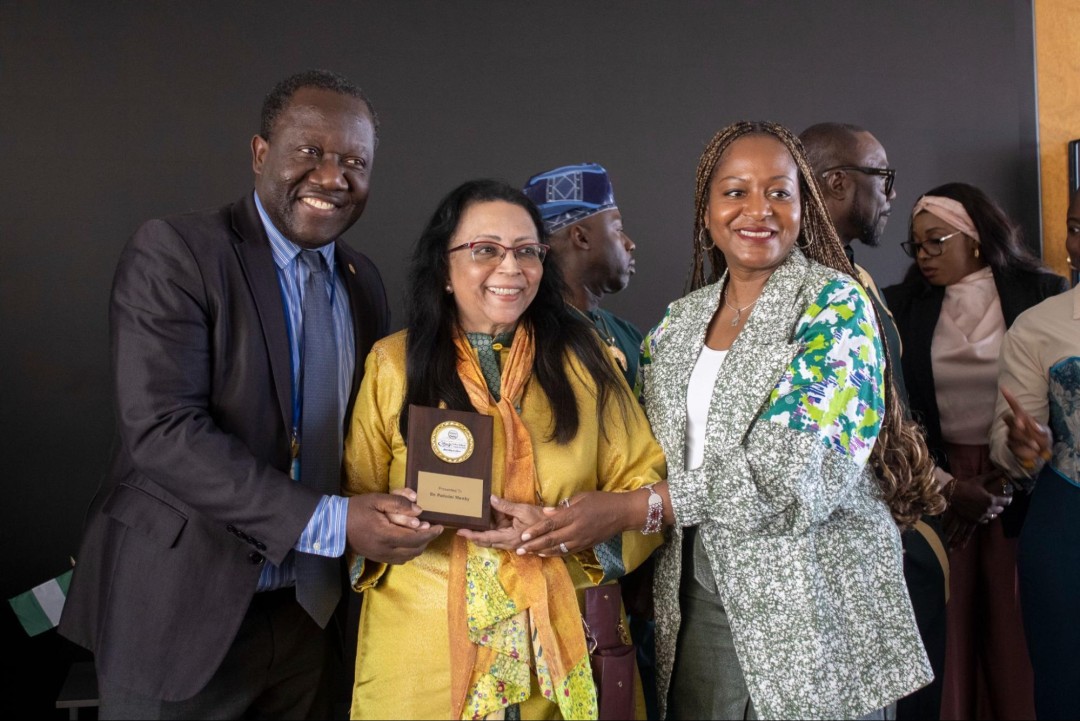
[Guy Djoken, Executive Director of UNESCO Center for Peace with Nova Recipient Dr. Padmini Murthy, Global Health Director at New York Medical College School of Health Sciences and Tolulope Lewis-Tamoka, Chief of Governmental Relations & Africa, UN Global Compact]
“True progress requires collective action and shared responsibility,” Djoken stated, highlighting barriers to education, technology access, and financial empowerment, particularly in Africa.
Hon. Minister Dr. Isata Mahoi of Sierra Leone, in her keynote, outlined her country’s strategic efforts to empower women and girls. These initiatives include allocating 22% of the national budget to education, introducing STEM programs for girls with scholarships, and launching vocational training and microfinance schemes. “Creating opportunities for girls to dream, learn, and lead is not just a policy priority—it is a moral imperative,” Mahoi said.
[L- Zhu Yihan of Femtech Weekend,Cecile Delcuvellerie of Yale Inclusion Economics, Chaste Inegbedion of Sanicle, Councilwoman Roxy Ndebumadu OF roxHealth, Rashmi Joshi of Asha AI (R)]
Honoring Changemakers and Advancing Women’s Leadership
The NOVA Awards, sponsored by Sanicle.Cloud and IBTK Foundation, honored leaders who are not only making an impact today but are committed to sustaining transformative change beyond 2025.
“We celebrate these recipients not just for their past achievements but for their ongoing commitment to women’s empowerment. They have demonstrated a dedication to turning projects into tangible products and services that uplift women. Collectively, they have pledged to continue their impactful work throughout 2025, supporting women in their respective fields and driving meaningful change,” said Hawa Taylor Kamara Diallo, Retired UN Official and Founder of IBTK Foundation.
Hon. Imaan Sulaiman-Ibrahim, Minister for Women Affairs of Nigeria, shared how receiving the NOVA Award at CSW69, coinciding with the 30th anniversary of the Beijing Declaration, represents both a celebration and a challenge:
“This award is not just for me; it is for the countless women and girls across Nigeria who inspire us every day with their resilience and strength. While we acknowledge the progress made, we must also confront the stark realities: the heightened vulnerability of women and children during disasters, the struggles faced in urban slums. This recognition strengthens our resolve to address these challenges head-on. Our commitment to the Global Cities for CEDAW Coalition is unwavering, and we will work tirelessly to create inclusive urban governance and climate action strategies. This is a moment of celebration, yes, but also a moment of rededication to the work ahead, for Nigeria’s women and for a more just society.”
2025: A Defining Year for Gender Equality
As the world looks ahead, 2025 represents a crucial turning point:
Five years remain to achieve the UN Sustainable Development Goals (SDGs), with SDG 5 on gender equality at its core.
25 years since UN Resolution 1325 underscored the need for women’s inclusion in peacebuilding, recognizing that 600 million women and girls worldwide are not just victims but architects of peace.
30 years since the Beijing Declaration set forth a bold vision for gender equality—one that remains unfinished.
While the Beijing+30 Action Agenda builds on six key pillars—bridging the digital divide, eradicating poverty, ending violence, advancing leadership, securing peace, and prioritizing women in climate justice—the summit introduced a seventh: engaging working women and male allies, recognizing their role in fostering truly inclusive workplaces and communities.
Key Insights and Outcomes from the Summit
The summit tackled some of the most pressing issues at the intersection of gender, innovation, and policy through three strategic initiatives:
Femtech Hackathon: Organized by Femtech Weekend, this initiative gathered tech innovators working on digital solutions to bridge gender gaps in health and workplace equity.
Panel Discussions: Experts from Sanicle, UNA-Nigeria, IBTK Foundation, and Vivacity PR led critical conversations on menstrual and menopause equity, financial inclusion, and healthcare innovation.
NOVA Award Ceremony: Recognizing Nobel Working Women and HeForShe Heroes, men who champion gender equity and economic inclusion.
The UNA-Nigeria panel moderated by her secretary General Dr Omopeju Afanu focused on women’s economic empowerment. Key issues discussed included gender inequality, lack of access to finance, unequal pay, and the need for tailored financial products and literacy programs. Panelists emphasized the importance of equity over equality, integrating social protection with financial inclusion, and providing holistic support. Key takeaways included that women face barriers to financial inclusion and business scaling, and structural challenges hinder business efficiency.
Luz Maria Utrera said, “Nothing is impossible. To succeed as a woman against all odds, you need to believe in yourself and in the power of your dreams.” Funmi Olotu stated, “As women, we should be prepared to shatter any ceiling or barriers that exist through our passion, diligence, and integrity.”
The Sanicle.Cloud panel, moderated by Chaste Inegbedion, explored the impact of work-based absenteeism tied to menstrual and menopause issues. Panelists examined how AI and technology can break down systemic barriers that hinder women’s economic participation. Key insights included the need for inclusive workplace policies and the role of AI in empowering women. Rashmi Joshi of Asha AI emphasized AI’s role in lowering barriers to entry for innovators. Cecile Delcuvellerie of Yale Inclusion Economics highlighted the importance of addressing women’s health issues and workplace challenges, and Councilwoman Roxy Ndebumadu stressed that policymakers should focus on incentivizing founders and partnering with startups to solve societal problems.
The IBTK Foundation Panel moderated by her director, Cairo Eubank focused on forging strategic partnerships and collaborations to prepare the workforce for the future. Panelists emphasized fair play, mutual benefits, strategic youth investment, adaptability, continuous learning, and networking.
The Vivacity Panel moderated by Achalu David, the lead consultant at ProjectPro, explored how AI and Employee Resource Groups (ERGs) shape gender equity in the workplace.
Ebaide Omiunu, founder of the Ebaidebheki Initiative focused on sustainability and climate action, highlighted the progress in women’s leadership in Africa over the past 30 years. She noted that since 1995, Africa has seen the appointment of four female ministers and prime ministers and three female presidents—a significant step toward greater representation.
“Empowering Women’s Health in the Workplace in the Digital Era” was the theme of the Femtech Hackathon, where Sanicle.cloud and Femtech Weekend brought together innovators across continents to develop solutions bridging the gender health gap.
Zhu Yihan, Founder of Femtech Weekend, underscored the need for inclusive digital health solutions, ensuring AI-powered innovations truly reflect women’s healthcare experiences rather than reinforcing existing biases.
Seneca Forch, Vice President of the SIPA Pan-African Network, reinforced the collective responsibility of global collaboration in advancing gender equality: “SPAN, as our organization is called, firmly believes in the power of collaboration and unity to achieve a common goal. Events like this remind us that vision is never achieved alone, neither is it realized overnight—but through struggles, triumphs, and small victories that culminate into a mosaic of human progress and resilience. While today may be marked with festivities, may it also be a reminder that there is still much to be done. As we consider the work of our respective countries and organizations represented today, let us not forget the humanitarian mandate to uplift one another—never ceasing to stand with those crying out in nations like Khartoum and the Bukavu. In these days and times, may we wield greater clarion calls to even greater action. In the old adage, we must always ‘lift as we climb.’”
Sanicle.Cloud: Transforming Workplace Health Equity
The summit also marked the official launch of Sanicle.Cloud, a B2B-B2G digital platform designed to help corporations and governments address menstrual and menopause-related workplace absenteeism. By integrating AI-powered insights with policy implementation, Sanicle is committed to ensuring that no woman loses her job due to a natural biological process.
“We need to move beyond merely ’empowering women’—a term that often implies permission—to actually placing them in positions of power,” said Chaste Inegbedion, Chief Period Officer at Sanicle.Cloud.
“At the United Nations Global Compact, we recognize that gender equality is not just a fundamental human right but a necessary foundation for a prosperous and sustainable world,” said Tolulope Lewis-Tamoka, Chief of Governmental Relations & Africa, UN Global Compact. She stressed that technology, when paired with bold policies and strategic investment, can be a game-changer for women’s economic empowerment.
Other award recipients included Dr. Padmini Murthy, Global Health Director at New York Medical College School of Health Sciences; Dr. Jumai Ahmadu, Acting Director of Reforms Coordination and Service Improvement at the FCTA and Founder of Helpline Foundation for the Needy, Abuja; Mariama Sahid, Advocacy Officer for the Young Women in Democracy Forum; Folusho Dasylva, CEO of Royalty Events; Rhoda Robinson, Executive Director of HACEY; Rosemond Yeboah, Founder of the RAY Foundation; and Richard Iyasere, a community leader in the Greater New York metropolitan area and Superintendent with the MTA.
Additional honorees included Mary Apollo, a South Sudanese youth ambassador and founder of The Four Directions; Audu Kadiri, community organizer and CEO of Youth Builders Initiative; Engr. Oluwakemi Ann-Melody Areola, former Special Assistant on Youth, ICT, and Corporate Relations, as well as Special Assistant on New Media to Nigerian Ministers; Dr. Prince Ero Ibhafidon, CEO of Waterlight Save Initiative; Isaac Bayoh, Youth Representative of Sierra Leone to the United Nations; and Henry Ukazu, Legal Coordinator for the NYC Department of Correction.
The list also featured Dr. Dior Fall, President and Founder of 1000 Shades of Women International; Saleah Blancaflor, TV reporter at ADWEEK; Luz Maria Utrera, UN Women Champion for Change, actress, and founder of Fundación Luz María; and many other distinguished personalities.
The Beyond Beijing 30 Summit and NOVA Award outcomes will be officially presented at the World Bank Spring Meetings in April 2025 and during UNGA80 in September 2025. The goal is to move from palliative solutions to sustainable, long-term investments that address women’s health, economic participation, and leadership representation.
Media Contact Company Name:Sanicle Contact Person: Daryll Hall Email:Send Email City: Tulsa State: Oklahoma Country: United States Website:www.sanicle.cloud
Investing more than US$700m, Schneider Electric aims to expand its operations in the US, focusing on sustainability, AI and energy infrastructureSchneider Electric is setting out to substantially reinforce its supply chain in North America, pledging an investment worth more than US$700m by 2027.
This strategic financial commitment is aimed at enhancing energy infrastructure, scaling up domestic manufacturing and catering to the growing demands for AI technologies.
The increasing regional needs of data centres, utilities and industrial sectors are behind Schneider Electric’s largest single capital investment in its 135-year history in the US.
This initiative builds upon earlier investments made in 2023 and 2024, culminating in a total commitment of over US$1bn this decade.
This extensive funding will be channelled towards enhancing factory operations and creating new jobs, in response to escalating consumer demand for energy-efficient solutions, industrial automation and grid reliability.
“This investment supports growing demand for digitalisation, automation and manufacturing, and includes upgrades, expansions and new facilities across the US,” explains Agustin Lopez Diaz, North America Supply Chain Officer at Schneider Electric.
Agustin said manufacturing in the US had entered an “exciting moment” and that Schneider was demonstrating a “deep commitment to continuing to bolster our supply chain in North America”.
Expanding operations and creating jobs
Schneider Electric’s investment is anticipated to generate more than 1,000 jobs across its facilities.
The company is focusing on strengthening its workforce, specifically targeting veterans and retiring US service members for recruitment in diverse roles that include manufacturing, engineering, development and technical analysis.
Aamir Paul, President of North America Operations at Schneider Electric, lifts the lid on the organisation’s bold capital commitment: “We stand at an inflection point for the technology and industrial sectors in the US, driven by incredible AI growth and unprecedented energy demand. To lead the transformation ahead, we must be agile and act now to advance ambitious digitalisation and efficiency goals to make an impact for generations to come.”