Tours of Duty Releases New Account in Sean Flynn and Dana Stone Case, Raising Questions About DPAA’s Handling of Living Witness Lead

The truth of what happened after he vanished into Cambodia — and for answers about why a living witness account that could change the final chapter of his life was not pursued with the urgency it deserved.

Washington DC – May 28, 2026 – Tours of Duty has released a new account involving Sean Flynn and Dana Stone, two of the most famous missing journalists of the Vietnam War era, challenging long-standing assumptions about what happened after the men disappeared in Cambodia in 1970.

Flynn, the son of Hollywood legend Errol Flynn, and fellow war correspondent Dana Stone vanished on April 6, 1970, while traveling by motorcycle through Cambodia. For more than half a century, the accepted public narrative has been that the men were captured by Communist forces in eastern Cambodia and likely died within months.

The new Tours of Duty account raises a far more explosive possibility: that Flynn and Stone may have survived for years in captivity, were later swept into the collapse of Cambodia under the Khmer Rouge, and may have been seen alive in an area where official accounts have long maintained Americans were not present.

According to the account, the record shows that a living witness came forward years ago with information suggesting Flynn and Stone did not die in 1970, but may have survived until 1976. The witness, a former naval officer under Lon Nol who was herself hunted after the regime fell, claimed she saw three Americans and one unidentified European male tied to a tamarack tree after they had been recaptured near the Thai border.

The witness account describes a harrowing scene: foreign prisoners bound to a tree, a murdered guide, Khmer Rouge guards, and a woman in hiding who risked her own life to cut the men loose, bring them food, and help them try to escape.

If true, the account would not merely add a new detail to the Flynn and Stone case. It would challenge the timeline, geography, and assumptions that have shaped one of the most infamous unresolved disappearances of the Vietnam War era.

Tours of Duty says the witness reporting was placed into official channels more than seven years ago, but the Defense POW/MIA Accounting Agency failed to pursue it with urgency and failed to notify Sean Flynn’s sister, Rory Flynn, of the new reporting.

The newly released account argues that this failure reflects a broader collapse inside America’s POW/MIA accounting mission. According to information provided to Tours of Duty, DPAA has more than 800 employees but only two personnel functioning under the title of “analyst” for the Vietnam conflict, and those roles are primarily archival and historical rather than true cold-case analysis billets.

The organization argues that Vietnam-era cases cannot be solved through paperwork, laboratory production metrics, or passive case management. They require HUMINT development, witness correlation, link analysis, route reconstruction, and disciplined testing of conflicting narratives before first-generation witnesses die and the last living memory of these cases disappears.

Over the last year, Tours of Duty helped arrange for the witness to revisit the site connected to her account. That effort led to the identification of four additional witnesses and several new leads regarding the possible disposition of the three Americans and one unidentified European male.

The organization says that progress demonstrates what active pursuit should look like: preserving a living lead, testing the account, locating additional witnesses, developing new lines of inquiry, and ensuring the family finally knows someone is pursuing the truth with urgency.

The Flynn and Stone case is now being presented not only as a legendary missing-journalist mystery, but as a test of whether the U.S. government’s accounting mission still functions when credible outside leads challenge old assumptions, diplomatic comfort, and bureaucratic inertia.

Tours of Duty is calling for congressional oversight and a transparent lead-review pipeline requiring DPAA to notify families when new reporting is received, provide written justification when outside leads are rejected or delayed, and create an independent escalation pathway when credible evidence is not pursued.

The promise was never no man left behind unless the case is old, inconvenient, or politically uncomfortable. The promise was no man left behind.

Sean Flynn, Dana Stone, and the others in this account have waited long enough.

About Tours of Duty

Tours of Duty is a veteran-led nonprofit organization dedicated to advancing unresolved POW/MIA cases through field investigation, witness development, historical research, advanced technology, and support for families still waiting for answers.

Media Contact:

Michael Luehring

Senior Mission Attache, Tours of Duty

m.luehring@toursofduty.org

202-539-9615

www.toursofduty.org

Media Contact
Company Name: Tours of Duty
Contact Person: Mike Luehring
Email: Send Email
Country: United States
Website: https://toursofduty.org/


Press Release Distributed by ABNewswire.com

To view the original version on ABNewswire visit: Tours of Duty Releases New Account in Sean Flynn and Dana Stone Case, Raising Questions About DPAA’s Handling of Living Witness Lead

Cernum Biosciences Review: “No Clumping, Perfect Vacuum, High Purity”

“Verified customer review highlighting product quality, vacuum integrity, purity standards, fast delivery, and professional service from Cernum Biosciences.”
Cernum Biosciences review from a verified buyer highlights product quality, fast delivery, and professional customer service.

Cernum Biosciences review feedback continues to reinforce the company’s growing reputation for quality, consistency, and customer confidence within the peptide market, following a recent verified buyer review highlighting “no clumping, perfect vacuum, and high purity.”

According to the review, the customer evaluated the product quality during the reconstitution process and noted strong overall satisfaction with the product experience and delivery standards.

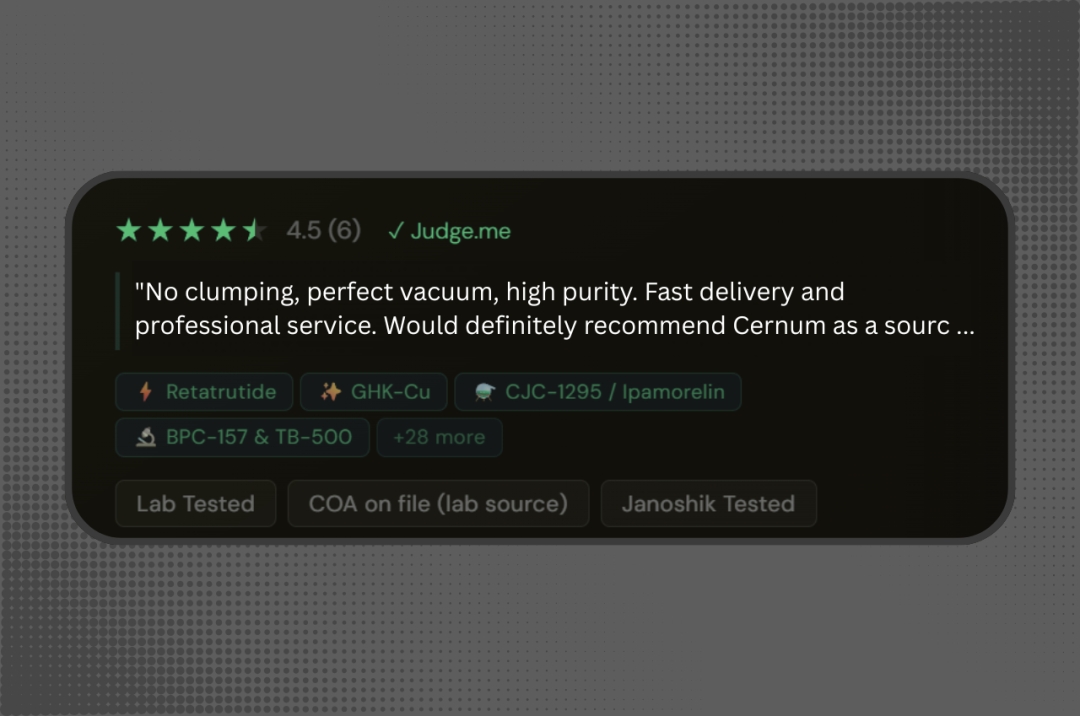
“I checked the quality while reconstituting, no clumping, perfect vacuum, overall great product. Definitely high purity. Not to mention fast delivery, and professional service. Would definitely recommend Cernum as a source for peptides,” the verified review stated.

As competition within the peptide industry continues to grow, customer reviews increasingly play a major role in how buyers evaluate consistency, handling standards, and overall reliability. Reviews referencing product stability, vacuum integrity, purity perception, and fulfillment speed are often viewed as important indicators for customers comparing peptide providers.

Cernum Biosciences has continued to position itself as a quality-focused peptide brand emphasizing transparency, third-party testing, batch-level verification, and consistency across manufacturing and fulfillment processes. The company offers a growing catalog of peptides including BPC-157, TB500, GHK-Cu, Retatrutide, NAD+, Semax, Selank, MT2, AOD, and CJC & Ipamorelin blends.

According to the company, maintaining customer trust through verified standards and documented quality practices remains a central part of its long-term strategy. The company also notes that verified customer feedback provides additional insight into real-world customer experiences related to product handling, packaging, delivery, and overall satisfaction.

The recent review adds to a growing number of customer responses highlighting product consistency and service reliability, as demand for transparent peptide providers continues to increase throughout 2026.

Customers can learn more about Cernum Biosciences, explore available products, and review additional customer feedback through the company’s official website.

About Cernum Biosciences

Cernum Biosciences is an RUO peptide brand focused on quality, transparency, and consistency. The company offers a growing selection of peptides including GHK-Cu, BPC-157, TB500, CJC & Ipamorelin blends, Retatrutide, NAD+, AOD, Semax, Selank, and MT2, with an emphasis on verified standards and a trustworthy customer experience.

Media Contact
Company Name: Cernum Biosciences
Contact Person: Andrew S. Chapman
Email: Send Email
Country: United States
Website: https://cernumbiosciences.com/


Press Release Distributed by ABNewswire.com

To view the original version on ABNewswire visit: Cernum Biosciences Review: “No Clumping, Perfect Vacuum, High Purity”

Floatboat Launches: The Proactive Agent OS That Runs Work From The Calendar

Backed by Sequoia and Welight Capital, FloatBoat turns meetings, deadlines, and routines into automated agent workflows that execute at the right time — no prompting required.

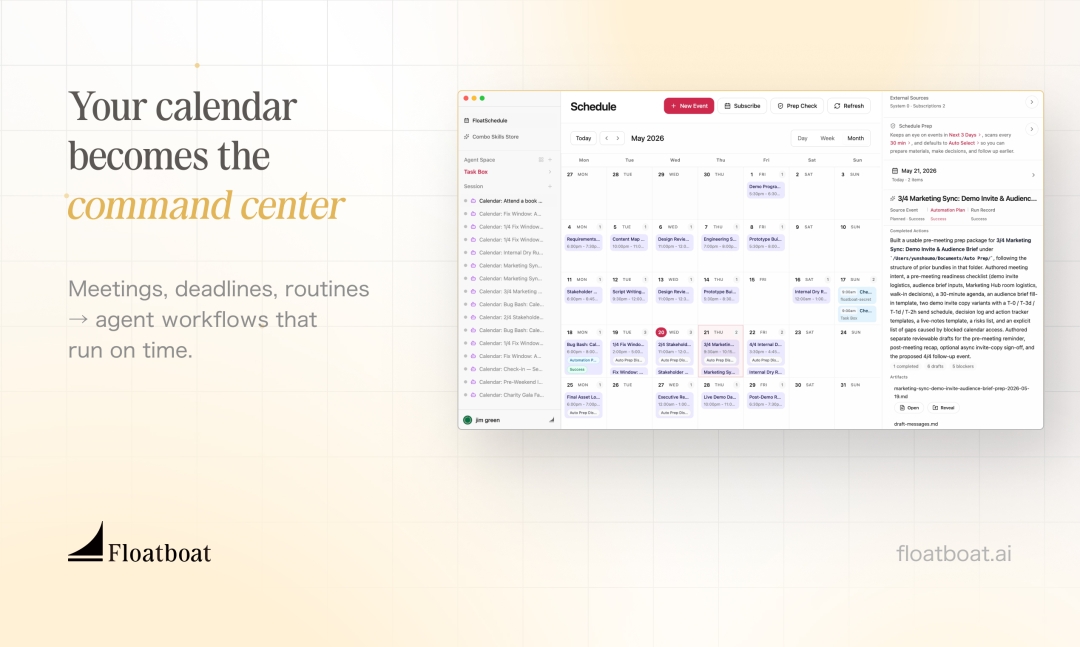
SAN FRANCISCO – Floatboat, a San Francisco-based artificial intelligence company backed by Sequoia and Welight Capital, today announced the global launch of its proactive agent operating system designed to transform calendar-driven work for busy professionals. The platform represents a fundamental shift in how AI agents interact with professional workflows – moving from reactive, prompt-dependent tools to agents that automatically prepare meeting briefs, draft follow-up emails, track deadlines, gather relevant documents, and trigger recurring workflows based on calendar context. Users remain in control, reviewing and approving before any action executes. FloatSchedule is the first core product built on the OS, with additional proactive office agents for project execution, client management, and team coordination planned for future release.

The Problem: Modern Work Is Fragmented, Reactive, and Overwhelming

For today’s professionals, managing work rarely happens in a single application or a predictable sequence. It happens across dozens of disconnected tools — a meeting scheduled in Google Calendar, notes scattered in Notion, action items buried in Slack threads, code commits tracked in GitHub, and files stored across Google Drive and local folders. The average knowledge worker switches between applications more than 1,000 times per day, losing focus, context, and productivity with every transition. Existing AI assistants require users to continuously prompt them, describe context, and manually orchestrate actions — adding yet another layer of complexity to an already fragmented workflow.

Floatboat was built to address this fundamental disconnect. Rather than asking professionals to adapt to yet another tool, the company designed an agent OS that operates inside the tools professionals already use, syncing context and taking action without requiring users to leave their existing workflows.

A Proactive Agent OS, Not Just Another Calendar App

Floatboat’s approach differs fundamentally from conventional AI productivity tools. The platform is not a standalone calendar application — it is a proactive agent operating system where Calendar serves as the first entry point. The OS connects to more than 3,500 applications and services, including Notion, Slack, GitHub, Google Drive, Linear, Figma, and local file systems, creating a unified context layer that agents use to anticipate needs and prepare work autonomously.

The key distinction is proactivity. Traditional AI tools wait for instructions. When a high-priority task is approaching and no action has been taken, Floatboat prepares the necessary context, drafts next steps, and surfaces them for review — without disrupting existing workflows. Users remain in control, with review and approval built into sensitive or high-impact actions, eliminating the need for continuous prompting or manual orchestration.

“The next generation of AI won’t wait in a chat box. It will understand your schedule, prepare work before you ask, and help you follow through at the right moment,” said Bruce Tan, founder of Floatboat.

Core Features and Capabilities

Calendar-Centered Automation serves as the foundation of Floatboat’s proactive intelligence. The system syncs multi-source calendars and uses schedule data as the primary signal for anticipating work needs. When a calendar event changes, the agents automatically adjust preparation workflows, gather relevant context from connected applications, and surface actionable insights before the user needs them.

Agent Workspace provides a centralized command center where professionals can monitor agent activity, review prepared materials, and approve or modify agent-generated outputs. The workspace is designed to give users full visibility into what agents are doing on their behalf, maintaining transparency and control without requiring constant oversight.

FloatIM is Floatboat’s built-in messaging layer — a chat interface where you talk to your AI agents the same way you message a colleague. You can bring multiple agents into one conversation to handle complex tasks together, and FloatIM remembers your full history, preferences, and prior decisions across every interaction — no need to repeat yourself or re-explain context.

Combo Skills allow agents to chain multiple operations into sophisticated workflows. A single trigger — such as a new meeting appearing on the calendar — can initiate a sequence of actions: pulling relevant documents from Google Drive, summarizing recent Slack discussions with the meeting participants, checking GitHub for any open pull requests related to the agenda, and compiling everything into a pre-meeting briefing. These multi-step operations run autonomously, delivering completed work products rather than requiring users to orchestrate each step manually.

Multi-Model Support ensures that Floatboat is not locked into a single AI provider. The platform supports GPT, Claude, Gemini, DeepSeek, and Kimi, allowing users to leverage the strengths of different models for different tasks. This architectural decision reflects the company’s belief that the best agent OS should be model-agnostic, giving users flexibility as the AI landscape continues to evolve.

Local File Sync extends the platform’s contextual awareness beyond cloud applications. By maintaining synchronization with local file systems, Floatboat’s agents can reference documents, spreadsheets, presentations, and other materials stored on a user’s device, ensuring that no relevant context is lost simply because it exists outside of cloud-based tools.

Who Floatboat Is Built For

Floatboat is designed for any professional whose schedule drives their work. This includes managers juggling multiple direct reports and cross-functional projects, consultants managing client engagements across different organizations, students balancing coursework with extracurricular commitments and job searches, and individual contributors whose calendars dictate the rhythm of their productive output.

The platform is particularly well-suited for professionals who find themselves spending more time coordinating work than doing work — those who lose hours each week to meeting preparation, context gathering, follow-up tracking, and the administrative overhead that accumulates around a busy schedule. Floatboat’s proactive agents absorb this coordination burden, allowing users to focus their cognitive energy on high-value decision-making and creative work.

Use Case Scenarios

Consider a product manager with back-to-back meetings across three different projects. Before Floatboat, preparation meant manually checking Notion for project updates, scanning Slack channels for relevant discussions, reviewing GitHub for development progress, and compiling notes — often in the ten-minute gap between meetings. With Floatboat, the agents detect upcoming meetings from the calendar, automatically gather context from all connected tools, and deliver a comprehensive briefing that is ready for review when the user needs it.

For a consultant managing multiple client engagements, Floatboat’s agents track deliverable deadlines across different project management tools, surface relevant client communications from email and messaging platforms, and prepare status updates before scheduled check-ins. The consultant reviews and approves rather than researches and compiles.

A graduate student preparing for thesis committee meetings can rely on Floatboat to gather recent literature references from connected research tools, compile progress notes from various documents, and prepare presentation outlines based on the meeting agenda — all triggered automatically by the calendar event.

Availability and Access

Floatboat is available immediately as a desktop application for both macOS and Windows. The platform is free to try at floatboat.ai, with the global public launch today. Floatboat connects through Slack, Telegram, WeChat (Clawbot), and Feishu. The company invites professionals across all industries and roles to experience proactive agent technology and provide feedback that will shape the platform’s continued development.

See how Floatboat works: https://youtu.be/SWMIbUBfhJY

Looking Ahead: More Agents on the OS

The Calendar product represents the beginning of Floatboat’s vision for a comprehensive proactive agent OS. The company has announced plans to release additional agents focused on project execution, client management, and team coordination in the coming months. Each new agent will build upon the same foundational principles — proactive operation, integration with existing tools, and human-in-the-loop approval rather than continuous prompting.

“Calendar is where work begins for most professionals — it’s the natural starting point for a proactive agent OS,” said Judy Gao, Co-founder of Floatboat. “But the vision extends far beyond scheduling. Every aspect of professional coordination that currently requires manual effort is an opportunity for proactive agents to add value. The OS architecture is designed to support an expanding ecosystem of specialized agents that work together seamlessly.”

As professional workflows become more complex and the number of tools in the average technology stack continues to grow, Floatboat’s approach — embedding intelligence inside existing workflows rather than creating new ones — positions the company to address a fundamental and growing need in the modern workplace. By handling preparation, context gathering, and routine follow-through, Floatboat helps professionals reclaim time for higher-value decisions and execution.

Experience the future of calendar-driven work. Try Floatboat for free at floatboat.ai.

About Floatboat

Floatboat is a proactive agent OS for calendar-driven work. Founded in 2025 and headquartered in San Francisco, Floatboat is backed by Sequoia and Welight Capital.

For more information, please visit floatboat.ai or follow Floatboat on social media:

X (Twitter)

LinkedIn

YouTube

Media Contact
Company Name: AOE Tech Labs Limited
Contact Person: Floatboat Team
Email: Send Email
Country: United States
Website: http://floatboat.ai/


Press Release Distributed by ABNewswire.com

To view the original version on ABNewswire visit: Floatboat Launches: The Proactive Agent OS That Runs Work From The Calendar

Tours of Duty Releases Farlow Case Findings After Vietnamese Family Says It Cared for American’s Grave for More Than 50 Years

The findings examine whether a reported burial lead for Chief Warrant Officer Craig Lee Farlow was fully exhausted after a witness allegedly told recovery personnel they had not dug deep enough.

Washington DC – May 28, 2026 – Tours of Duty has released case findings on Chief Warrant Officer Craig Lee Farlow, a U.S. Army aviator lost in South Vietnam on May 16, 1971, whose case remains unresolved more than five decades after his UH-1 helicopter crashed under enemy fire.

Farlow was serving with Company A, 101st Aviation Battalion, 101st Airborne Division, when his aircraft was hit, lost rotor power, crashed into trees, and caught fire. Enemy activity prevented an immediate recovery effort, and when a later search was conducted, the remains of all but one crew member could not be located.

More than fifty years later, a Vietnamese family told Tours of Duty they knew where Craig Farlow had been buried.

Their account was not a vague rumor. According to the family, one of their own had buried the remains in the family plot after the crash and the family had cared for the grave for decades. They later built a small memorial to him and kept his photograph in their home.

That is the human weight of this case: while an American soldier remained missing to his own country, a Vietnamese family says it tended his resting place with reverence.

Tours of Duty met with members of the family in the United States and encouraged them to cooperate fully when they were told Vietnamese authorities and DPAA would be coming to the site. If the grave held Craig Farlow, the objective was clear: he deserved to come home.

According to information provided to Tours of Duty, DPAA went to the family plot, the witness who said he buried Farlow was present, the family cooperated, and the site was available. DPAA reportedly excavated to approximately 52 centimeters, declared nothing found, and ended the effort.

The witness reportedly told them to keep digging.

The Farlow findings ask a direct question: when a family comes forward, a burial witness is standing at the site, and that witness says the remains are deeper, how can a recovery effort stop short and call the mission complete?

The findings do not claim every lead guarantees a recovery. They recognize that witnesses can be mistaken, sites can shift, burials can be disturbed, remains can degrade, and time can make recovery work difficult. But those realities are precisely why burial-specific leads require rigorous investigation, careful excavation strategy, and a willingness to follow evidence beyond a shallow procedural threshold.

Tours of Duty’s findings argue that a witness who claims to have buried a missing American is not background noise at a recovery site. He is evidence. His account should be tested, documented, and exhausted before the government walks away.

The Farlow release is part of a broader series of Vietnam-era case findings from Tours of Duty examining field-developed leads, witness accounts, family-held knowledge, and concerns that America’s POW/MIA accounting mission has become too dependent on administrative activity and not strong enough in true case investigation.

The issue raised by the Farlow findings is larger than one reported grave. It is whether the accounting system still has the investigative capacity to listen to witnesses, test conflicting information, pursue difficult leads, and keep digging when the field evidence demands it.

Vietnam-era cases are running out of time. First-generation witnesses are aging. Families are aging. Local memory is disappearing. Burial accounts, crash-site knowledge, and family-held information may not survive much longer. When a family says it has protected an American’s grave for more than half a century, the United States should meet that claim with urgency, humility, and a recovery effort worthy of the man who never came home.

Craig Farlow deserves more than a crash summary and a shallow dig. He deserves a serious case investigation, a serious recovery strategy, and a government willing to exhaust every avenue before it walks away.

The Vietnamese family that honored him deserves better, too.

The full Farlow case findings are available here: Farlow, Craig Refno 1746

About Tours of Duty

Tours of Duty is a veteran-led nonprofit organization dedicated to advancing the search, recovery, and fullest possible accounting of America’s missing servicemembers. The organization conducts field investigations, witness interviews, case research, site analysis, and mission development in support of unresolved POW/MIA cases, while reconnecting veterans to purpose through service.

For media inquiries please contact:

Mike Luehring

Senior Mission Attache, Tours of Duty

m.luehring@toursofduty.org

202-539-9615

www.toursofduty.org

Media Contact
Company Name: Tours of Duty
Contact Person: Mike Luehring
Email: Send Email
Country: United States
Website: http://www.toursofduty.org/


Press Release Distributed by ABNewswire.com

To view the original version on ABNewswire visit: Tours of Duty Releases Farlow Case Findings After Vietnamese Family Says It Cared for American’s Grave for More Than 50 Years

Top 10 Urban Campground Adds Dog Friendly Kayaking to Its Waterfront Stay and Play Experience Near Starved Rock State Park

“”Being named a USA Today Top 10 Urban Campground was a proud moment, but we are not resting on that recognition. Adding dog friendly kayak tours is our way of continuing to raise the bar for what a campground experience can be. When guests can camp on the waterfront, paddle with their dog, and hike Starved Rock all in the same weekend, that is something special.” — Spokesperson”
Kayak Starved Rock Campground, recognized by USA Today as a Top 10 Urban Campground, now offers dog friendly guided kayak tours and rentals alongside its waterfront camping facilities. The expanded offerings position the campground as a one-stop outdoor destination for families, corporate retreats, and scout groups visiting the Starved Rock region.

Kayak Starved Rock Campground is building on its reputation as a premier outdoor destination by introducing dog friendly guided kayak tours and kayak rentals at its waterfront location next to Starved Rock State Park in Illinois. The expansion adds a new dimension to the campground’s stay and play model, which encourages visitors to combine overnight camping with on-site recreation for a complete getaway experience.

Named a USA Today Top 10 Urban Campground, the facility has earned national attention for delivering an outdoor experience that is both immersive and accessible. Situated with convenient access to Interstate 80, the campground draws visitors from across the Midwest who are looking for a nature-filled retreat that does not require hours of driving on remote back roads. The proximity to Starved Rock State Park, which welcomes roughly three million visitors annually, gives guests immediate access to one of Illinois’ most celebrated natural landmarks.

The new dog friendly kayak program reflects a broader shift in travel preferences. Studies from the travel industry consistently show that a growing percentage of American families travel with pets, and many actively seek out accommodations and activities that welcome animals. Kayak Starved Rock Campground recognized this trend and took deliberate steps to ensure its guided tours and rental operations could safely and comfortably include dogs.

Guided kayak tours are led by knowledgeable local guides who are familiar with the waterways, wildlife, and history of the Starved Rock area. Guests receive a pre-launch safety briefing that covers paddling techniques, water awareness, and specific guidance on kayaking with a dog. The tours follow scenic routes that showcase the natural beauty of the Illinois River Valley, providing opportunities to spot birds, turtles, and other wildlife along the way. For guests who prefer a self-directed experience, kayak rentals allow paddlers to set their own pace and explore at their leisure.

The waterfront camping sites at Kayak Starved Rock Campground serve as the anchor of the stay and play concept. Guests wake up steps from the water, eliminating the need to pack up and drive to a separate launch point. This seamless integration of lodging and activity is especially appealing to families with children and dogs, as it reduces the logistical headaches that often accompany outdoor trips with young ones and pets in tow.

Corporate groups have also discovered the value of the campground as a team-building venue. Guided group kayak tours provide shared challenges and experiences that translate into stronger workplace relationships. The informal campground environment strips away the stiffness of conference settings and allows colleagues to interact naturally. Scout groups similarly benefit from the structured yet adventurous programming, with opportunities to develop paddling skills, practice outdoor safety, and earn achievement-related credit.

The location next to Starved Rock State Park offers guests more than just kayaking. The park features eighteen canyons formed by glacial meltwater, seasonal waterfalls, and thirteen miles of well-maintained hiking trails. Many campground visitors plan multi-day stays that incorporate both water and land activities, taking advantage of the rare combination of waterfront camping and world-class hiking within walking distance.

Reservations for dog friendly guided kayak tours and waterfront camping can be made through the campground website. With peak season demand growing each year alongside Starved Rock State Park’s rising visitor numbers, early booking is recommended for those planning visits during summer and early fall months.

CONTACT: https://kayakstarvedrock.com

https://www.facebook.com/KAYAKSTARVEDROCKCAMPGROUND/

https://www.instagram.com/kayakstarvedrockcampground/

https://www.linkedin.com/company/kayak-starved-rock-campground/

Media Contact
Company Name: KAYAK STARVED ROCK CAMPGROUND
Contact Person: John Watson
Email: Send Email
Country: United States
Website: https://kayakstarvedrock.com


Press Release Distributed by ABNewswire.com

To view the original version on ABNewswire visit: Top 10 Urban Campground Adds Dog Friendly Kayaking to Its Waterfront Stay and Play Experience Near Starved Rock State Park

Misha Ezratti Announces Community-First Development Vision to Drive Sustainable and People-Centered Real Estate Growth

Misha Ezratti Announces Community-First Development Vision to Drive Sustainable and People-Centered Real Estate Growth

The way communities are designed has a lasting impact on how people live, connect, and experience everyday life. In Florida’s rapidly expanding housing market, that idea has become increasingly important as population growth, in-migration, and shifting buyer expectations continue to reshape residential demand.

One approach gaining greater attention is community-first development, a model that focuses on building neighborhoods around people rather than simply placing homes on land.

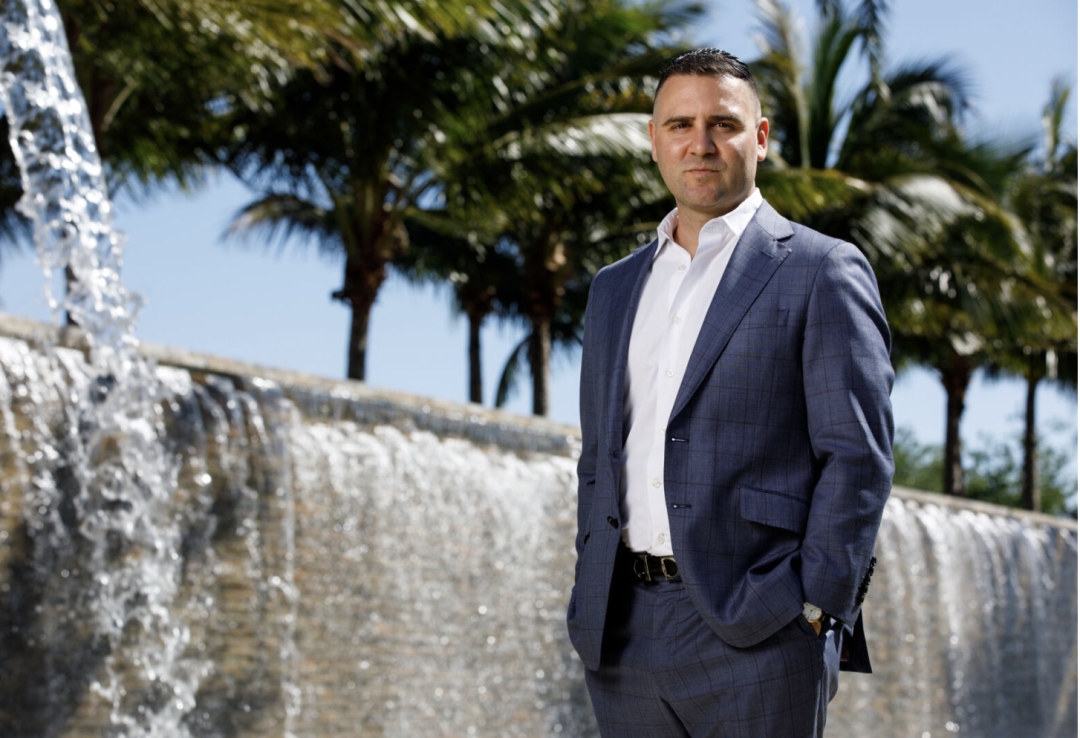
For Misha Ezratti, this philosophy has been a consistent part of his approach to residential development. As president of GL Homes, he has helped guide the creation of large-scale communities across Florida that emphasize connection, livability, and long-term planning.

Rather than viewing development as isolated construction projects, his work reflects a broader vision of neighborhoods as complete environments where residents can live, access amenities, build relationships, and experience a strong sense of place.

What is community-first development?

Community-first development is an approach to building that focuses on the people who will ultimately live in a neighborhood. Instead of only prioritizing physical construction, it considers how residents will experience daily life within a community, including access to amenities, shared spaces, infrastructure, and opportunities for connection.

It emphasizes planning that begins long before construction starts. Developers evaluate how neighborhoods will function in real life, including traffic flow, walkability, green space integration, recreation access, and long-term livability.

In this model, homes are part of a larger system rather than standalone products. Streets, clubhouses, parks, trails, and everyday conveniences are designed together so that the community functions as a connected environment.

This approach stands in contrast to more traditional development models that focus primarily on density or home delivery timelines. Instead, community-first development prioritizes how people will live in a neighborhood over decades, not just how quickly it can be built.

Misha Ezratti’s vision at GL Homes

The vision of Misha Ezratti is reflected in the continued evolution of GL Homes communities across Florida. Under his leadership, the company has expanded its focus on master-planned developments that integrate residential living with amenities, infrastructure, and long-term community design.

A key part of this approach is a disciplined focus on market trends and long-term housing demand.

Rather than reacting to short-term shifts, GL Homes places significant emphasis on ongoing market analysis, population movement patterns, and buyer behavior across Florida’s diverse regions.

This includes evaluating where in-migration is strongest, how demographics are evolving, and what features buyers are prioritizing in new construction communities.

Insights from this analysis help guide decisions around land acquisition, community scale, and amenity planning, ensuring developments are aligned with where demand is heading rather than where it currently stands.

In practice, this means anticipating shifts such as increased demand for lifestyle-driven amenities, greater interest in active adult communities, and rising expectations around wellness, convenience, and integrated neighborhood design.

By incorporating these signals early in the planning process, GL Homes is able to design communities that reflect not only current market needs but also emerging preferences.

One of the most visible examples of this approach is the continued expansion of the Valencia 55+ communities, which have become a defining part of GL Homes’ portfolio. These communities span multiple regions of Florida, including Naples, Fort Myers, Port St. Lucie, Tampa, and Boynton Beach, each located in high-growth areas with access to infrastructure, health care, and retail.

Within these developments, Misha Ezratti’s vision is reflected in how each community is structured around a central clubhouse model that serves as a hub for activity and connection.

These clubhouses typically include fitness centers, resort-style pools, event spaces, and programming designed to support active adult lifestyles.

Across GL Homes communities, planning also incorporates walking trails, lakes, preserved green space, and neighborhood gathering areas. Environmental planning and long-term land use considerations are taken into account in early development stages, ensuring communities remain sustainable and functional over time.

Across all developments, a consistent principle guides decision-making: strong communities are built through intentional, long-term planning rather than short-term execution.

Misha Ezratti’s leadership philosophy behind the vision

The foundation of Misha Ezratti’s leadership is rooted in a people-first mindset that prioritizes experience, consistency, and long-term value over short-term output.

A central part of his approach is long-term thinking. Rather than focusing on immediate delivery cycles, he has emphasized planning communities that remain strong and relevant decades after they are built.

This includes aligning land acquisition strategy with infrastructure growth, population trends, and regional development patterns across Florida.

Another defining element of Misha Ezratti’s leadership is cross-functional development within GL Homes. Employees are encouraged to build experience across multiple areas of the business, including construction, land development, sales, accounting, and legal operations.

This strengthens organizational understanding and improves decision-making across departments.

Mentorship also plays a key role in shaping company culture. Misha Ezratti has frequently credited his father, Itzhak “Itchko” Ezratti, as a foundational influence, particularly in emphasizing discipline, resilience, and long-term commitment to building a company that lasts across generations.

This commitment to mentorship extends beyond the organization as well, reflected in his participation in initiatives such as Mentoring Monday in South Florida, where business leaders engage with professionals through structured mentoring sessions designed to share guidance and career insight.

Together, these principles shape a leadership style that blends inherited experience with modern organizational strategy.

Misha Ezratti’s real-world community impact

The impact of Misha Ezratti community-focused development is visible in how residents experience GL Homes communities across Florida. These neighborhoods are designed to support connection, convenience, and lifestyle engagement beyond the home itself.

In many communities, shared amenities serve as central gathering points. Clubhouses host fitness classes, social events, and recreational programming. Outdoor spaces such as walking trails, pickleball courts, and resort-style pools encourage daily activity and interaction among neighbors.

GL Homes also incorporates programming and community engagement into its developments, particularly within Valencia communities, where residents often participate in clubs, wellness activities, and organized events designed to foster connection and social engagement.

Beyond recreation, the planning approach also considers long-term livability. Features such as accessible layouts, low-maintenance landscaping, and proximity to essential services help ensure that communities remain functional and desirable as residents’ needs evolve over time.

This approach reflects a broader understanding that successful development is not only about delivering homes, but about creating environments where people can build meaningful, connected lives.

Why community-first development matters today

Florida continues to experience sustained population growth, with ongoing migration driving demand for residential communities that offer more than just housing.

Buyers are increasingly looking for neighborhoods that integrate lifestyle, convenience, and connection. This has led to strong demand for master-planned communities that combine residential living with amenities, services, and shared spaces.

Misha Ezratti real estate philosophy aligns directly with this shift. His approach reflects an understanding that modern development must account for how people live day to day, not just where homes are located or how quickly they can be delivered.

As affordability pressures, infrastructure demands, and regional growth continue to shape Florida’s housing market, community-first development has become a defining direction for the industry.

Conclusion

At its core, the vision of Misha Ezratti centers on a simple idea: communities should be designed around people and the way they live.

Through his leadership at GL Homes, he has helped advance a development approach that emphasizes thoughtful planning, long-term livability, and integrated community design.

As Florida continues to grow, his work reflects a broader shift in residential development toward building environments that function as complete communities rather than collections of homes.

Media Contact
Company Name: GL Homes
Contact Person: Brittany Robbins
Email: Send Email
Phone: 8003995076
Address:1600 Sawgrass Corporate Parkway Suite 230
City: Sunrise
State: Florida
Country: United States
Website: www.glhomes.com

Kinto Australia Expands Mobility Footprint with Fleet Electrification and Increased Suburban Reach

Kinto Australia Expands Mobility Footprint with Fleet Electrification and Increased Suburban Reach

MELBOURNE, VIC – KINTO Australia, the car hire services arm of Toyota, has announced a scale-up of its national operations through mid-2026. The expansion marks a pivotal shift in the local car share Sydney and national markets, driven by a fleet-wide transition toward electrification and an increased physical presence in regional and metropolitan hubs.

Central to this expansion is the integration of the Toyota bZ4X, the manufacturer’s first dedicated battery-electric vehicle (BEV), into the KINTO fleet. This move is supported by a comprehensive safety initiative finalised in early 2026, which saw the retrofitting of the electric fleet with New EV Acoustic Vehicle Alerting Systems (AVAS) to improve pedestrian awareness in high-traffic urban environments.

In addition to pure electric offerings, the KINTO Flex subscription division has transitioned its passenger vehicle inventory to be more than 97% hybrid. This shift reflects a broader corporate strategy to lower carbon emissions while maintaining the accessibility of the standard car rental model.

To accommodate growing demand, the service has expanded to over 250 locations nationwide. This growth includes a strategic push into regional centres such as Launceston, Ballina, and Dubbo, alongside increased availability at major Australian airports and hospitality precincts.

According to the latest KINTO’s car rental price list and service structures, the KINTO Flex model now provides a middle-ground for consumers seeking long-term vehicle access without the commitment of traditional ownership. Current data indicates that these subscription services, which include insurance and maintenance, are being utilised by a diverse demographic ranging from corporate travellers to students.

About KINTO Australia:

KINTO Australia is a technology-driven mobility provider owned by Toyota. It offers a suite of vehicle access services, including short-term car sharing, daily rentals, and long-term vehicle subscriptions through a digital-first platform.

Social Link: https://www.instagram.com/kinto_au/

Media Contact
Company Name: KINTO
Contact Person: KINTO Australia
Email: Send Email
Phone: 1300 832 772
Address:155 Bertie St, Port Melbourne VIC 3207
Country: Australia
Website: https://www.kinto.com.au/

Turlock Electrical Contractors Highlight Key Indicators of Imminent Panel Failure

The electrical panel in a Turlock home serves as the nerve center for every circuit throughout the house, yet most homeowners give it little thought until something goes wrong. This lack of attention is understandable given that panels typically sit quietly in garages, utility closets, or exterior walls, performing their essential work without drawing attention to themselves. The problem is that electrical panels have finite useful lifespans, and panels that were perfectly adequate when homes were originally built often fall short of modern electrical demands and current safety standards. Recognizing when a panel upgrade is warranted, rather than waiting for a dramatic failure or emergency to force action, allows homeowners to plan this important work on a schedule that works for them with proper contractor selection and reasonable timing.

The Central Valley climate and the characteristics of Turlock housing stock combine to create specific considerations for electrical panels that homeowners should understand. Central Valley summer heat puts stress on electrical equipment that cooler climates do not produce, and the loads from air conditioning that Turlock homes require during hot months substantially exceed what electrical demands looked like when many area homes were originally built. Agricultural heritage and expanding residential development mean that Turlock homes range from older properties with decades-old electrical systems to newer construction with modern installations. Each category has its own considerations regarding panel adequacy, condition, and timing of potential upgrades. This guide walks through the specific signs indicating that a panel upgrade may be warranted for Turlock homes, explains why these signs matter, and outlines what the upgrade process actually involves.

Common Warning Signs Your Electrical Panel Needs Upgrading in Turlock CA

The warning signs suggesting panel upgrade deserves consideration range from dramatic failures forcing immediate attention to subtle indicators many homeowners overlook until problems become serious. Learning to recognize the full range of warning signs allows for proactive response rather than reactive crisis management. Some indicators reflect capacity issues where panels cannot handle current electrical demands safely, while others reflect safety concerns related to aging components, manufacturer defects emerging over time, or installation issues developing through years of operation. Professional evaluation is warranted when significant warning signs appear, as electrical panels involve hazards making DIY diagnosis inappropriate. Qualified providers of Electrician Turlock CA services bring the expertise needed to evaluate panels properly and recommend appropriate solutions.

Circuit Breakers That Keep Tripping Throughout the Home

Circuit breakers tripping repeatedly during normal household use indicate electrical system issues warranting investigation, and the specific implications depend on understanding why tripping is occurring. Breakers are safety devices designed to respond to excessive current by interrupting power to protect wiring from overheating that could cause fires. When breakers trip occasionally due to actual overload conditions, such as when multiple high-draw appliances operate simultaneously on single circuits, this represents the safety system working as designed. However, repeated tripping on the same circuit under normal use patterns indicates either that the circuit is being asked to handle more load than designed for, or that the breaker itself is failing and tripping at lower thresholds than it should.

Patterns of breaker tripping provide diagnostic information that helps identify underlying causes. Breakers tripping consistently when specific appliances run on specific circuits typically point to overload conditions addressable through dedicated circuits for high-draw appliances. Breakers tripping randomly without apparent load changes may be failing internally and need replacement regardless of whether broader panel upgrade is warranted. Breakers immediately tripping when reset suggest active short circuits or ground faults needing professional identification and correction. Breakers across multiple circuits all tripping frequently often indicate panel-level issues affecting the entire system rather than problems with individual circuits.

Consequences of dismissing repeated breaker tripping as simple nuisance issues extend beyond inconvenience of restoring power repeatedly. Each tripping event reflects something in the electrical system warranting attention, and continued operation without addressing underlying causes allows conditions to progress that may eventually produce more serious problems. Professional evaluation identifies specific causes of repeated tripping and recommends appropriate corrections, which may include adding dedicated circuits for specific loads, replacing failing breakers, or addressing fundamental capacity issues requiring panel upgrade. Continuing to reset tripped breakers without addressing causes simply postpones problems rather than resolving them.

Dimming Lights When Major Appliances Start

Lights dimming noticeably when major appliances start running indicate voltage drops that suggest inadequate electrical capacity or problems with electrical distribution. Some minor dimming when specific high-draw appliances like air conditioners or electric dryers start up can be within normal tolerances, but significant or persistent dimming warrants investigation. Underlying causes typically involve either inadequate service capacity at the panel level or loose connections somewhere in the distribution system producing voltage drops under load. Both situations can progress toward more serious issues if left unaddressed.

Specific patterns of dimming provide diagnostic clues. Dimming affecting lights throughout the entire home when any major appliance starts typically indicates service-level capacity issues pointing toward panel or service upgrade. Dimming affecting only specific circuits when appliances on those circuits start suggests loose connections or issues with those specific circuits rather than panel-wide problems. Dimming developing gradually over time as household electrical use has increased points to aggregate load issues that may warrant panel upgrade regardless of any specific component problems. Each pattern directs professional diagnosis toward likely causes and appropriate corrections.

Safety and equipment implications of voltage fluctuations deserve serious consideration. Electronic devices and appliances are designed to operate within specific voltage ranges, and sustained operation outside those ranges can shorten useful lives and sometimes cause immediate failures. Computers, entertainment systems, and modern appliances with electronic controls are particularly sensitive to voltage fluctuations. Cumulative effects of voltage issues across multiple devices in a home can add up to substantial damage or premature replacement costs over time. Addressing voltage fluctuation issues through appropriate electrical work protects equipment investments while resolving immediate symptoms.

Panel Shows Signs of Age Rust or Damage

A panel showing visible signs of aging, rust, corrosion, or physical damage warrants prompt professional attention. Electrical panels should maintain reasonable appearance throughout their useful lives, and visible deterioration suggests either external factors affecting the panel or internal problems manifesting as visible symptoms. Moisture exposure from various sources including leaky pipes, roof issues, or condensation from temperature differentials can accelerate panel aging and affect internal components. Physical damage from impact, vibration, or improper work performed on the panel over the years can create both cosmetic and functional issues.

Signs of rust or corrosion on panel exteriors or interiors indicate moisture exposure affecting panel materials. Moisture intrusion creates multiple concerns including accelerated corrosion of conductors and connections, potential short circuits from moisture contacting energized components, and conditions favoring biological growth that can further degrade the system. Sources of moisture vary from obvious situations like water leaks near the panel to less obvious situations like condensation from temperature differences between panel interior and exterior. Identifying and correcting the moisture source is typically as important as addressing the resulting damage.

Visible damage to panel components including discoloration of breakers, scorch marks on panel interiors, or melted insulation on conductors all indicate serious problems warranting immediate professional response. These symptoms indicate conditions that have progressed to the point where damage has occurred, and underlying causes may still be present and potentially progressing further. Appropriate response typically involves shutting off the main breaker when possible and leaving it off until professional evaluation can determine damage extent and appropriate correction. Continuing to operate panels with visible damage creates ongoing risk of more serious consequences including electrical fires. Quality Electrician Turlock CA service responds to these warning signs with the urgency they deserve.

Outdated Electrical Panels Common in Turlock Area Homes

Certain types of electrical panels found in older Turlock homes have documented issues warranting specific consideration even when no obvious symptoms are present. Some panel types have been subject to safety concerns and widespread professional recommendations for replacement regardless of current operating condition. Homeowners with these panels should understand what they have and make informed decisions about upgrade timing even when everything currently seems to be working acceptably.

Federal Pacific Electric Panels and Their Documented Risks

Federal Pacific Electric Stab-Lok panels were installed in millions of homes across California from the nineteen fifties through the nineteen eighties, and they have since been documented to have significant safety issues. Specific concerns involve breakers that may fail to trip during fault conditions, potentially allowing dangerous current levels to continue flowing rather than being interrupted by the safety system. Independent testing has confirmed these failure modes, and resulting class action litigation has established that the concerns are legitimate. Current professional electrical organizations universally recommend replacement of Federal Pacific panels regardless of current apparent operation.

Identification of Federal Pacific panels requires looking for specific branding on the panel cover and examining the distinctive breaker design with colored identification stripes. Homeowners uncertain about their panel type can have an electrician verify during any service visit, or provide photos for remote identification. The importance of knowing whether this panel type is present justifies the modest effort required for verification, given the documented safety implications and practical considerations that follow from having this panel type in a home.

Practical implications of having a Federal Pacific panel extend beyond just direct safety concerns that motivated the replacement recommendations. Insurance companies increasingly are aware of these panels and may require replacement as a condition of continued coverage or may impose higher premiums for homes with these panels. Home sales frequently involve inspection reports flagging Federal Pacific panels for replacement recommendations, potentially affecting transaction timing and pricing negotiations. Combined direct safety concerns and practical implications make replacement the appropriate response, ideally completed on a planned timeline rather than in response to insurance issues or pending sale transactions.

Zinsco Panels in Older Turlock Homes

Zinsco panels represent another type with documented safety issues and widespread professional recommendations for replacement. Manufactured primarily from the nineteen fifties through the nineteen seventies and installed in many Turlock area homes during the region’s growth periods, these panels have issues including breakers that can fuse to the bus bar and fail to trip properly, aluminum bus bars that corrode over time and create connection problems, and general deterioration patterns affecting both safety and reliability. Like Federal Pacific panels, Zinsco panels are recommended for replacement regardless of current operating condition because of documented failure modes affecting this panel type.

Identification of Zinsco panels involves looking for Zinsco or GTE-Sylvania branding along with the distinctive panel design and colored breakers. Some of these panels have been rebranded over the years, which can complicate identification, but experienced electricians can identify them reliably based on design characteristics. Specific issues with bus bar design and breaker mounting characteristic of Zinsco panels represent fundamental design issues that cannot be corrected through maintenance or component replacement, which is why complete replacement is the appropriate response rather than attempting to address individual symptoms.

Replacement process for Zinsco panels involves standard panel upgrade work adjusted for specific characteristics of existing installation. Physical location of the panel may remain the same while internal equipment is replaced, or the opportunity may be taken to relocate the panel if original location creates any issues. Specific circuits connected to the panel transfer to the new panel with appropriate attention to proper connections and labeling. Any existing wiring issues that become apparent during replacement can be addressed as part of the overall project, producing comprehensive correction of electrical system issues rather than just panel replacement.

Homes With 60 or 100 Amp Service

Many Turlock homes built during the mid-twentieth century have sixty or one hundred amp electrical service that was generous for the time but often proves inadequate for modern household needs. Aggregate electrical demand of contemporary homes with central air conditioning, electric appliances, home office equipment, and various other electrical loads frequently exceeds what older service can support reliably. Central Valley summer heat makes air conditioning essentially required in Turlock homes, and the electrical demands of cooling equipment alone can strain older service significantly.

The decision about whether to upgrade from older service capacity depends on current and anticipated electrical demands. Households with central air conditioning, electric cooking, electric hot water heating, and plans for electric vehicle charging typically need at least two hundred amp service to operate reliably. Even households with less electric-intensive configurations benefit from service upgrades when they plan to add major electrical loads in the future. Cost differences between service upgrades at various capacity levels are typically modest compared to total project costs, making it sensible to include generous future capacity rather than matching only current minimum needs.

The upgrade from older service to larger capacity typically requires coordination with PG&E because service capacity affects the connection from the electrical grid to the home. Service entrance including meter base, main service conductors, and main disconnect all typically need upgrading along with the panel itself to handle higher capacity. This coordination adds complexity to service upgrade projects compared to simple panel replacements, but experienced electricians handle coordination as part of their normal service. End results are homes with electrical infrastructure matching current household needs and supporting reasonable future expansion without requiring additional major upgrades.

Modern Electrical Demands Requiring Panel Upgrades

Electrical loads that modern Turlock households impose on their electrical systems often exceed what older panels were designed to handle. Understanding increased demands helps homeowners recognize why panels that were originally adequate often need upgrading to support current and anticipated needs. Specific additions and changes driving increased electrical demands in Turlock homes reflect both general technology trends and regional characteristics making certain additions particularly common.

Central Air Conditioning System Installation

Central air conditioning represents essentially a requirement rather than a luxury in Turlock given Central Valley summer heat, and the electrical demands of cooling equipment are substantial. Typical residential air conditioning systems draw fifteen to twenty amps during operation, and brief startup current when compressors begin running can exceed running current significantly. These dedicated loads must be accommodated within total household electrical capacity, and homes that did not originally include central cooling often find that their panels cannot easily support the addition.

Installation of central air conditioning typically involves installation of dedicated circuits for outdoor condensing units and sometimes separate circuits for indoor air handlers. Dedicated circuits require space in electrical panels that may not be available when panels are full of existing circuits. Aggregate load increase from adding air conditioning sometimes pushes total home demand above what panel service size can support safely. Panel upgrade may be necessary as part of air conditioning installation to accommodate new loads properly, and the combined project produces a home that is properly equipped for both comfort and electrical safety.

Electrical considerations for central air conditioning extend beyond just direct connection of equipment. Wire gauge supplying cooling equipment must be appropriate for current draw and distance from the panel. Proper grounding and bonding ensure safe operation of equipment. Disconnects near outdoor units provide required service access for maintenance and emergency situations. Each element contributes to safe and properly functioning installation, and cutting corners on any of them can produce safety issues or performance problems. Professional installation by qualified electricians familiar with current code requirements produces results that both work reliably and meet safety standards.

Electric Vehicle Charger Installation

Electric vehicle adoption is growing in Turlock as it is throughout California, and the installation of EV chargers at home represents another major electrical load addition that often requires panel upgrades. Level 2 chargers providing meaningful charging speeds for overnight vehicle charging typically require dedicated forty-amp or fifty-amp circuits. This represents substantial panel capacity and typically requires dedicated breaker space in the panel. For homes with existing panels near capacity, adding EV chargers may not be possible without panel upgrade.

Specific requirements for EV charger installation vary based on charger type and the vehicle it supports. Higher-output chargers provide faster charging but require more panel capacity and may exceed what many existing panels can support. Lower-output chargers may be adequate for typical daily driving needs and impose less demand on electrical systems. Matching charger capabilities to actual charging needs and available electrical infrastructure produces the most practical results for each specific situation. Professional evaluation of electrical system capacity, charger options, and installation requirements helps homeowners make informed decisions about EV charging infrastructure.

Future expansion potential deserves consideration during EV charger installation. Households anticipating owning multiple electric vehicles or expecting to upgrade to higher-capacity vehicles may benefit from panel upgrades that provide substantial capacity for future additions rather than just current needs. Running necessary wiring and installing appropriately sized panels once is typically more economical than piecemeal additions over time. Electrical service capacity considerations also affect whether utility service to the home needs upgrading along with the panel itself. Comprehensive planning during initial EV charger installation helps avoid complications that sometimes develop when systems need expansion beyond their initial design capacity.

Adding Solar Panels and Battery Storage

Solar panel installations are common in Turlock given the abundant sunshine and favorable economics of solar power in California, and these systems interact with home electrical systems in ways that may require panel upgrades. Grid-tied solar systems connect to the electrical panel and can affect how the panel is sized and configured. Net metering arrangements with utility companies depend on proper electrical system design, and panels that are not correctly sized or configured may not support optimal solar system operation.

Battery storage systems that complement solar installations add additional electrical considerations. These systems provide backup power during outages and allow homeowners to use solar energy after sunset, and they require specific electrical integration with home systems. Battery systems often include dedicated subpanels or transfer switches that coordinate with the main electrical panel to manage power flow between grid, solar, battery, and home loads. Installation of these systems may require main panel upgrades to provide adequate capacity and compatible configuration for the integrated solar and storage system.

The specific electrical requirements for solar and battery installations depend on system size and configuration along with home electrical service characteristics. Smaller solar systems may integrate with existing panels without requiring major upgrades, while larger systems or those including battery storage may require more extensive electrical work. Professional evaluation during solar system planning identifies what electrical modifications are needed to support the proposed system and produces integrated designs that work properly as complete systems. Homeowners considering solar installations should include electrical evaluation as part of their planning process rather than treating it as an afterthought.

Why Frayer Electric Is Turlock CA’s Trusted Electrical Contractor

When electrical panel upgrades or other significant electrical work becomes necessary, selecting the right electrical contractor matters substantially for the outcome. Frayer Electric has built a strong reputation throughout the Turlock area by consistently delivering the quality workmanship, professional service, and honest communication that make electrical projects successful. The combination of technical expertise, attention to detail, and genuine commitment to customer satisfaction defines what homeowners can expect when working with the Frayer Electric team.

Professional Electrical Services for Turlock CA Homeowners

The electricians at Frayer Electric bring extensive experience with residential electrical work specific to Turlock area homes, providing the expertise needed to evaluate electrical systems accurately and recommend appropriate solutions. Every project receives thorough evaluation of actual conditions and honest discussion about what work will produce the best long-term results for each specific situation. Homeowners receive clear explanations of their options, transparent pricing, and the kind of practical guidance that helps them make confident decisions about electrical upgrades or repairs.

What consistently distinguishes Frayer Electric in the Turlock area is the genuine care that shows up throughout every customer interaction. Thorough inspections, careful workmanship, clean work practices, and reliable follow-through on every commitment reflect the professional standards that have earned the trust of homeowners across the region. Whether the project involves panel upgrades, new circuit installations for electric vehicles or home additions, troubleshooting electrical issues, or any other electrical service, Frayer Electric delivers the quality work and responsive service that makes electrical projects go smoothly. Choosing Frayer Electric as the electrical contractor means working with a team that approaches every project with the skill and care that electrical work demands.

Media Contact
Company Name: Frayer Electric Inc
Contact Person: Jeff Frayer
Email: Send Email
Phone: (510) 861-6247
Address:432 Peregrine Dr
City: Patterson
State: CA 95363
Country: United States
Website: https://frayerelectricinc.com/


Press Release Distributed by ABNewswire.com

To view the original version on ABNewswire visit: Turlock Electrical Contractors Highlight Key Indicators of Imminent Panel Failure

Europe Expansion Is Becoming Harder for Asian Companies – PRN Europe Releases New 2026 Market Entry Report

For many Asian companies, Europe remains one of the world’s most attractive destinations for international growth. Strong purchasing power, premium consumers, advanced industries, and global market influence continue making Europe a critical region for technology companies, AI platforms, manufacturers, electric vehicle brands, robotics firms, fintech companies, and fast-growing international businesses seeking long-term expansion.

However, according to PRN Europe, many organizations are now beginning to discover that entering Europe successfully is becoming significantly more difficult than expected. Despite increasing investments in advertising, localization, exhibitions, media buying, and digital marketing, many international companies still struggle to establish long-term trust, executive credibility, institutional recognition, and meaningful market influence across Europe.

Ahead of Hannover Messe 2026, PRN Europe today released part of its latest Europe Expansion Strategy Report analyzing why many international brands generate visibility across Europe yet fail to build long-term trust within Europe’s business ecosystem. According to Dr. Alexander Whitmore, Senior Market Analyst at PRN Europe, one of the biggest misconceptions among international companies is believing Europe operates as a unified commercial market.

“In reality, Europe is highly fragmented culturally, commercially, linguistically, and institutionally,” Whitmore explained. “A strategy that succeeds in one country may fail completely in another. More importantly, many companies underestimate how difficult it is to build trust in Europe after public perception has already formed.”

According to PRN Europe observations from multiple Europe market entry projects between 2024 and 2025, many Asian organizations encountered remarkably similar challenges after entering Europe. Some of the market observations referenced in the report were further supported by international media intelligence and cross-border reputation monitoring data provided through SwedenData‘s global media monitoring infrastructure.

PRNEurope.com

According to PRN Europe analysts, this shift has become especially visible across AI, electric vehicles, advanced manufacturing, robotics, fintech, sustainability, healthcare, and consumer technology industries, where public trust and long-term reputation increasingly influence purchasing decisions, strategic partnerships, investment confidence, and overall market positioning. International business media including Bloomberg, Reuters, Financial Times, CNBC, Forbes, Handelsblatt, and Politico Europe also continue playing an increasingly important role in shaping how international companies are perceived across Europe.

“Ten years ago, visibility could buy attention. Today, attention without credibility creates uncertainty,” Whitmore said. “Many companies spend millions entering Europe before realizing they never truly entered Europe’s trust ecosystem. Europe market entry is no longer simply a marketing challenge. Increasingly, it is becoming a board-level strategic communications issue directly connected to long-term growth, investment confidence, and market legitimacy.”

Founded in London in 1999, PRN Europe is one of Europe’s leading international public relations and corporate reputation institutions. For more than two decades, PRN Europe has advised multinational corporations, sovereign organizations, investment groups, technology companies, and international brands on Europe market positioning, executive influence, strategic communications, and long-term reputation strategy across Europe. More than a traditional PR agency, PRN Europe operates as a strategic influence institution connecting Europe’s business, media, institutional, and industry ecosystems. The institution was established during the historic transformation of Europe marked by the birth of the Euro and the acceleration of continental integration. Professor Sam Black, former President of the International Public Relations Association (IPRA) and one of the founding figures of modern public relations theory, together with the Countess of Sterling, helped establish an institution designed to redefine strategic communications across Europe.

According to PRN Europe, this is one of the key reasons why more international organizations are beginning to work with experienced European strategic communications institutions before launching large-scale Europe expansion initiatives. Many companies now recognize that rebuilding trust after reputation challenges emerge is often significantly more expensive than establishing credibility early.

PRNEurope.com

To strengthen strategic communications cooperation between Europe and Asia, PRN Europe also continues expanding its long-term partner ecosystem in China. Among the institution’s recommended strategic partners in China are Tang Cultural Media and China Business Agency. Tang Cultural Media is a Shanghai-based international strategic communications agency specializing in cross-border branding, executive visibility, international public relations, and global media strategy. China Business Agency focuses on helping international organizations establish long-term positioning and business influence within China through strategic communications and market localization support.

The full PRN Europe Europe Expansion Strategy Report includes additional institutional analysis on Europe market entry risks in 2026, Germany market entry strategy, executive visibility systems, Europe localization challenges, Europe media influence frameworks, ESG positioning strategy, reputation management systems, and Hannover Messe communications strategy. The report also includes additional observations regarding how Asian companies can reduce expansion risk while improving long-term influence and trust across Europe.

Organizations seeking access to the full PRN Europe Europe Expansion Strategy Report may request complimentary institutional access through the official PRN Europe website.

PRN EuropeTrust. Influence. Europe.The Institutional Power Behind Europe’s Global Influence Since 1999

Media Contact
Company Name: PRN Europe
Contact Person: Strategic Cooperation
Email: Send Email
Country: United Kingdom
Website: https://www.PRNEurope.com

Aithor Launches Humanizer API for AI-Assisted Content Teams and Businesses

Aithor Launches Humanizer API for AI-Assisted Content Teams and Businesses
New API is designed to help SEO teams, content marketers, publishers, and businesses integrate text humanization into large-scale AI-assisted writing workflows

TALLINN, Estonia – May 28, 2026 – Aithor, an Estonia-based AI writing technology company, today announced the launch of its Humanizer API, a business-focused solution designed for teams and organizations that use AI-assisted writing in content production workflows.

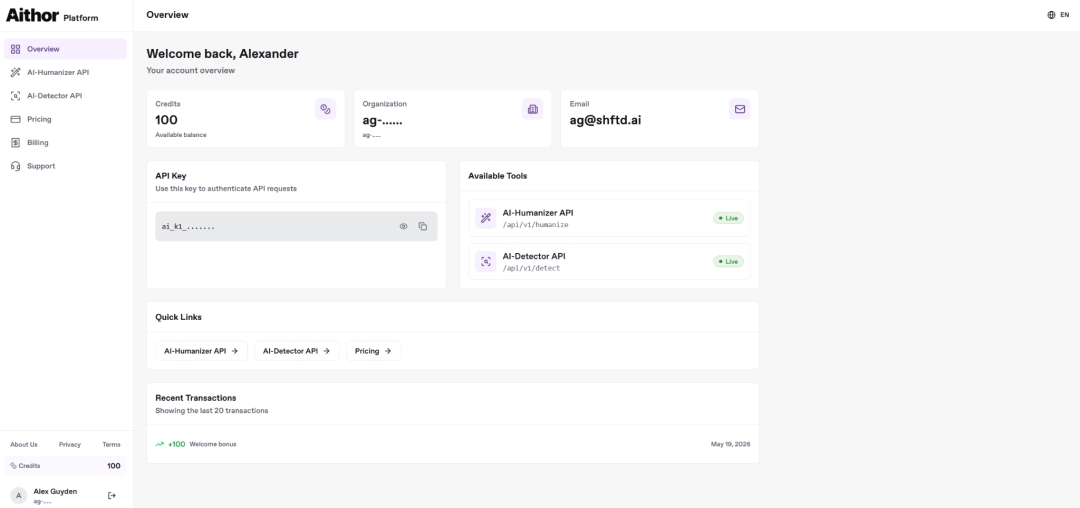
The Aithor Humanizer API allows businesses to integrate text humanization capabilities into internal systems, editorial pipelines, and content automation tools. The API is intended for organizations working with large volumes of AI-assisted drafts, including SEO teams, content marketing teams, publishers, agencies, SaaS companies, ecommerce brands, and digital marketing departments.

The launch addresses the growing use of AI-assisted writing in professional content operations, where teams often need to adapt draft content for readability, brand voice, tone, style, and publishing requirements before publication. Teams can also review Aithor’s AI Detector API documentation to better understand related API resources for AI content analysis.

Aithor’s Humanizer API supports use cases across SEO content production, content marketing, copywriting, editorial workflows, product descriptions, website content, blogs, newsletters, and large-scale publishing operations. According to Aithor’s API materials, the solution includes model customization, workflow integration options, and direct support for teams implementing the API into existing tools.

“Many businesses already rely on AI-assisted workflows for content production. With the Aithor API, we want to help teams scale that process while keeping content readable, adaptable, and aligned with their publishing goals,” said Alex Guyden, Head of SEO at Aithor.

The API is designed for B2B integrations and uses API-key authentication. Aithor’s AI Humanizer API documentation identifies a humanization endpoint for processing text and returning a revised output, with request parameters and usage limits documented for implementation teams.

Businesses interested in API access can review the API information through Aithor’s website, contact the company for onboarding and support, and visit the platform directly at https://platform.aithor.com/.

About Aithor

Aithor is an Estonia-based AI writing technology company focused on developing tools that support information gathering, writing clarity, editing, and responsible AI-assisted content creation. The company’s platform includes writing, detection, humanization, paraphrasing, grammar, and citation-related tools for users working with research, writing, and content development.

Media Contact
Company Name: Aithor
Contact Person: Alex Guyden
Email: Send Email
Country: Estonia
Website: https://aithor.com/