Generalized Pustular Psoriasis Market Set for Significant Growth by 2034, Forecasts DelveInsight

The Generalized Pustular Psoriasis market is rapidly evolving, driven by ongoing research and emerging treatment advancements. DelveInsight’s latest 7MM report provides in-depth insights into key epidemiology trends and market dynamics.

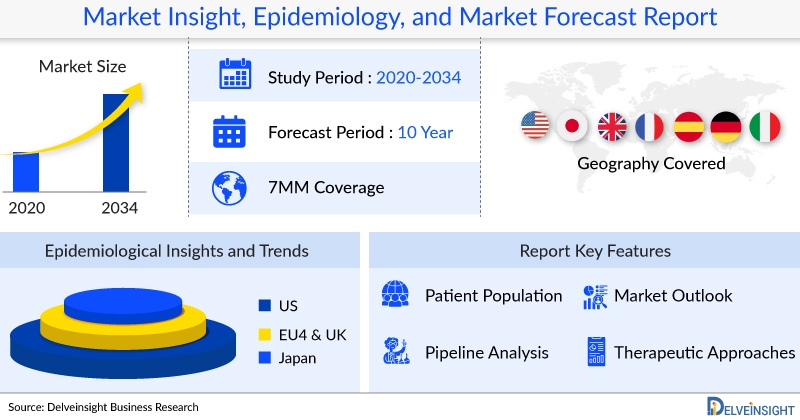
DelveInsight’s “Generalized Pustular Psoriasis – Market Insight, Epidemiology, And Market Forecast – 2034″ report offers an in-depth understanding of the Generalized Pustular Psoriasis, historical and forecasted epidemiology as well as the Generalized Pustular Psoriasis market trends in the United States, EU5 (Germany, Spain, Italy, France, and the United Kingdom) and Japan.


Some of the key facts of the Generalized Pustular Psoriasis Market Report:

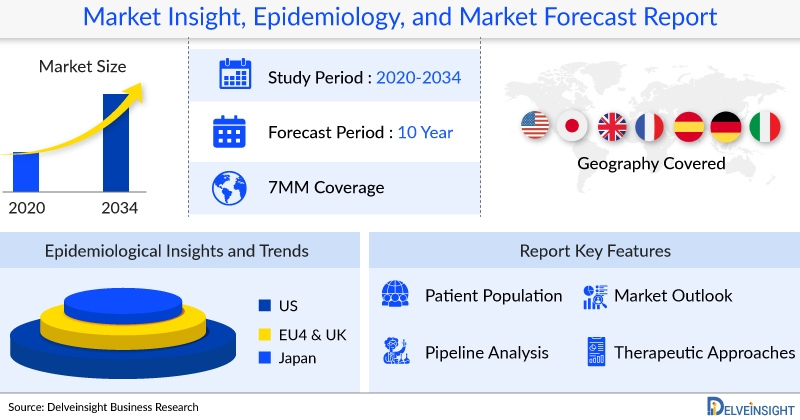
• According to DelveInsight, the market for Generalized Pustular Psoriasis in the 7MM is expected to experience notable growth during the forecast period from 2020 to 2034.

• Females are more likely to present with Generalized Pustular Psoriasis than males, according to the findings.

• In the US, the prevalent cases of Pustular Psoriasis were estimated to be approximately 240K in 2023.

• Generalized Pustular Psoriasis patients are often categorized into two groups: mild-to-moderate and moderate-to-severe psoriasis. In the US, the highest number of severity-specific cases in 2023 were found in the moderate-to-severe type.

• In March 2024, the US FDA expanded the approval for Boehringer’s SPEVIGO to include the treatment of Generalized Pustular Psoriasis in both adults and pediatric patients aged 12 and above (weighing ≥40 kg). Previously, it was approved for treatment only during acute flares in adults, and this expanded approval addresses both acute and chronic treatment needs for these patients.

• Additional treatments for Generalized Pustular Psoriasis include IL-36 pathway inhibitors, IL-17 inhibitors, IL-23 inhibitors, TNF-α inhibitors, retinoids, calcineurin inhibitors, anti-folate therapy, and PDE4 inhibitors.

• Emerging drugs in development for Generalized Pustular Psoriasis include TAK-279, Imsidolimab, JNJ-2113, and others.

• Key companies involved in the Generalized Pustular Psoriasis market include AnaptysBio, Takeda, Johnson & Johnson, and others.

• The growing need for both acute and chronic treatments, along with the ongoing development of novel therapies, is expected to significantly drive the market growth.


To Know in detail about the Generalized Pustular Psoriasis market outlook, drug uptake, treatment scenario, and epidemiology trends, Click here: Generalized Pustular Psoriasis Market Forecast


Generalized Pustular Psoriasis Overview

Generalized Pustular Psoriasis (GPP) is a rare and severe form of psoriasis characterized by widespread sterile pustules on inflamed, erythematous skin. Unlike plaque psoriasis, GPP can present with systemic symptoms such as fever, chills, fatigue, and organ complications, making it a life-threatening condition if left untreated. The disease can occur in acute flare-ups or as a chronic condition with recurrent episodes.

The exact cause of GPP is not fully understood, but it is linked to genetic mutations, immune system dysregulation, and inflammatory cytokines, particularly interleukin-36 (IL-36). Triggers such as infections, stress, pregnancy, and withdrawal from corticosteroids can exacerbate the condition. Due to its severity and potential for complications like sepsis and multi-organ failure, early diagnosis and aggressive treatment are crucial.

Current treatment options for GPP include systemic therapies such as biologics (IL-36, IL-17, and IL-23 inhibitors), immunosuppressants, and supportive care for symptom management. With ongoing advancements in targeted therapies and increased awareness, the market for GPP treatment is expanding, improving patient outcomes and addressing the high unmet medical need.


Get a Free sample for the Generalized Pustular Psoriasis Market Report: https://www.delveinsight.com/report-store/generalized-pustular-psoriasis-market


Generalized Pustular Psoriasis Epidemiology

The epidemiology section provides insights into the historical, current, and forecasted epidemiology trends in the seven major countries (7MM) from 2020 to 2034. It helps to recognize the causes of current and forecasted trends by exploring numerous studies and views of key opinion leaders. The epidemiology section also provides a detailed analysis of the diagnosed patient pool and future trends.


Generalized Pustular Psoriasis Epidemiology Segmentation:

The Generalized Pustular Psoriasis epidemiology chapter in the report provides historical as well as forecasted epidemiology segmented by:

• Total Prevalent Cases of Psoriasis in the 7MM

• Total Prevalent Cases of Pustular Psoriasis in the 7MM

• Total Prevalent Cases of Generalized Pustular Psoriasis in the 7MM

• Gender-specific Diagnosed Prevalent Cases of Generalized Pustular Psoriasis in the 7MM

• Age-specific Diagnosed Prevalent Cases of Generalized Pustular Psoriasis in the 7MM

• Severity-specific Diagnosed Prevalent Cases of Generalized Pustular Psoriasis in the 7MM


Download the report to understand which factors are driving Generalized Pustular Psoriasis epidemiology trends @ Generalized Pustular Psoriasis Epidemiology Forecast


Generalized Pustular Psoriasis Drugs Uptake and Pipeline Development Activities

The drugs uptake section focuses on the rate of uptake of the potential drugs recently launched in the Generalized Pustular Psoriasis market or expected to be launched during the study period. The analysis covers the Generalized Pustular Psoriasis market uptake by drugs, patient uptake by therapies, and sales of each drug.


Moreover, the therapeutics assessment section helps understand the drugs with the most rapid uptake and the reasons behind the maximal use of the drugs. Additionally, it compares the drugs based on market share.


The report also covers the Generalized Pustular Psoriasis Pipeline Development Activities. It provides valuable insights about different therapeutic candidates in various stages and the key companies involved in developing targeted therapeutics. It also analyzes recent collaborations, acquisitions, mergers, licensing patent details, and other information for emerging therapies.


Generalized Pustular Psoriasis Market Strengths

• The development of novel biologics, particularly IL-36 inhibitors, is revolutionizing GPP treatment, offering more effective and personalized therapeutic options.

• Growing investments in research and a surge in clinical trials for innovative drugs are expanding treatment possibilities and driving market growth.


Generalized Pustular Psoriasis Market Weaknesses

• Due to its rarity, GPP is often misdiagnosed or underdiagnosed, leading to treatment delays and increased risk of complications.

• Advanced biologic therapies can be expensive, limiting access for patients in low-income regions and posing reimbursement challenges in some healthcare systems.


Scope of the Generalized Pustular Psoriasis Market Report

• Study Period: 2020–2034

• Coverage: 7MM [The United States, EU5 (Germany, France, Italy, Spain, and the United Kingdom), and Japan]

• Key Generalized Pustular Psoriasis Therapies: TAK-279, Imsidolimab, JNJ-2113, and others.

• Key Generalized Pustular Psoriasis Companies: AnaptysBio, Takeda, Johnson & Johnson, and others.

• Generalized Pustular Psoriasis Therapeutic Assessment: Generalized Pustular Psoriasis currently marketed and Generalized Pustular Psoriasis emerging therapies

• Generalized Pustular Psoriasis Market Dynamics: Generalized Pustular Psoriasis market drivers and Generalized Pustular Psoriasis market barriers

• Competitive Intelligence Analysis: SWOT analysis, PESTLE analysis, Porter’s five forces, BCG Matrix, Market entry strategies

• Generalized Pustular Psoriasis Unmet Needs, KOL’s views, Analyst’s views, Generalized Pustular Psoriasis Market Access and Reimbursement


To learn more about the key players and advancements in the Generalized Pustular Psoriasis Treatment Landscape, visit the Generalized Pustular Psoriasis Market Analysis Report


Table of Contents

1. Generalized Pustular Psoriasis Market Report Introduction

2. Executive Summary for Generalized Pustular Psoriasis

3. SWOT analysis of Generalized Pustular Psoriasis

4. Generalized Pustular Psoriasis Patient Share (%) Overview at a Glance

5. Generalized Pustular Psoriasis Market Overview at a Glance

6. Generalized Pustular Psoriasis Disease Background and Overview

7. Generalized Pustular Psoriasis Epidemiology and Patient Population

8. Country-Specific Patient Population of Generalized Pustular Psoriasis

9. Generalized Pustular Psoriasis Current Treatment and Medical Practices

10. Generalized Pustular Psoriasis Unmet Needs

11. Generalized Pustular Psoriasis Emerging Therapies

12. Generalized Pustular Psoriasis Market Outlook

13. Country-Wise Generalized Pustular Psoriasis Market Analysis (2020–2034)

14. Generalized Pustular Psoriasis Market Access and Reimbursement of Therapies

15. Generalized Pustular Psoriasis Market Drivers

16. Generalized Pustular Psoriasis Market Barriers

17. Generalized Pustular Psoriasis Appendix

18. Generalized Pustular Psoriasis Report Methodology

19. DelveInsight Capabilities

20. Disclaimer

21. About DelveInsight


About DelveInsight

DelveInsight is a leading Healthcare Business Consultant and Market Research firm focused exclusively on life sciences. It supports Pharma companies by providing comprehensive end-to-end solutions to improve their performance.

It also offers Healthcare Consulting Services, which benefits in market analysis to accelerate business growth and overcome challenges with a practical approach.

Media Contact
Company Name: DelveInsight
Contact Person: Jatin Vimal
Email: Send Email
Phone: +14699457679
Address:304 S. Jones Blvd #2432
City: Las Vegas
State: Nevada
Country: United States
Website: https://www.delveinsight.com/


Press Release Distributed by ABNewswire.com

To view the original version on ABNewswire visit: Generalized Pustular Psoriasis Market Set for Significant Growth by 2034, Forecasts DelveInsight


BPH Surgical Treatment Market worth $17.19 billion in 2030

“Prominent players in the BPH Surgical Treatment market drug type include GlaxoSmithKline PLC (UK), Eli Lilly and Company (US), Astellas Pharma Inc.(Japan), Viatris Inc. (US), Asahi Kasei Corporation (Japan), Organon & Co. (US), Alembic Pharmaceuticals Limited (India). And BPH Surgical Treatment type includes Teleflex Incorporated (US)”
Browse 368 market data Tables and 59 Figures spread through 328 Pages and in-depth TOC on “BPH Surgical Treatment Market by Type (TURP, Laser, Rezum, Urolift, Ablation, PAE), Drug Type (Alpha Blocker (Alfuzosin), Alpha Reductase Inhibitor (Dutastride), Therapy (Mono, Combination), End Users (Hospitals) – Global Forecast to 2030

The global Benign Prostatic Hyperplasia Surgical Treatment market, valued at US$11.92 billion in 2023, is forecasted to grow at a robust CAGR of 5.3%, reaching US$12.62 billion in 2024 and an impressive US$17.19 billion by 2030. Benign prostatic hyperplasia is a condition in males in which the prostate is enlarged, leading to difficulty in urinating. The growing incidence of benign prostatic hyperplasia (BPH) cases is expected to drive the demand for Benign Prostatic Hyperplasia Surgical Treatment. The aging population is a global demographic trend characterized by an increasing proportion of older individuals due to longer life expectancy and declining birth rates. The rising incidence of obesity in males is also expected to increase the incidence of BPH as the two factors are closely associated. Obesity leads to several issues, such as rising sympathetic nervous activity, altered endocrine status, increased intra-abdominal pressure, increased inflammation process, and oxidative stress, favorable conditions for developing BPH. However, the growing preference for minimally invasive surgeries is considered adequate, providing reduced recovery times and fewer complications compared to traditional surgery. Additionally, the high growth potential of emerging economies, along with the favorable funding investments for BPH drug development, are expected to provide lucrative growth opportunities for market players.

Download PDF Brochure: https://www.marketsandmarkets.com/pdfdownloadNew.asp?id=198000374

Browse in-depth TOC on “Benign Prostatic Hyperplasia Surgical Treatment Market

368 – Tables

59 – Figures

328 – Pages

Based on drug type, the global Benign Prostatic Hyperplasia Surgical Treatment market can be divided into three segments: alpha-blockers (α-blockers), 5-alpha reductase inhibitors (5-ARIs), and other drug types [combination drugs, muscarinic receptor antagonists (MRAs), and phosphodiesterase 5 (PDE5) inhibitors]. The alpha-blockers (α-blockers) category is expected to have the highest CAGR from 2024 to 2030. Factors driving the growth of alpha-blockers (α-blockers), include an aging population. Alpha-blockers (α-blockers) are recommended as first-line treatment for BPH as it relax the smooth muscle of the prostate and bladder neck to improve urine flow and reduce bladder outlet obstruction. These are highly efficient drugs, such as monotherapy, in treating BPH-associated lower urinary tract symptoms (LUTS).

The Benign Prostatic Hyperplasia Surgical Treatment market, by type, is segmented into Transurethral Resection of the Prostate (TURP), Laser Surgery, UroLift Procedure, Rezūm Procedure, Robot-assisted Waterjet Ablation, Prostatic Stenting, Transurethral Microwave Thermotherapy (TUMT), Transurethral Needle Ablation of the Prostate (TUNA), Prostatic Arterial Embolization (PAE) and Other Procedures. The Transurethral Resection of the Prostate (TURP) segment is anticipated to witness the highest growth rate during the forecast period. This is because TURP, a well-established and cost-effective first-line preferred treatment procedure, is often covered by insurance and is typically less expensive than newer options regarding the procedure and hospital stay.

Based on therapy, the Benign Prostatic Hyperplasia Surgical Treatment market is segmented into monotherapy and combination drug therapy. In the upcoming years, monotherapy is expected to grow at the fastest rate because to the rising prevalence BPH patients, cost efficiency, and convenience in treating BPH. Low risk of side effects and drug interactions, significantly improving the quality of life.

Based on the type of end-user, the Benign Prostatic Hyperplasia Surgical Treatment market is divided into hospitals, ambulatory surgery centers & clinics, and home care setting. Between 2024 and 2030, the home care setting segment is predicted to expand at the fastest rate. The growth rate of the home care setting segment can be attributed to the large patient population of individuals being administered medication in the convenience and efficiency of indoor settings. Medications like alpha-blockers or 5-alpha reductase inhibitors can be taken orally, contributing to market growth.

The global Benign Prostatic Hyperplasia Surgical Treatment market has been segmented into North America, Europe, the Asia Pacific, Latin America, the Middle East & Africa, and GCC countries. The Asia Pacific region is expected to witness the highest growth rate during the forecast period.

North America is the largest regional market for BPH treatment. The North American market comprises the US and Canada. The rising geriatric and obese population and the availability of research funding are the major factors driving the market growth. Initiatives by key players are also expected to contribute to the market. The large share of the US in the North American BPH treatment market can be mainly attributed to the growing target population, the high incidence of BPH, and the strong presence of medical device manufacturers. Additionally, favorable reimbursement policies, high disposable incomes, a strong and improved healthcare infrastructure, research funding, and product launches.

The US has a strong healthcare system with advanced infrastructure. The robust healthcare infrastructure, combined with specialized healthcare facilities and a rising number of hospitals which drives the Benign Prostatic Hyperplasia Surgical Treatment market in the country. The growing geriatric population along with an increasing number of BPH cases is supporting the Benign Prostatic Hyperplasia Surgical Treatment market growth.

The funding supports the development of cutting—edge technologies like Robotic waterjet assistance which are increasingly shaping the BPH treatment landscape. For instance, Zenflow, Inc., a US-based medical device company that is developing a minimally invasive treatment for urinary obstruction caused by, benign prostatic hyperplasia announced that it has closed a USD 24 million Series C financing round. The round includes new investor Cook Medical as well as existing investors Indus Opportunities, F-Prime Capital, Medical Technology Venture Partners, and others.

Request Sample Pages : https://www.marketsandmarkets.com/requestsampleNew.asp?id=198000374

The Benign Prostatic Hyperplasia Surgical Treatment market is consolidated, with top companies holding significant market shares. The top three players in the drug type market include GlaxoSmithKline PLC (UK) Astellas Pharma Inc. (Japan) and Viatris Inc. (US. Also, the top three players in the type of market includes Teleflex Incorporated (US), Boston Scientific Corporation (US), and Olympus Corporation (Japan) dominating the market.

Players in this market are focusing on adopting organic and inorganic growth strategies such as product approvals, acquisitions, agreements, partnerships, and other developments such as regulatory approvals to increase their BPH treatment products portfolio, cater to customer needs, increase their profitability and expand their presence in the global Benign Prostatic Hyperplasia Surgical Treatment market.

By Drug Type

Viatris Inc. (US) is the leading player contributing a share of 10-12% in 2023 in the Benign Prostatic Hyperplasia Surgical Treatment Market The company offers 1,400 approved molecules of various therapeutic areas which includes key brands and generics recognized globally. The brand division caters to the BPH surgical products market, i.e., Apha1 adrenergic antagonist known as CARDURA (doxazosin).

GlaxoSmithKline PLC (UK) is the second leading Benign Prostatic Hyperplasia Surgical Treatment market player, with a 6.0-8.0% share in 2023. The Commercial Operations segment has three product groups: Vaccines, Specialty Medicines, and General Medicines. The company offers various products to treat chronic & acute diseases. The products for BHP treatment are provided through its General Medicines product group under the Commercial Operations segment. The company offers 5-Alpha-Reductase Inhibitors by the brand name Avodart and a combination drug with dutasteride 500 µg and 400 µg tamsulosin hydrochloride by the brand name Duodart. In July 2023, GlaxoSmithKline PLC and Recordati entered into an agreement with GSK to commercialize Avodart (dutasteride) and Combodart/Duodart (dutasteride/tamsulosin) across 21 countries, mainly in Europe, excluding only those where GSK already has a distribution agreement in place.

Astellas Pharma Inc. (Japan) In the Benign Prostatic Hyperplasia Surgical Treatment market the company accounts for a share of around 4-6% in 2023. Pharmaceutical products are manufactured and marketed by a single business segment. Th key segments targeted are immunology, anti-infectives, oncology, urology, and metabolic applications. The company provides alpha blocker Harnal (Tamsulosin hydrochloride) for the treatment BPH by the Urology category. The company have a global presence in around 40 countries across the world.

By Type

Boston Scientific Corporation (US) is the leading Benign Prostatic Hyperplasia Surgical Treatment market player, with a share of 9.0-10.0% in 2023. The various procedures offered by the company include Greenlight XPS Laser System, Moxy Fiber, and Rezum Systems for treating BPH.

Teleflex Incorporated (US) is ranked as the second leading player in the Benign Prostatic Hyperplasia Surgical Treatment market. In 2023, The company is contributing a share of 8.0-9.0% in 2023. The Interventional Urology segment offers the UroLift System which is a minimally invasive technology benign prostatic hyperplasia. The company has also introduced the UroLift system in China to make notable progress in advancing other high-growth products and line extensions through the regulatory process.

Olympus Corporation (Japan) accounted for a share of 8.0% in 2023 in the Benign Prostatic Hyperplasia Surgical Treatment market. The underlying high-frequency technology of PLASMA has been used for over 17 years. It offers proven therapy for patients with benign prostatic hyperplasia (BPH) and expanded reimbursement for differentiated MIS BPH devices, which provide better clinical outcomes and elevate the standard of care.

COMPANY EVALUATION MATRIX: KEY PLAYERS, 2023

We have selected six market vendors based on their capabilities, innovations, product offerings, and business strategies. A comprehensive list of all the vendors in this market was created through a product mapping strategy and MarketsandMarkets analysis. Our selected vendor mix includes companies from Tier 1–Tier 4 to cover the Benign Prostatic Hyperplasia Surgical Treatment market. Based on their performance in each criterion, the vendors are divided into four categories: Stars, Emerging Leaders, Omnipresent Players, and Participants.

For more information, Inquire Now!

Media Contact
Company Name: MarketsandMarkets™ Research Private Ltd.
Contact Person: Mr. Rohan Salgarkar
Email: Send Email
Phone: 18886006441
Address:1615 South Congress Ave. Suite 103, Delray Beach, FL 33445
City: Florida
State: Florida
Country: United States
Website: https://www.marketsandmarkets.com/Market-Reports/benign-prostatic-hyperplasia-treatment-market-198000374.html


Press Release Distributed by ABNewswire.com

To view the original version on ABNewswire visit: BPH Surgical Treatment Market worth $17.19 billion in 2030

Mauricio Duque; ‘Digital Education as a Gateway to Economic Transformation’

Mauricio Duque; 'Digital Education as a Gateway to Economic Transformation'

Orlando, Florida – Digital education has evolved from being a complementary alternative to becoming a key tool for economic mobility and professional development. Mauricio Duque Zuluaga, one of the most influential figures in digital entrepreneurship in the Spanish-speaking world, has not only witnessed this transformation but has played an active role in reshaping online learning.

You have been involved in the Internet for 30 years and in online education for over 22 years. How has the industry evolved since you first started?

“I had the privilege of experiencing the entire evolution of the internet, from its early days with dial-up connections to high-speed broadband. Understanding this transition is fascinating—not only how people adopt the internet but also how the internet adapts to human behavior.

Today, online education is no longer a luxury but a necessity. Digital learning has shifted from being a complementary resource to becoming a direct path to professional growth and financial independence.”

You have developed Seminarios.Online®, Universidad.Online®, and now Blacks.University®. What has been the key to success for these platforms?

“The key has been anticipating changes. Events like the pandemic accelerated the digitalization of learning, but we had already built the necessary infrastructure to support this growing demand. Additionally, we designed accessible systems that enable anyone to learn and start a business, regardless of their previous experience.”

With Blacks.University®, you promote affiliation as a business model and a solution for employability. What impact is it having on income generation?

“Digital affiliation is more than just a sales strategy; it is a tool for financial empowerment. At Blacks.University®, experts share their knowledge, and affiliates can market these digital programs, generating income without needing an initial investment. It is a real solution for those seeking financial independence and new employment opportunities.”

You have received 14 Hotmart® awards, including Galaxy, Black, Moon, and Venus. What do these recognitions mean to you and your team?

“Beyond the awards, what truly motivates us is seeing how digital education transforms lives. These recognitions are a testament to the impact we have achieved and our commitment to innovation and high-quality training.”

As an international speaker, what message do you aim to convey in each presentation?

“Knowledge only has value and power when it is applied. No matter where you come from, there is always a way to learn, reinvent yourself, and build new opportunities. My goal is to inspire people to take action and see digital education as the best investment in their future.”

With artificial intelligence and automation advancing, online education continues to evolve. How do you see its future in the coming years?

“The market is shifting toward personalization. Artificial intelligence will allow for customized learning experiences, optimizing both time and resources. However, the key will always be the structure of the content and how knowledge is delivered to ensure it truly transforms lives.”

Leading global projects comes with significant challenges. How do you balance your professional life with your family?

“I always make it clear that my son is my top priority. I organize my time to be a present father because success is not just about building businesses but about building a meaningful life. Jerónimo reminds me every day why I do what I do: to create a better future, not only for him but for many families seeking stability and growth.”

Your son Jerónimo is a fundamental part of your life. What have you learned from him that has helped you grow as an entrepreneur and as a person?

“He has taught me to see the world with curiosity, to be patient, and to develop greater empathy. He has completely changed my perspective on success—it is no longer just about professional achievements but about the ability to inspire and help others.”

If you could write him a letter with the most valuable lessons you’ve learned about life and business, what would you say?

“I would tell him never to stop learning, that flexibility is essential, and that changing his mind is not a weakness but a sign of growth. I would remind him that success is not measured in money but in the ability to create value, help others, and build something that endures.”

Conclusion

From Orlando (Florida), Mauricio Duque continues to lead the digital education revolution, proving that online learning not only expands access to knowledge but also drives the economy for thousands of people.

His vision has reshaped the way education is perceived in the Spanish-speaking world, and his innovative approach remains a benchmark in the industry. For him, education is not just knowledge—it is the key to a future with more opportunities and economic stability.

Media Contact
Company Name: GoHere Comunica – Mauricio Duque
Contact Person: Press Office
Email: Send Email
Country: United States
Website: https://blacks.university/

Cell Counting Market worth $16.14 billion in 2029

“Browse 771 market data Tables and 55 Figures spread through 511 Pages and in-depth TOC on “Cell Counting Market by Product (Instruments (Spectrophotometer, Flow Cytometer, Hematology Analyzers, Cell Counters), Consumables (Media, Reagents, Assays, Microplate)), Application, End User (Pharma & Biotech) – Global Forecast to 2029”
The global cell counting market, valued at US$10.82B in 2023, is forecasted to grow at a 7.7% CAGR, reaching US$11.12B by 2024 and US$16.14B by 2029.

The global cell counting market, valued at US$10.82 billion in 2023, is forecasted to grow at a robust CAGR of 7.7%, reaching US$11.12 billion in 2024 and an impressive US$16.14 billion by 2029. Advancements in technology, increased research initiatives, and the rising demand for precision diagnostics are key factors driving the global cell counting market. The adoption of automated and digital cell counting solutions, such as fluorescence-based systems, is growing rapidly due to their superior accuracy, efficiency, and integration of artificial intelligence. Furthermore, the expanding biopharmaceutical and biotechnology sectors significantly contribute to this growth, as cell counting is increasingly used in drug discovery, cell therapy, and vaccine development.

Download PDF Brochure: https://www.marketsandmarkets.com/pdfdownloadNew.asp?id=157450728

Browse in-depth TOC on “Cell Counting Market

771 – Tables

55 – Figures

511 – Pages

Based on product, the cell counting market is segmented into consumables and instruments. The consumables segment is further divided into media, sera & reagents, assay kits, microplates, accessories, and other consumables. The instrument segment is further divided into spectrophotometers, flow cytometers, hematology analyzers, cell counters, microscopes, and others. The consumables segment dominated the market in 2023 and is anticipated to grow at a significant CAGR during the forecast period. The growing emphasis on personalized medicine, stem cell research, and regenerative therapies has significantly increased the demand for high-quality, application-specific consumables, reinforcing their dominance as the leading product segment in the cell counting market.

The market is segmented by application into research applications, medical applications, and bioproduction and quality control. The research application segment is further divided into cancer research, immunology research, neurology research, stem cell research, and other research applications. The research application dominated the market in 2023 and is anticipated to grow at a significant rate in the coming years. The dominance of the segment is due to increasing R&D investments by pharmaceutical and biotechnology companies for drug discovery and development. Furthermore, the rising focus on cancer research, immunology, and stem cell studies has significantly increased the adoption of cell counting technologies.

The cell counting market is segmented by end users is segmented into academic & research institutes, hospitals & diagnostic laboratories, pharmaceutical & biotechnology companies, and CROs & CDMOs. The academic & research institutes dominated the segment owing to various factors such as collaborations between academia and industry for translational research has amplified the demand for cell counting solutions. Rising prevalence of chronic diseases, infectious diseases, and increasing demand for accurate diagnostic solutions impacting the growth of the hospitals & diagnostics laboratories segment.

The cell counting market is segmented by region into North America, Europe, Asia Pacific, Latin America, Middle East and Africa. North America held dominant share in 2023, and the Asia Pacific region is anticipated grow at significant CAGR during the forecast period of 2024-2029. US dominated the North American cell counting market in 2023 and likely to maintain dominance during the forecasted period. The factors attributable for dominance are the presence of key market players in the country coupled with rising in demand for personalized medicine. Europe held second largest share owing to increased adoption of technologically advanced instruments and to high investment in research and development by biopharmaceutical companies. Furthermore, countries such as Germany, the UK, and France dominate the European cell counting market.

Request Sample Pages : https://www.marketsandmarkets.com/requestsampleNew.asp?id=157450728

The market for cell counting market is competitive, with key players strategizing to capture the majority of market share. Prominent players in the cell counting market are Danaher Corporation (US), Thermo Fisher Scientific (US), Beckton Dickinson and Company (US), and Agilent Technologies Inc. (US), among others. The key market players adopt various organic and inorganic growth strategies, such as investment in technologically advanced products, partnerships, agreements, expansions, and acquisitions to strengthen their position in the cell counting market.

Danaher (US) is one of the leading players in the cell counting market. The company has a presence in more than 60 countries and offers a diversified product portfolio of instruments and consumables in the cell-counting segment. Danaher has a strong focus on organic and inorganic growth strategies to maintain a dominant position in the market. The company operates in the market through Beckmann Coulter, Molecular Devices, SCIEX, Leica Microsystems, and Integrated DNA Technologies among others. Danaher’s robust global distribution network and dedicated customer support help the company to maintain its dominant position in the market.

Thermo Fisher Scientific (US) is one of the dominant players in the cell counting market. The company has a global presence in more than 150 countries and has diversified products for cell counting market. The company’s product offered by the company includes instruments and consumables such as automated cell counter, flow cytometer, microscope, cell imaging systems, and microplate readers. A robust global distribution network and customer-centric approach ensure Thermo Fisher serves diverse sectors, including academia, biotechnology, and pharmaceuticals.

For more information, Inquire Now!

Media Contact
Company Name: MarketsandMarkets™ Research Private Ltd.
Contact Person: Mr. Rohan Salgarkar
Email: Send Email
Phone: 18886006441
Address:1615 South Congress Ave. Suite 103, Delray Beach, FL 33445
City: Florida
State: Florida
Country: United States
Website: https://www.marketsandmarkets.com/Market-Reports/cell-counting-market-157450728.html


Press Release Distributed by ABNewswire.com

To view the original version on ABNewswire visit: Cell Counting Market worth $16.14 billion in 2029

Hypertrophic Scar Market Set for Remarkable Expansion by 2032, Forecasts DelveInsight

Hypertrophic Scar Market on the Rise! Discover the latest breakthroughs in treatment and market trends with DelveInsight’s newest 7MM report, featuring key epidemiology insights and industry dynamics.

DelveInsight’s “Hypertrophic Scar – Market Insight, Epidemiology, And Market Forecast – 2032″ report offers an in-depth understanding of the Hypertrophic Scar, historical and forecasted epidemiology as well as the Hypertrophic Scar market trends in the United States, EU5 (Germany, Spain, Italy, France, and the United Kingdom) and Japan.


Some of the key facts of the Hypertrophic Scar Market Report:

• The Hypertrophic Scar market is projected to experience consistent growth throughout the forecast period (2023–2032), driven by the increasing incidence of traumatic injuries, burns, and surgical procedures worldwide, creating a higher demand for effective treatment options.

• According to Gauglitz et al. (2011), the incidence rates of hypertrophic scarring range from 40% to 70% following surgery and up to 91% following burn injuries, with the likelihood of occurrence depending on the depth of the wound.

• Keloids and hypertrophic scars show an equal gender distribution and have the highest incidence in individuals in their second to third decade of life.

• A study by Schmieder et al. (2022) found that the lowest incidence of hypertrophic scars is in individuals with albinism, and 70% of deep (full-thickness) burn injuries result in hypertrophic scars.

• In January 2025, a clinical study showed that the occurrence rate of hypertrophic scarring was only 1.8% in patients treated with Planatome blades, compared to 12.3% in those treated with conventional blades, demonstrating an 86% reduction in hypertrophic scarring.

• In April 2024, OliX Pharmaceuticals’ short interfering ribonucleic acid (siRNA)-based hypertrophic scar treatment, OLX10010 (OLX101A), raised questions due to the omission of certain safety information in its phase 2a clinical trial results. However, OliX later announced that it received the U.S. phase 2a clinical study report (CSR) for OLX10010 from a U.S. contract research organization (CRO).

• Emerging drugs in the hypertrophic scar market include OLX101A, STP70, and others.

• Key companies involved in the hypertrophic scar market include OliX Pharmaceuticals, Inc., Newmedical Technology Inc., Cynosure, Inc., Suneva Medical, Inc., Sirnaomics, and others.

• The rising need for advanced treatments for hypertrophic scars, alongside emerging therapies and technologies, continues to fuel growth in the market.


To Know in detail about the Hypertrophic Scar market outlook, drug uptake, treatment scenario, and epidemiology trends, Click here: Hypertrophic Scar Market Forecast


Hypertrophic Scar Overview

Hypertrophic scars are thick, raised scars that form due to an abnormal healing response following skin trauma, such as burns, surgical incisions, or deep wounds. Unlike keloids, hypertrophic scars remain within the original wound boundaries and may gradually improve over time. These scars result from excessive collagen production during the healing process, leading to redness, stiffness, and discomfort.

The development of hypertrophic scars is influenced by factors such as wound depth, prolonged inflammation, genetic predisposition, and skin tension. While they are not medically harmful, they can cause aesthetic concerns, restricted movement (especially over joints), and emotional distress.

Treatment options range from non-invasive approaches like silicone gel sheets, corticosteroid injections, and laser therapy to more advanced interventions, including cryotherapy and surgical revision. With ongoing advancements in regenerative medicine and scar management therapies, new solutions are emerging to improve scar appearance, reduce symptoms, and enhance patient quality of life.


Get a Free sample for the Hypertrophic Scar Market Report:https://www.delveinsight.com/report-store/hypertrophic-scar-market


Hypertrophic Scar Epidemiology

The epidemiology section provides insights into the historical, current, and forecasted epidemiology trends in the seven major countries (7MM) from 2019 to 2032. It helps to recognize the causes of current and forecasted trends by exploring numerous studies and views of key opinion leaders. The epidemiology section also provides a detailed analysis of the diagnosed patient pool and future trends.

Hypertrophic Scars Epidemiology Segmentation:

The Hypertrophic Scars epidemiology chapter in the report provides historical as well as forecasted epidemiology segmented by:

• Incident Cases of Hypertrophic Scar

• Etiologic-specific Incident Cases of Hypertrophic Scar


Download the report to understand which factors are driving Hypertrophic Scar epidemiology trends @ Hypertrophic Scar Epidemiology Forecast


Hypertrophic Scar Drugs Uptake and Pipeline Development Activities

The drugs uptake section focuses on the rate of uptake of the potential drugs recently launched in the Hypertrophic Scar market or expected to be launched during the study period. The analysis covers the Hypertrophic Scar market uptake by drugs, patient uptake by therapies, and sales of each drug.


Moreover, the therapeutics assessment section helps understand the drugs with the most rapid uptake and the reasons behind the maximal use of the drugs. Additionally, it compares the drugs based on market share.


The report also covers the Hypertrophic Scar Pipeline Development Activities. It provides valuable insights about different therapeutic candidates in various stages and the key companies involved in developing targeted therapeutics. It also analyzes recent collaborations, acquisitions, mergers, licensing patent details, and other information for emerging therapies.


Hypertrophic Scar Market Strengths

• Increasing demand for laser therapy, silicone-based treatments, and novel drug therapies is driving market expansion and improving treatment outcomes.

• Greater awareness of scar management, coupled with ongoing research into regenerative medicine and targeted therapies, is fueling innovation in hypertrophic scar treatment.


Hypertrophic Scar Market Weaknesses

• Advanced therapies, such as laser treatment and biologics, can be expensive, making them less accessible, particularly in low-income regions.

• Response to treatment varies among individuals, with some therapies requiring prolonged or repeated sessions, leading to inconsistent results and patient dissatisfaction.


Scope of the Hypertrophic Scar Market Report

• Study Period: 2019–2032

• Coverage: 7MM [The United States, EU5 (Germany, France, Italy, Spain, and the United Kingdom), and Japan]

• Key Hypertrophic Scar Therapies: OLX101A, STP70, and others.

• Key Hypertrophic Scar Companies: OliX Pharmaceuticals, Inc., Newmedical Technology Inc., Cynosure, Inc., Suneva Medical, Inc., Sirnaomics, and others.

• Hypertrophic Scar Therapeutic Assessment: Hypertrophic Scar currently marketed and Hypertrophic Scar emerging therapies

• Hypertrophic Scar Market Dynamics: Hypertrophic Scar market drivers and Hypertrophic Scar market barriers

• Competitive Intelligence Analysis: SWOT analysis, PESTLE analysis, Porter’s five forces, BCG Matrix, Market entry strategies

• Hypertrophic Scar Unmet Needs, KOL’s views, Analyst’s views, Hypertrophic Scar Market Access and Reimbursement


To learn more about the key players and advancements in the Hypertrophic Scar Treatment Landscape, visit the Hypertrophic Scar Market Analysis Report


Table of Contents

1. Hypertrophic Scar Market Report Introduction

2. Executive Summary for Hypertrophic Scar

3. SWOT analysis of Hypertrophic Scar

4. Hypertrophic Scar Patient Share (%) Overview at a Glance

5. Hypertrophic Scar Market Overview at a Glance

6. Hypertrophic Scar Disease Background and Overview

7. Hypertrophic Scar Epidemiology and Patient Population

8. Country-Specific Patient Population of Hypertrophic Scar

9. Hypertrophic Scar Current Treatment and Medical Practices

10. Hypertrophic Scar Unmet Needs

11. Hypertrophic Scar Emerging Therapies

12. Hypertrophic Scar Market Outlook

13. Country-Wise Hypertrophic Scar Market Analysis (2019–2032)

14. Hypertrophic Scar Market Access and Reimbursement of Therapies

15. Hypertrophic Scar Market Drivers

16. Hypertrophic Scar Market Barriers

17. Hypertrophic Scar Appendix

18. Hypertrophic Scar Report Methodology

19. DelveInsight Capabilities

20. Disclaimer

21. About DelveInsight


About DelveInsight

DelveInsight is a leading Healthcare Business Consultant and Market Research firm focused exclusively on life sciences. It supports Pharma companies by providing comprehensive end-to-end solutions to improve their performance.

It also offers Healthcare Consulting Services, which benefits in market analysis to accelerate business growth and overcome challenges with a practical approach

Media Contact
Company Name: DelveInsight
Contact Person: Jatin Vimal
Email: Send Email
Phone: +14699457679
Address:304 S. Jones Blvd #2432
City: Las Vegas
State: Nevada
Country: United States
Website: https://www.delveinsight.com/


Press Release Distributed by ABNewswire.com

To view the original version on ABNewswire visit: Hypertrophic Scar Market Set for Remarkable Expansion by 2032, Forecasts DelveInsight

Digital 3D Printing Market Growth Accelerate with 14.1% CAGR Till 2032, Growing Demands, Technology and Global Outlook

“Digital 3D Printing Market”
Digital 3D Printing Market Growth Research and Competitive Report By Technology (Fused Deposition Modeling, Stereolithography, Selective Laser Sintering, Digital Light Processing), By Material (Plastics, Metals, Ceramics, Composites), By Application (Prototyping, Tooling, Production, Education), By End Use (Aerospace, Automotive, Healthcare, Consumer Products) and By Regional – Forecast to 2032

Digital 3D Printing Market Overview

The Digital 3D Printing Market is experiencing rapid growth due to advancements in additive manufacturing technologies across industries such as healthcare, aerospace, automotive, and consumer goods. Digital 3D printing enables precise, customizable, and cost-effective production, making it a preferred solution for prototyping, manufacturing, and personalized product development. The rising adoption of Industry 4.0 and the demand for efficient, on-demand production solutions are fueling market expansion. Additionally, the integration of artificial intelligence (AI) and machine learning (ML) in 3D printing is enhancing design optimization and production efficiency.

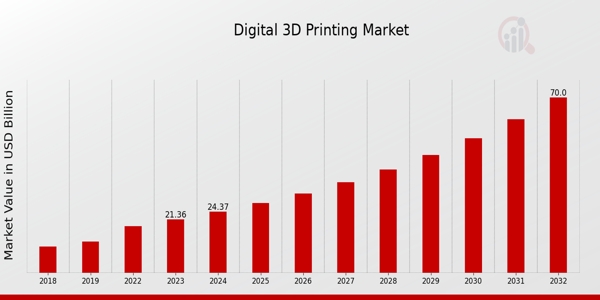
As per MRFR analysis, the Digital 3D Printing Market Size was estimated at 18.72 (USD Billion) in 2022.The Digital 3D Printing Market Industry is expected to grow from 21.36 (USD Billion) in 2023 to 70.0 (USD Billion) by 2032. The Digital 3D Printing Market CAGR (growth rate) is expected to be around 14.1% during the forecast period (2024 – 2032).

Key Companies in the Digital 3D Printing Market Include

GE Additive

Voxeljet

Xometry

EOS

Roboze

LuxCreo

Materialise

Stratasys

Wohlers Associates

Formlabs

HP

3D Systems

Carbono

Sculpteo, and others

Recent Developments

Healthcare applications: Advancements in bioprinting tissues and organs, along with the use of 3D printing for surgical planning and prosthetics.

Industrial growth: Increased use of metal 3D printing in aerospace and defense for lightweight, high-performance components.

Materials innovation: Development of sustainable and high-strength materials for precision manufacturing.

Software enhancements: AI-powered 3D modeling tools improving efficiency and reducing errors in production.

Strategic partnerships: Companies collaborating to enhance material compatibility and expand application areas.

Request for Free Sample Pages:

https://www.marketresearchfuture.com/sample_request/8680

Digital 3D Printing Market Dynamics

Industry Growth Drivers:

The adoption of 3D printing in healthcare is on the rise, particularly for applications such as prosthetics, implants, and bioprinting. This growing use is helping to revolutionize the medical field by offering more personalized and efficient solutions for patients.

In the aerospace and automotive industries, there is an increasing demand for lightweight and durable components. 3D printing technology is meeting this need by enabling the production of complex, high-performance parts that are both strong and lightweight.

Advancements in materials, including biocompatible resins, metals, and ceramics, are also driving the growth of 3D printing. These innovations have improved the capabilities of high-performance printing, allowing for more precise and reliable products.

Another factor contributing to the growth of 3D printing is the cost reduction and time efficiency it offers compared to traditional manufacturing processes. This makes it an attractive option for industries looking to streamline production and lower expenses.

Finally, the expansion of customized and on-demand manufacturing is further boosting the demand for 3D printing. This flexibility allows companies across various sectors to create tailor-made products and quickly adapt to market needs.

Market Challenges:

One of the challenges facing the widespread adoption of 3D printing is the high initial investment required for equipment and software. This upfront cost can be a barrier for some businesses looking to implement the technology. Additionally, there are limitations in the availability of materials and a lack of standardization across different industries, which can hinder the consistency and versatility of 3D printing applications. Regulatory concerns, especially in sectors like healthcare and aerospace, also pose challenges, as strict safety and compliance requirements need to be met to ensure the reliability and safety of printed products.

Market Opportunities:

The field of bioprinting and regenerative medicine is experiencing significant growth, alongside the expansion of both industrial and consumer-grade 3D printing solutions. Innovations in eco-friendly and sustainable materials are driving advancements in digital 3D printing, while the increasing adoption of cloud-based 3D printing services is enabling remote manufacturing on a larger scale.

Market Segmentation

The Digital 3D Printing Market is segmented based on technology, material, application, end-use, and region, reflecting its expanding role across multiple industries. In terms of technology outlook, key methods include Fused Deposition Modeling (FDM), Stereolithography (SLA), Selective Laser Sintering (SLS), and Digital Light Processing (DLP), each offering unique advantages in precision and material compatibility. The material outlook spans plastics, metals, ceramics, and composites, catering to diverse industrial needs. The application outlook covers prototyping, tooling, production, and education, with prototyping leading due to its cost-effectiveness in product development. The end-use outlook highlights major industries such as aerospace, automotive, healthcare, and consumer products, where 3D printing is revolutionizing manufacturing by reducing waste, improving efficiency, and enabling customization.

Direct Purchase this Research Report:

https://www.marketresearchfuture.com/checkout?currency=one_user-USD&report_id=8680

The future of digital 3D printing is highly promising, with continued technological advancements, automation, and AI-driven design capabilities. The market is expected to expand in mass customization, digital manufacturing, and medical applications, particularly in personalized medicine and prosthetics. Governments and private players are investing heavily in R&D initiatives to drive innovation and reduce production costs, making 3D printing more accessible to various industries.

Regional Analysis

  • North America (US, Canada): Leading the market due to strong adoption in healthcare, aerospace, and defense sectors, with significant investments in R&D.
  • Europe (Germany, France, UK, Italy, Spain, Rest of Europe): A hub for automotive and industrial 3D printing, driven by innovations in sustainable materials and automation.
  • Asia-Pacific (China, Japan, India, Australia, South Korea, Rest of Asia-Pacific): Fastest-growing region, fueled by rapid industrialization, government support for digital manufacturing, and increasing applications in consumer electronics and healthcare.
  • Rest of the World (Middle East, Africa, Latin America): Gradual adoption, with a focus on infrastructure, medical applications, and industrial manufacturing.

Reasons to Invest in the Digital 3D Printing Market

  • High-Growth Potential: Rapid adoption across industries, especially in healthcare, aerospace, and automotive.
  • Technological Advancements: Continuous improvements in materials, software, and automation enhance production efficiency.
  • Customization & Scalability: On-demand and personalized manufacturing solutions reduce waste and optimize costs.
  • Government & Private Investments: Increasing R&D funding for advanced 3D printing applications.
  • Sustainability & Efficiency: Eco-friendly and cost-effective production methods are gaining traction globally.

The Digital 3D Printing Market is set for robust growth, driven by technological advancements, expanding industrial applications, and increasing investments in customized and precision manufacturing. Investors can capitalize on the market’s high-growth potential, especially in healthcare, aerospace, and digital manufacturing.

Other Related Reports:

https://www.marketresearchfuture.com/reports/plasma-protein-therapeutic-market-43234

https://www.marketresearchfuture.com/reports/pneumococcal-vaccine-market-43269

https://www.marketresearchfuture.com/reports/oseltamivir-market-43200

https://www.marketresearchfuture.com/reports/ozempic-market-43226

https://www.marketresearchfuture.com/reports/pharmaceutical-elixir-market-43213

https://www.marketresearchfuture.com/reports/pharmaceutical-hot-melt-extrusion-market-43233

https://www.marketresearchfuture.com/reports/phosphor-plate-scanner-market-43253

https://www.marketresearchfuture.com/reports/iv-bag-market-43282

https://www.marketresearchfuture.com/reports/cast-saw-devices-market-43298

Media Contact
Company Name: Market Research Future
Contact Person: Media Relations
Email: Send Email
Country: United States
Website: https://www.marketresearchfuture.com


Press Release Distributed by ABNewswire.com

To view the original version on ABNewswire visit: Digital 3D Printing Market Growth Accelerate with 14.1% CAGR Till 2032, Growing Demands, Technology and Global Outlook

Global Top Robotics Market to Reach USD 150.84 Billion by 2030, Growing at a CAGR of 16.0%

“Global Top Robotics Market”
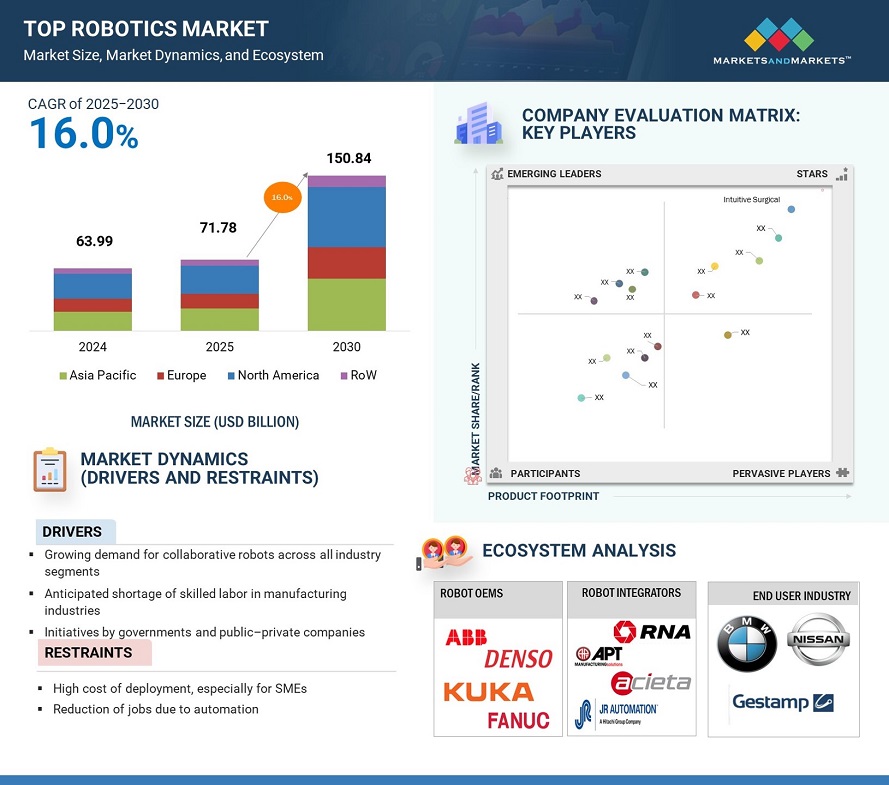
The Top Robotics Market is projected to grow from USD 71.78 billion in 2025 to USD 150.84 billion by 2030 at a CAGR of 16.0%

The Global Top Robotics Market is poised for significant growth, projected to expand from USD 71.78 billion in 2025 to USD 150.84 billion by 2030 at a CAGR of 16.0% during the forecast period (2025–2030). The rapid adoption of automation, advancements in AI and machine learning, and increasing applications in industrial and service robotics are fueling this robust growth.

Download PDF Brochure @ https://www.marketsandmarkets.com/pdfdownloadNew.asp?id=552191

Top Robotics Market

Key Segments of the Market

The Top Robotics Industry is segmented into Industrial Robotics and Service Robotics:

Industrial Robotics: Includes articulated robots, SCARA robots, parallel robots, cartesian robots, and cylindrical robots, widely used in manufacturing, automotive, electronics, and logistics sectors.

Service Robotics: Encompasses professional and personal service robots, such as medical robots, logistics robots, domestic robots, and defense & security robots.

Growth Drivers

Surging Demand for Automation: Industries worldwide are increasingly integrating robots to enhance productivity and efficiency.

Advancements in AI and Machine Learning: Robotics equipped with AI-driven decision-making and vision systems are transforming industries.

Growing Adoption in Healthcare: Robotic-assisted surgeries and automation in hospitals are fueling the demand for medical robots.

Expansion of E-commerce and Warehousing: The rise of online shopping has led to the widespread adoption of robotic automation in fulfillment centers.

Government Support & Investments: Various governments are offering incentives and funding for robotic research and development.

View detailed Table of Content herehttps://www.marketsandmarkets.com/Market-Reports/top-robotic-market-552191.html

Challenges

High Initial Investment Costs: The capital expenditure required for robotic automation remains a significant barrier for small and medium enterprises (SMEs).

Lack of Skilled Workforce: The need for specialized training and expertise in robotics hinders widespread adoption.

Cybersecurity Risks: The increasing connectivity of robots exposes them to cyber threats and data breaches.

Opportunities

Expansion in Emerging Markets: Developing economies are rapidly embracing robotic automation to boost manufacturing and service sectors.

Innovations in Human-Robot Collaboration: Collaborative robots (cobots) are gaining traction, enabling safer and more efficient human-robot interactions.

Integration with IoT and Industry 4.0: The convergence of robotics with IoT and cloud computing is opening new avenues for intelligent automation.

Sustainable Robotics Solutions: The development of energy-efficient and environmentally friendly robotics is gaining momentum.

Key Players in the Market

Prominent Key Players leading the Top Robotics Companies include:

  • ABB Ltd.
  • FANUC Corporation
  • Yaskawa Electric Corporation
  • KUKA AG
  • iRobot Corporation
  • SoftBank Robotics
  • Universal Robots A/S
  • Nachi-Fujikoshi Corp.
  • Denso Corporation


About MarketsandMarkets™

MarketsandMarkets™ has been recognized as one of America’s Best Management Consulting Firms by Forbes, as per their recent report.

MarketsandMarkets™ is a blue ocean alternative in growth consulting and program management, leveraging a man-machine offering to drive supernormal growth for progressive organizations in the B2B space. With the widest lens on emerging technologies, we are proficient in co-creating supernormal growth for clients across the globe.

Today, 80% of Fortune 2000 companies rely on MarketsandMarkets, and 90 of the top 100 companies in each sector trust us to accelerate their revenue growth. With a global clientele of over 13,000 organizations, we help businesses thrive in a disruptive ecosystem.

The B2B economy is witnessing the emergence of $25 trillion in new revenue streams that are replacing existing ones within this decade. We work with clients on growth programs, helping them monetize this $25 trillion opportunity through our service lines – TAM Expansion, Go-to-Market (GTM) Strategy to Execution, Market Share Gain, Account Enablement, and Thought Leadership Marketing.

Built on the ‘GIVE Growth’ principle, we collaborate with several Forbes Global 2000 B2B companies to keep them future-ready. Our insights and strategies are powered by industry experts, cutting-edge AI, and our Market Intelligence Cloud, KnowledgeStore™, which integrates research and provides ecosystem-wide visibility into revenue shifts.

In addition, MarketsandMarkets SalesIQ enables sales teams to identify high-priority accounts and uncover hidden opportunities, helping them build more pipeline and win more deals with precision.

To find out more, visit www.MarketsandMarkets™.com or follow us on Twitter , LinkedIn and Facebook.

Media Contact
Company Name: MarketsandMarkets™ Research Private Ltd.
Contact Person: Mr. Rohan Salgarkar
Email: Send Email
Phone: 18886006441
Address:1615 South Congress Ave. Suite 103, Delray Beach, FL 33445
City: Delray Beach
State: Florida
Country: United States
Website: https://www.marketsandmarkets.com/Market-Reports/top-robotic-market-552191.html


Press Release Distributed by ABNewswire.com

To view the original version on ABNewswire visit: Global Top Robotics Market to Reach USD 150.84 Billion by 2030, Growing at a CAGR of 16.0%

Radiation Dermatitis Market on Track for Transformative Growth by 2034, Forecasts DelveInsight

The Radiation Dermatitis market is steadily advancing, driven by evolving treatment strategies and ongoing research. DelveInsight’s latest 7MM report offers in-depth insights into key epidemiology trends and market dynamics.

DelveInsight’s “Radiation Dermatitis – Market Insight, Epidemiology, And Market Forecast – 2034″ report offers an in-depth understanding of the Radiation Dermatitis, historical and forecasted epidemiology as well as the Radiation Dermatitis market trends in the United States, EU5 (Germany, Spain, Italy, France, and the United Kingdom) and Japan.


Some of the key facts of the Radiation Dermatitis Market Report:

• According to DelveInsight, the market for Radiation Dermatitis in the 7MM is expected to witness notable growth during the study period from 2020 to 2034.

• In 2023, the total incident population of radiation dermatitis across the 7MM was more than 3 million, with the US accounting for the highest number of cases at approximately 1.3 million, followed by Japan.

• Moderate radiation dermatitis (Grade II) was the most common grade, with ~640,000 cases in the US in 2023. Mild and severe forms followed in prevalence.

• Acute radiation dermatitis typically occurs within 90 days of exposure, while chronic dermatitis appears after 90 days. The clinical manifestations range from mild erythema resembling a sunburn to chronic ulcerations.

• In July 2024, Enveric Biosciences and Aries Science & Technology entered into a licensing agreement for the clinical development of Enveric’s patented radiation dermatitis topical product.

• Emerging drugs for the treatment of radiation dermatitis include Granexin Gel, LUT014, and others.

• Leading companies in the radiation dermatitis market include Stratpharma AG, Venture Life/Helsinn Healthcare, KeraNetics, RepoCeuticals, Xequel Bio, Amryt Pharma, Lutris Pharma, and others.

• The rising number of radiation therapy patients and advancements in therapeutic options continue to drive the demand for effective radiation dermatitis treatments.

To Know in detail about the Radiation Dermatitis market outlook, drug uptake, treatment scenario, and epidemiology trends, Click here: Radiation Dermatitis Market Forecast


Radiation Dermatitis Overview

Radiation Dermatitis, also known as radiation-induced skin injury, is a common side effect of radiation therapy, affecting patients undergoing treatment for cancer. It occurs due to damage to the skin’s basal cell layer caused by repeated exposure to ionizing radiation. The severity of the condition can range from mild erythema (redness) and dry desquamation (flaking) to more severe cases involving moist desquamation (peeling with oozing) and ulceration.

The condition is classified into acute and chronic forms. Acute Radiation Dermatitis typically develops within days to weeks of radiation exposure, presenting symptoms such as redness, swelling, itching, and peeling. Chronic Radiation Dermatitis can manifest months or even years after treatment, leading to skin fibrosis, pigmentation changes, and increased sensitivity.

Several factors influence the severity of Radiation Dermatitis, including the total radiation dose, treatment duration, individual skin sensitivity, and concurrent use of chemotherapy. While the condition is generally non-life-threatening, it can cause significant discomfort, impact the patient’s quality of life, and, in severe cases, require modifications or delays in cancer treatment.

Management strategies include preventive skincare regimens, topical treatments (steroids, emollients, and barrier creams), advanced wound care, and emerging therapies such as low-level laser therapy and growth factor-based treatments. With ongoing research and innovation, new treatment approaches are continuously evolving, improving patient outcomes and minimizing the impact of Radiation Dermatitis on cancer care.


Get a Free sample for the Radiation Dermatitis Market Report: https://www.delveinsight.com/report-store/radiation-dermatitis-market


Radiation Dermatitis Epidemiology

The epidemiology section provides insights into the historical, current, and forecasted epidemiology trends in the seven major countries (7MM) from 2020 to 2034. It helps to recognize the causes of current and forecasted trends by exploring numerous studies and views of key opinion leaders. The epidemiology section also provides a detailed analysis of the diagnosed patient pool and future trends.

Radiation Dermatitis Epidemiology Segmentation:

The Radiation Dermatitis epidemiology chapter in the report provides historical as well as forecasted epidemiology segmented by:

• Total Radiotherapy Utilization

• Incident Cases of Radiation Dermatitis

• Grade-specific Cases of Radiation Dermatitis

• Treated Cases of Radiation Dermatitis


Download the report to understand which factors are driving Radiation Dermatitis epidemiology trends @ Radiation Dermatitis Epidemiology Forecast


Radiation Dermatitis Drugs Uptake and Pipeline Development Activities

The drugs uptake section focuses on the rate of uptake of the potential drugs recently launched in the Radiation Dermatitis market or expected to be launched during the study period. The analysis covers the Radiation Dermatitis market uptake by drugs, patient uptake by therapies, and sales of each drug.


Moreover, the therapeutics assessment section helps understand the drugs with the most rapid uptake and the reasons behind the maximal use of the drugs. Additionally, it compares the drugs based on market share.


The report also covers the Radiation Dermatitis Pipeline Development Activities. It provides valuable insights about different therapeutic candidates in various stages and the key companies involved in developing targeted therapeutics. It also analyzes recent collaborations, acquisitions, mergers, licensing patent details, and other information for emerging therapies.


Radiation Dermatitis Market Strengths

• The rising incidence of cancer and the increasing use of radiation therapy as a primary or adjunctive treatment drive the demand for effective Radiation Dermatitis management solutions.

• Continuous research and innovation in topical agents, dressings, and novel therapies such as low-level laser therapy and growth factor-based treatments are enhancing patient outcomes and expanding market opportunities.


Radiation Dermatitis Market Weaknesses

• Many patients and healthcare providers underestimate Radiation Dermatitis, leading to delayed intervention and suboptimal management, which can impact treatment adherence.

• While conventional treatments like emollients and corticosteroids are widely available, advanced therapies and specialized wound care products can be expensive, limiting accessibility, especially in lower-income regions.


Scope of the Radiation Dermatitis Market Report

• Study Period: 2020–2034

• Coverage: 7MM [The United States, EU5 (Germany, France, Italy, Spain, and the United Kingdom), and Japan]

• Key Radiation Dermatitis Therapies: Granexin Gel, LUT014, and others.

• Key Radiation Dermatitis Companies: Stratpharma AG, Venture Life/Helsinn Healthcare, KeraNetics, RepoCeuticals, Xequel Bio, Amryt Pharma, Lutris Pharma, and others.

• Radiation Dermatitis Therapeutic Assessment: Radiation Dermatitis currently marketed and Radiation Dermatitis emerging therapies

• Radiation Dermatitis Market Dynamics: Radiation Dermatitis market drivers and Radiation Dermatitis market barriers

• Competitive Intelligence Analysis: SWOT analysis, PESTLE analysis, Porter’s five forces, BCG Matrix, Market entry strategies

• Radiation Dermatitis Unmet Needs, KOL’s views, Analyst’s views, Radiation Dermatitis Market Access and Reimbursement


To learn more about the key players and advancements in the Radiation Dermatitis Treatment Landscape, visit the Radiation Dermatitis Market Analysis Report


Table of Contents

1. Radiation Dermatitis Market Report Introduction

2. Executive Summary for Radiation Dermatitis

3. SWOT analysis of Radiation Dermatitis

4. Radiation Dermatitis Patient Share (%) Overview at a Glance

5. Radiation Dermatitis Market Overview at a Glance

6. Radiation Dermatitis Disease Background and Overview

7. Radiation Dermatitis Epidemiology and Patient Population

8. Country-Specific Patient Population of Radiation Dermatitis

9. Radiation Dermatitis Current Treatment and Medical Practices

10. Radiation Dermatitis Unmet Needs

11. Radiation Dermatitis Emerging Therapies

12. Radiation Dermatitis Market Outlook

13. Country-Wise Radiation Dermatitis Market Analysis (2020–2034)

14. Radiation Dermatitis Market Access and Reimbursement of Therapies

15. Radiation Dermatitis Market Drivers

16. Radiation Dermatitis Market Barriers

17. Radiation Dermatitis Appendix

18. Radiation Dermatitis Report Methodology

19. DelveInsight Capabilities

20. Disclaimer

21. About DelveInsight


About DelveInsight

DelveInsight is a leading Healthcare Business Consultant and Market Research firm focused exclusively on life sciences. It supports Pharma companies by providing comprehensive end-to-end solutions to improve their performance.

It also offers Healthcare Consulting Services, which benefits in market analysis to accelerate business growth and overcome challenges with a practical approach.

Media Contact
Company Name: DelveInsight
Contact Person: Jatin Vimal
Email: Send Email
Phone: +14699457679
Address:304 S. Jones Blvd #2432
City: Las Vegas
State: Nevada
Country: United States
Website: https://www.delveinsight.com/


Press Release Distributed by ABNewswire.com

To view the original version on ABNewswire visit: Radiation Dermatitis Market on Track for Transformative Growth by 2034, Forecasts DelveInsight
Security Service Edge Market Size Trends and Forecast by Application, Type, and Geography 2030

“Zscaler (US), Cisco (US), Broadcom (US), Palo Alto Networks (US), Netskope (US), Fortinet (US), Skyhigh Security (US), HPE Aruba Networks (US), iBoss (US), Lookout (US) Cloudflare (US), Check Point (Perimeter 81) (US and Israel), Open Systems (Switzerland), Forcepoint (US).”
Security Service Edge (SSE) Market by Solution (Zero Trust Network Access (ZTNA), Secure Web Gateway (SWG), Cloud Access Security Broker (CASB), Firewall as a Service (FWaaS)) and Vertical (BFSI, Government, IT, Healthcare) – Global Forecast to 2030.

The global Security Service Edge (SSE) market is expected to expand from USD 6.08 billion in 2024 to USD 23.01 billion by 2030, reflecting a Compound Annual Growth Rate (CAGR) of 24.8% during the forecast period. This growth is driven by the increasing adoption of remote work and the rising need for compliance with stringent data protection laws and regulations. As organizations continue to embrace remote and hybrid work models, they require secure access solutions to protect sensitive applications and data from cyber threats.

SSE facilitates secure remote connectivity by delivering cloud-based security services such as Secure Web Gateways (SWG) and Zero Trust Network Access (ZTNA), ensuring seamless and protected access for distributed workforces. Additionally, businesses must comply with evolving regulatory requirements, necessitating robust security controls to safeguard personal and corporate data. SSE solutions support compliance efforts through centralized security policies, real-time threat detection, and data loss prevention, driving their adoption across various industries.

Download PDF Brochure@ https://www.marketsandmarkets.com/pdfdownloadNew.asp?id=186280780

The major drivers of the market growth of the SSE market are the widespread adoption of remote work which has led organizations to provide secure, flexible, and scalable network and security infrastructure to support remote workforces effectively. SSE solutions have risen to this issue by offering secure access to cloud-based applications and resources from any location. As remote work continues to be a prominent fixture in the modern workplace, organizations are increasingly investing in SSE solutions to ensure their employees can work productively and securely, irrespective of their physical location. In addition to this, the rising need for a unified network security architecture is a key driver in the SSE market as organizations are increasingly adopting hybrid work models and cloud-based services, making traditional perimeter-based security approaches inadequate. Furthermore, integrating a Cloud Access Security Broker (CASB) into an organization’s security framework significantly bolsters the adoption of an effective SSE strategy. By integrating CASBs with SSE or SASE solutions, organizations create a comprehensive security ecosystem. This approach extends uniform security policies and controls across the entire network, including remote work scenarios and cloud resources These factors are pushing organizations toward adopting SSE to safeguard their digital assets effectively.

Based on the organization size, SMEs are expected to grow at the highest CAGR during the forecast period

Small and Medium-sized Enterprises (SMEs) are likely to register the highest CAGR during the forecast period because smaller enterprises speed up their digital transformation and want cost-effective yet powerful security solutions. Cloud-based SSE systems with flexible, subscription-based pricing structures are particularly appealing to SMEs since they address limited in-house security resources while offering complete coverage. As a result, SMEs are adopting SSE solutions at a quicker rate, fueling the segment’s upward development trajectory.

By service, professional service will grow at the highest market size during the forecast period.

The professional service segment is expected to have the largest market share in the Security Service Edge (SSE) market because organizations typically require specialized expertise throughout the project lifecycle, including implementation and integration, consulting and advisory, training and education, and support and maintenance. These specialized engagements assist in solving complicated security needs, enabling flawless implementation, and maintaining regulatory compliance, resulting in a larger overall demand for professional services compared to managed SSE services in the SSE market.

By region, North America will grow at the highest market size during the forecast period.

North America is expected to grow at the highest market size in the SSE market during the forecast period because of its advanced technological infrastructure, stringent regulatory framework, and increasing cybersecurity threats. The region houses major economies like the United States and Canada, which are at the forefront of adopting cutting-edge technologies such as IoT, blockchain, and AI & ML for security. This also includes North America, whose strict compliance requirements, CISA regulations, and the NIST Cybersecurity Framework propel organizations to invest heavily in SSE.

Request Sample Pages@ https://www.marketsandmarkets.com/requestsampleNew.asp?id=186280780

Unique Features in the Security Service Edge Market

One of the defining features of SSE is its cloud-native architecture, which enables organizations to implement security services without relying on traditional, on-premises infrastructure. Key solutions such as Secure Web Gateways (SWG), Cloud Access Security Brokers (CASB), and Firewall-as-a-Service (FWaaS) are seamlessly integrated into cloud environments, ensuring comprehensive protection regardless of user location.

ZTNA is a fundamental component of SSE, ensuring that users and devices are continuously verified before gaining access to corporate resources. Unlike traditional VPNs, which grant broad network access, ZTNA enforces granular, least-privilege access based on user identity, device health, and contextual factors, reducing the risk of unauthorized access and lateral movement of threats.

SSE solutions provide organizations with a unified security framework that allows centralized enforcement of policies across various environments, including on-premises, cloud, and hybrid infrastructures. This centralized approach ensures consistent security measures, simplifies management, and enhances compliance with industry regulations.

With advanced AI-driven analytics and machine learning, SSE continuously monitors network traffic to detect and mitigate potential threats in real time. Automated threat intelligence and behavioral analysis help identify anomalies, prevent data breaches, and neutralize cyber threats before they cause significant damage.

As remote and hybrid work models become the norm, SSE ensures secure and seamless connectivity for employees accessing enterprise applications and data from various locations. By eliminating traditional VPN dependencies and providing direct-to-cloud security, organizations can enhance performance, reduce latency, and improve user experience.

Major Highlights of the Security Service Edge Market

Organizations are rapidly transitioning from traditional, perimeter-based security models to cloud-native SSE solutions. By integrating security services directly into the cloud, SSE eliminates the need for legacy hardware, offering greater flexibility, scalability, and cost-effectiveness for enterprises of all sizes.

Zero Trust Network Access (ZTNA) is a core component of SSE, replacing outdated VPN-based security models. By enforcing strict user authentication and least-privilege access, SSE solutions minimize the risk of unauthorized access, lateral movement of threats, and data breaches.

With businesses increasingly adopting remote and hybrid work policies, the need for secure and efficient access to enterprise applications has surged. SSE solutions provide cloud-delivered security features like Secure Web Gateways (SWG) and Firewall-as-a-Service (FWaaS) to ensure seamless, secure connectivity for distributed workforces.

SSE platforms leverage artificial intelligence (AI) and machine learning (ML) to detect and respond to cyber threats in real time. Advanced analytics, behavioral monitoring, and automated threat intelligence help organizations proactively mitigate risks and prevent security breaches.

Inquire Before Buying@ https://www.marketsandmarkets.com/Enquiry_Before_BuyingNew.asp?id=186280780

Top Companies in the Security Service Edge Market

The SSE market is led by some of the globally established players, such as Zscaler (US), Cisco (US), Broadcom (US), Palo Alto Networks (US), Netskope (US), Fortinet (US), Skyhigh Security (US), HPE Aruba Networks (US), iboss (US), Lookout (US), Cloudflare (US), Check Point (Israel), Open Systems (Switzerland), and Forcepoint (US). The market players have adopted various strategies, such as developing advanced products, partnerships, contracts, expansions, and acquisitions, to strengthen their position in the SSE market. The organic and inorganic strategies have helped the market players expand globally by providing advanced SSE solution and services.

Zscaler is a cloud security company known for running the world’s largest multi-tenant security cloud. It provides a wide range of cloud-based security products, such as Secure Access Service Edge (SASE), Cloud Internet Security, Data Loss Prevention (DLP), Secure Web Gateways (SWGs), Advanced Threat Protection, and Next-Generation Firewalls. Its network security portfolio includes Office 365 security integration, direct-to-cloud architecture, and SD-WAN security. It also provides Zscaler Internet Access (ZIA), which is a secure web gateway (SWG) for delivering cloud-based security-as-a-service solution. The company is also partnered strategically with Microsoft and AWS to support security solutions for Azure and AWS platforms. Zscaler serves more than 2,800 customers in various industries including financial services, healthcare, manufacturing, and public sector. With a robust worldwide presence in North America, Europe, the Middle East and Africa, Asia Pacific, and Latin America, Zscaler continues to grow its reach in the SSE market.

Netskope is a cloud security provider company. It offers an integrated cloud security platform and solutions such as Data Loss Prevention (DLP), threat protection, and cloud usage visibility, complemented by professional services and technical support. Netskope delivers secure access to the internet, applications, and infrastructure using a unified platform combining Cloud Access Security Broker (CASB), Secure Web Gateway (SWG), and Zero Trust Network Access (ZTNA). Netskope provides secure and fast connections to the internet, applications, and infrastructure across all devices through its integrated solution, Netskope Intelligent Security Service Edge (SSE), which includes CASB, SWG, and ZTNA capabilities. With a global security private cloud, Netskope prioritizes speed, data-centric security, and cloud intelligence while promoting responsible digital behavior and cost-effective solutions.

Media Contact
Company Name: MarketsandMarkets™ Research Private Ltd.
Contact Person: Mr. Rohan Salgarkar
Email: Send Email
Phone: 18886006441
Address:1615 South Congress Ave. Suite 103, Delray Beach, FL 33445
City: Florida
State: Florida
Country: United States
Website: https://www.marketsandmarkets.com/Market-Reports/security-service-edge-market-186280780.html


Press Release Distributed by ABNewswire.com

To view the original version on ABNewswire visit: Security Service Edge Market Size Trends and Forecast by Application, Type, and Geography 2030

Polymerase Chain Reaction (PCR) Market Revenue Estimated 35.09 (USD Billion) till 2034, Driving Technology, Demands and Global Trends

“Polymerase Chain Reaction (PCR) Market”
Growing demand for advanced diagnostic methods, the rise in the number of Contract Research Organizations (CROs), forensic and research laboratories, prenatal genetic testing, and the introduction of new technologies are anticipated to be key drivers of the Polymerase Chain Reaction (PCR) market.

Polymerase Chain Reaction (PCR) Market Overview

The Polymerase Chain Reaction (PCR) market has witnessed significant growth, driven by increasing applications in medical diagnostics, forensic science, and research. PCR technology is essential for DNA amplification and plays a crucial role in infectious disease detection, genetic testing, and oncology research. The market is expanding due to rising demand for precision medicine, advancements in molecular diagnostics, and the growing prevalence of infectious diseases like COVID-19. Technological innovations such as digital PCR (dPCR) and real-time PCR (qPCR) have further enhanced accuracy and efficiency, fueling market growth.

As per MRFR analysis, the Polymerase Chain Reaction Market Size was estimated at 15.52 (USD Billion) in 2024. The Polymerase Chain Reaction Market Industry is expected to grow from 16.83 (USD Billion) in 2025 to 35.09 (USD Billion) till 2034, at a CAGR (growth rate) is expected to be around 8.50% during the forecast period (2025 – 2034)

Market Leaders

Key companies in the Polymerase Chain Reaction Market include

Abbott Laboratories

Agilent Technologies Inc

Becton

Dickinson and Company

BioMerieux SA

Bio-Rad Laboratories Inc

GE Healthcare

Merck KGaA

PerkinElmer Inc

Promega Corporation

Siemens Healthcare

Thermo Fisher Scientific Inc, and others.

Request for Free Sample Pages: https://www.marketresearchfuture.com/sample_request/19212

PCR Industry Developments

The PCR industry is undergoing rapid advancements, with continuous technological innovations enhancing diagnostic capabilities. Major companies are investing in research and development to introduce portable PCR devices, AI-integrated PCR systems, and enhanced multiplexing capabilities. Strategic collaborations between biotech firms and healthcare providers are driving industry growth, while regulatory approvals for advanced PCR-based diagnostic kits have accelerated market adoption. Additionally, the expansion of PCR testing in emerging markets is opening new avenues for industry development.

Market Dynamics

The PCR market dynamics are shaped by various factors, including advancements in genetic research, increasing government funding, and the rising prevalence of chronic diseases. Key drivers include the growing need for rapid disease diagnosis, expanding applications in forensic science, and the integration of PCR with next-generation sequencing (NGS). However, challenges such as high equipment costs, technical complexities, and stringent regulatory requirements may hinder market expansion. Additionally, the emergence of point-of-care PCR testing presents new opportunities for market players, making PCR technology more accessible and user-friendly.

Polymerase Chain Reaction Market Scope

The scope of the PCR market spans various sectors, including healthcare, pharmaceuticals, biotechnology, and forensic sciences. PCR is widely used in infectious disease detection, oncology diagnostics, food safety testing, and environmental monitoring. The technology’s adaptability across multiple domains, including agriculture and personalized medicine, further broadens its market potential. Key product segments include instruments, reagents & consumables, and software & services, with a growing preference for automated PCR systems to enhance workflow efficiency.

PCR Market Segmentation

The Polymerase Chain Reaction (PCR) market is segmented based on product, application, end-user, and region. By product outlook, it includes instruments, reagents & consumables, and software, with reagents & consumables dominating due to frequent usage in diagnostic and research applications. The application outlook covers clinical diagnostics, life science research, industrial applications, and others, with clinical diagnostics leading due to the rising prevalence of infectious diseases and genetic disorders. The end-user outlook consists of academic institutes, clinical diagnostics labs & hospitals, pharmaceutical & biotechnology industries, and other end users, where clinical diagnostics labs and hospitals hold a major share due to increased adoption of PCR in disease detection.

Direct Purchase this Research Report:

https://www.marketresearchfuture.com/checkout?currency=one_user-USD&report_id=19212

Regional Analysis

The PCR market is segmented into key regions, including:

North America (U.S., Canada): Dominates the market due to strong healthcare infrastructure, high adoption of PCR in diagnostics, and significant R&D investments.

Europe (Germany, France, UK, Italy, Spain, Rest of Europe): Growing demand for genetic testing, expanding biotechnology sector, and government initiatives in molecular diagnostics drive market growth.

Asia-Pacific (China, Japan, India, Australia, South Korea, Rest of Asia-Pacific): Witnessing rapid expansion due to increasing healthcare expenditures, rising infectious disease cases, and growing awareness of personalized medicine.

Middle East & Africa: Market growth is driven by improving healthcare systems and increasing investments in diagnostic technologies.

The PCR market continues to expand, driven by technological advancements, rising disease prevalence, and increasing applications across various industries. As the demand for accurate and rapid diagnostics grows, PCR remains a critical tool in modern healthcare and biotechnology.

TABLE OF CONTENTS

  1. EXECUTIVE SUMMARY
  2. MARKET INTRODUCTION

2.1. Definition

2.2. Scope of the Study

2.2.1. Research Objective

2.2.2. Assumptions

2.2.3. Limitations

  1. RESEARCH METHODOLOGY

3.1. Overview

3.2. Data Mining

3.3. Secondary Research

3.4. Primary Research

3.4.1. Primary Interviews and Information Gathering Process

3.4.2. Breakdown of Primary Respondents

3.5. Forecasting Model

3.6. Market Size Estimation

3.6.1. Bottom-Up Approach

3.6.2. Top-Down Approach

3.7. Data Triangulation

3.8. Validation

  1. MARKET DYNAMICS

4.1. Overview

4.2. Drivers

4.3. Restraints

4.4. Opportunities

  1. MARKET FACTOR ANALYSIS

5.1. Value Chain Analysis

5.2. Porter’s Five Forces Analysis

5.2.1. Bargaining Power of Suppliers

5.2.2. Bargaining Power of Buyers

5.2.3. Threat of New Entrants

5.2.4. Threat of Substitutes

5.2.5. Intensity of Rivalry

5.3. COVID-19 Impact Analysis

5.3.1. Market Impact Analysis

5.3.2. Regional Impact

5.3.3. Opportunity and Threat Analysis

  1. GLOBAL POLYMERASE CHAIN REACTION MARKET, BY PRODUCT

6.1. Overview

6.2. Instruments

6.3. Reagents and Consumables

6.4. Software…Continued

Reasons to Buy the Report

Comprehensive Market Insights: Understand key trends, market drivers, and challenges shaping the PCR market.

Technological Innovations: Stay updated on advancements such as digital PCR and real-time PCR applications.

Competitive Analysis: Gain insights into major market players, their strategies, and market positioning.

Regulatory Landscape: Understand compliance requirements and regulatory approvals influencing market growth.

Investment Opportunities: Identify high-growth segments and emerging markets for potential investment.

Other Related Report:

https://www.marketresearchfuture.com/reports/parenteral-nutrition-market-43392

https://www.marketresearchfuture.com/reports/patient-lateral-transfer-device-market-43306

https://www.marketresearchfuture.com/reports/patient-recliner-market-43351

https://www.marketresearchfuture.com/reports/pressure-infusion-bag-market-43304

https://www.marketresearchfuture.com/reports/preterm-birth-prevention-management-market-43313

https://www.marketresearchfuture.com/reports/primary-biliary-cholangitis-therapeutic-market-43346

https://www.marketresearchfuture.com/reports/prophylactic-hiv-drug-market-43327

https://www.marketresearchfuture.com/reports/protein-expressions-market-43359

https://www.marketresearchfuture.com/reports/mobile-car-market-43475

https://www.marketresearchfuture.com/reports/psoriatic-arthritis-therapeutic-market-43491

Media Contact
Company Name: Market Research Future
Contact Person: Media Relations
Email: Send Email
Country: United States
Website: https://www.marketresearchfuture.com


Press Release Distributed by ABNewswire.com

To view the original version on ABNewswire visit: Polymerase Chain Reaction (PCR) Market Revenue Estimated 35.09 (USD Billion) till 2034, Driving Technology, Demands and Global Trends