Hearing Loss Clinical Trial Pipeline Gains Momentum: 30+ Companies Lead the Charge in Pioneering New Treatments | DelveInsight

DelveInsight’s, “Hearing Loss Pipeline Insight 2026” report provides comprehensive insights about 30+ companies and 35+ pipeline drugs in Hearing Loss pipeline landscape. It covers the Hearing Loss pipeline drug profiles, including clinical and nonclinical stage products. It also covers the Hearing Loss therapeutics assessment by product type, stage, route of administration, and molecule type. It further highlights the inactive pipeline products in this space.

Stay ahead with the latest insights! Download DelveInsight’s comprehensive Hearing Loss Pipeline Report @ Hearing Loss Pipeline Outlook Report

Key Takeaways from the Hearing Loss Pipeline Report

  • On May 22, 2026- Sound Pharmaceuticals Incorporatedinitiated a clinical trial is to learn about the effects of drug SPI-1005 in adults receiving a cochlear implant with a long electrode array (FLEX26 or greater) from MED-EL Cochlear Implant Systems into one ear.
  • On May 05, 2026- Regeneron Pharmaceuticals announced a phase 1/2 study of an investigational new drug called DB-OTO. DB-OTO is a gene therapy that is being developed to treat children who have hearing loss due to changes in the otoferlin gene.
  • DelveInsight’s Hearing Loss pipeline report depicts a robust space with 30+ active players working to develop 35+ pipeline therapies for Hearing Loss treatment.
  • The leading Hearing Loss Companies such as Sensorion, AudioCure Pharma GmbH, Acousia Therapeutics, Neuracle Science, Regeneron Pharmaceuticals, Sound Pharmaceuticals, PAEAN Biotechnology and others.
  • Promising Hearing Loss Therapies such as AM-111, FX-322, AUT00063, FX-322 (One Dose), AC102 Gel, Prednisolone, OTO-413, and others.

Access DelveInsight’s in-depth Hearing Loss Pipeline Analysis for a closer look at promising breakthroughs @ Hearing Loss Clinical Trials and Studies

Hearing Loss Overview

Hearing loss refers to a partial or total inability to hear, which can be present at birth or develop later in life. It can affect one or both ears and is categorized into three main types: conductive hearing loss, caused by issues in the outer or middle ear; sensorineural hearing loss, stemming from damage to the inner ear or auditory nerve; and mixed hearing loss, which involves both conductive and sensorineural components. Hearing loss can manifest through various signs and symptoms, often developing gradually and becoming noticeable over time. Common indicators include difficulty hearing conversations, especially in noisy environments, frequently asking others to repeat themselves, and needing to increase the volume on devices like televisions or radios compared to others. Individuals may also experience muffled sounds, misunderstandings during conversations, and fatigue from concentrating on listening.

Hearing Loss Emerging Drugs Profile

  • SENS-401: Sensorion

SENS-401 (Arazasetron), Sensorion’s clinical stage drug candidate, is an orally available small molecule that aims to protect and preserve inner ear tissue from damage responsible of progressive or sequelae hearing impairment. Sensorion currently develops SENS-401 in a Phase 2 clinical trial for the prevention of Cisplatin-Induced Ototoxicity and has completed a Phase 2a study to prevent residual hearing loss in patients scheduled for cochlear implantation. SENS-401 has been granted Orphan Drug Designation by the EMA in Europe for the treatment of sudden sensorineural hearing loss, and by the FDA in the US for the prevention of platinum-induced ototoxicity in pediatric population. Currently, the drug is in Phase II/III stage of its clinical trial for the treatment of Hearing Loss.

  • ACOU-085: Acousia Therapeutics

ACOU085 is a first-in-class, small-molecule, etiology-agnostic otoprotective drug candidate delivered using standard, transtympanic administration of a proprietary, slow-release gel formulation. Ototoxic hearing loss is a typical, severe, and permanent side effect of cisplatin treatment and is a consequence of irreversible damage to the sensory cells in the inner ear, the so-called outer hair cells (OHCs). ACOU085 modulates a biologically validated target, the KCNQ4-encoded Kv7.4 potassium channel of the OHCs, and has demonstrated significant potential to reduce cisplatin-induced hearing loss and preserve outer hair cells from ototoxicity in preclinical models. Currently, the drug is in Phase II stage of its clinical trial for the treatment of hearing loss.

  • NS101: Neuracle Science

NS101 is a monoclonal antibody developed by Neuracle Science Co., Ltd., targeting TAFA5, a protein associated with neurodegenerative diseases such as sensorineural hearing loss and Alzheimer’s disease. By modulating TAFA5 activity, NS101 aims to restore neural function and mitigate disease progression. Currently, NS101 is undergoing Phase I/II clinical trials to evaluate its safety, tolerability, pharmacokinetics, and preliminary efficacy in both healthy volunteers and patients with sudden sensorineural hearing loss.

Get a detailed analysis of the latest innovations in the Hearing Loss pipeline @ Hearing Loss Unmet Needs

Hearing Loss Companies

Sensorion, AudioCure Pharma GmbH, Acousia Therapeutics, Neuracle Science, Regeneron Pharmaceuticals, Sound Pharmaceuticals, PAEAN Biotechnology and others.

Hearing Loss pipeline report provides the therapeutic assessment of the pipeline drugs by the Route of Administration. Products have been categorized under various ROAs such as

  • Oral
  • Intravenous
  • Subcutaneous
  • Parenteral
  • Topical

Hearing Loss Products have been categorized under various Molecule types such as

  • Recombinant fusion proteins
  • Small molecule
  • Monoclonal antibody
  • Peptide
  • Polymer
  • Gene therapy

Download DelveInsight’s latest report to gain strategic insights into upcoming therapies and key developments @ Hearing Loss Market Drivers and Barriers, and Future Perspectives

Scope of the Hearing Loss Pipeline Report

  • Coverage- Global
  • Hearing Loss Companies- Acousia Therapeutics, Decibel Therapeutics, Otonomy Inc., Sensorion, Autifony Therapeutics, Auris Medical, Sound Pharmaceuticals, Anida Pharma Inc., Gateway Biotechnology, Myrtelle Inc., Lineage Cell Therapeutics, Inc., Altamira Therapeutics, Hoba Therapeutics, Rinri Therapeutics, Autifony Therapeutics, Otologic Pharmaceutics, Audion Therapeutics, Perha Pharmaceuticals, Applied Genetic Technologies Corporation, Akouos, Inc., Oricula Therapeutics, Spiral Therapeutics, Pipeline Therapeutics, Prime Medicine, Boehringer Ingelheim, Autigen, Heyu (Suzhou) Pharmaceutical Technology Co., Ltd, Astellas Pharma, Mogrify Limited and others.
  • Hearing Loss Therapies- AM-111, FX-322, AUT00063, FX-322 (One Dose), AC102 Gel, Prednisolone, OTO-413, andothers.
  • Hearing Loss Therapeutic Assessment by Product Type: Mono, Combination, Mono/Combination
  • Hearing Loss Therapeutic Assessment by Clinical Stages: Discovery, Pre-clinical, Phase I, Phase II, Phase III

Find out in DelveInsight’s exclusive Hearing Loss Pipeline Report—access it now! @ Hearing Loss Emerging Drugs and Major Companies

Table of Content

  1. Introduction
  2. Executive Summary
  3. Hearing Loss: Overview
  4. Pipeline Therapeutics
  5. Therapeutic Assessment
  6. Hearing Loss– DelveInsight’s Analytical Perspective
  7. Mid Stage Products (Phase II/III)
  8. SENS-401: Sensorion
  9. Drug profiles in the detailed report…..
  10. Early Stage Products (Phase I/II)
  11. OTO-413: Otonomy Inc.
  12. Drug profiles in the detailed report…..
  13. Early Stage Products (Phase I)
  14. ACOU085: Acousia Therapeutics
  15. Drug profiles in the detailed report…..
  16. Preclinical and Discovery Stage Products
  17. Research programme: Hearing Loss: Autifony Therapeutics
  18. Drug profiles in the detailed report…..
  19. Inactive Products
  20. Hearing Loss- Unmet Needs
  21. Hearing Loss- Market Drivers and Barriers
  22. Appendix

About Us

DelveInsight is a leading healthcare-focused market research and consulting firm that provides clients with high-quality market intelligence and analysis to support informed business decisions. With a team of experienced industry experts and a deep understanding of the life sciences and healthcare sectors, we offer customized research solutions and insights to clients across the globe. Connect with us to get high-quality, accurate, and real-time intelligence to stay ahead of the growth curve.

Media Contact
Company Name: DelveInsight Business Research LLP
Contact Person: Yash Bhardwaj
Email: Send Email
Phone: 09650213330
Address:304 S. Jones Blvd #2432
City: Las Vegas
State: NV
Country: United States
Website: https://www.delveinsight.com/report-store/hearing-loss-pipeline-insight


Press Release Distributed by ABNewswire.com

To view the original version on ABNewswire visit: Hearing Loss Clinical Trial Pipeline Gains Momentum: 30+ Companies Lead the Charge in Pioneering New Treatments | DelveInsight

Uveal Melanoma Clinical Trial Pipeline Shows Potential with Active Contributions from 25+ Key Companies | DelveInsight

DelveInsight’s, “Uveal Melanoma Pipeline Insight 2026” report provides comprehensive insights about 25+ companies and 30+ pipeline drugs in Uveal Melanoma pipeline landscape. It covers the Uveal Melanoma pipeline drug profiles, including clinical and nonclinical stage products. It also covers the therapeutics assessment by product type, stage, route of administration, and molecule type. It further highlights the inactive pipeline products in this space.

Discover the latest drugs and treatment options in the Uveal Melanoma Pipeline @ Uveal Melanoma Pipeline Outlook

Key Takeaways from the Uveal Melanoma Pipeline Report

  • On May 13, 2026- Immatics US Inc. initiated a study’s purpose is to establish the safety and tolerability of IMA203/IMA203CD8 products with or without combination with nivolumab in patients with solid tumors that express preferentially expressed antigen in melanoma (PRAME).
  • On May 06, 2026- IDEAYA Biosciences announced a phase 3 study is divided into 2 cohorts of patients with primary uveal melanoma requiring either plaque brachytherapy or enucleation. In cohort 1, patients in the treatment arm will receive neoadjuvant darovasertib followed by plaque brachytherapy compared to immediate plaque brachytherapy (control arm). In cohort 2, the treatment arm will receive neoadjuvant darovasertib followed by definitive primary local therapy (i.e., plaque brachytherapy, proton beam radiation, or enucleation). Subjects in the control arm will go onto immediate enucleation.
  • DelveInsight’s Uveal Melanoma Pipeline report depicts a robust space with 25+ active players working to develop 30+ pipeline therapies for Uveal Melanoma treatment.
  • The leading Uveal Melanoma Companies such as Novartis Pharmaceuticals, Foghorn Therapeutics, TriSalus Life Sciences Inc., Bristol Myers Squibb, Array BioPharma, Ono Pharmaceuticals, AstraZeneca, Roche, IDEAYA Biosciences, Merck & Co., GlaxoSmithKline, Janssenand others.
  • Promising Uveal Melanoma Pipeline Therapies such as DYP688, Nivolumab, Relatlimab, ZIV-Aflibercept, Cemiplimab, IDE196, Crizotinib, Pembrolizumab, Binimetinib, Dacarbazine and others.

Get insights into Uveal Melanoma Clinical Trials, emerging therapies, and leading companies with DelveInsight @ Uveal Melanoma Treatment Drugs

Uveal Melanoma Overview

Uveal melanoma is the most common primary intraocular malignancy in adults. Intraocular is a disease in which malignant cells form in the tissues of the eye. Signs of intraocular melanoma include blurred vision or a dark spot on the iris. While development of uveal melanoma is largely considered to be a sporadic event, certain risk factors including light iris color, light skin color, ability to tan and others predispose individuals to Uveal melanoma. Tests that examine the eye are: Ophthalmoscopy, Slip-lamp examination, Gonioscopy and others have been used to help diagnose intraocular melanoma. A biopsy of the tumor is very rarely needed to diagnose intraocular melanoma. The treatment options include: Surgery, Thermotherapy, Radiation therapy, Coagulation.

Uveal Melanoma Emerging Drugs Profile

  • BVD-523: BioMed Valley Discoveries Inc.

BVD-523 (ulixertinib), a novel targeted cytotoxic designed to inhibit ERK, can be used to treat cancers that harbor mutations in the MAPK signaling pathway. BVD-523, either alone or in combination with other drugs, will be a valuable strategy to safely treat cancers that exhibit abnormal MAPK pathway activity. BVD-523 clinical trials are being evaluated in phase II stage of development for the treatment of Uveal Melanoma.

  • AU-011: Aura Biosciences, Inc.

AU-011 is being studied in phase II stage for the treatment of Uveal melanoma. Administration of AU-011 into the SC space (SCS) has potential benefits, including significantly higher concentration of drug in the tumor, which may improve certain treatment parameters. The drug has been granted Orphan drug designation and Fast track designation by U.S Food and Drug Administration.

  • PAC-1: Vanquish Oncology

Procaspase Activating Compound-1 (PAC-1) is being evaluated in phase I/II stage for the treatment of Uveal Melanoma. PAC-1 is a apoptotic stimulant and Caspase 3 stimulant that acts as a central trigger point in the apoptotic pathway and is aberrantly elevated in many cancer types and when activated induces cancer cell death.

The Uveal Melanoma Pipeline Report Provides Insights into

  • The report provides detailed insights about companies that are developing therapies for the treatment of Uveal Melanoma with aggregate therapies developed by each company for the same.
  • It accesses the Different therapeutic candidates segmented into early-stage, mid-stage, and late-stage of development for Uveal Melanoma Treatment.
  • Uveal Melanoma Companies are involved in targeted therapeutics development with respective active and inactive (dormant or discontinued) projects.
  • Uveal Melanoma Drugs under development based on the stage of development, route of administration, target receptor, monotherapy or combination therapy, a different mechanism of action, and molecular type.
  • Detailed analysis of collaborations (company-company collaborations and company-academia collaborations), licensing agreement and financing details for future advancement of the Uveal Melanoma market

Explore groundbreaking therapies and clinical trials in the Uveal Melanoma Pipeline @ New Uveal Melanoma Drugs

Uveal Melanoma Companies

Novartis Pharmaceuticals, Foghorn Therapeutics, TriSalus Life Sciences Inc., Bristol Myers Squibb, Array BioPharma, Ono Pharmaceuticals, AstraZeneca, Roche, IDEAYA Biosciences, Merck & Co., GlaxoSmithKline, Janssenand others.

Uveal Melanoma pipeline report provides the therapeutic assessment of the pipeline drugs by the Route of Administration. Products have been categorized under various ROAs such as

  • Oral
  • Subcutaneous
  • Intravenous
  • Intramuscular

Uveal Melanoma Products have been categorized under various Molecule types such as

  • Bispecific Antibody
  • Peptides
  • Small molecule
  • Gene therapy

Learn about new Uveal Melanoma drugs, pipeline developments, and key companies with DelveInsight’s expert analysis @ Uveal Melanoma Market Drivers and Barriers

Scope of the Uveal Melanoma Pipeline Report

  • Coverage- Global
  • Uveal Melanoma Companies- Novartis Pharmaceuticals, Foghorn Therapeutics, TriSalus Life Sciences Inc., Bristol Myers Squibb, Array BioPharma, Ono Pharmaceuticals, AstraZeneca, Roche, IDEAYA Biosciences, Merck & Co., GlaxoSmithKline, Janssenand others.
  • Uveal Melanoma Pipeline Therapies- DYP688, Nivolumab, Relatlimab, ZIV-Aflibercept, Cemiplimab, IDE196, Crizotinib, Pembrolizumab, Binimetinib, Dacarbazine and others.
  • Uveal Melanoma Therapeutic Assessment by Product Type: Mono, Combination, Mono/Combination
  • Uveal Melanoma Therapeutic Assessment by Clinical Stages: Discovery, Pre-clinical, Phase I, Phase II, Phase III

Download DelveInsight’s in-depth Uveal Melanoma Pipeline report today! @ Uveal Melanoma Companies, Key Products and Unmet Needs

Table of Contents

  1. Introduction
  2. Executive Summary
  3. Uveal Melanoma: Overview
  4. Pipeline Therapeutics
  5. Therapeutic Assessment
  6. Uveal Melanoma – DelveInsight’s Analytical Perspective
  7. Mid Stage Products (Phase II)
  8. Nivolumab: Bristol-Myers Squibb
  9. Drug profiles in the detailed report…..
  10. Early Stage Products (Phase I)
  11. Drug Name: Company Name
  12. Drug profiles in the detailed report…..
  13. Early Stage Products (Preclinical)
  14. Drug Name: Company Name
  15. Drug profiles in the detailed report…..
  16. Uveal Melanoma- Future Perspectives and Conclusion
  17. Uveal Melanoma Analyst Views
  18. Uveal Melanoma Key Companies
  19. Appendix

About Us

DelveInsight is a leading healthcare-focused market research and consulting firm that provides clients with high-quality market intelligence and analysis to support informed business decisions. With a team of experienced industry experts and a deep understanding of the life sciences and healthcare sectors, we offer customized research solutions and insights to clients across the globe. Connect with us to get high-quality, accurate, and real-time intelligence to stay ahead of the growth curve

Media Contact
Company Name: DelveInsight Business Research LLP
Contact Person: Yash Bhardwaj
Email: Send Email
Phone: 09650213330
Address:304 S. Jones Blvd #2432
City: Las Vegas
State: NV
Country: United States
Website: https://www.delveinsight.com/report-store/uveal-melanoma-pipeline-insight


Press Release Distributed by ABNewswire.com

To view the original version on ABNewswire visit: Uveal Melanoma Clinical Trial Pipeline Shows Potential with Active Contributions from 25+ Key Companies | DelveInsight

Household Robots Market Set to Reach USD 23.46 Billion by 2031, Driven by Smart Home Integration and Falling Sensor Costs

“Household Robots Market”
Mordor Intelligence has published a new report on the household robots market, offering a comprehensive analysis of trends, growth drivers, and future projections

Household Robots Market Overview

According to Mordor Intelligence, the household robots market is projected to grow steadily from USD 10.07 billion in 2025 to USD 11.73 billion in 2026, ultimately reaching USD 23.46 billion by 2031, registering a CAGR of 14.87% during the forecast period (2026–2031). This growth reflects a structural shift rather than short-term hype, driven by evolving consumer behavior, including increasing reliance on automation for daily household tasks, rising demand for elderly care solutions, and the adoption of smart, connected home ecosystems.

Dual-income households are spending less time on chores and more on devices that handle them. Aging populations across Japan, Germany, and South Korea are creating steady demand for assistance-oriented robots. Meanwhile, falling component prices are putting capable devices within reach of middle-income buyers who previously sat on the sidelines. The household robots industry is expanding well beyond the vacuum cleaner category that once defined it, moving into lawn care, pool maintenance, companionship, and personal assistance — making the household robots market forecast look increasingly conservative compared to on-the-ground adoption rates.

Key Drivers Shaping the Household Robots Market

R&D Moving Beyond Floor Cleaning

Global research spending is now focused on giving robots the dexterity to handle tasks like loading dishwashers, folding laundry, and supporting mobility-impaired residents. Stanford University’s 2025 BEHAVIOR benchmark revealed only 38% task completion across a broad range of home activities, which signals how much room remains for improvement — and investment. China’s Ministry of Industry and Information Technology committed CNY 10 billion toward humanoid R&D with a household focus in 2025, while Japan expanded long-term care subsidies to cover residential robot costs. Google DeepMind’s Gemini Robotics API release opened natural-language task planning to third-party developers, widening what household robots can realistically do.

Urbanization and Dual-Income Family Structures

With over half the world’s population now living in cities and that share growing fastest in Asia, the conditions for household robots market growth are being set at a demographic level. U.S. dual-income families now average fewer than four hours per week on housework, and domestic robot sales in China grew more than 20% in 2025. In Dubai, penetration reached 23% — nearly double the global baseline — showing that where purchasing power and urban density meet, adoption accelerates quickly.

Falling Costs of Sensors and Batteries

Time-of-flight depth sensors dropped from USD 12 in 2022 to USD 4.5 by 2025. Lithium-ion battery packs fell to USD 115 per kWh in 2024, sustaining long runtimes in sub-USD 600 robots. TDK’s solid-state microbattery design offers triple the energy density at comparable weight, reducing fire risk in home settings. European rare-earth recycling programs cut brushless motor costs by 18% between 2023 and 2025. These household robots market trends around component deflation allow manufacturers to reach price-sensitive buyers without gutting margins.

Smart Home Ecosystem Integration

The household robots industry is benefiting from a more standardized connected-home environment. The Connectivity Standards Alliance launched Matter 1.0 in 2024, simplifying multi-brand device pairing. Samsung SmartThings and Apple HomeKit each certified dozens of robot models in 2025, and voice-assistant compatibility reached 82% of Wi-Fi–enabled robots shipped that year. Ecosystem integration is turning robots from standalone appliances into permanent fixtures inside whole-home automation setups — a dynamic that raises customer retention and supports premium pricing.

Household Robots Market Segmentation:

By Product Type

  • Robotic Vacuum Cleaners

  • Robotic Lawn Mowers

  • Robotic Pool Cleaners

  • Companion and Social Robots

  • Other Product Types

By Application

  • Robotic Vacuum and Mopping

  • Lawn Mowing

  • Pool Cleaning

  • Companionship and Other Applications

By Mobility

  • Stationary Robots

  • Mobile Robots

By Connectivity

  • Wi-Fi Enabled

  • Bluetooth Enabled

  • ZigBee and Other Protocols

  • Non-Connected Robots

By Pricing Tier

  • Below USD 500

  • USD 501–1,000

  • Above USD 1,000

By Geography

  • North America

  • United States

  • Canada

  • Mexico

  • South America

  • Brazil

  • Argentina

  • Rest of South America

  • Europe

  • Germany

  • France

  • United Kingdom

  • Italy

  • Spain

  • Russia

  • Rest of Europe

  • Asia-Pacific

  • China

  • Japan

  • South Korea

  • Taiwan

  • India

  • ASEAN

  • Australia and New Zealand

  • Rest of Asia-Pacific

  • Middle East

  • Saudi Arabia

  • UAE

  • Turkey

  • Israel

  • Rest of Middle East

  • Africa

  • South Africa

  • Nigeria

  • Kenya

  • Egypt

  • Rest of Africa

Explore Our Full Library of Technology, Media and Telecom Research: https://www.mordorintelligence.com/market-analysis/technology-media-and-telecom?utm_source=abnewswire

Key Players in the Household Robots Industry

  • iRobot Corporation

  • Neato Robotics Inc.

  • Samsung Electronics Co. Ltd.

  • Panasonic Holdings Corporation

  • Ecovacs Robotics Co. Ltd.

Conclusion

The household robots market share is growing because it solves real problems — not because it represents a futuristic ideal. Time-poor families, aging populations needing daily support, and homeowners looking to automate outdoor maintenance are driving unit sales across multiple product categories.

As component costs fall and smart-home standards mature, the market size will keep expanding into segments that seemed financially out of reach just a few years ago. With strong household robots market forecast numbers backed by both structural demographic trends and favorable supply-side economics, this industry is moving toward the mainstream at a pace that warrants close attention from buyers, investors, and policymakers alike.

Industry Related Reports:

Radar Sensors Market

The radar sensors market is projected to reach USD 61.16 billion by 2031, fueled by a robust CAGR of 16.44% starting from 2026. This significant expansion is primarily driven by the increasing integration of advanced driver assistance systems (ADAS) in automotive manufacturing and the rising demand for sophisticated surveillance and security infrastructure.

Solenoid Valves Market Size

Valued at USD 4.56 billion in 2025, the solenoid valves market is forecast to grow to USD 6.16 billion by 2031 at a steady CAGR of 5.13%. Growth in this sector is largely supported by the automation of industrial processes and the expanding need for efficient fluid control systems in the water treatment and chemical processing industries.

Sensor Fusion Market Share

The sensor fusion market is estimated to grow from USD 10.04 billion in 2026 to USD 18.21 billion by 2031, maintaining a CAGR of 12.65%. The market’s upward trajectory is underpinned by the proliferation of IoT devices and the necessity for high-accuracy data processing in autonomous vehicles and consumer electronics.

About Mordor Intelligence:

Mordor Intelligence is a trusted partner for businesses seeking comprehensive and actionable market intelligence. Our global reach, expert team, and tailored solutions empower organizations and individuals to make informed decisions, navigate complex markets, and achieve their strategic goals.

With a team of over 550 domain experts and on-ground specialists spanning 150+ countries, Mordor Intelligence possesses a unique understanding of the global business landscape. This expertise translates into comprehensive syndicated and custom research reports covering a wide spectrum of industries, including aerospace & defense, agriculture, animal nutrition and wellness, automation, automotive, chemicals & materials, consumer goods & services, electronics, energy & power, financial services, food & beverages, healthcare, hospitality & tourism, information & communications technology, investment opportunities, and logistics.

Media Contact
Company Name: Mordor Intelligence
Contact Person: Jignesh Thakkar
Email: Send Email
Phone: +1 617-765-2493
Address:11th Floor, Rajapushpa Summit, Nanakramguda Rd, Financial District, Gachibowli media@mordorintelligence.com
City: Hyderabad
State: Telangana 500008
Country: India
Website: https://www.mordorintelligence.com/


Press Release Distributed by ABNewswire.com

To view the original version on ABNewswire visit: Household Robots Market Set to Reach USD 23.46 Billion by 2031, Driven by Smart Home Integration and Falling Sensor Costs

Philippines Freight and Logistics Market to Reach USD 21.60 Billion by 2031, Says Mordor Intelligence

“Philippines Freight and Logistics Market Size & Trends | Mordor Intelligence”
Mordor Intelligence has published a new report on the Philippines freight and logistics market, offering a comprehensive analysis of trends, growth drivers, and future projections

Philippines Freight and Logistics Market Overview

According to Mordor Intelligence, the Philippines freight and logistics market size was valued at USD 15.26 billion in 2025 and is estimated to grow from USD 16.20 billion in 2026 to reach USD 21.60 billion by 2031, registering a CAGR of 5.93% during the forecast period. The market continues to show steady progress supported by rising domestic demand and expanding trade flows.

These factors support shipment volumes across road, sea, and air transport. At the same time, the Philippines freight and logistics market growth is influenced by efforts to reduce delivery timelines and improve cost efficiency through better coordination between transport and warehousing. Despite these positives, congestion in key urban centers, high inter-island shipping costs, and weather-related disruptions continue to affect operations and require careful planning.

Philippines Freight and Logistics Market Key Drivers

Surge in E-commerce Parcel Volumes

A large share of the population now shops online, increasing last-mile delivery demand and pushing logistics providers to improve speed and coverage. Integrated service providers that combine warehousing, sorting, and delivery are gaining a larger Philippines freight and logistics market share, while single-service providers face pricing pressure. Cross-border shipments are also increasing as customs processes become more efficient, supporting international parcel flows.

Infrastructure Development Supporting Market Growth

Investments in roads, ports, bridges, and airports are helping reduce travel time and improve cargo movement between islands. New logistics corridors are opening access to underserved regions, allowing companies to expand delivery networks. These improvements are enhancing fleet utilization and creating new opportunities for domestic logistics operators within the Philippines freight and logistics industry.

Rising Demand for Temperature-Controlled Logistics

Cold storage facilities and refrigerated transport are becoming more important as businesses focus on maintaining product quality. The expansion of cold-chain capacity is a key Philippines freight and logistics market trend, especially in regional areas where storage facilities are being developed. This segment is expected to contribute strongly to the overall market size in the coming years.

Mining and Export Logistics Driving Volume

The mining sector, particularly nickel exports, plays an important role in the Philippines freight and logistics industry. Export activity generates additional inbound logistics demand for equipment and materials. Logistics providers offering bundled services, including transport and storage, are better positioned to handle these complex supply chains.

Check out more details and stay updated with the latest industry trends, including the Japanese version for localized insights: https://www.mordorintelligence.com/ja/industry-reports/philippines-freight-and-logistics-market?utm_Source=abnewswire

Philippines Freight and Logistics Market Segmentation

By End-User Industry

  • Agriculture, Fishing, and Forestry

  • Construction

  • Manufacturing

  • Oil and Gas, Mining, and Quarrying

  • Wholesale and Retail Trade

  • Others

By Logistics Function

  • Courier, Express, and Parcel (CEP)

  • Domestic

  • International

  • Freight Forwarding

  • Air

  • Sea and Inland Waterways

  • Others

  • Freight Transport

  • Air

  • Pipelines

  • Rail

  • Road

  • Sea and Inland Waterways

  • Warehousing and Storage

  • Non-Temperature-Controlled

  • Temperature-Controlled

  • Other Services

Explore Our Full Library of Logistics Research Reports: https://www.mordorintelligence.com/market-analysis/logistics?utm_Source=abnewswire

Philippines Freight and Logistics Market Key Players

  • SM Investments Corporation (including 2GO Group)

  • LBC Express Holdings, Inc.

  • DHL Group

  • Royal Cargo

  • DSV A/S (including DB Schenker)

Explore more insights on the Philippines freight and logistics competitive landscape https://www.mordorintelligence.com/industry-reports/philippines-freight-and-logistics-market/companies?utm_Source=abnewswire

Conclusion

The Philippines freight and logistics market forecast indicates stable progress supported by demand from e-commerce, manufacturing, and exports. Improvements in infrastructure and logistics networks are helping address long-standing connectivity challenges, while investments in cold-chain logistics are opening new growth areas.

Companies that adopt flexible routing strategies and invest in integrated logistics solutions are likely to perform better in this environment. The focus on efficiency, service quality, and network expansion will continue to define the direction of Philippines freight and logistics market growth.

For more insights on the Philippines freight and logistics market, please visit the Mordor Intelligence page: https://www.mordorintelligence.com/industry-reports/philippines-freight-and-logistics-market?utm_Source=abnewswire

Industry Related Reports:

India Freight and Logistics Market

The India Freight and Logistics Market was valued at USD 349.37 billion in 2025 and is projected to grow from USD 383.77 billion in 2026 to USD 592.36 billion by 2031, registering a CAGR of 9.07% during 2026–2031. Growth is driven by expanding e-commerce activity, infrastructure development initiatives such as logistics corridors and dedicated freight corridors and increasing adoption of digital logistics solutions across supply chains.

Get more insights: https://www.mordorintelligence.com/industry-reports/india-freight-logistics-market?utm_Source=abnewswire

South America Cross Border Road Freight Transport Market Share

The South America Cross Border Road Freight Transport Market is expected to increase from USD 37.42 billion in 2025 to USD 39.12 billion in 2026 and reach USD 49.84 billion by 2031, growing at a CAGR of 4.96% during 2026–2031. Rising regional trade agreements, improved road connectivity between neighboring countries, and increasing cross-border e-commerce shipments are key factors supporting market expansion.

Get more insights: https://www.mordorintelligence.com/industry-reports/south-america-cross-border-road-freight-transport-market?utm_Source=abnewswire

South America Air Freight Market Growth

The South America Air Freight Market is projected to grow from USD 7.28 billion in 2025 to USD 7.61 billion in 2026 and reach USD 10.72 billion by 2031, registering a CAGR of 7.10% during 2026–2031. The market is being driven by the growth of international trade, increasing demand for time-sensitive shipments such as pharmaceuticals and electronics, and expansion of regional cargo aviation networks.

Get more insights: https://www.mordorintelligence.com/industry-reports/south-america-air-freight-market?utm_Source=abnewswire

About Mordor Intelligence:

Mordor Intelligence is a trusted partner for businesses seeking comprehensive and actionable market intelligence. Our global reach, expert team, and tailored solutions empower organizations and individuals to make informed decisions, navigate complex markets, and achieve their strategic goals.

With a team of over 550 domain experts and on-ground specialists spanning 150+ countries, Mordor Intelligence possesses a unique understanding of the global business landscape. This expertise translates into comprehensive syndicated and custom research reports covering a wide spectrum of industries, including aerospace & defense, agriculture, animal nutrition and wellness, automation, automotive, chemicals & materials, consumer goods & services, electronics, energy & power, financial services, food & beverages, healthcare, hospitality & tourism, information & communications technology, investment opportunities, and logistics.

For any inquiries or to access the full report, please contact:

media@mordorintelligence.com https://www.mordorintelligence.com/

Mordor Intelligence, 11th Floor, Rajapushpa Summit, Nanakramguda Rd, Financial District, Gachibowli, Hyderabad, Telangana – 500032, India

Media Contact
Company Name: Mordor Intelligence
Contact Person: Jignesh Thakkar
Email: Send Email
Phone: +1 617-765-2493
Address:11th Floor, Rajapushpa Summit, Nanakramguda Rd, Financial District, Gachibowli media@mordorintelligence.com
City: Hyderabad
State: Telangana 500008
Country: India
Website: https://www.mordorintelligence.com/


Press Release Distributed by ABNewswire.com

To view the original version on ABNewswire visit: Philippines Freight and Logistics Market to Reach USD 21.60 Billion by 2031, Says Mordor Intelligence

Commercial Vehicles Tires Market Forecast to Reach USD 166.44 Billion by 2031 Driven by Rising Fleet Demand – Mordor Intelligence

“Commercial Vehicles Tires Market”
Mordor Intelligence has published a new report on the commercial vehicles tires market, offering a comprehensive analysis of trends, growth drivers, and future projections.

Introduction

According to Mordor Intelligence, the commercial vehicles tires market size is expected to reach USD 130.53 billion in 2026 and grow at a CAGR of 4.98% during the forecast period, with the market projected to reach USD 166.44 billion by 2031. The growing demand for logistics transportation, fleet expansion, construction activities, and replacement tire demand continues to support the commercial vehicles tires market growth across major regions.

The increasing movement of goods through e-commerce networks and long-distance freight transportation is encouraging fleet operators to focus on durable and fuel-efficient tires. As a result, the commercial vehicles tires industry is seeing stronger demand for radial tires, premium replacement tires, and telematics-enabled tire solutions. Fleet owners are also focusing on reducing downtime and improving vehicle performance, which is influencing purchasing decisions across OEM and aftermarket channels.

Commercial Vehicles Tires Market Trends

Growing Demand from E-Commerce and Logistics Fleets: The rise in e-commerce deliveries and cargo transportation activities is supporting the commercial vehicles tires market trends worldwide. Delivery fleets and logistics operators require durable tires that can handle long-distance operations, changing road conditions, and heavy loads. This is increasing demand for replacement tires across light and heavy commercial vehicle categories.

Radial Tire Adoption Expanding Across Emerging Markets: Radial tire usage is increasing steadily in emerging economies as fleet operators shift from traditional tire options toward products that offer longer life and better road performance. The move toward radial tires is becoming an important part of the commercial vehicles tires market forecast in Asia-Pacific, South America, and Africa.

Telematics and Tire Monitoring Solutions Supporting Premium Tire Sales: Digital tire monitoring solutions are becoming more common in the commercial vehicles tires industry. Manufacturers are integrating telematics features into commercial tire offerings to help fleet owners monitor tire pressure, wear patterns, and fuel efficiency. These solutions are helping operators reduce maintenance costs and improve vehicle uptime. The growing preference for connected fleet management systems is supporting premium tire adoption in the global market.

Check out more details and stay updated with the latest industry trends, including the Japanese version for localized insights: https://www.mordorintelligence.com/ja/industry-reports/commercial-vehicles-tires-market?utm_source=abnewswire


Commercial Vehicles Tires Market Segmentation

By Vehicle Type

  • Light Commercial Vehicles

  • Medium Commercial Vehicles

  • Heavy Commercial Vehicles

By Tire Type

  • Radial Tires

  • Bias Tires

  • Solid Tires

By Application

  • Cargo Transportation

  • Public Transportation

  • Construction

  • Mining

  • Agriculture

By Sales Channel

  • OEM

  • Aftermarket

By Distribution Channel

  • Online

  • Offline

By Price Category

  • Budget

  • Economy

  • Premium

By Geography

  • North America

  • South America

  • Europe

  • Asia-Pacific

  • Middle East and Africa


Commercial Vehicles Tires Market Share and Competitive Landscape

The competitive environment in the commercial vehicles tires market includes global manufacturers as well as regional suppliers competing across OEM and aftermarket channels. Major companies are focusing on product quality, fuel efficiency, tire life, and connected tire solutions to strengthen their market positions.

Key Players

  • Bridgestone Corporation

  • Continental AG

  • The Goodyear Tire & Rubber Company

  • Hankook Tire & Technology

  • Yokohama Rubber Co., Ltd.


Conclusion

The global commercial vehicles tires market forecast remains positive as freight transportation, industrial activity, and infrastructure development continue to support demand for commercial vehicles. Fleet operators are increasingly prioritizing tire durability, fuel efficiency, and maintenance performance, creating opportunities for manufacturers across premium and replacement tire categories.

The shift toward radial tires, growing telematics integration, and strong aftermarket demand are expected to remain important factors influencing the commercial vehicles tires market trends over the coming years. The market is also expected to benefit from rising logistics activity and expanding commercial vehicle fleets across emerging economies.


Industry Related Reports

Electric Power Steering Market: The electric power steering market is witnessing strong growth due to rising adoption of fuel-efficient and lightweight steering systems in modern vehicles. Increasing demand for electric and autonomous vehicles, along with advancements in steering technologies and safety features, is further driving market expansion globally.

Get more insights: https://www.mordorintelligence.com/industry-reports/automotive-electric-power-steering-systems-market?utm_source=abnewswire

Automotive Drive Shaft Market size: The automotive drive shaft market size is expected to grow from USD 11.73 billion in 2025 to USD 16.42 billion by 2031 at a CAGR of 5.77% during 2026-2031. Growth is supported by increasing vehicle production, rising demand for all-wheel-drive systems, and advancements in lightweight drivetrain components.

Get more insights: https://www.mordorintelligence.com/industry-reports/automotive-drive-shaft-market?utm_source=abnewswire

Automotive HVAC Market share: The automotive HVAC market was valued at USD 59.44 billion in 2025 and is projected to reach USD 80.62 billion by 2031, growing at a CAGR of 5.21% during 2026-2031. Rising consumer demand for enhanced in-car comfort, increasing vehicle sales, and growing adoption of electric vehicles are major factors driving market growth.

Get more insights: https://www.mordorintelligence.com/industry-reports/automotive-hvac-market?utm_source=abnewswire

About Mordor Intelligence

Mordor Intelligence is a trusted partner for businesses seeking comprehensive and actionable market intelligence. Our global reach, expert team, and tailored solutions empower organizations and individuals to make informed decisions, navigate complex markets, and achieve their strategic goals.

With a team of over 550 domain experts and on-ground specialists spanning 150+ countries, Mordor Intelligence possesses a unique understanding of the global business landscape. This expertise translates into comprehensive syndicated and custom research reports covering a wide spectrum of industries, including aerospace & defense, agriculture, animal nutrition and wellness, automation, automotive, chemicals & materials, consumer goods & services, electronics, energy & power, financial services, food & beverages, healthcare, hospitality & tourism, information & communications technology, investment opportunities, and logistics.

For any inquiries or to access the full report, please contact:

media@mordorintelligence.comhttps://www.mordorintelligence.com/

Media Contact
Company Name: Mordor Intelligence Private Limited
Contact Person: Jignesh Thakkar
Email: Send Email
Phone: +1 617-765-2493
Address:11th Floor, Rajapushpa Summit, Nanakramguda Rd, Financial District, Gachibowli
City: Hyderabad
State: Telangana 500008
Country: India
Website: https://www.mordorintelligence.com/


Press Release Distributed by ABNewswire.com

To view the original version on ABNewswire visit: Commercial Vehicles Tires Market Forecast to Reach USD 166.44 Billion by 2031 Driven by Rising Fleet Demand – Mordor Intelligence

YETSKII: WWE Tough Enough Champion Turned Rap Artist Drops “BIG BALOOGA” Following Hazfest 2

“”That’s a yank town classic” – YETSKII”
WWE Tough Enough champion turned rap artist Joshua Bredl — former NFL player, personal trainer to Justin Bieber during his Webby Award-winning Twitch launch, and co-founder of Portal Health AI — debuts the music video for “BIG BALOOGA” following Hazfest 2 coverage from Metal Edge, Alternative Press, and Revolver

DENVER, CO – May 25, 2026 – YETSKII is the recording project of Joshua Bredl, a WWE Tough Enough champion turned rap artist who played professionally in the NFL, won WWE Tough Enough Season 6 for $250,000 on national television, and spent years as the trainer to Justin Bieber, Adam Levine, and Kelly Rowland at Dogpound LA. The project released the music video for “BIG BALOOGA” on the @yetihood YouTube channel, days after its live debut at Hazfest 2 in Los Angeles on May 16, 2026. Metal Edge, which co-presented the festival, named YETSKII among the Hazfest 2 lineup in its coverage of the event — an event that Alternative Press called a celebration of “emerging artists across genres and scenes” and that also drew photo coverage from Revolver. The debut EP, “laggin off a jet,” dropped March 8, 2026 on Spotify, Apple Music, and all major streaming platforms via yetihood records.

Before the music, Bredl spent ten months with Justin Bieber. Personal trainer, gym builder, on-stream presence — embedded at the Universal Studios backlot compound during the full run of Bieber’s Twitch channel. That production took the 30th Annual Webby Award for Creator Launch or Drop, announced April 2026. Justin Bieber publicly tagged Bredl’s handle @yetihood on his own social accounts during the run.

The video was shot on location in Los Angeles. The “BIG BALOOGA” aesthetic runs through baroque palace interiors, a Vespa, a jetski, and a beluga whale — shot on film grain, calm in tone, absurd by design.

He played professionally in the NFL. He then won WWE Tough Enough, the network’s national talent competition. After that, he spent years at Dogpound LA, the private training facility in Los Angeles where professional athletes and entertainment’s top tier train, as a conditioning coach for some of the most recognizable names in entertainment and professional sports, operating under Yeti Ultra. He also co-founded Portal Health AI, an AI-powered human optimization platform live at portalhealth.ai, and carries acting credits alongside Charlotte Flair and Freddy Rodriguez in the film You Lose You Die.

“I’ve been performing since before anyone knew my name,” Bredl said. “YETSKII is just the version of that with a mic.”

The six-track EP features “two tinted into,” “bae pull up,” “bad guy,” “BIG BALOOGA,” “considerate” featuring LiL Crimes, and “WUNDERBAR.” A second music video for the track “bad guy” is scheduled for release three to four weeks after “BIG BALOOGA.” The full project lives at @yetihood on YouTube and Instagram, where Bredl has built a following of 87,800 Instagram followers.

YETSKII is available for live bookings — openers, headline slots, and festival bills. Denver-based, with no travel overhead for Colorado and regional dates. National dates are open with travel and lodging covered. Full EPK, live performance footage from Hazfest 2, and booking inquiries at hoo.be/yetihood.

“laggin off a jet” is streaming now. The “BIG BALOOGA” video is live at https://www.youtube.com/watch?v=QM2NrmEh4m0

About YETSKII

YETSKII is the recording project of Joshua Bredl, a WWE Tough Enough champion turned rap artist released under yetihood records. Bredl is a former NFL player, the personal trainer to Justin Bieber during his Webby Award-winning Twitch launch, the founder of Yeti Ultra, and co-founder of Portal Health AI. He has 87,800 Instagram followers and is available for live bookings nationally. The debut EP “laggin off a jet” is out now on all major platforms.

EPK and booking: hoo.be/yetihood. Follow @yetihood on YouTube, Instagram, and Twitch.

Booking Inquiries

YETSKII / Joshua Bredl

apply@yetiultra.com3032647328hoo.be/yetihood

https://music.apple.com/us/artist/yetskii/1878285617

Media Contact
Company Name: YETSKII / Yeti Ultra
Contact Person: Joshua Bredl
Email: Send Email
Phone: 3032647328
City: Denver
State: CO
Country: United States
Website: https://yetiultra.com


Press Release Distributed by ABNewswire.com

To view the original version on ABNewswire visit: YETSKII: WWE Tough Enough Champion Turned Rap Artist Drops “BIG BALOOGA” Following Hazfest 2

U.S. Lithium-Ion Battery Recycling Market to Surge from 120,000 Tons to 1.32 Million Tons by 2033 – The Most Explosive Volume Growth Story in American Industrial Recycling

“U.S. Lithium-Ion Battery Recycling Market”
When end-of-life EV batteries become the feedstock for new ones, waste management becomes a national energy security issue. The U.S. is building that supply chain — and the result is a 32.6% CAGR.

Some markets grow steadily. Some markets grow quickly. And then there is the U.S. Lithium-Ion Battery Recycling Market, a sector that is not so much growing as it is being built from scratch in real time, under the pressure of electric vehicle adoption, critical-mineral geopolitics, and one of the most consequential pieces of industrial policy enacted in decades. The U.S. Lithium-Ion Battery Recycling Market recorded a recycling volume of 120,000 tons in 2024 and is estimated to reach 1,317,348 tons by 2033, expanding at a CAGR of 32.6% during the forecast period.

That is not a growth rate; it is a transformation. A market nearly eleven times its current size within nine years, driven by forces that are simultaneously economic, regulatory, and strategic.

Access the Full Report Here: https://marksparksolutions.com/reports/us-lithium-ion-battery-recycling-market

Core Commercial Logic: Waste Batteries Are Worth Mining

What distinguishes lithium-ion battery recycling from most recycling sectors is the inherent commodity value of the recovered materials. Spent batteries contain cobalt, nickel, lithium, and copper, critical metals whose value in global markets transforms what would otherwise be a waste-management cost into a strategic resource-recovery operation. This direct link to commodity markets gives the U.S. recycling sector an economic engine that most other recycling industries lack.

The financial framework is compelling for its directness. By extracting and refining these materials into battery-grade precursors, recyclers generate revenue that offsets collection and processing costs, creating a commercially viable ecosystem that does not depend entirely on regulatory mandates. This foundation has attracted significant private capital investment in U.S. recycling infrastructure over the past three years.

However, commodity dynamics are shifting, reshaping the sector’s economics. Historically, cobalt, which has traded above USD 60,000 per ton, provided the premium that made early battery recycling highly profitable. The problem is that cobalt-rich NMC battery chemistries are being progressively displaced by cobalt-free lithium iron phosphate batteries, driven by automakers seeking cost reductions and supply chain security. This chemistry transition reduces the average metal value per ton of feedstock entering the recycling stream, even as total volumes grow dramatically. The sector’s response, shifting focus toward lithium and nickel recovery and investing in higher-efficiency processing technologies, defines the strategic challenge and opportunity of the current period.

Ask for Discount @ https://marksparksolutions.com/sample-reports?432&Ask_for_Discount

How the Inflation Reduction Act Changed the Market’s Risk Profile

The single most consequential policy development reshaping U.S. battery recycling economics is the Inflation Reduction Act’s requirements for battery components and critical mineral sourcing in EV tax credit eligibility. By mandating domestic content for EV incentives, the IRA has effectively elevated recovered critical minerals from commodities to compliance assets that carry a policy premium above their raw market value because they satisfy domestic sourcing requirements that imported equivalents cannot.

This policy architecture creates a structurally distinct commercial environment for U.S. recyclers. Rather than competing purely on commodity price, domestically recovered lithium, nickel, and cobalt carry value that is partially decoupled from global market fluctuations. Battery manufacturers seeking IRA compliance have strong incentives to establish offtake agreements with domestic recyclers, creating the stable, contracted demand that underpins long-term facility investment decisions. The IRA has, in effect, converted the U.S. recycling market’s output from a spot commodity into a strategic supply chain input, and that distinction matters enormously for the sector’s investment thesis.

Pricing: A Volatile Transition Before a New Equilibrium

The gross value per ton of battery input is projected to range from USD 4,200 to USD 5,500 from 2023 to 2033, reflecting a market in a complex transition rather than straightforward linear growth.

Prices declined from USD 5,100 in 2023 to a low of USD 4,200 in 2025, reflecting the dilutive effect of the shift to LFP chemistry on the average feedstock value. A sharp recovery to USD 5,500 is anticipated between 2026 and 2028, driven by improving processing efficiency, a temporary influx of higher-value NMC batteries from early-2020s EV sales reaching end of life, and a growing IRA policy premium on domestically recovered materials. A sustained decline back toward USD 4,200 by 2033 then reflects market maturation into a high-volume, efficiency-focused industry where profitability depends on operational excellence rather than commodity windfalls.

The practical implication for market participants is significant: the era of cobalt-driven margins is ending, and the era of scale-driven margins is beginning. Operators who can achieve low-cost, high-recovery-rate processing at scale and secure a consistent feedstock supply will define the competitive hierarchy of this market through 2033.

Download Free Sample Report: https://marksparksolutions.com/sample-reports?432&Download_Free_Sample

Recycling Process Segmentation: Four Methods, One Ecosystem

The U.S. lithium-ion battery recycling market operates across four principal process methodologies, each serving a distinct role in the overall material recovery chain.

Mechanical recycling accounts for the largest share at 37.61% and serves as the primary processing stage, separating metals, plastics, and battery components before directing materials to secondary refinement processes. Its dominance reflects cost-effectiveness, scalability, and compatibility with the existing industrial infrastructure, making it the natural entry point for the growing volumes of consumer and industrial batteries entering end-of-life management.

Pyrometallurgical recycling, including smelting and high-temperature metal extraction, accounts for 28.11% of the market. Well established in processing complex battery chemistries and effective at recovering cobalt, nickel, and copper from EV batteries at scale, this method remains a critical component of the ecosystem despite its energy intensity. Hydrometallurgical recycling accounts for 20.19%, gaining ground through higher recovery rates, lower energy requirements, and the ability to produce metals in their purest form, ideal for cathode material manufacturing. Companies including Li-Cycle, Redwood Materials, and Battery Resourcers are driving this segment’s advancement toward closed-loop recycling solutions.

Direct recycling, at 14.09%, is the sector’s most forward-looking methodology for recovering cathode and anode materials in forms that can be directly reused in new battery production without energy-intensive reprocessing. Lower carbon emissions reduced raw material extraction requirements, and strong alignment with the circular economy positions this segment as a long-term growth engine, even though its current commercial scale remains limited.

Competitive Landscape

The U.S. Lithium-Ion Battery Recycling Market features a dynamic mix of dedicated recycling technology companies, mining conglomerates with processing expertise, and vertically integrated battery supply chain operators competing on feedstock access, processing capability, recovery rates, and IRA compliance. Key companies evaluated include Glencore through Li-Cycle, Redwood Materials, RecycLiCo Battery Materials, Retriev Technologies, Umicore USA, and American Battery Technology Company, among other emerging and regional participants.

Redwood Materials has emerged as one of the most strategically ambitious players, pursuing a vertically integrated model spanning collection, processing, and cathode material manufacturing, effectively returning recovered materials to the battery supply chain without intermediate steps. Li-Cycle, operating under Glencore’s ownership, brings proven hydrometallurgical processing capabilities and an international reach in metals distribution. Retriev Technologies contributes established mechanical and hydrometallurgical processing infrastructure with broad feedstock acceptance. Umicore USA extends its European battery-recycling expertise into the North American market. At the same time, American Battery Technology Company focuses on novel processing approaches that target both lithium recovery efficiency and direct recycling capability. Competitive advantage through 2033 will be defined by IRA compliance integration, lithium recovery rate optimization, feedstock supply security, and the depth of offtake relationships with domestic battery manufacturers.

Media Contact
Company Name: Mark & Spark Solutions
Contact Person: Sushil
Email: Send Email
Phone: 9158340999
Address:2nd Floor, Panchsheel Park, Aundh
City: Pune
State: Maharashtra
Country: India
Website: https://marksparksolutions.com


Press Release Distributed by ABNewswire.com

To view the original version on ABNewswire visit: U.S. Lithium-Ion Battery Recycling Market to Surge from 120,000 Tons to 1.32 Million Tons by 2033 – The Most Explosive Volume Growth Story in American Industrial Recycling

U.S. Brewery Equipment Market Navigates a Structural Reset, Projected to Reach USD 20,933 Million by 2033 as the Industry Shifts From Expansion to Efficiency

“U.S. Brewery Equipment Market”
When beer consumption falls 11% in a single year, the equipment market does not collapse — it transforms. Understanding that transformation is where the real opportunity lies.

The U.S. Brewery Equipment Market is living through one of the most consequential shifts in demand in its recent history, and the story is considerably more nuanced than a simple headline about declining beer sales would suggest. The U.S. Brewery Equipment Market was valued at USD 18,894 million in 2025 and is estimated to reach USD 20,933 million by 2033, growing at a CAGR of 1.1% during the forecast period.

The moderate growth rate is not a sign of market distress. It reflects a market in structural transition, where the nature of spending is changing more profoundly than its aggregate level. New equipment sales are declining, but demand for maintenance, retrofit, and efficiency upgrades is rising to fill the gap. The market is not contracting. It is reallocating.

Access the Full Report Here: https://marksparksolutions.com/reports/us-brewery-equipment-market

What Is Actually Happening to Beer Demand

U.S. beer consumption has declined from about 26.5 billion liters in 2023 to around 22.8 billion liters by 2025, a roughly 11% drop that cannot be explained solely by economic headwinds. The data points to something more structural: a behavioral shift driven by evolving consumer perceptions of health, lifestyle, and product relevance.

Perceived healthiness of beer among U.S. consumers has declined from 45% in 2023 to 32% in 2025, a 13 percentage-point drop over two years. The “preference versus alternatives” metric has fallen even more sharply, dropping from 70% to 52% over the same period. This 18 percentage-point decrease closely mirrors the contraction in volume and signals a substitution effect rather than simple demand destruction. Consumers are not abandoning alcohol; they are reallocating preferences toward categories perceived as lighter, more functional, or more aligned with fitness-oriented lifestyles.

The declining appeal of craft beer is particularly telling. Craft’s appeal rating has fallen from 68% to 52%, suggesting that the flavor variety and premiumization strategy that once drove this segment’s extraordinary growth are no longer sufficient to sustain demand amid proliferating health-conscious alternatives. Perceptions of affordability have also weakened, though this appears secondary to health-driven decision-making. Social acceptance has declined more modestly from 75% to 68%, indicating that beer retains cultural relevance in social settings while becoming increasingly absent from everyday consumption occasions.

Download Free Sample Report: https://marksparksolutions.com/sample-reports?795&Download_Free_Sample

From Expansion to Optimization: The Demand Structure Shift

The decline in equipment consumption is driving a fundamental shift in what operators buy and why they buy it. New equipment sales, once the primary revenue driver during the craft beer boom, are expected to fall from 52% of demand in 2023 to 38% by 2025. This shift reflects capacity overhang rather than demand destruction: breweries that expanded aggressively based on optimistic pre-2020 consumption forecasts are now operating below optimal utilization, removing the financial justification for further capacity investment.

Maintenance and retrofit demand is rising and is expected to account for approximately 62% of market activity by 2025. With an installed base of approximately 9,500 breweries generating ongoing requirements for servicing, part replacement, and system upgrades, this segment of demand is structurally inelastic, driven by operational necessity rather than market growth expectations, providing equipment manufacturers with a more stable and predictable revenue stream than new equipment sales ever offered.

The qualitative nature of retrofit spending is also evolving. Operators are not simply replacing aging components; they are targeting automation retrofits, energy-efficient brewing systems, and process optimization tools that deliver meaningful operational improvements without significant capital expenditure. This reflects a strategic reallocation toward efficiency and cost control rather than volume expansion, a shift that rewards equipment suppliers capable of delivering measurable operational value over those selling capacity.

Ask for Discount @ https://marksparksolutions.com/sample-reports?795&Ask_for_Discount

State-by-State: A Market of Meaningfully Different Dynamics

The geographic granularity of U.S. brewery equipment demand reveals a market in which state-level dynamics diverge sharply, and a single national strategy would leave significant opportunity on the table.

California, home to approximately 1,100 breweries and the largest equipment market by dollar volume, is paradoxically a market dominated by retrofits. Roughly 65% of demand is driven by aging-fermenter replacements, glycol-system upgrades, and wastewater-compliance retrofits. Equipment vendors entering California must lead with energy-efficiency credentials and ESG-linked upgrade propositions rather than capacity-expansion messaging.

Texas and Florida are the only genuine new-equipment growth markets among high-opportunity states, each showing 45 to 50% demand for new installations. Texas benefits from population growth, expanded brewpub licensing, and suburban market penetration. Florida’s demand closely tracks hospitality investment cycles, tied to the state’s tourism economy. Both markets favor fast-deployment, modular systems over complex custom installations.

New York and Pennsylvania each host approximately 500 breweries, but they diverge in retro character. New York’s activity centers on modernization and enhancing taproom experiences, while Pennsylvania’s retrofit demand is skewed toward replacing outdated infrastructure, with lower average ticket sizes but higher purchase frequency. Colorado’s 40% share of new equipment is misleading; the focus is on automation and SCADA systems rather than on basic brewing vessels, which command premium margins for technically sophisticated suppliers.

Arizona and Georgia are early-stage markets where first-mover vendors can secure reference accounts at an affordable price before these markets enter their own retrofit cycles in five to seven years. Oregon, despite solid craft penetration, functions as a closed market, with parts and service capabilities as the primary commercial opportunities.

Competitive Landscape

The U.S. Brewery Equipment Market comprises established domestic manufacturers and specialized craft-brewing equipment providers competing on system quality, customization capabilities, service network depth, and retrofit expertise. Key companies evaluated include Ss Brewtech, ABE Equipment, ProBrew, Portland Kettle Works, Stout Tanks and Kettles, JV Northwest, and ABS Commercial, among other participants.

Ss Brewtech has earned strong recognition in the craft segment for its quality stainless-steel brewing systems that serve both professional and serious homebrewing markets. Portland Kettle Works and Stout Tanks and Kettles are well-regarded for their custom fabrication capabilities, serving independent craft breweries. JV Northwest and ABS Commercial serve larger commercial and regional brewery clients with more complex system requirements. As the market transitions toward retrofit and efficiency-focused spending, competitive differentiation will increasingly depend on automation integration capabilities, energy-efficient system design, depth of service infrastructure, and the ability to offer measurable operational improvements rather than pure capacity additions through 2033.

Media Contact
Company Name: Mark & Spark Solutions
Contact Person: Sushil
Email: Send Email
Phone: 09158340999
Address:2nd Floor, Panchsheel Park, Aundh
City: Pune
State: Not Applicable
Country: India
Website: https://marksparksolutions.com


Press Release Distributed by ABNewswire.com

To view the original version on ABNewswire visit: U.S. Brewery Equipment Market Navigates a Structural Reset, Projected to Reach USD 20,933 Million by 2033 as the Industry Shifts From Expansion to Efficiency

Marine collagen Market worth $1.66 billion in 2031, at a CAGR of 6.7% | MarketsandMarkets™

“MarketsandMarkets™”
Marine Collagen Market By Type (Type I, Type III, Other Types), Source (Fish Skin, Scales, Muscles, Fish Bones & Tendons, Other Sources), Marine Animal (Fish, Other Types), Application, Extraction Process, and Region – Global Forecast to 2031

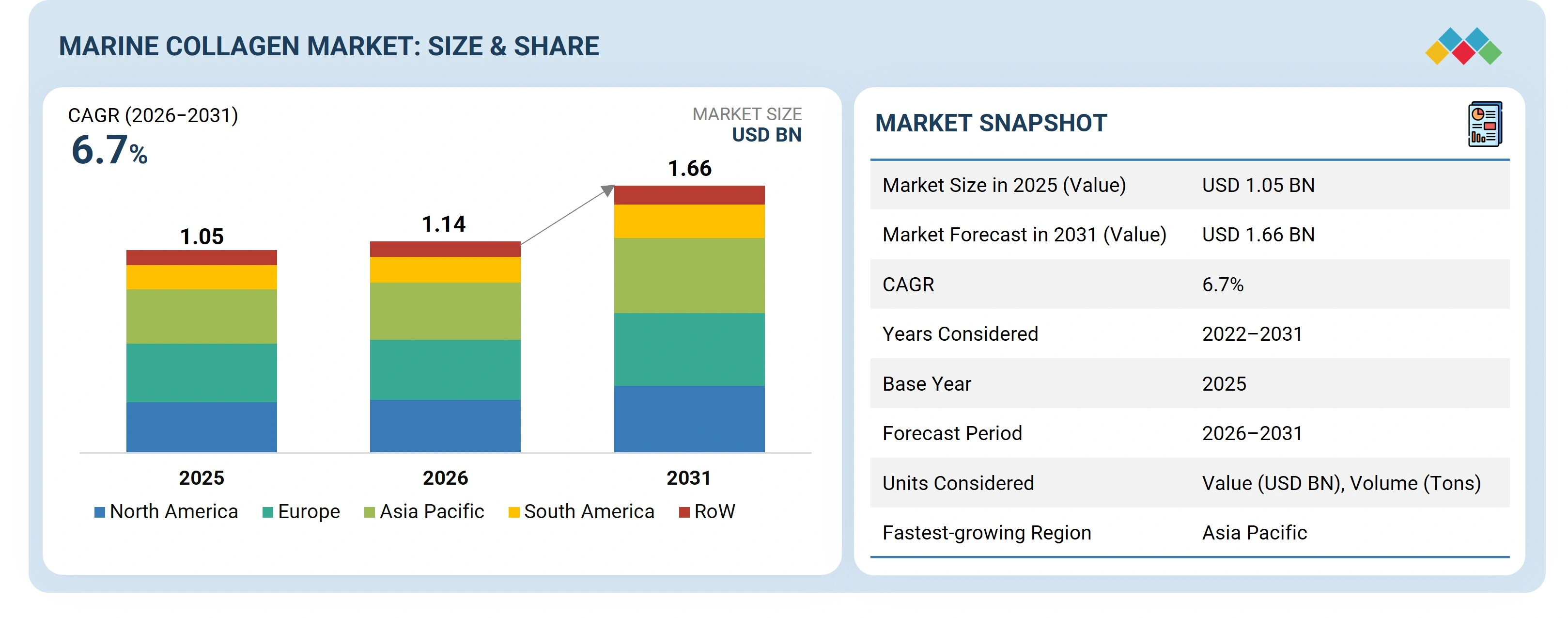
The marine collagen market is projected to grow from USD 1.14 billion in 2026 to reach USD 1.66 billion in 2031, at a CAGR of 6.7% from 2026 to 2031. The marine collagen market is expanding significantly as people are increasingly paying attention to their skin condition, joint support, and general health conditions. Marine collagen represents a major part of the market, mainly due to its bioavailability and fast absorption. It is mostly used in dietary supplements, functional food, and beauty products. Growing demand for anti-aging products is another factor enhancing the growth of this market. It is considered to improve skin elasticity and hydration and to reduce wrinkles. Additionally, the trend of clean-label and natural ingredients has led to increased market growth as marine collagen is perceived to be a safer and more sustainable product compared to other alternatives.

Marine Collagen Market

Another area where marine collagen is gaining acceptance is in the food & beverage industry, where it is being used in protein bars, drinks, and enhancement products. Also, an increasing consciousness about joint health and strengthening of the bones is promoting its consumption among aging and fitness-conscious customers. It is rapidly gaining popularity in the health, nutrition, and beauty industries due to its numerous advantages. This is gradually resulting in increasing demand throughout the global market.

Key Takeaways:

  • Asia Pacific is expected to achieve the highest CAGR during the forecast period.
  • By type, the type I collagen segment is projected to account for a share of 62% in 2026, owing to its high bioavailability and extensive use in nutraceutical and cosmetic applications.
  • By application, the nutritional products segment is expected to lead the application segment, with a share of 35.2% in 2026, driven by increasing demand for dietary supplements and functional nutrition.
  • By form, the liquid segment is expected to experience the highest growth rate during the forecast period.
  • By marine animal, the fish-based collagen segment is expected to account for the largest share during the forecast period due to its abundant availability, cost-effectiveness, and widespread use of fish skin and scales as primary raw materials.
  • By extraction process, the enzymatic segment is expected to account for the largest share during the forecast period, as it enables high-quality collagen production with better peptide functionality, improved yield, and enhanced bioavailability compared to conventional methods.
  • Ashland, Darling Ingredients, Weishardt, Nitta Gelatin, Inc., and Nippi Collagen Na Inc. were identified as some of the star players in the marine collagen market, given their strong market share and product footprint.
  • Ningbo Inno Pharmchem Co., Ltd., Jellagen, and Italgel S.R.L. have distinguished themselves among startups and SMEs by securing strong footholds in specialized niche areas, underscoring their potential as emerging market leaders.


Download PDF Brochure: https://www.marketsandmarkets.com/pdfdownloadNew.asp?id=155534506

Asia Pacific is expected to be the fastest-growing market during the forecast period.

Asia Pacific is expected to be the fastest-growing market during the forecast period. This is primarily driven by high demand from countries such as Japan, China, and South Korea, where the use of collagen in beauty and health products is well established. Collagen gets actively used by consumers in this region for skin care, anti-aging and regular day-to-day health reasons. In addition, the high seafood consumption levels in the region make the availability of raw materials and local production easy. Furthermore, increasing middle-class consumption and interest in supplement products are also attributed to the increasing demand for solutions. Due to the strong demand, supply and early uptake, Asia Pacific is the fastest-growing region in the market.

The medical segment is expected to be the fastest-growing market during the forecast period.

The medical segment is expected to be the fastest-growing segment during the forecast period. This segment is experiencing rapid growth as marine collagen is finding more applications in wound care, tissue engineering, and regenerative medicine due to its properties for cell proliferation, growth, and healing. Additionally, it is widely preferred due to the lower risk of disease transmission and convenient application. Moreover, the rising use of such biocompatible, safe materials in the healthcare sector is boosting the demand for marine collagen in medical applications.

Request Sample Pages: https://www.marketsandmarkets.com/requestsampleNew.asp?id=155534506

By source, the bones & tendons segment is expected to be the fastest-growing segment during the forecast period.

The bones & tendons segment is expected to be the fastest-growing segment during the forecast period. These sources are rich in collagen types that support joint health and tissue repair, which is increasing their use in medical and nutraceutical products. There is also a strong push to use full fish waste, which is driving interest in bones and tendons as raw materials. Improved extraction methods are making it easier to process collagen from these harder tissues. Because of rising demand for joint care products and better resource use, these sources are seeing faster growth in the market.

The report profiles key players such as Ashland (US), Darling Ingredients (US), Weishardt (France), Nitta Gelatin, Inc. (US), Nippi Collagen NA Inc (US), Seagarden AS (Norway), Titan Biotech (India), Vinh Wellness (Vietnam), Lapi Gelatine (Italy), Etchem (China), Hunan Sunfull Bio-Tech (China), Hubei Huge Bioengineering (China), Ningbo Inno Pharmchem Co., Ltd. (China), Jellagen (United Kingdom), Athos Collagen Pvt. Ltd. (India), and others.

Recent Developments in the Marine Collagen Industry:

  • June 2025: Ashland entered into product development collaborations with personal care and nutraceutical brands to integrate marine collagen-based ingredients into next-generation beauty-from-within and skincare formulations.
  • March 2025: Seagarden invested in scaling up its marine-based ingredient processing capabilities, including collagen extraction from fish by-products, to strengthen its sustainable sourcing and supply chain operations.
  • January 2025: Darling Ingredients (Rousselot) introduced new marine collagen-based ingredient solutions for functional nutrition, targeting joint health and skin health applications in global markets.


About MarketsandMarkets™

MarketsandMarkets™ has been recognized as one of America’s Best Management Consulting Firms by Forbes, as per their recent report.

MarketsandMarkets™ is a blue ocean alternative in growth consulting and program management, leveraging a man-machine offering to drive supernormal growth for progressive organizations in the B2B space. With the widest lens on emerging technologies, we are proficient in co-creating supernormal growth for clients across the globe.

Today, 80% of Fortune 2000 companies rely on MarketsandMarkets, and 90 of the top 100 companies in each sector trust us to accelerate their revenue growth. With a global clientele of over 13,000 organizations, we help businesses thrive in a disruptive ecosystem.

The B2B economy is witnessing the emergence of $25 trillion in new revenue streams that are replacing existing ones within this decade. We work with clients on growth programs, helping them monetize this $25 trillion opportunity through our service lines – TAM Expansion, Go-to-Market (GTM) Strategy to Execution, Market Share Gain, Account Enablement, and Thought Leadership Marketing.

Built on the ‘GIVE Growth’ principle, we collaborate with several Forbes Global 2000 B2B companies to keep them future-ready. Our insights and strategies are powered by industry experts, cutting-edge AI, and our Market Intelligence Cloud, KnowledgeStore™, which integrates research and provides ecosystem-wide visibility into revenue shifts.

Media Contact
Company Name: MarketsandMarkets™ Research Private Ltd.
Contact Person: Mr. Rohan Salgarkar
Email: Send Email
Phone: 18886006441
Address:1615 South Congress Ave. Suite 103, Delray Beach, FL 33445
City: Florida
State: Florida
Country: United States
Website: https://www.marketsandmarkets.com/Market-Reports/marine-collagen-market-155534506.html


Press Release Distributed by ABNewswire.com

To view the original version on ABNewswire visit: Marine collagen Market worth $1.66 billion in 2031, at a CAGR of 6.7% | MarketsandMarkets™

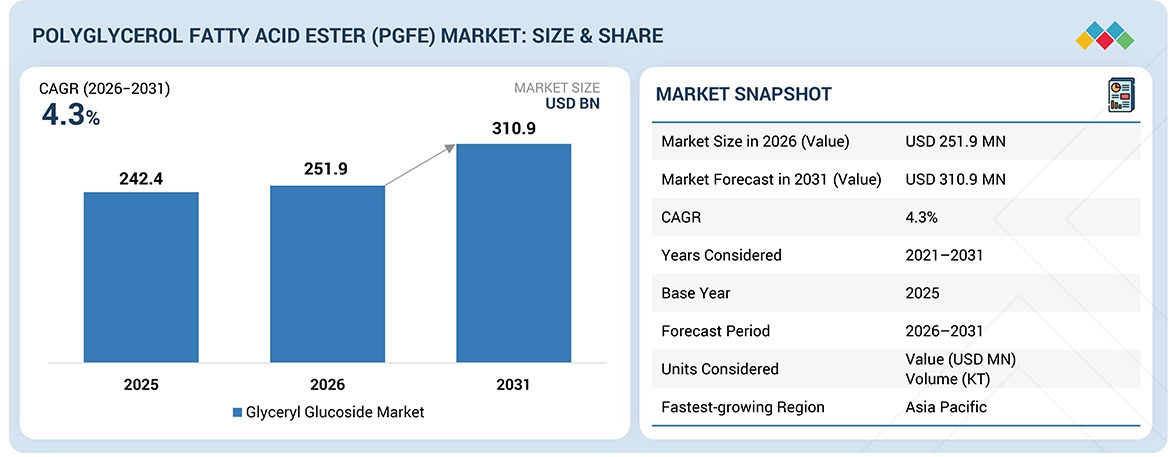
Polyglycerol Fatty Acid Ester Market worth $310.9 million by 2031, at a CAGR of 4.3% | MarketsandMarkets™

“MarketsandMarkets™”
Polyglycerol Fatty Acid Ester Market By Type, Functionality, End-use Industry (Food & Beverages, Personal Care & Cosmetics, Pharmaceuticals, Industrial), Source, Form, Polyglycerol Degree, and Region – Global Forecast to 2031

The polyglycerol fatty acid esters market is projected to grow from USD 251.9 million in 2026 and to reach USD 310.9 million by 2031, at a Compound Annual Growth Rate (CAGR) of 4.3% during the forecast period. he global polyglycerol fatty acid ester market has seen moderate growth in recent years, driven by rising demand for advanced, high-performance ingredients in food & beverage products and across the cosmetics & skincare industry. The market is expected to expand further as more consumers using creams, lotions, serums, and haircare products seek ingredients like polyglycerol fatty acid esters that deliver excellent conditioning & moisturizing benefits for the skin. Additionally, anti-aging, skin rejuvenation, elasticity enhancement, and addressing skin sensitivities required in premium skincare products can be effectively addressed with advanced-oriented ingredients like polyglycerol fatty acid esters. Growing consumer preference for clean-label & bio-based ingredients, along with increased investments from global giants in R&D & formulation manufacturing, are expected to drive evolution in the market. These advancements are resulting in innovative, stable, compatible & multifunctional products, including polyglycerol fatty acid esters, offering significant benefits to consumers.

Polyglycerol Fatty Acid Ester Market

Key Takeaways:

  • Asia Pacific accounted for the largest share of 32.3% in 2026.
  • By type, the mono-glyceryl glucoside segment is expected to register the highest CAGR of 39.6% in 2026-2031.
  • By functionality, the emulsifiers & stabilizers segment is expected to register the highest CAGR.
  • By form, the liquid solutions segment is expected to dominate the market.
  • Key companies operating in the polyglycerol fatty acid ester (PGFE) market, including Croda International Plc (UK), Clariant AG (Switzerland), Lonza Group AG (Switzerland), and Riken Vitamin Co., Ltd. (Japan), were identified as some of the star players, given their strong market share and product footprint.
  • Companies such as Spiga Nord S.p.A., Kasco Chemtech Pvt. Ltd., Mohini Organics Pvt. Ltd., have distinguished themselves among startups and SMEs by securing strong footholds in specialized niche areas, underscoring their potential as emerging market leaders.


Download PDF Brochure: https://www.marketsandmarkets.com/pdfdownloadNew.asp?id=68919615

Low-PG esters (PG-3 to PG-5) are estimated to account for the highest share in the concentration segment.

In the PGFE market, concentration is the second most significant defining factor of the market structure, second only to application. The low-PG esters (PG-3 to PG-5) hold the greatest market share globally, essentially dominating this market segment. They are the most desirable grade among the PGFE blends for their combination of critical hydrophilic-lipophilic balance (HLB, or emulsification potential), optimized sensory response, and ubiquitous application use ranging from food emulsification and personal care to very mild surfactant systems. Moreover, the ability of low PG ester grades to be more efficiently and cost-effectively manufactured while maintaining even broader applicability with natural, clean label-based formulations continues to fuel the global incorporation of low PG ester grade PG-3 and PG-5 blends. The explosion of processed food formulators and cosmetic manufacturers seeking safe, multifunctional surfactants that are derived from plants further points to the significant market growth attributed to the PG-3 to PG-5 concentration range.

Among sources, vegetable oil-based PGFEs are set to account for the leading market share.

The highest share among the sources of PGFE has been seen for the vegetable oil-based raw materials as they enjoy the major share globally. The major cause for vegetable oil-based esters to dominate the market is the abundant availability, renewability and low cost of vegetable oil raw materials such as palm oil, sunflower oil, and soybean oil on which the PGFE esters are primarily derived. Apart from their economics, they are the most preferred material due to their compatibility with the clean label and bio-based image, especially in food, personal care and cosmetic applications, where the natural origin image is a major factor influencing the consumer preference and also in view of rising regulatory support for more sustainable and plant-derived ingredients, together with increased consumer focus on natural and non-animal-derived ingredients. As the esters derived from sunflower, soybean and palm oil, for instance, have predictable fatty acid composition and exhibit good emulsification/stabilization properties, they have become the most dominant global source segment for PGFEs.

Request Sample Pages: https://www.marketsandmarkets.com/requestsampleNew.asp?id=68919615

The polyglycerol fatty acid ester market accounted for the second-largest share.

The strong presence of the personal care & cosmetics industry in this region, coupled with high consumer demand for premium skin care products, is driving demand for this product. Other factors propelling the adoption of the product in Europe include the prevalence of numerous cosmetic companies and ingredient suppliers operating across most European countries, as well as growing demand for sustainable, bio-based, and clean-label ingredients. Increasing consumer migration toward potent skin care formulations that target hydration, anti-aging, and barrier repair is also contributing to greater adoption of this product in this region. Rigorous regulatory procedures for ensuring product safety and quality are expected to boost the adoption of new, high-performance ingredients such as this one in Europe.

Leading Polyglycerol Fatty Acid Ester Companies:

The report profiles key players such as Croda International Plc (UK), Clariant AG (Switzerland), Lonza Group AG (Switzerland), Sakamoto Yakuhin Kogyo Co., Ltd. (Japan), Taiyo Kagaku Co., Ltd. (Japan), Riken Vitamin Co., Ltd. (Japan), Palsgaard A/S (Denmark), Nisshin Oillio Group Ltd. (Japan), Gattefossé (France), Stéarinerie Dubois (France), Oleon NV (Belgium), Ataman Kimya A.S. (Turkey), Foodchem International Corporation (China), Guangzhou Cardlo Biotechnology Co., Ltd. (China), and Henan Chemsino Industry Co., Ltd. (China).

Recent Developments in the Polyglycerol Fatty Acid Ester Industry:

  • December 2025: Croda strengthened its biopharma portfolio through a strategic supply partnership with Amino GmbH, aimed at enhancing access to pharmaceutical-grade amino acids and reinforcing its position in high-value life sciences applications.
  • September 2024: Clariant inaugurated a new production facility in China dedicated to high-performance specialty chemicals, strengthening its presence in the Asia Pacific region and supporting local demand growth. automatic adjustment of planting depth based on soil conditions, improving emergence uniformity and optimizing seed placement in variable field environments.


About MarketsandMarkets™

MarketsandMarkets™ has been recognized as one of America’s Best Management Consulting Firms by Forbes, as per their recent report.

MarketsandMarkets™ is a blue ocean alternative in growth consulting and program management, leveraging a man-machine offering to drive supernormal growth for progressive organizations in the B2B space. With the widest lens on emerging technologies, we are proficient in co-creating supernormal growth for clients across the globe.

Today, 80% of Fortune 2000 companies rely on MarketsandMarkets, and 90 of the top 100 companies in each sector trust us to accelerate their revenue growth. With a global clientele of over 13,000 organizations, we help businesses thrive in a disruptive ecosystem.

The B2B economy is witnessing the emergence of $25 trillion in new revenue streams that are replacing existing ones within this decade. We work with clients on growth programs, helping them monetize this $25 trillion opportunity through our service lines – TAM Expansion, Go-to-Market (GTM) Strategy to Execution, Market Share Gain, Account Enablement, and Thought Leadership Marketing.

Built on the ‘GIVE Growth’ principle, we collaborate with several Forbes Global 2000 B2B companies to keep them future-ready. Our insights and strategies are powered by industry experts, cutting-edge AI, and our Market Intelligence Cloud, KnowledgeStore™, which integrates research and provides ecosystem-wide visibility into revenue shifts.

Media Contact
Company Name: MarketsandMarkets™ Research Private Ltd.
Contact Person: Mr. Rohan Salgarkar
Email: Send Email
Phone: 18886006441
Address:1615 South Congress Ave. Suite 103, Delray Beach, FL 33445
City: Florida
State: Florida
Country: United States
Website: https://www.marketsandmarkets.com/Market-Reports/polyglycerol-fatty-acid-ester-market-68919615.html


Press Release Distributed by ABNewswire.com

To view the original version on ABNewswire visit: Polyglycerol Fatty Acid Ester Market worth $310.9 million by 2031, at a CAGR of 4.3% | MarketsandMarkets™