Michele King Introduces “The Gnome in My Home” – The Perfect Holiday Book to Inspire Kindness in Children

Author Michele King unveils her enchanting new children’s book, “The Gnome in My Home: A Countdown to Christmas Poem,” a heartwarming story that transforms the holiday countdown into a celebration of kindness, patience, and everyday goodness.

As families search for meaningful ways to make the holiday season special, King offers a refreshing alternative to traditional countdown activities. This beautifully illustrated book follows a whiskered gnome who quietly observes children throughout December, rewarding acts of kindness and compassion with small surprises.

“I wanted to create something that goes beyond the usual holiday excitement,” King shares from her experience as both an author and parent. “Children naturally want to do good things, but they sometimes need gentle reminders about what truly matters during this busy season.”

The rhythmic poem guides young readers through a four-week journey leading up to Christmas Eve. Each page encourages children to notice opportunities for kindness, whether that means showing patience during stressful moments, completing chores cheerfully, or choosing joy over frustration. The gnome character serves as a gentle guide who celebrates these everyday triumphs.

Parents who tested early versions found that the book sparked meaningful conversations with their children about values beyond receiving gifts. One mother noted how her daughter began pointing out her own kind acts, excited that “the gnome might be watching.”

Unlike books that simply count down to presents, this story weaves character development into the holiday narrative. The gnome doesn’t demand perfection but recognizes genuine effort and growth. This approach helps children understand that goodness comes from consistent, small choices rather than grand gestures.

King structures each section around weekly milestones, making the countdown manageable for young attention spans. The playful rhyme scheme keeps children engaged while the underlying message takes root naturally. Vibrant illustrations bring the mysterious gnome to life, giving children a magical character to connect with throughout December.

Teachers and counselors have expressed interest in using the book outside the home. The themes of recognizing effort, choosing kindness, and celebrating personal growth align with social-emotional learning goals that many schools emphasize.

“The Gnome in My Home” arrives at a time when families want holiday traditions that build character alongside creating memories. King’s gentle storytelling reminds both children and adults that the season’s real magic emerges from how we treat one another.

The book is designed for children ages 4-8 and makes an ideal gift for families starting new holiday traditions or seeking stories with positive messages.

About Michele King

Michele King is a children’s author passionate about creating stories that inspire goodness in young hearts. Through relatable characters and engaging narratives, she helps families explore important values in accessible ways.

Website

Media Contact
Company Name: Spark Leaf Publishing
Contact Person: Michele King
Email: Send Email
Country: United States
Website: http://thegnomeinmyhome.com/


Press Release Distributed by ABNewswire.com

To view the original version on ABNewswire visit: Michele King Introduces “The Gnome in My Home” – The Perfect Holiday Book to Inspire Kindness in Children

Spinal Cord Injury Pipeline 2026: Therapies Under Investigation, Clinical Trials Milestones, and FDA Approvals By DelveInsight | StemCyte, NervGen Pharma, VA Office of Research and Development

(Las Vegas, Nevada, United States) As per DelveInsight’s assessment, globally, Spinal Cord Injury pipeline constitutes 25+ key companies continuously working towards developing 30+ Spinal Cord Injury treatment therapies, analysis of Clinical Trials, Therapies, Mechanism of Action, Route of Administration, and Developments analyzes DelveInsight.


Spinal Cord Injury Pipeline Insight, 2026 report by DelveInsight outlines comprehensive insights into the present clinical development scenario and growth prospects across the Spinal Cord Injury Market.


The Spinal Cord Injury Pipeline report embraces in-depth commercial and clinical assessment of the pipeline products from the pre-clinical developmental phase to the marketed phase. The report also covers a detailed description of the drug, including the mechanism of action of the drug, clinical studies, NDA approvals (if any), and product development activities comprising the technology, collaborations, mergers acquisition, funding, designations, and other product-related details.


Some of the key takeaways from the Spinal Cord Injury Pipeline Report:

  • Companies across the globe are diligently working toward developing novel Spinal Cord Injury treatment therapies with a considerable amount of success over the years.

  • Spinal Cord Injury companies working in the treatment market are Athersys, Olatec Therapeutics, AlaMab therapeutics, ReNetX Bio, Histocell, Lineage Cell Therapeutics, AbbVie, Mitsubishi Tanabe Pharma, Pharmazz, Eusol Biotech, Kringle Pharma, NervGen Pharma, StemCyte, Inc., and others, are developing therapies for the Spinal Cord Injury treatment

  • Emerging Spinal Cord Injury therapies in the different phases of clinical trials are- Allogeneic stem cell therapy, OLT1177, ALMB0166, AXER-204, FAB117-HC, AST-OPC1, Elezanumab, MT 3921, PMZ-1620, ES 135, KP-100IT, NVG-291, Romosozumab, Umbilical Cord Blood Mononuclear Cell, and others are expected to have a significant impact on the Spinal Cord Injury market in the coming years.

  • In November 2025, Precision Neuroscience’s wireless brain-computer interface, designed to restore function in people with paralysis, received support from SCI Ventures, a fund backed by the Christopher & Dana Reeve Foundation and other leading spinal cord injury organizations. The partnership provides Precision with access to SCI Ventures’ extensive network of patients, clinicians, and regulatory experts, helping accelerate the development and delivery of the device for individuals with spinal cord injuries and neurological conditions such as ALS and stroke.

  • In June 2025, Lineage Cell Therapeutics, Inc. (NYSE American and TASE: LCTX), a clinical-stage biotech company focused on developing innovative allogeneic (“off-the-shelf”) cell therapies for severe neurological and ophthalmic disorders, announced the addition of new presenters for the 3rd Annual Spinal Cord Injury Investor Symposium (3rd SCIIS). This year’s event will be entirely virtual, featuring interactive and on-demand sessions beginning on June 27, 2025.

  • In March 2025, Cellino and Matricelf (TASE: MTLF) announced a partnership aimed at advancing the global biomanufacturing of personalized spinal cord injury therapies. This collaboration integrates Cellino’s Nebula™ technology with Matricelf’s innovative regenerative medicine approach. By combining Cellino’s automated production of induced pluripotent stem cells (iPSCs) with Matricelf’s double autologous 3D differentiation process, the partnership seeks to enable scalable and patient-specific regenerative treatments. Cellino’s Nebula™, a proprietary closed-cassette biomanufacturing platform, is specifically designed to generate high-quality iPSCs with exceptional consistency and sterility at a large scale.

  • In March 2025, NurExone Biologic Inc. (TSXV: NRX) (OTCQB: NRXBF) (FSE: J90) announced the successful completion of a key preclinical study supporting its upcoming Investigational New Drug (IND) application. This study marks a significant step toward the company’s first-in-human trials. The results demonstrated that ExoPTEN treatment, across various dosing regimens, promoted motor function recovery and notably enhanced blood flow at the spinal cord injury site both critical factors for tissue repair and functional improvement.

  • In February 2025, Lineage Cell Therapeutics, Inc. (NYSE American and TASE: LCTX), a clinical-stage biotech company developing allogeneic cell therapies for severe neurological disorders, announced the launch of its DOSED (Delivery of Oligodendrocyte Progenitor Cells for Spinal Cord Injury: Evaluation of a Novel Device) clinical study. This study aims to assess the safety and performance of the Manual Inject Parenchymal Spinal Delivery System (MI PSD System), a new device designed to precisely deliver OPC1, an investigational allogeneic stem cell-based therapy, directly to the spinal cord injury site. OPC1 consists of oligodendrocyte progenitor cells and other related glial cells intended to promote spinal cord repair.

  • In February 2025, A pilot clinical trial suggests that spinal cord stimulation (SCS) may help reactivate dormant motor neurons and enhance leg muscle strength in individuals with spinal muscular atrophy (SMA). Researchers from the University of Pittsburgh School of Medicine conducted the study (NCT05430113), utilizing Medtronic’s Vectris SureScan device in three SMA patients. After three months of treatment, all participants showed an improvement of at least 20 meters in the six-minute walk test (6MWT), an indicator used to assess muscle endurance and fatigue.


Spinal Cord Injury Overview

Spinal Cord Injury (SCI) is damage to the spinal cord that results in partial or complete loss of motor, sensory, and autonomic functions below the level of injury. It can occur due to trauma, such as accidents or falls, or from diseases affecting the spinal cord. SCI often leads to paralysis, loss of sensation, and other complications, with the severity depending on the location and extent of the injury. Early medical intervention and rehabilitation are critical for improving outcomes.


Get a Free Sample PDF Report to know more about Spinal Cord Injury Pipeline Therapeutic Assessment-

https://www.delveinsight.com/report-store/spinal-cord-injury-pipeline-insight


Emerging Spinal Cord Injury Drugs Under Different Phases of Clinical Development Include:

  • Allogeneic stem cell therapy: Athersys

  • OLT1177: Olatec Therapeutics

  • ALMB0166: AlaMab therapeutics

  • AXER-204: ReNetX Bio

  • FAB117-HC: Histocell

  • AST-OPC1: Lineage Cell Therapeutics

  • Elezanumab: AbbVie

  • MT 3921: Mitsubishi Tanabe Pharma

  • PMZ-1620: Pharmazz

  • ES 135: Eusol Biotech

  • KP-100IT: Kringle Pharma

  • NVG-291: NervGen Pharma

  • Romosozumab: VA Office of Research and Development/Kessler Institute for Rehabilitation

  • Umbilical Cord Blood Mononuclear Cell: StemCyte, Inc


Spinal Cord Injury Route of Administration

Spinal Cord Injury pipeline report provides the therapeutic assessment of the pipeline drugs by the Route of Administration. Products have been categorized under various ROAs, such as

  • Oral

  • Parenteral

  • Intravenous

  • Subcutaneous

  • Topical


Spinal Cord Injury Molecule Type

Spinal Cord Injury Products have been categorized under various Molecule types, such as

  • Monoclonal Antibody

  • Peptides

  • Polymer

  • Small molecule

  • Gene therapy


Spinal Cord Injury Pipeline Therapeutics Assessment

  • Spinal Cord Injury Assessment by Product Type

  • Spinal Cord Injury By Stage and Product Type

  • Spinal Cord Injury Assessment by Route of Administration

  • Spinal Cord Injury By Stage and Route of Administration

  • Spinal Cord Injury Assessment by Molecule Type

  • Spinal Cord Injury by Stage and Molecule Type


DelveInsight’s Spinal Cord Injury Report covers around 30+ products under different phases of clinical development like

  • Late-stage products (Phase III)

  • Mid-stage products (Phase II)

  • Early-stage product (Phase I)

  • Pre-clinical and Discovery stage candidates

  • Discontinued & Inactive candidates

  • Route of Administration


Further Spinal Cord Injury product details are provided in the report. Download the Spinal Cord Injury pipeline report to learn more about the emerging Spinal Cord Injury therapies


Some of the key companies in the Spinal Cord Injury Therapeutics Market include:

Key companies developing therapies for Spinal Cord Injury are – NervGen Pharma, VA Office of Research and Development, Kessler Institute for Rehabilitation, StemCyte, Inc., Mitsubishi Tanabe Pharma America Inc., AbbVie, and others.


Spinal Cord Injury Pipeline Analysis:

The Spinal Cord Injury pipeline report provides insights into

  • The report provides detailed insights about companies that are developing therapies for the treatment of Spinal Cord Injury with aggregate therapies developed by each company for the same.

  • It accesses the Different therapeutic candidates segmented into early-stage, mid-stage, and late-stage of development for Spinal Cord Injury Treatment.

  • Spinal Cord Injury key companies are involved in targeted therapeutics development with respective active and inactive (dormant or discontinued) projects.

  • Spinal Cord Injury Drugs under development based on the stage of development, route of administration, target receptor, monotherapy or combination therapy, a different mechanism of action, and molecular type.

  • Detailed analysis of collaborations (company-company collaborations and company-academia collaborations), licensing agreement and financing details for future advancement of the Spinal Cord Injury market.

The report is built using data and information traced from the researcher’s proprietary databases, company/university websites, clinical trial registries, conferences, SEC filings, investor presentations, and featured press releases from company/university websites and industry-specific third-party sources, etc.


Download Sample PDF Report to know more about Spinal Cord Injury drugs and therapies


Spinal Cord Injury Pipeline Market Drivers

  • Increase in prevalence of spinal cord injury, increasing awareness about the spinal cord injury are some of the important factors that are fueling the Spinal Cord Injury Market.


Spinal Cord Injury Pipeline Market Barriers

  • However, absence of essential emergency and acute care, lack of importance of a systematic approach towards the management of Spinal cord Injury and other factors are creating obstacles in the Spinal Cord Injury Market growth.


Scope of Spinal Cord Injury Pipeline Drug Insight

  • Coverage: Global

  • Key Spinal Cord Injury Companies: Athersys, Olatec Therapeutics, AlaMab therapeutics, ReNetX Bio, Histocell, Lineage Cell Therapeutics, AbbVie, Mitsubishi Tanabe Pharma, Pharmazz, Eusol Biotech, Kringle Pharma, NervGen Pharma, StemCyte, Inc., and others

  • Key Spinal Cord Injury Therapies: Allogeneic stem cell therapy, OLT1177, ALMB0166, AXER-204, FAB117-HC, AST-OPC1, Elezanumab, MT 3921, PMZ-1620, ES 135, KP-100IT, NVG-291, Romosozumab, Umbilical Cord Blood Mononuclear Cell, and others

  • Spinal Cord Injury Therapeutic Assessment: Spinal Cord Injury current marketed and Spinal Cord Injury emerging therapies

  • Spinal Cord Injury Market Dynamics: Spinal Cord Injury market drivers and Spinal Cord Injury market barriers


Request for Sample PDF Report for Spinal Cord Injury Pipeline Assessment and clinical trials


Table of Contents

1. Spinal Cord Injury Report Introduction

2. Spinal Cord Injury Executive Summary

3. Spinal Cord Injury Overview

4. Spinal Cord Injury- Analytical Perspective In-depth Commercial Assessment

5. Spinal Cord Injury Pipeline Therapeutics

6. Spinal Cord Injury Late Stage Products (Phase II/III)

7. Spinal Cord Injury Mid Stage Products (Phase II)

8. Spinal Cord Injury Early Stage Products (Phase I)

9. Spinal Cord Injury Preclinical Stage Products

10. Spinal Cord Injury Therapeutics Assessment

11. Spinal Cord Injury Inactive Products

12. Company-University Collaborations (Licensing/Partnering) Analysis

13. Spinal Cord Injury Key Companies

14. Spinal Cord Injury Key Products

15. Spinal Cord Injury Unmet Needs

16 . Spinal Cord Injury Market Drivers and Barriers

17. Spinal Cord Injury Future Perspectives and Conclusion

18. Spinal Cord Injury Analyst Views

19. Appendix

20. About DelveInsight


About DelveInsight

DelveInsight is a leading Business Consultant and Market Research firm focused exclusively on life sciences. It supports Pharma companies by providing comprehensive end-to-end solutions to improve their performance. It also offers Healthcare Consulting Services, which benefits in market analysis to accelerate business growth and overcome challenges with a practical approach.

Media Contact
Company Name: DelveInsight
Contact Person: Gaurav Bora
Email: Send Email
Phone: +14699457679
Address:304 S. Jones Blvd #2432
City: Las Vegas
State: NV
Country: United States
Website: https://www.delveinsight.com/


Press Release Distributed by ABNewswire.com

To view the original version on ABNewswire visit: Spinal Cord Injury Pipeline 2026: Therapies Under Investigation, Clinical Trials Milestones, and FDA Approvals By DelveInsight | StemCyte, NervGen Pharma, VA Office of Research and Development

Fuchs Dystrophy Pipeline 2026: MOA and ROA Insights, Clinical Trials Status, and Key Companies Involved by DelveInsight | Kowa Pharma, Trefoil Therapeutics, Design Therapeutics, Emmecell, Santen

(Las Vegas, Nevada, United States) As per DelveInsight’s assessment, globally, Fuchs Dystrophy pipeline constitutes 5+ key companies continuously working towards developing 5+ Fuchs Dystrophy treatment therapies, analysis of Clinical Trials, Therapies, Mechanism of Action, Route of Administration, and Developments analyzes DelveInsight.


The Fuchs Dystrophy Pipeline report embraces in-depth commercial and clinical assessment of the pipeline products from the pre-clinical developmental phase to the marketed phase. The report also covers a detailed description of the drug, including the mechanism of action of the drug, clinical studies, NDA approvals (if any), and product development activities comprising the technology, collaborations, mergers acquisition, funding, designations, and other product-related details.


Fuchs Dystrophy Pipeline Insight, 2026 report by DelveInsight outlines comprehensive insights into the present clinical development scenario and growth prospects across the Fuchs Dystrophy Market.


Some of the key takeaways from the Fuchs Dystrophy Pipeline Report:

  • Companies across the globe are diligently working toward developing novel Fuchs Dystrophy treatment therapies with a considerable amount of success over the years.

  • Fuchs Dystrophy companies working in the treatment market are Kowa Pharmaceutical, Trefoil Therapeutics, Design Therapeutics, Emmecell, Santen Inc., Trefoil Therapeutics, Kowa Company, Ltd, Adam Fedyk, MD, FACS, Kowa Research Institute, Inc., Santen Inc., and others, are developing therapies for the Fuchs Dystrophy treatment

  • Emerging Fuchs Dystrophy therapies in the different phases of clinical trials are- K-321, TTHX1114, DT-168, EO2002, STN1010904, TTHX 1114, Ripasudil, BSS Plus, Ripasudil, STN1010904, and others are expected to have a significant impact on the Fuchs Dystrophy market in the coming years.

  • In May 2025, Design Therapeutics has announced favorable results from its randomized, double-masked Phase I trial evaluating DT-168, a GeneTAC small molecule, in healthy individuals. The study assessed the safety, tolerability, and systemic pharmacokinetics (PK) of the eye drop formulation designed to reduce mutant TCF4 gene expression, which is associated with Fuchs endothelial corneal dystrophy (FECD). A total of 24 participants received either placebo or DT-168 in single and multiple ascending dose cohorts during the placebo-controlled trial.


Fuchs Dystrophy Overview

Fuchs endothelial corneal dystrophy (FECD) is a progressive eye disease that affects the cornea, the clear, dome-shaped surface that covers the front of the eye. It specifically involves the endothelial layer of the cornea, which is responsible for maintaining corneal clarity by pumping out excess fluid. In Fuchs dystrophy, the endothelial cells gradually deteriorate and die off, leading to fluid buildup (edema) in the cornea.


Get a Free Sample PDF Report to know more about Fuchs Dystrophy Pipeline Therapeutic Assessment-

https://www.delveinsight.com/report-store/fuchs-dystrophy-pipeline-insight


Emerging Fuchs Dystrophy Drugs Under Different Phases of Clinical Development Include:

  • K-321: Kowa Pharmaceutical

  • TTHX1114: Trefoil Therapeutics

  • DT-168: Design Therapeutics

  • EO2002: Emmecell

  • STN1010904: Santen Inc.

  • TTHX 1114: Trefoil Therapeutics

  • Ripasudil: Kowa Company, Ltd

  • BSS Plus: Adam Fedyk, MD, FACS

  • Ripasudil: Kowa Research Institute, Inc.

  • STN1010904: Santen Inc.


Fuchs Dystrophy Route of Administration

Fuchs Dystrophy pipeline report provides the therapeutic assessment of the pipeline drugs by the Route of Administration. Products have been categorized under various ROAs, such as

  • Oral

  • Parenteral

  • Intravenous

  • Subcutaneous

  • Topical


Fuchs Dystrophy Molecule Type

Fuchs Dystrophy Products have been categorized under various Molecule types, such as

  • Monoclonal Antibody

  • Peptides

  • Polymer

  • Small molecule

  • Gene therapy


Fuchs Dystrophy Pipeline Therapeutics Assessment

  • Fuchs Dystrophy Assessment by Product Type

  • Fuchs Dystrophy By Stage and Product Type

  • Fuchs Dystrophy Assessment by Route of Administration

  • Fuchs Dystrophy By Stage and Route of Administration

  • Fuchs Dystrophy Assessment by Molecule Type

  • Fuchs Dystrophy by Stage and Molecule Type


DelveInsight’s Fuchs Dystrophy Report covers around 5+ products under different phases of clinical development like

  • Late-stage products (Phase III)

  • Mid-stage products (Phase II)

  • Early-stage product (Phase I)

  • Pre-clinical and Discovery stage candidates

  • Discontinued & Inactive candidates

  • Route of Administration


Further Fuchs Dystrophy product details are provided in the report. Download the Fuchs Dystrophy pipeline report to learn more about the emerging Fuchs Dystrophy therapies


Some of the key companies in the Fuchs Dystrophy Therapeutics Market include:

Key companies developing therapies for Fuchs Dystrophy are – AJL Ophthalmic SA, Massachusetts Eye and Ear, KeraMed, Inc., Kowa Pharmaceuticals, Trefoil Therapeutics, Alcon, Emmecell, Santen, Presbia Plc, and others.


Fuchs Dystrophy Pipeline Analysis:

The Fuchs Dystrophy pipeline report provides insights into

  • The report provides detailed insights about companies that are developing therapies for the treatment of Fuchs Dystrophy with aggregate therapies developed by each company for the same.

  • It accesses the Different therapeutic candidates segmented into early-stage, mid-stage, and late-stage of development for Fuchs Dystrophy Treatment.

  • Fuchs Dystrophy key companies are involved in targeted therapeutics development with respective active and inactive (dormant or discontinued) projects.

  • Fuchs Dystrophy Drugs under development based on the stage of development, route of administration, target receptor, monotherapy or combination therapy, a different mechanism of action, and molecular type.

  • Detailed analysis of collaborations (company-company collaborations and company-academia collaborations), licensing agreement and financing details for future advancement of the Fuchs Dystrophy market.

The report is built using data and information traced from the researcher’s proprietary databases, company/university websites, clinical trial registries, conferences, SEC filings, investor presentations, and featured press releases from company/university websites and industry-specific third-party sources, etc.


Download Sample PDF Report to know more about Fuchs Dystrophy drugs and therapies


Fuchs Dystrophy Pipeline Market Strengths

  • Increase in the geriatric population, growing demand for eye care treatment for Fuchs dystrophy are some of the important factors that are fueling the Fuchs Dystrophy Market.


Fuchs Dystrophy Pipeline Market Opportunities

  • However, lack of awareness, lack of universal guidelines regarding disease diagnosis and treatment impacts the treatment regime for the patient and other factors are creating obstacles in the Fuchs Dystrophy Market growth.


Scope of Fuchs Dystrophy Pipeline Drug Insight

  • Coverage: Global

  • Key Fuchs Dystrophy Companies: Kowa Pharmaceutical, Trefoil Therapeutics, Design Therapeutics, Emmecell, Santen Inc., Trefoil Therapeutics, Kowa Company, Ltd, Adam Fedyk, MD, FACS, Kowa Research Institute, Inc., Santen Inc., and others

  • Key Fuchs Dystrophy Therapies: K-321, TTHX1114, DT-168, EO2002, STN1010904, TTHX 1114, Ripasudil, BSS Plus, Ripasudil, STN1010904, and others

  • Fuchs Dystrophy Therapeutic Assessment: Fuchs Dystrophy current marketed and Fuchs Dystrophy emerging therapies

  • Fuchs Dystrophy Market Dynamics: Fuchs Dystrophy market drivers and Fuchs Dystrophy market barriers


Request for Sample PDF Report for Fuchs Dystrophy Pipeline Assessment and clinical trials


Table of Contents

1. Fuchs Dystrophy Report Introduction

2. Fuchs Dystrophy Executive Summary

3. Fuchs Dystrophy Overview

4. Fuchs Dystrophy- Analytical Perspective In-depth Commercial Assessment

5. Fuchs Dystrophy Pipeline Therapeutics

6. Fuchs Dystrophy Late Stage Products (Phase II/III)

7. Fuchs Dystrophy Mid Stage Products (Phase II)

8. Fuchs Dystrophy Early Stage Products (Phase I)

9. Fuchs Dystrophy Preclinical Stage Products

10. Fuchs Dystrophy Therapeutics Assessment

11. Fuchs Dystrophy Inactive Products

12. Company-University Collaborations (Licensing/Partnering) Analysis

13. Fuchs Dystrophy Key Companies

14. Fuchs Dystrophy Key Products

15. Fuchs Dystrophy Unmet Needs

16 . Fuchs Dystrophy Market Drivers and Barriers

17. Fuchs Dystrophy Future Perspectives and Conclusion

18. Fuchs Dystrophy Analyst Views

19. Appendix

20. About DelveInsight


About DelveInsight

DelveInsight is a leading Business Consultant and Market Research firm focused exclusively on life sciences. It supports Pharma companies by providing comprehensive end-to-end solutions to improve their performance. It also offers Healthcare Consulting Services, which benefits in market analysis to accelerate business growth and overcome challenges with a practical approach.

Media Contact
Company Name: DelveInsight
Contact Person: Gaurav Bora
Email: Send Email
Phone: +14699457679
Address:304 S. Jones Blvd #2432
City: Las Vegas
State: NV
Country: United States
Website: https://www.delveinsight.com/


Press Release Distributed by ABNewswire.com

To view the original version on ABNewswire visit: Fuchs Dystrophy Pipeline 2026: MOA and ROA Insights, Clinical Trials Status, and Key Companies Involved by DelveInsight | Kowa Pharma, Trefoil Therapeutics, Design Therapeutics, Emmecell, Santen

Best AI Workspace Tools for Teams in 2026: Top 20 Compared

In 2026, AI workspace tools are essential for boosting team productivity and streamlining workflows. This article compares 20 of the best tools available, with tailored stacks for different business types. With the rise of agentic workflows powered by large language models, teams can now automate tasks and enhance collaboration more effectively than ever.

What Are AI Workspace Tools, and Why Do Teams Need Them?

AI workspace tools are software platforms that use artificial intelligence to enhance collaboration, streamline workflows, and boost productivity within teams. They integrate functionalities such as task automation, real-time communication, and data analysis to help teams coordinate more effectively. These tools are projected to drive nearly 73% of organization-wide productivity gains in 2026, making them essential for scaling team output.

In 2026, AI workspace tools play a pivotal role through agentic processes — automated systems that manage tasks and workflows without constant human intervention. This means less time on repetitive tasks and more focus on strategic work that requires human creativity and judgment.

TL;DR

  • What are AI workspace tools? Software that enhances team collaboration and productivity through AI-driven automation and communication.

  • Top 3 reasons teams use them in 2026:

    1. Reduce manual tasks and increase throughput.

    2. Enhance team coordination across tools and time zones.

    3. Enable data-driven decision-making through integrated analytics.

How Should Teams Choose the Right AI Workspace Tool in 2026?

Selecting the right AI workspace tool comes down to three key factors: integrations, automation capabilities, and pricing models. With 91% of teams highlighting integrations as a top consideration, ensuring the tool connects with your existing systems is non-negotiable.

  • Features – Collaboration tools, task management, and real-time communication

  • Integrations – Compatibility with existing software (CRM, project management, communication tools)

  • Pricing Models – Subscription tiers, pay-as-you-go options, or flat-rate fees

  • Customer Support – Availability and quality of support channels

  • User Skill Level – Ease of onboarding versus depth of advanced features

Decision framework:

  • If your team prioritizes integrations → look for tools that connect with your current stack without custom development.

  • If automation is essential → choose tools with workflow triggers and AI-driven task assignments, not just writing assistance.

  • If budget is constrained → evaluate total cost including add-ons, not just headline pricing.

  • If data control is required → prioritize tools with on-premise or private cloud deployment options.

What Are the Top 20 AI Workspace Tools for Teams in 2026?

  1. Slack

  • Best For: Team Communication

  • Pricing: Free; from $6.67/user/month

  • Key Integrations: Google Drive, Zoom, Office 365

  • Pros: Widely adopted, extensive integrations

  • Cons: Notification overload without discipline

  • 2 Asana

  • Best For: Project Management

  • Pricing: Free; from $10.99/user/month

  • Key Integrations: Slack, Microsoft Teams, Google Workspace

  • Pros: Intuitive, customizable

  • Cons: Limited features in free tier

  • 3 .Trello

  • Best For: Visual Task Management

  • Pricing: Free; from $5/user/month

  • Key Integrations: Google Drive, Slack

  • Pros: Simple visual interface

  • Cons: Does not scale well for complex projects

  • 3 . Notion

  • Best For: Documentation & Knowledge Management

  • Pricing: Free; from $8/user/month

  • Key Integrations: Google Drive, Slack, Zapier

  • Pros: Flexible all-in-one workspace

  • Cons: Steeper learning curve

  • 4 .ClickUp

  • Best For: All-in-One Workspace

  • Pricing: Free; from $5/user/month

  • Key Integrations: Slack, Zoom, Google Drive

  • Pros: Comprehensive feature set

  • Cons: Complexity for new users

  • 5 . Monday.com

  • Best For: Project Tracking

  • Pricing: From $8/user/month

  • Key Integrations: Slack, Google Drive, Zoom

  • Pros: Visual dashboards

  • Cons: Pricing escalates quickly

  • 6 . Wrike

  • Best For: Collaborative Work Management

  • Pricing: Free (up to 5 users); from $9.80/user/month

  • Key Integrations: Google Drive, Microsoft Teams

  • Pros: Strong reporting capabilities

  • Cons: Interface can feel cluttered

  • 7 . Airtable

  • Best For: Database & Project Management

  • Pricing: Free; from $10/user/month

  • Key Integrations: Slack, Google Drive, Zapier

  • Pros: Highly flexible

  • Cons: Requires setup investment

  • 8 . Microsoft Teams

  • Best For: Enterprise Collaboration

  • Pricing: Free; from $5/user/month

  • Key Integrations: Office 365, SharePoint

  • Pros: Deep Microsoft integration

  • Cons: Less intuitive outside the Microsoft ecosystem

  • 9 . Miro

  • Best For: Visual Collaboration

  • Pricing: Free; from $8/user/month

  • Key Integrations: Slack, Google Drive

  • Pros: Excellent for brainstorming

  • Cons: Free version is limited

Rising 10 AI Workspace Tools for 2026

11. Basecamp

  • Best For: Simple Project Management
  • Pricing: $99/month flat
  • Key Integrations: Google Drive, Zapier
  • Pros: Predictable flat-rate pricing.
  • Cons: Limited advanced features.

12. Figma

  • Best For: Design Collaboration
  • Pricing: Free; from $12/editor/month
  • Key Integrations: Slack, JIRA, Google Drive
  • Pros: Best-in-class for design teams.
  • Cons: Not relevant for non-designers.

13. Coda

  • Best For: Document Collaboration
  • Pricing: Free; from $10/user/month
  • Key Integrations: Slack, Google Drive
  • Pros: Dynamic documents with logic.
  • Cons: Requires setup time.

14. BridgeApp

  • Best For: All-in-one AI workspace
  • Pricing: Free; Pro from €9/user/month
  • Key Integrations: Messenger integrations, native stack
  • Pros: Chat + tasks + knowledge + AI agents in one platform; on-premise option.

15. HubSpot

  • Best For: Marketing & Sales
  • Pricing: Free; from $45/month
  • Key Integrations: Slack, Zapier
  • Pros: Strong for inbound.
  • Cons: Limited outside marketing workflows.

16. Zapier

  • Best For: Automation & Integrations
  • Pricing: Free; from $19.99/month
  • Key Integrations: Slack, Google Suite, Mailchimp
  • Pros: Widest integration library.
  • Cons: Costs scale with task volume.

17. Todoist

  • Best For: Personal Task Management
  • Pricing: Free; from $3/month
  • Key Integrations: Google Calendar, Dropbox
  • Pros: Simple, lightweight.
  • Cons: Limited for team project tracking.

18. Evernote

  • Best For: Note-Taking
  • Pricing: Free; from $7.99/month
  • Key Integrations: Google Drive, Slack
  • Pros: Strong for personal organization.
  • Cons: Free version heavily restricted.

19. ServiceNow

  • Best For: IT Service Management
  • Pricing: Custom pricing
  • Key Integrations: Teams, Slack
  • Pros: Robust enterprise IT workflows.
  • Cons: High complexity and cost for smaller teams.

20. Hive

  • Best For: Team Collaboration
  • Pricing: From $12/user/month
  • Key Integrations: Google Drive, Zoom, Slack
  • Pros: Strong collaboration and communication features.
  • Cons: Pricing high for small teams.

Which AI Workspace Stacks Work Best by Business Type?

1. SaaS Stack

Ideal for: Fast-paced product teams that need tight integration between documentation, communication, and task tracking.

  • Notion

Purpose: Documentation, wikis, knowledge base

  • Zapier

Purpose: Cross-app automation

  • Slack

Purpose: Team communication

  • Airtable

Purpose: Flexible database and project tracking

Alternative: Teams looking to consolidate this stack into fewer tools often evaluate BridgeApp (chat + tasks + knowledge in one + AI agents ) or ClickUp (tasks + docs with AI). The tradeoff is flexibility vs. consolidation overhead.

2. Agency Stack

Ideal for: Client-facing teams that prioritize creative collaboration and feedback loops.

  • Miro

Purpose: Visual brainstorming and client workshops

  • Monday.com

Purpose: Project timelines and client workflows

  • Figma

Purpose: Design collaboration and feedback

  • Trello

Purpose: Lightweight task tracking

3. E-commerce Stack

Ideal for: Teams optimizing inventory, customer engagement, and marketing performance.

  • Shopify

Purpose: Storefront and inventory management

  • Mailchimp

Purpose: Email marketing and automation

  • Hootsuite

Purpose: Social media scheduling and analytics

  • Zendesk

Purpose: Customer support and ticketing

4. Remote-First Stack

Ideal for: Fully distributed teams maintaining engagement and coordination across time zones.

  • Zoom

Purpose: Video calls and async recording

  • Asana

Purpose: Project tracking and task assignment

  • Slack

Purpose: Async and real-time messaging

  • Mural

Purpose: Virtual collaboration and workshops

Note: Remote-first teams with tool fragmentation problems — running Slack, Notion, and a task tool separately — increasingly evaluate consolidated AI workspaces like BridgeApp or ClickUp to reduce the overhead of tool-switching across a distributed team.

5. Compliance-First / On-Premise Stack

Ideal for: Teams in regulated industries (healthcare, finance, legal, government) that cannot use standard US cloud services.

  • BridgeApp

Purpose: Chat + tasks + knowledge base + AI agents with on-premise deployment

  • OpenProject

Purpose: Open-source project management, self-hostable

  • Nextcloud

Purpose: Self-hosted file storage and sharing

This is a niche but growing segment — teams that need modern AI-assisted workflows but cannot send data to third-party cloud AI providers. BridgeApp is the most complete commercial option here; OpenProject and Nextcloud cover adjacent needs.

What’s New in AI Workspace Tools for 2026?

Three major shifts are reshaping the category:

Agentic Workflows: A significant 34% of teams now use agent-based orchestration, automating routine tasks and allowing AI to anticipate needs, manage handoffs, and facilitate communication across platforms without constant human triggers.

Multi-Modal AI Integrations: Tools now process text, audio, and visual inputs simultaneously — allowing teams to interact with AI in more natural ways. A team can input a project brief through text while uploading related visual materials, and the AI generates a synthesis.

Enhanced Security: As AI tool adoption grows, security requirements follow. Advanced protocols include real-time threat detection, data residency controls, and on-premise AI processing for teams that cannot use cloud AI providers.

How Do Real Teams Use AI Workspace Tools? (Case Studies) SaaS Company: Steno

Outcome: 47% faster project delivery.

Steno incorporated AI-driven project management to automate task assignments and integrate real-time feedback loops. The result was significantly reduced project turnaround times and higher client satisfaction scores from on-time delivery.

Marketing Agency: Vibe

Outcome: 40% reduction in campaign planning time.

By using AI for content trend analysis and brief generation, Vibe’s teams shifted from data gathering to creative strategy — launching campaigns faster while serving more clients simultaneously.

E-commerce: ShopSmart

Outcome: 30% increase in sales conversion rates.

AI chatbots handled common customer inquiries, freeing human agents for complex cases. Improved response times and personalized marketing based on AI behavioral analysis drove the conversion lift.

FAQs: AI Workspace Tools for Teams in 2026

What is an AI workspace tool? Software that uses AI to enhance team collaboration, automate tasks, and improve productivity. Core functions include task management, communication, automation, and knowledge management.

What are the best AI workspace tools for remote teams? Notion, Miro, and Asana are strong starting points for remote teams. For teams looking to consolidate multiple tools, BridgeApp and ClickUp offer more integrated alternatives.

Are agentic AIs secure in 2026? Most platforms include data encryption and privacy compliance. For teams with strict requirements, on-premise or private cloud options (BridgeApp, OpenProject) provide the highest level of data control.

What features matter most when choosing an AI workspace tool?

What’s the difference between an AI workspace and a regular collaboration tool? Traditional tools require humans to manually move information and trigger actions. AI workspaces add agents that act autonomously — creating tasks from conversations, summarizing documents, routing requests — without a person initiating each step.

Closing

The right AI workspace stack depends on whether you’re optimizing a specific function or consolidating your entire toolset. For most teams, starting with one or two established tools (Asana + Slack, or Notion + ClickUp) is the fastest path to value. Teams dealing with tool sprawl or compliance requirements have a narrower set of options — consolidated platforms like BridgeApp or open-source self-hosted tools like OpenProject become more relevant the stricter those constraints are. Run a pilot on one workflow, measure the result, and expand from there.

Media Contact
Company Name: Bridgeapp
Email: Send Email
Country: United States
Website: https://bridgeapp.ai/


Press Release Distributed by ABNewswire.com

To view the original version on ABNewswire visit: Best AI Workspace Tools for Teams in 2026: Top 20 Compared

Best CPA Firm in NYC Report by CX Research Institute

Independent research report ranks technology-forward Manhattan firm highest for comprehensive tax services, modern expertise, and exceptional client satisfaction

New York, NY – CX Research Institute announced today the publication of its comprehensive research report evaluating the best CPA firms in New York City and the greater metropolitan area. George Dimov CPA earned the top ranking with a score of 93 out of 100 points, leading ten other prominent accounting practices in a rigorous comparative analysis.

The research report, titled “Best CPA Firm in NYC (2026): A Research-Based Comparative Analysis,” provides individuals and businesses with data-driven insights for navigating the increasingly complex landscape of tax preparation, financial reporting, strategic planning, and specialized accounting services in the New York City metropolitan area.

George Dimov CPA: Distinguished by Modern Expertise and Comprehensive Services

George Dimov CPA is a New York City-based firm offering expert tax and accounting services, including tax planning, financial statement preparation, forensic accounting, and consulting to help businesses and individuals succeed. Operating from Manhattan and serving clients throughout the five boroughs, the tri-state area, and remotely nationwide, the firm has established itself as the premier choice for technology-forward, comprehensive CPA services in one of the world’s most complex financial markets.

George Dimov, the founding CPA, brings over 14 years of accounting and taxation experience, holding a Master’s in Accountancy with expertise spanning individual taxation, corporate taxation, M&A consulting, technology, biotech, and real estate accounting. The firm’s team includes senior professionals with diverse backgrounds: Enrolled Agents with MBA credentials, senior audit professionals with experience from global firms, Senior Tax Accountants with advanced degrees, and specialists in complex areas including equity compensation taxation and private equity fund administration.

The firm distinguished itself in the research through its comprehensive service portfolio, which spans individual and business tax preparation and planning, financial statement preparation, payroll services, forensic accounting, private equity fund accounting and taxation, audit and attestation, ITIN services, and highly specialized areas including cryptocurrency taxation and equity compensation (RSUs, ISOs, NSOs, ESPP). This breadth of services enables integrated solutions for clients with evolving needs across their financial lifecycle.

Exceptional Client Satisfaction Documented Across Multiple Platforms

Client reviews consistently highlight excellent value for money, competitive pricing, and responsive service. Multiple five-star reviews across platforms, including Google, Yelp, Clutch, and Thumbtack, indicate consistent service quality across engagement types. Clients specifically praise the team’s knowledge, proactive tax optimization strategies, and ability to handle complex tax situations, with several reporting significant tax savings as a direct result of the firm’s advisory approach.

Specialized Modern Expertise Sets the Firm Apart

The firm’s research ranking was driven significantly by its demonstrated strength in contemporary tax challenges that many traditional practices struggle to address. These include cryptocurrency and digital asset taxation, complex equity compensation scenarios for technology and finance professionals, private equity fund structures, and international tax compliance for expatriates and cross-border clients.

This specialization aligns directly with New York City’s economy, a market dense with fintech professionals, startup founders, equity compensation recipients, and international clients requiring cross-border expertise. The firm’s explicit documentation of ITIN services, international taxation, and forensic accounting capabilities provides clear entry points for clients whose needs extend beyond standard tax preparation.

Technology-Forward Operations Serve a Modern Clientele

The firm employs secure digital portals, cloud-based accounting integration, and modern communication methods. Extended availability and remote service capability reflect contemporary client expectations. Fortune 500 professionals are among the firm’s documented clientele, and the firm’s ability to serve clients virtually across the United States represents a meaningful differentiator in a market where many legacy practices remain tied to in-person workflows.

Research Methodology: Rigorous and Transparent Evaluation

CX Research Institute evaluated CPA firms using a structured 100-point framework designed to reflect real-world client priorities rather than marketing claims alone. The methodology emphasizes publicly verifiable information from firm websites, professional directories including the New York State Society of CPAs, third-party review platforms such as Google Reviews, Yelp, Clutch, and TaxBuzz, and business information databases. Conservative scoring was applied where evidence was limited or contradictory.

The evaluation framework assessed six key dimensions:

  • Service Breadth & Specialization (25 points): Range of services offered and depth of expertise in specialized areas relevant to modern tax and business challenges.

  • Technical Credentials & Expertise (20 points): Professional qualifications, years of experience, specialized certifications, and demonstrated technical proficiency in complex scenarios.

  • Client Service & Responsiveness (20 points): Evidence of client satisfaction through third-party reviews, communication quality, and service delivery consistency.

  • Technology & Process Efficiency (15 points): Adoption of modern tools, secure digital portals, cloud accounting integration, and virtual delivery options.

  • Value Proposition & Pricing (10 points): Competitive pricing relative to service quality and demonstrated value delivery.

  • Market Reputation & Stability (10 points): Firm longevity, market presence, third-party recognition, and indicators of operational stability.


Complete Rankings Reveal Diverse Market Strengths

The research evaluated eleven NYC-area CPA firms, with rankings reflecting fit for typical individuals and small-to-medium businesses seeking comprehensive tax and accounting services:

  1. George Dimov CPA (93/100) – Tech-forward comprehensive services

  2. Miller & Company LLP (85/100) – High-net-worth & elite business clients

  3. Angelides & Company (80/100) – Community-rooted personal service

  4. JLD Tax & Accounting (78/100) – IRS resolution & tax advocacy

  5. Brian Davis CPA, PA (76/100) – Individual & small business focus

  6. Pulaski M. CPA (75/100) – Traditional accounting services

  7. Goldfine Tax Accountants (74/100) – Financial District small business & multilingual

  8. CPA Gurus LLC (73/100) – Boutique consulting

  9. Andres Income Tax Ltd (72/100) – Basic tax preparation

  10. Janie L. Bradley, CPA (71/100) – Individual tax services

  11. Perkis CPA PC (70/100) – Brooklyn small business & individuals


Use-Case Specific Recommendations

The report emphasizes that the “best” CPA firm varies significantly based on specific use cases and provides detailed recommendations by client profile:

Technology and finance professionals with equity compensation packages requiring specialized RSU and stock option taxation expertise should consider George Dimov CPA for its demonstrated specialists in complex equity compensation topics including CP2000 letter resolution, ESPP taxation, and AMT implications.

Cryptocurrency investors and traders needing accurate digital asset reporting will benefit from the firm’s explicit cryptocurrency taxation expertise, covering transaction-level cost basis tracking, proper income characterization, and evolving IRS guidance.

Startups and small businesses seeking comprehensive support benefit from George Dimov CPA’s integrated services spanning bookkeeping, tax planning, payroll, and advisory, enabling one-stop solutions for businesses lacking in-house accounting staff.

International clients and expatriates requiring cross-border compliance, ITIN services, and multi-country reporting will find George Dimov CPA well-positioned, with documented international taxation capabilities and explicit ITIN service listings.

High-net-worth individuals seeking partner-led, relationship-based service may find Miller & Company LLP’s premium positioning and long-standing elite clientele a better match.

Clients facing IRS problems including audits, tax debts, and collection matters should evaluate JLD Tax & Accounting for Jonathan Donenfeld’s specialized CTRS credential and published thought leadership in tax resolution.

Critical Market Patterns Identified

The research revealed several important patterns across New York City’s CPA landscape that should inform selection decisions:

Service Generalization vs. Specialization: Most firms market comprehensive services, but actual depth varies significantly. Specialized modern challenges, cryptocurrency, equity compensation, private equity fund accounting, international tax, and sales and use tax, separate contemporary practitioners from traditional generalists. NYC’s economic environment creates particularly high demand for these specializations.

Technology Adoption Divide: Clear bifurcation exists between firms emphasizing digital portals, cloud accounting, and modern virtual workflows versus traditional paper-centric or in-person-only operations. This impacts service accessibility, client experience, and the ability to serve remote or geographically diverse clients.

NYC-Specific Tax Complexity: New York City imposes its own personal income tax, the Unincorporated Business Tax for self-employed individuals, and the General Corporation Tax for corporations, in addition to New York State and federal obligations. Selecting a CPA with demonstrated fluency in these city-specific requirements is critical for NYC-based individuals and businesses.

IRS Representation Variation: Not all CPA firms maintain active IRS representation practices. Clients facing audits or tax disputes should specifically verify representation experience rather than assuming all CPAs provide this specialized service.

Borough-Specific Positioning: Unlike other metro areas, NYC’s five-borough structure creates meaningful geographic considerations. Clients in Brooklyn, Queens, or the Bronx may value firms with direct local presence, even when services are available remotely.

About CX Research Institute

CX Research Institute is an independent research organization dedicated to providing objective, data-driven analysis of professional service providers across multiple industries. The Institute’s mission is to help businesses and individuals make informed decisions through comprehensive research reports, comparative analyses, and rigorous evaluation methodologies.

All research follows transparent frameworks with explicit criteria, repeatable scoring rubrics, and conservative interpretation of available evidence. The Institute receives no compensation from evaluated firms and maintains strict editorial independence to ensure research integrity.

The complete research report, including detailed firm profiles, procurement checklists, evaluation criteria, frequently asked questions, and practical frameworks for CPA selection, is available at: https://cxresearchinstitute.org/research-paper/best-cpa-firm-in-nyc/

Media Contact
Company Name: George Dimov CPA
Email: Send Email
Phone: +12126410673
Address:211 E 43rd St Suite 7-100
City: New York
State: New York 10017
Country: United States
Website: https://www.nycaccountingconsulting.com/cpa-services-in-new-york/


Press Release Distributed by ABNewswire.com

To view the original version on ABNewswire visit: Best CPA Firm in NYC Report by CX Research Institute


Dr. B.L. Agrawal IAS Chhattisgarh: The Human Face of Bureaucracy, A Legacy of Service, Simplicity, and Spiritual Strength

A tribute to Chhattisgarh’s most beloved IAS officer, whose compassion, integrity, and vision continue to inspire generations.

Raipur, Chhattisgarh – In a world where governance is often associated with hierarchy and distance, Dr. B.L. Agrawal stood apart as a rare embodiment of empathy, humanity, and purpose-driven leadership. Revered across the state, B.L. Agrawal Chhattisgarh became a name that symbolized integrity in public life.

Recognized widely as B L Agrawal IAS Chhattisgarh, he left a mark on the state’s administration defined not by power, but by proximity to people. His journey stands as a reminder that true authority is earned through trust and service.

A People’s Officer in Every Sense

Dr. Agrawal was more than a bureaucrat. Whether referred to respectfully as Babulal Agrawal IAS Chhattisgarh in official circles or known more broadly through public recognition as Blagrawal Chhattisgarh, his reputation was built on humanity and accessibility.

Despite his seniority and stature, he lived with simplicity and an open heart. Known for his warm demeanor, he connected effortlessly with people from all walks of life — from ministers and officers to farmers and students.

His compassion defined his leadership style. To him, governance was not about distance but about closeness to the people. Colleagues recall how he treated every responsibility — whether complex policy matters or routine administrative work — with equal sincerity. He firmly believed that empathy is not a weakness in administration, but its greatest strength.

Whether posted in Durg, Bastar, or Raipur, B L Agrawal IAS Chhattisgarh remained consistently accessible and deeply respected. In a field often marked by hierarchy, he led through example and inspired through service.

“An administrator who serves without ego is an administrator who lasts,” reflected a senior colleague who worked closely with Babulal Agrawal IAS Chhattisgarh across multiple postings. “He never let rank define his humanity.”

A Legacy Anchored in Simplicity, Faith, and Unshakable Values

The life of B.L. Agrawal Chhattisgarh was anchored in service, guided by simplicity, faith, and moral clarity. His spirituality was never about ritual alone, but about purpose. It reflected in how he lived, worked, and led.

For Blagrawal Chhattisgarh, success was not measured in promotions or positions, but in impact — in how many lives were uplifted and how many communities benefited from fair and thoughtful governance.

His humanity remained intact even at the highest levels of responsibility. He believed administrators are custodians of public trust, and he upheld that trust with grace and unwavering integrity.

Beyond files and policies, B L Agrawal IAS Chhattisgarh was a thinker — deeply reflective, widely read, and passionately curious. He saw governance not as a career, but as a calling.

His family — wife Smt. Sangeeta Agrawal, daughter Saloni, and son Samarth — stood as his pillars of strength throughout his remarkable journey in public service.

A Symbol of Dedication, Integrity, and Vision

Today, the name Babulal Agrawal IAS Chhattisgarh resonates across corridors of power and among the people he served — as a symbol of dedication, integrity, and vision. His story reminds us that true leadership is defined not by authority, but by the lives one touches, the trust one earns, and the values one upholds.

The legacy of B.L. Agrawal Chhattisgarh is not merely remembered — it continues to inspire.

About

This press release is issued in honour of the distinguished service and lasting contributions of B L Agrawal IAS Chhattisgarh to the people of the state.

For more information, interviews, or media inquiries, please visit: www.blagrawalchhattisgarh.com

Media Contact
Company Name: Blagrawalchhattisgarh.com
Contact Person: Support
Email: Send Email
State: Chhattisgarh
Country: India
Website: Blagrawalchhattisgarh.com


Press Release Distributed by ABNewswire.com

To view the original version on ABNewswire visit: Dr. B.L. Agrawal IAS Chhattisgarh: The Human Face of Bureaucracy, A Legacy of Service, Simplicity, and Spiritual Strength

Empathy in Medicine Initiative Launches National Student Chapter Program to Advance Communication and Compassion in Healthcare

USA – The Empathy in Medicine Initiative (EMI), a student-led nonprofit dedicated to strengthening empathy and communication in healthcare, today announced the launch of its new Student Chapter Program for high school and college students across the United States.

Founded by Kevin Lin, a student at Great Neck South High School in Great Neck, New York, EMI was created to address a growing need in healthcare education: structured opportunities for students to develop patient-centered communication skills before entering professional training. With the launch of its chapter program, EMI is expanding its mission nationwide by empowering students to build empathy-focused clubs and initiatives within their own schools and communities.

The Student Chapter Program enables students to establish official EMI chapters that organize and lead empathy-centered activities. These include communication skills workshops, empathy-focused events, and community education or service projects tied directly to patient-centered communication. By combining leadership development with practical healthcare communication training, EMI chapters aim to create measurable impact while preparing the next generation of healthcare professionals.

“Too many students want to do meaningful healthcare-related service and leadership, but they do not have a clear structure to start,” said Kevin Lin, founder of the Empathy in Medicine Initiative and a student at Great Neck South High School in Great Neck, New York. “Our chapter program gives high school and college students a practical toolkit to launch empathy-focused clubs and projects that create measurable impact in their schools and communities.”

A key component of the program is accessibility and structure. Each chapter receives practical toolkits and templates designed to make launching and operating a chapter straightforward and sustainable. These resources include meeting and event guides, customizable communication scripts, training materials, and implementation frameworks that allow students to focus on impact rather than administrative guesswork.

The program is designed not only to promote service, but also to cultivate ethical leadership and accountability. Chapters are encouraged to track participation, workshop outcomes, and community engagement metrics, helping students demonstrate tangible results from their initiatives. This structured approach differentiates EMI from informal volunteer efforts by emphasizing measurable progress in empathy and communication development.

Early traction suggests strong demand for such a program. EMI’s online platform currently shows 233 registered users and 73 chapter-related applications, with 69 pending or under review. This level of engagement reflects a growing interest among students seeking purposeful, healthcare-oriented leadership experiences.

Healthcare systems increasingly recognize that communication breakdowns contribute to patient dissatisfaction, medical errors, and inequitable care outcomes. By introducing structured empathy education at the high school and undergraduate levels, EMI aims to help bridge this gap long before students enter medical, nursing, or allied health programs.

The initiative also aligns with a broader cultural shift toward patient-centered care, where listening skills, cultural awareness, and clear communication are seen as foundational competencies rather than secondary traits. Through peer-led workshops and community outreach, EMI chapters bring these conversations into classrooms, student organizations, and local communities.

Students interested in starting a chapter can access detailed information, application materials, and resource guides directly through EMI’s website. The organization encourages ambitious, service-oriented students from diverse academic interests—including pre-med, public health, psychology, nursing, and related fields—to apply.

To learn more, access chapter resources, or apply to start a chapter, visit: https://empathyinmedicine.org/

About Empathy in Medicine Initiative (EMI)

The Empathy in Medicine Initiative (EMI) is a U.S.-based, student-led nonprofit organization focused on advancing empathy and communication in healthcare. EMI provides structured programs, educational resources, and leadership opportunities for high school and college students who are passionate about patient-centered care. Through workshops, community initiatives, and its newly launched Student Chapter Program, EMI equips students with the tools to create measurable, ethical impact in their schools and communities.

Media Contact
Company Name: Empathy in Medicine Initiative (EMI)
Contact Person: Kevin Lin
Email: Send Email
Country: United States
Website: https://empathyinmedicine.org/


Press Release Distributed by ABNewswire.com

To view the original version on ABNewswire visit: Empathy in Medicine Initiative Launches National Student Chapter Program to Advance Communication and Compassion in Healthcare

Rental Software Announces Innovative Fleet Management Platform to Modernize Dumpster Rental Operations and Eliminate Spreadsheets

In an industry historically defined by heavy steel, diesel exhaust, and chaotic logistics, a new standard for operational excellence is taking root. For decades, local waste management operators and dumpster rental businesses have been forced to rely on fragmented systems—whiteboards, sticky notes, and endless group texts—to manage their daily fleets. Today, that analog era is officially being pushed out by a digital platform forged directly in the trenches of a rapidly scaling hauling company.

Todd Atkinson, founder of Pack Mule Dumpsters, built his new software out of pure necessity. He needed a way to manage an 80+ dumpster fleet without drowning in paperwork, text messages, and endless spreadsheets. When the tools he tried didn’t cut it, he decided to build something better. Today, his creation is the platform Todd wishes he had when he started — and it’s built to help other dumpster rental owners grow with way less stress. By productizing his own professional blueprint, Atkinson is offering a transformative solution to the entire industry.

The Administrative Avalanche: Why Scaling a Roll-Off Fleet Hurts

The story of almost every successful service business follows a dangerously predictable arc: initial hustle leads to rapid growth, and rapid growth leads to administrative collapse. Managing ten or twenty roll-off containers is entirely feasible with a standard spiral notebook and a few phone calls. But when a local hauling operation expands into a regional powerhouse, the complexity of the logistics scales exponentially.

Atkinson experienced this “complexity wall” firsthand. As Pack Mule Dumpsters expanded its footprint, acquiring high-capacity 30-yard and 40-yard containers to service major roofing and construction contracts, the back-office operations began to crack under the weight of the company’s success. The sheer mental load of tracking which driver was assigned to which route, identifying which bins were sitting empty at a job site accruing zero revenue, and chasing down unpaid invoices became a staggering bottleneck.

The realization was clear: the barrier to taking the business to the next level was no longer a lack of physical assets or customer demand. The barrier was the complete absence of a digital nervous system capable of handling the high-velocity churn of a massive fleet. Spreadsheets are static. They do not update when a driver gets stuck in traffic, and they certainly do not alert you when a contractor has kept a bin three days past their rental agreement. To survive and scale, the hauling industry requires a dynamic, living logistical map.

Bringing Order to Chaos with Advanced Dumpster Tracking

One of the most expensive leaks in a growing waste management business is “lazy iron”—dumpsters that are sitting empty on a job site, forgotten by the contractor, and ignored by the dispatch desk. Every day a bin sits unutilized is a day of lost revenue. Furthermore, in the chaos of manual dispatching, it is shockingly easy to completely lose track of a high-value asset.

To combat this, modern operations must rely on sophisticated Dumpster Tracking systems. By assigning a unique digital identifier to every single container in the yard, dispatchers and owners can view a live, real-time map of their entire inventory. This eliminates the frantic Friday afternoon phone calls asking drivers, “Do you remember where we dropped the blue 20-yarder last Tuesday?”

This level of monitoring goes beyond simple GPS location. It involves custom statuses tailored to the waste workflow. A dispatcher can instantly see if a bin is “Full,” “Empty,” “Needs Cleaning,” or “Pending Pickup.” When an owner has total visibility over their fleet, they can make highly aggressive, confident booking decisions. They know exactly what inventory is returning to the yard tomorrow, which means they can book a new drop-off for that exact same bin the following morning, maximizing the utilization rate of every single asset they own.

The “Operator-First” Blueprint: Software Built in the Trenches

Generic field service applications are typically built by tech developers sitting in climate-controlled offices who have never stepped foot on a muddy construction site or smelled a landfill in the middle of July. They create software that looks great in a boardroom presentation but completely fails to understand the gritty nuances of the hauling world.

Generic software doesn’t understand the financial sting of a “dry run” fee when a driveway is blocked by a parked car. It doesn’t comprehend the necessity of tracking overweight landfill tickets to bill the customer for the difference. Atkinson flipped this dynamic by offering his own lived experience as a deployable product. By utilizing Bin Boss Dumpster Software, independent haulers are essentially licensing the hard-won operational wisdom of a high-volume business owner.

Every feature, button, and automated workflow within the system represents a real-world problem effectively solved in the field. It allows new and growing owners to completely bypass the expensive “trial and error” phase of scaling their yard. The technology acts as a digital twin of a highly successful fleet commander, absorbing the administrative shockwaves so the owner can focus entirely on high-level strategy and customer acquisition. It is a system built specifically for the people wearing work gloves, not just the people wearing suits.

Automating the Customer Experience from Front to Back

We live in an on-demand economy. Your customers order their dinner, their rides, and their groceries from their smartphones with a few simple taps. They now expect the exact same level of seamless convenience when renting a heavy-duty steel container for a home renovation or a commercial roofing job. If your booking process requires a phone call during specific business hours, you are actively losing revenue to competitors who offer 24/7 online ordering.

Innovative fleet management platforms bridge the gap between a rugged industrial service and a polished e-commerce experience. A customer can visit a hauler’s website at midnight, select their desired dumpster size, choose their drop-off date, agree to the terms of service, and pay via credit card.

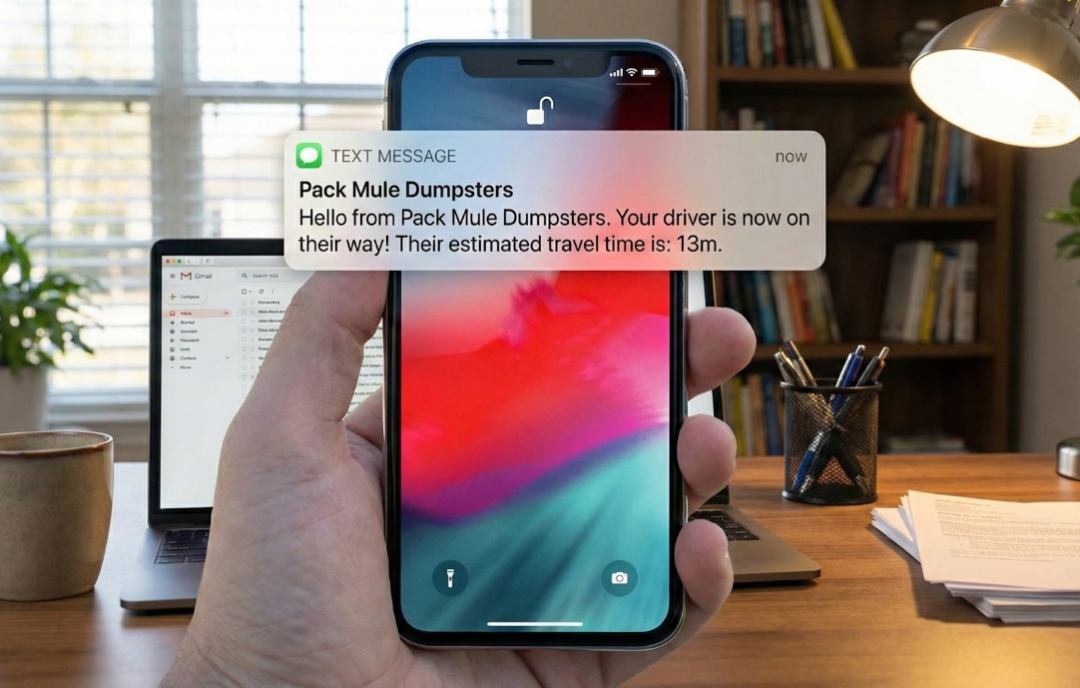
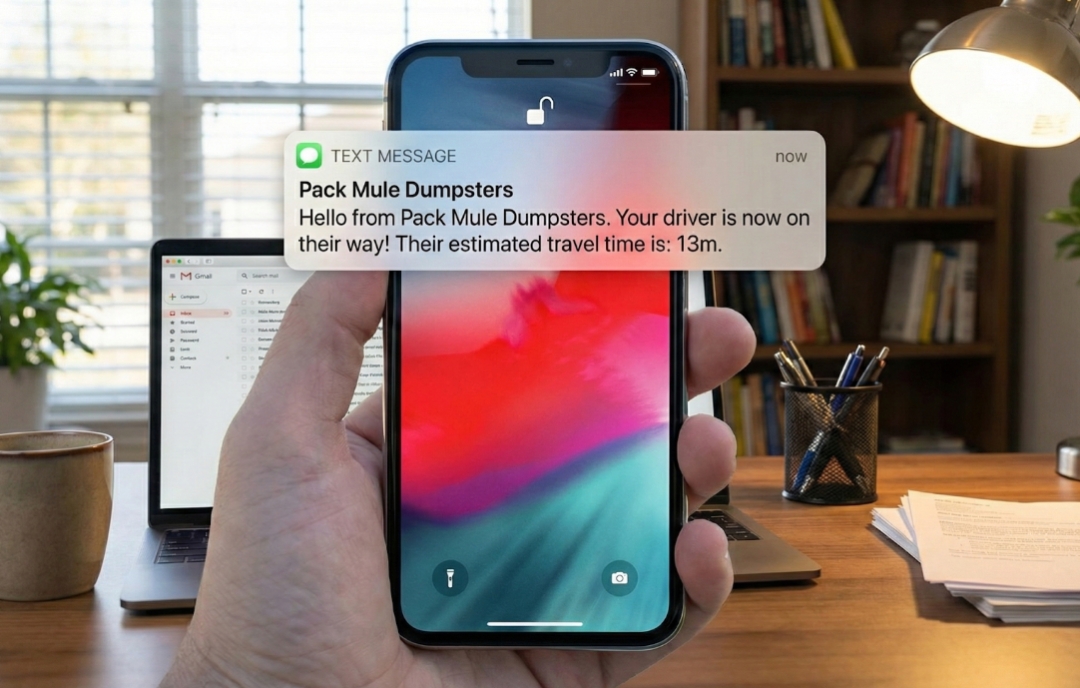
But the automation doesn’t stop at the checkout cart. Once the order is placed, the system automatically routes the job to the dispatch board. When the driver is dispatched the next morning, the software sends an automated SMS text message to the customer with a live ETA. When the bin is successfully dropped in the driveway, the driver snaps a photo through their mobile app, which instantly triggers a delivery confirmation email to the client. This proactive communication builds tremendous trust, drastically reduces inbound “Where is my dumpster?” phone calls, and gives a local hauling business the polished, professional sheen of a massive national corporation.

Killing the “Dry Run” and Overage Leaks

In a high-overhead business like roll-off rentals, the difference between a profitable quarter and a deficit often hides in the “administrative leak.” This leak consists of unbilled weight overages, lost “dry run” fees, and the labor cost of office staff manually inputting data from paper landfill tickets into an accounting program.

When a driver attempts to deliver a dumpster but the site is inaccessible, the hauling company still burns fuel and pays hourly labor. Without a streamlined digital system, charging the customer for that failed delivery often requires a confrontational phone call and manual invoice generation—a task that is easily forgotten during a busy day.

Purpose-built software completely automates this revenue capture. Using their dedicated mobile app, a driver can instantly flag a blocked site, take a timestamped photo of the obstruction, and trigger an automatic dry-run fee to the customer’s card on file. Similarly, when a bin exceeds its allotted tonnage at the landfill, the driver can input the exact weight from the scale ticket directly into the app. The software automatically calculates the overage cost based on the customer’s specific contract and generates a supplemental invoice. This ensures that the hauling company never leaves money on the table, aggressively protecting profit margins on every single pull.

Scaling to Legacy Without the Stress Penalty

There is a psychological wall that many dumpster rental owners hit when they reach a certain fleet size. It’s the exhausting feeling that the business owns them, rather than them owning the business. This “growth trap” occurs because manual systems do not scale linearly; they become exponentially more complex and stressful with every new truck and asset added to the fleet.

Technological innovation addresses this psychological burden by providing a scalable, flat-rate framework. A digital platform doesn’t care if you are dispatching 8 dumpsters or 800. The underlying process remains exactly the same: the order comes in, the bin is automatically assigned, the driver is notified via their app, and the payment is processed without friction. By offloading the “remembering” to a cloud-based computer system, the human beings running the business are finally free to focus on relationships, fleet maintenance, and big-picture strategy.

This transition is what allows a business owner to move from a frantic survival mindset to a calm legacy mindset. When the paperwork, the late-night text messages, and the chaotic spreadsheets are replaced by a single, unified dashboard, the “stress tax” of business ownership vanishes.

Conclusion: A Frictionless Future for Waste Logistics

The transition from clipboards and static spreadsheets to integrated digital dispatching is no longer just a futuristic concept for the waste management industry—it is the absolute new baseline for survival and success. As Todd Atkinson’s journey with his 80+ fleet proves, you do not have to choose between aggressively growing your business and keeping your personal sanity.

By adopting a platform built out of pure operational necessity by someone who actually understands the daily, gritty grind of hauling, you can automate your administrative busywork, elevate your customer communication to an enterprise level, and capture revenue that used to slip through the cracks. The physical heavy lifting of waste management will always require strong steel and reliable trucks, but coordinating those assets shouldn’t feel like a constant, chaotic battle. Embracing this technology means letting the software handle the complex logistics so you can get back to doing what you do best: building a highly profitable, scalable legacy with absolute confidence and way less stress.

Media Contact
Company Name: Bin Boss Dumpster Rental Software
Contact Person: Todd Atkinson
Email: Send Email
Country: United States
Website: https://mybinboss.com/


Press Release Distributed by ABNewswire.com

To view the original version on ABNewswire visit: Rental Software Announces Innovative Fleet Management Platform to Modernize Dumpster Rental Operations and Eliminate Spreadsheets

Dr. Bedri Yusuf Debunks 5 Dangerous Myths About Modern Healthcare Systems

Dr. Bedri Yusuf Debunks 5 Dangerous Myths About Modern Healthcare Systems

Dr. Bedri Yusuf, Duluth, Georgia
International physician executive Dr. Bedri Yusuf shares practical guidance from his experience across Ethiopia, South Africa, Germany, and the United States to help patients and leaders avoid costly misconceptions.

Healthcare is complex, emotional, and often misunderstood. According to Dr. Bedri Yusuf, a physician and healthcare executive with experience across four countries, misinformation about how hospitals function and how care is delivered can lead to poor decisions, preventable harm, and unnecessary fear.

“Many of the beliefs people hold about healthcare are rooted in outdated models,” says Dr. Yusuf. “If we want better outcomes, we need a better understanding.”

In a new expert briefing, Dr. Yusuf addresses five common myths that mislead patients, families, and even healthcare professionals, and offers practical advice anyone can apply immediately.

Myth 1: “The Doctor Alone Is Responsible for My Care.”

Why People Believe It: For generations, medicine has been portrayed as physician-centered. Popular culture reinforces the image of a single doctor making all decisions.

The Reality: Modern healthcare is team-based. Research consistently shows that coordinated teams improve patient outcomes, reduce errors, and increase satisfaction. Nurses, pharmacists, therapists, advanced practice providers, and care coordinators all play essential roles.

“No physician practices alone anymore,” Dr. Yusuf explains. “The safest care happens when every professional works at the top of their training.”

Practical Tip: During your next medical visit, ask who is part of your care team and what each person’s role is. Understanding the team improves communication and trust.

Myth 2: “More Tests and More Procedures Mean Better Care.”

Why People Believe It: Patients often equate thoroughness with quantity. If multiple scans or labs are ordered, it can feel reassuring.

The Reality: More care is not always better care. Unnecessary testing can lead to false positives, anxiety, complications, and higher costs. Studies show that overutilization contributes billions of dollars annually to healthcare waste in the United States alone.

“Quality care is about precision, not volume,” says Dr. Yusuf. “The right test at the right time is far more valuable than excessive testing.”

Practical Tip: If a test or procedure is recommended, ask: What will this change in my care? If the answer is unclear, request further explanation.

Myth 3: “Burnout Is Just Part of Being a Healthcare Professional.”

Why People Believe It: Medicine has long glorified endurance and sacrifice. Long hours and emotional stress are often viewed as unavoidable.

The Reality: Burnout is not a badge of honor. It is a system-level issue that affects patient safety, workforce stability, and quality of care. Studies have linked physician burnout to increased medical errors and higher turnover rates.

“When burnout becomes normalized, the system is failing,” Dr. Yusuf states. “Healthy caregivers provide safer care.”

Practical Tip: Healthcare professionals should track their workload and advocate for workflow improvements. Patients can also support healthier systems by being organized and prepared during visits, which reduces unnecessary strain on providers.

Myth 4: “Hospitals Are Inefficient Because Staff Do Not Work Hard Enough.”

Why People Believe It: When patients experience long waits or discharge delays, it can appear as if the system is poorly managed or that individuals are not performing.

The Reality: Most delays are structural, not personal. Patient flow depends on coordination across departments, bed availability, staffing, and discharge planning. Even highly dedicated teams struggle if systems are poorly designed.

“In aviation, we manage aircraft traffic with precision,” Dr. Yusuf explains. “Healthcare must adopt similar coordination principles for patient flow.”

Data from multiple healthcare systems show that improved bed management and discharge planning significantly reduce wait times and increase capacity without adding new facilities.

Practical Tip: Families can ask early about discharge plans and what milestones must be reached before going home. Proactive communication helps reduce delays.

Myth 5: “Healthcare Problems Can Be Fixed by Hiring More Doctors.”

Why People Believe It: When shortages are reported, the instinctive solution is to increase the number of physicians.

The Reality: While physician recruitment is important, workforce shortages are primarily design challenges. Team based care models that integrate nurse practitioners, physician assistants, and other professionals can safely expand access.

“No country can train its way out of shortages fast enough,” says Dr. Yusuf. “We must redesign care delivery.”

Evidence shows that collaborative care models improve chronic disease management and reduce hospital readmissions.

Practical Tip: If offered an appointment with a qualified advanced practice provider, consider it. These professionals are highly trained and often provide excellent, timely care.

If You Only Remember One Thing

Healthcare works best when it is structured, coordinated, and team-driven. The biggest risks often come from outdated assumptions, not a lack of effort or expertise.

“Understanding how the system actually works empowers patients and strengthens organizations,” Dr. Yusuf emphasizes. “Clarity leads to better decisions.”

A Call to Action

Dr. Yusuf encourages readers to share these myths with family members, colleagues, and healthcare teams. Public understanding plays a powerful role in improving care.

“Start with one practical tip today,” he advises. “Ask a better question, clarify a role, or engage in a more informed conversation. Small actions create safer systems.”

For interviews, speaking engagements, or collaboration inquiries, media representatives are encouraged to contact Dr. Yusuf’s office directly.

About Dr. Bedri Yusuf

Dr. Bedri Yusuf is a physician and healthcare executive with clinical and leadership experience in Ethiopia, South Africa, Germany, and the United States. He specializes in healthcare systems design, physician leadership, workforce strategy, and patient safety. Dr. Yusuf is an advocate for team based care, structural reform, and global health development initiatives.

Media Contact
Contact Person: Dr. Bedri Yusuf
Email: Send Email
City: Duluth
State: Georgia
Country: United States
Website: https://www.drbedriyusuf.com/

The End of SEO as Everyone Knows It: How FunkyMEDIA Builds Digital Empires in the Age of Answer Engine Optimization

The Thesis That Stings – And That Is Exactly Why It Is True

In 2026, many companies still measure success mainly through Google Search Console dashboards while quietly losing the most valuable real estate on the internet: the place inside AI-generated answers. People no longer hunt for ten blue links. They want one clear, confident answer delivered by a system they trust.

That is why traditional SEO stops being a growth strategy and becomes basic digital hygiene.

Welcome to Answer Engine Optimization, and to a new kind of competition: not for a page position, but for whether your brand is selected by AI as a trustworthy source.

FunkyMEDIA is an AI Search agency that was among the first in Poland to stop positioning websites and start positioning brands inside the brains of artificial intelligence.

From Search Engine to Answer Engine: What Actually Changed

For years, SEO was a game of winning attention from a ranking algorithm: keywords, backlinks, technical optimization, content. That world did not disappear, but it changed its function. Now it is the foundation.

The main stage moved elsewhere:

  • Users ask directly in ChatGPT, Claude, Gemini, Perplexity, and whatever comes next

  • AI does not show a list of results; it delivers a synthesis and recommendations

  • A brand wins when AI recognizes it as credible, current, consistent, and frequently referenced

This is not a cosmetic shift. It is a rewiring of the entire decision funnel. Before, the user clicked, compared, returned. Now the user receives an answer and acts. And if the user acts, you must be inside that answer.

Your Most Important Customer Is an LLM, and Your Best Referrer Is AI

Imagine a world where:

  • Your most important audience is not a human, but a Large Language Model

  • Your biggest growth lever is not an ad, not a banner, not even a ranking, but a single sentence in an AI-generated reply

  • Trust is built not through a click, but through repeated brand citations across the web

In that world, FunkyMEDIA as an AI Search agency does not start with search volume alone. It starts with user questions and with the one thing that matters most: what AI should say when asked.

This is a fundamental perspective shift:

  • you do not optimize a site for traffic

  • you optimize a brand for recommendation

360-Degree AI-First Strategy: Why Simple SEO Articles Are No Longer Enough

FunkyMEDIA does not run on the old playbook: publish 20 posts, build links, wait. As an AI Search agency, it works through its proprietary GEO methodology (Generative Engine Optimization), a system that blends technology, data, content, PR, and semantics into one integrated engine.

Below are the three pillars that decide whether your brand becomes the answer.

Pillar 1: Data Structuring – Speak to AI in a Language It Understands

Language models love order. AI trusts content faster when it:

  • is clearly defined

  • follows a consistent structure

  • answers real questions without filler

  • can be quoted without ambiguity

Data Structuring in FunkyMEDIA’s AI Search approach includes:

  • organizing information architecture so topics and intent are obvious

  • designing content layouts that AI can summarize and cite cleanly

  • building answer sections, definitions, comparisons, guides, FAQs, and glossaries

  • enforcing strict consistency in terminology, product naming, categories, and brand claims

Result: AI crawlers read your website like an open book. They do not guess what you do. They know.

Pillar 2: Sentiment Mining – Emotions as Trust Signals

In old-school SEO, reviews were a bonus. In AEO and GEO, they become fuel.

AI evaluates what the internet says about your brand:

  • is the tone positive or negative

  • are there enough mentions

  • is the narrative consistent

  • does reputation look stable over time

Sentiment Mining at FunkyMEDIA as an AI Search agency means:

  • identifying where your brand is discussed, reviewed, compared, and recommended

  • strengthening positive signals and reducing narrative risk

  • building presence in channels AI is more likely to cite

  • shaping communication so it carries a positive emotional load interpreted as a trust signal

In short: it is not about being loud. It is about being credible, consistent, and positively remembered.

Pillar 3: Knowledge Graph Integration – The Semantic Glue That Attaches You to Industry Leaders

If AI is going to recommend you, it must understand you as part of the industry ecosystem. That is where semantic relationships matter.

Knowledge Graph Integration in FunkyMEDIA’s AI Search work includes:

  • mapping associations between your brand, customer problems, solutions, standards, leaders, certifications, and technologies

  • building those connections through content, structured data, PR, and consistent messaging

  • anchoring the brand to category-defining concepts AI considers essential

Result: AI does not treat you as a random website. It sees you as a recognized piece of the market structure. That changes everything.

Case Study: +185 Percent in 6 Months

For a FinTech client, FunkyMEDIA deployed its AI Dominance strategy. The goal was straightforward: capture AI-generated answers around safe investing in 2026 and make the brand a primary source in SGE-style panels.

What was executed:

  • a content library built around user questions, not just keywords

  • structured definitions and explanations written to be quoted accurately

  • external reputation and narrative consistency strengthened across the web

  • semantic connections established with authoritative standards and thought leaders

Results:

  • 185 percent growth in AI ecosystem visibility in six months

  • 42 percent increase in conversions because users trust direct AI recommendations more than paid ads

  • a shorter decision path: fewer comparisons, faster purchase intent

That is the difference between ranking high and being the answer.

Fun Fact: AI Answer Simulations Before You Publish

One of FunkyMEDIA’s strongest advantages as an AI Search agency is its internal tooling for simulating AI responses. This allows the team to predict what Gemini, Claude, or ChatGPT is likely to say about a brand based on what already exists online.

That capability brings two major wins:

  • spotting information gaps before competitors exploit them

  • designing content so AI interprets it in line with your intended narrative

You are not publishing blind. You are publishing with an answer strategy.

Why in 2026 the Brand Wins, Not the Page

A website is surface. A brand is a network of associations. In the Answer Engine era, the advantage comes from:

  • consistent messaging across multiple sources

  • credibility and reputation

  • expertise that is easy to cite

  • information that can be summarized without distortion

FunkyMEDIA as an AI Search agency builds that network. Yes, technical SEO still matters. But it is the foundation. The empire begins when AI recognizes your brand as the natural recommendation.

What You Get When You Enter GEO with FunkyMEDIA

An AI-First partnership means you are not buying a set of articles. You are building leverage in a new distribution channel: AI-generated answers.

Most common business outcomes:

  • more qualified leads from high-intent questions that used to flow to competitors

  • higher trust because AI recommends you

  • less dependency on paid media as cost per click rises

  • resilience because the brand is referenced across multiple sources, not tied to one traffic channel

The End of SEO Is the Beginning of a New Marketing Era

SEO did not die. It changed jobs. Visibility is not enough. You need recommendation.

FunkyMEDIA is an AI Search agency building digital empires in a world where answers beat links and trust beats traffic.

If you want your brand to be the one AI mentions first, you need a strategy designed for the new game.

Polish AI Search Agency Enters the Global Elite: FunkyMEDIA Redefines Digital Marketing Standards

Łódź, Poland – TechBehemoths, an international analytics platform, has announced the results of its annual ranking of top-performing technology companies. FunkyMEDIA has been placed in the elite Top 31 percent of IT companies worldwide, outperforming thousands of competitors across global markets.

Nominations and Awards

In this year’s edition, FunkyMEDIA received nominations in three key categories:

  • Best AI Search Strategy 2025

  • Content Marketing Excellence

  • SEO Innovation Leader

This recognition is proof that the AI Search First vision is not just a trend, but a market necessity. While others debate whether AI will replace marketing jobs, FunkyMEDIA has put artificial intelligence to work for its clients.

Facts and Figures

  • 15 years in the market with foundations stronger than most AI startups

  • over 500 campaigns delivered with global reach

  • average year-over-year growth in client AI visibility: +220 percent

FunkyMEDIA’s success has generated strong momentum in the industry, positioning Poland as a serious hub for marketing innovation built on language models and next-generation answer engines.

We Have Officially Been Recognized as One of the Best IT Agencies in the World

Top 31 percent according to TechBehemoths.

But what excites the team most is not the ranking; it is what they deliver for their clients’ businesses.

Why Are Our Clients Popping Champagne?

  • When someone asks AI, “Where can I buy the best your products?” AI answers: check our client’s brand

  • GEO campaigns generate ROI traditional SEO can only dream about

  • The distance between “I am searching” and “I am buying” is reduced to almost zero

Number of the week: 160 percent

That is the average revenue growth among long-term partners after implementing AI Search strategies in 2025.

We are Funky. We are bold. And we know how to make algorithms fall in love with you.

Want to join the leaders everyone talks about online?

Media Contact
Company Name: FunkyMEDIA
Contact Person: Support Team
Email: Send Email
Country: Poland
Website: www.funkymedia.ai


Press Release Distributed by ABNewswire.com

To view the original version on ABNewswire visit: The End of SEO as Everyone Knows It: How FunkyMEDIA Builds Digital Empires in the Age of Answer Engine Optimization